
To understand who owns Santander Bank, one must first distinguish between a local branch on a high street and the massive global apparatus behind it. Santander is not owned by a single individual, a solitary family, or even a single government. Instead, it is a publicly-traded, multinational financial services company owned by millions of shareholders across the globe. Formally known as Banco Santander, S.A., its ownership structure is a complex tapestry of institutional investors, retail shareholders, and a legacy family that has guided its trajectory for over a century.

As of the current fiscal landscape, Santander stands as one of the largest banks in the world by market capitalization and the largest in the Eurozone. Because it is a “S.A.” (Sociedad Anónima), it operates as a public limited company. This means its “owners” are anyone who holds its shares on the various stock exchanges where it is listed, including the Bolsa de Madrid and the New York Stock Exchange (NYSE).
The Public Ownership Model: A Global Shareholder Base
The ownership of Santander is highly fragmented, which is typical for a global systemically important bank (G-SIB). Unlike a private bank owned by a billionaire founder, Santander’s capital is divided into billions of shares. This structure ensures that no single entity has total control, but it also subjects the bank to the collective will of its global investor base.
Stock Exchange Listings and Market Presence
Banco Santander is primary-listed on the Bolsa de Madrid and is a constituent of the IBEX 35 index. However, its reach extends far beyond Spain. It is also listed on the London Stock Exchange and the New York Stock Exchange via American Depositary Receipts (ADRs). This multi-exchange presence allows the bank to tap into diverse pools of capital, ranging from European pension funds to American retail investors. For the individual investor, owning even a single share of SAN (its ticker symbol) technically makes them a part-owner of the institution.
Institutional vs. Retail Shareholders
The bank’s ownership is generally split between two main groups: institutional investors and retail (individual) investors.
-
Institutional Investors: These are the “heavy hitters” of the financial world—pension funds, insurance companies, and asset management firms. They typically hold about 50% to 60% of the total shares. These entities invest on behalf of millions of people, meaning that if you have a 401(k) or a pension plan managed by a major firm, you might indirectly own a piece of Santander.
-
Retail Investors: Santander is unique among global banks for having an exceptionally high number of retail shareholders. There are approximately 4 million individual shareholders across the globe. This is largely due to the bank’s history of “loyalty” programs and its deep roots in the Spanish and Latin American domestic markets, where many customers are also shareholders.
The Botín Family Legacy: Influence Without Absolute Ownership
While the “owners” are the shareholders, the “influence” has historically been concentrated in the hands of the Botín family. It is a common misconception that the Botín family owns Santander Bank in its entirety. In reality, their collective stake is relatively small in percentage terms—often cited as being under 2% of the total shares. However, their leadership has defined the bank for generations.
From Regional Bank to Global Titan
The bank was founded in 1857 in the port city of Santander, Spain. However, its transformation into a global powerhouse began in earnest under the leadership of Emilio Botín, who served as chairman from 1986 until his death in 2014. Emilio Botín was a visionary who orchestrated a series of aggressive acquisitions, including the merger with Central Hispano and the purchase of Abbey National in the UK. Under his watch, the bank moved from a regional Spanish player to a dominant force in Brazil, Mexico, the United Kingdom, and the United States.
Leadership Under Ana Botín
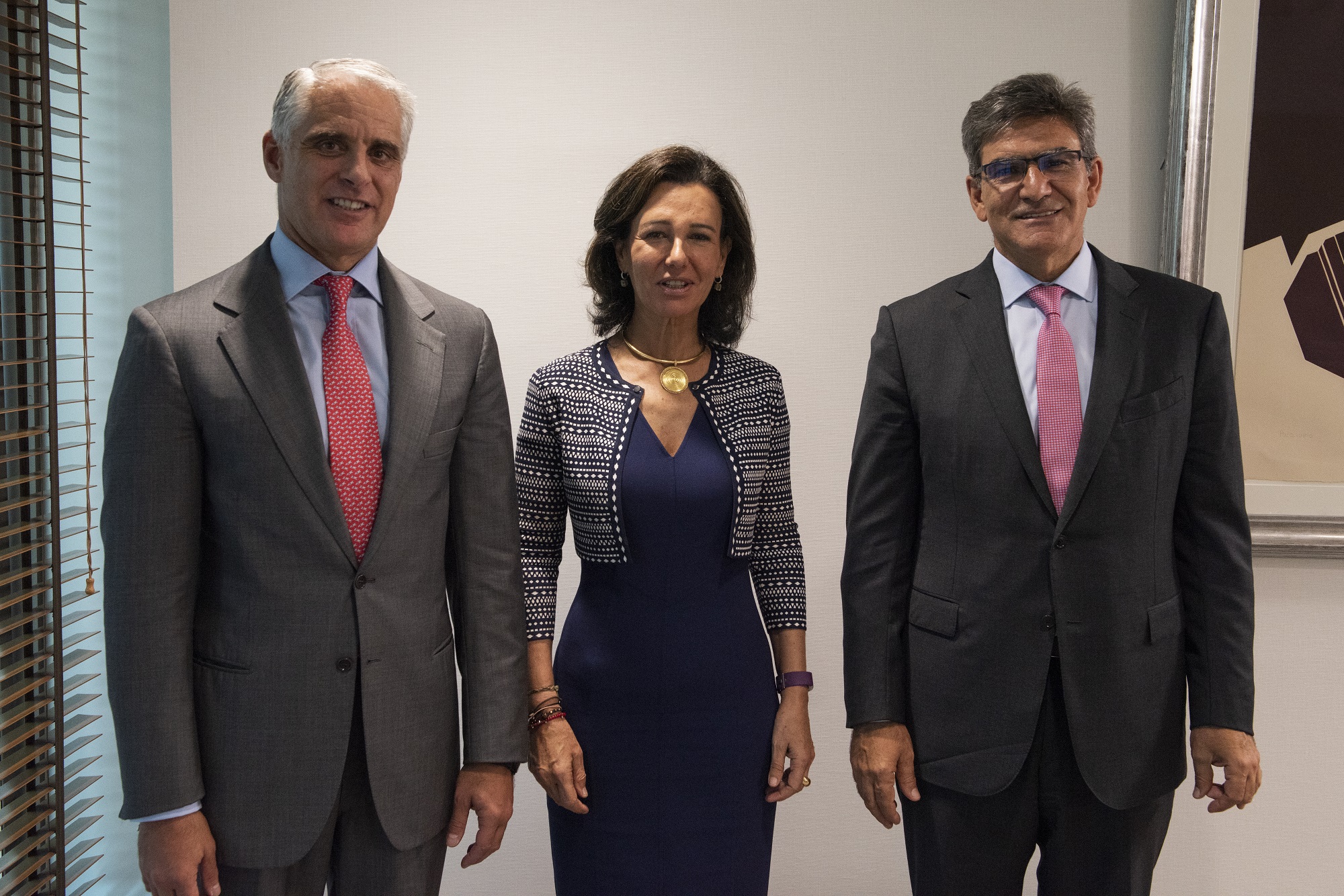
Following Emilio’s death, his daughter, Ana Botín, took the helm as Executive Chair. Her leadership has shifted the bank’s focus toward digital transformation and sustainable finance. While the family does not own the bank in a legal or majority sense, their “ownership” is expressed through their role in management and their historical stewardship. They hold significant board influence, and their vision continues to dictate the bank’s strategic direction. For many investors, the Botín name is a brand of stability and long-term thinking, which helps maintain investor confidence even though the family doesn’t hold a controlling equity stake.
Major Institutional Investors: The Silent Owners

If we look at the SEC filings and shareholder registers, the largest “owners” of Santander are the same institutional giants that own significant portions of almost every major public company. These firms do not run the day-to-day operations, but they hold significant voting power on issues such as executive compensation, board appointments, and mergers.
BlackRock and Vanguard’s Influence
BlackRock, Inc., the world’s largest asset manager, is consistently one of the largest shareholders of Banco Santander. Through its various index funds and ETFs (like iShares), BlackRock holds a stake that typically fluctuates between 3% and 6%. Similarly, The Vanguard Group holds a substantial percentage through its passive investment vehicles. These firms are “passive” owners; they don’t seek to change the bank’s strategy, but their sheer size makes them the most powerful entities in the room during shareholder meetings.
The Role of Sovereign Wealth Funds and Mutual Funds
In addition to the US-based giants, various European and international funds hold stakes. This includes Norges Bank (which manages the Norwegian Government Pension Fund Global) and several large mutual fund managers like Amundi and Fidelity. The involvement of these diverse institutional owners provides a layer of oversight, as these firms have a fiduciary duty to ensure the bank is managed profitably and ethically.
Understanding the Global Subsidiary Structure
To fully answer “who owns Santander,” one must also look at how its various regional arms are structured. Santander operates under a “subsidiary model” that is somewhat unique among global banks. Instead of a single centralized entity where the parent company provides all the liquidity, Santander’s regional banks are largely self-sufficient.
Santander US and Consumer Finance
In the United States, Santander Bank, N.A. is a wholly-owned subsidiary of Santander Holdings USA, Inc., which is in turn owned by the Spanish parent, Banco Santander, S.A. The US operation has grown significantly through the acquisition of Sovereign Bank and the full integration of Santander Consumer USA, a major player in the auto lending market. While the parent company in Spain “owns” the US operation, the US entity must comply with American regulations (such as those from the Federal Reserve), creating a localized ownership feel for US consumers.
Santander UK and the European Market
A similar structure exists in the United Kingdom. Santander UK is one of the “Big Five” banks in Britain. It was formed through the acquisition of Abbey National, Alliance & Leicester, and the savings business of Bradford & Bingley. While it is a subsidiary of the Spanish parent, it operates with its own board and regulatory oversight from the Prudential Regulation Authority (PRA). This decentralized model was designed to prevent a “domino effect”—if one regional subsidiary faces a crisis, the others are theoretically insulated.
Why Ownership Matters for Your Personal Finances
For the average consumer or small business owner, knowing “who owns the bank” is more than a trivia point; it is a matter of financial security and institutional philosophy. The ownership structure of a bank dictates its risk appetite, its dividend policy, and its long-term viability.
Stability and Systematic Importance
Because Santander is owned by a massive, diverse group of international investors and is classified as a Global Systemically Important Bank, it is subject to the highest levels of regulatory scrutiny. This “ownership by the public” means that the bank must maintain high capital buffers and undergo rigorous “stress tests” by the European Central Bank (ECB) and the Federal Reserve. For a personal finance customer, this provides a level of security that smaller, privately-held or less-regulated institutions might not offer.
Dividend Strategy and Investor Relations
Santander is known for its commitment to shareholder returns. For those who use the bank not just for checking accounts but as an investment vehicle, the ownership structure is vital. The bank typically distributes a significant portion of its profits back to its 4 million shareholders in the form of dividends. This makes it a popular choice for “income investors” who seek steady payouts. The bank’s “Money” strategy is focused on balancing these payouts with the need to reinvest in digital banking tools and AI-driven fraud prevention.
In conclusion, the answer to “who owns Santander Bank” is twofold. Legally and financially, it is owned by millions of institutional and retail shareholders across the globe, with firms like BlackRock and Vanguard holding the largest individual slices. However, culturally and strategically, it is an institution shaped by the legacy of the Botín family. This blend of massive public ownership and consistent family leadership has created a financial behemoth that remains a cornerstone of the global banking system. Whether you are a depositor in Boston, a mortgage holder in London, or a shareholder in Madrid, you are part of an ownership network that spans continents and decades.
aViewFromTheCave is a participant in the Amazon Services LLC Associates Program, an affiliate advertising program designed to provide a means for sites to earn advertising fees by advertising and linking to Amazon.com. Amazon, the Amazon logo, AmazonSupply, and the AmazonSupply logo are trademarks of Amazon.com, Inc. or its affiliates. As an Amazon Associate we earn affiliate commissions from qualifying purchases.