
For decades, the stock market has stood as the most accessible and powerful vehicle for individual wealth creation. While alternative investments like real estate, commodities, and digital assets often capture headlines, the equity market remains the bedrock of modern personal finance. To understand the “why” behind stock market participation, one must look past the daily fluctuations of price tickers and delve into the fundamental mechanics of capitalism, compounding, and inflation protection. At its core, the stock market is not a casino; it is a platform that allows individuals to own a piece of the world’s most productive and innovative enterprises.
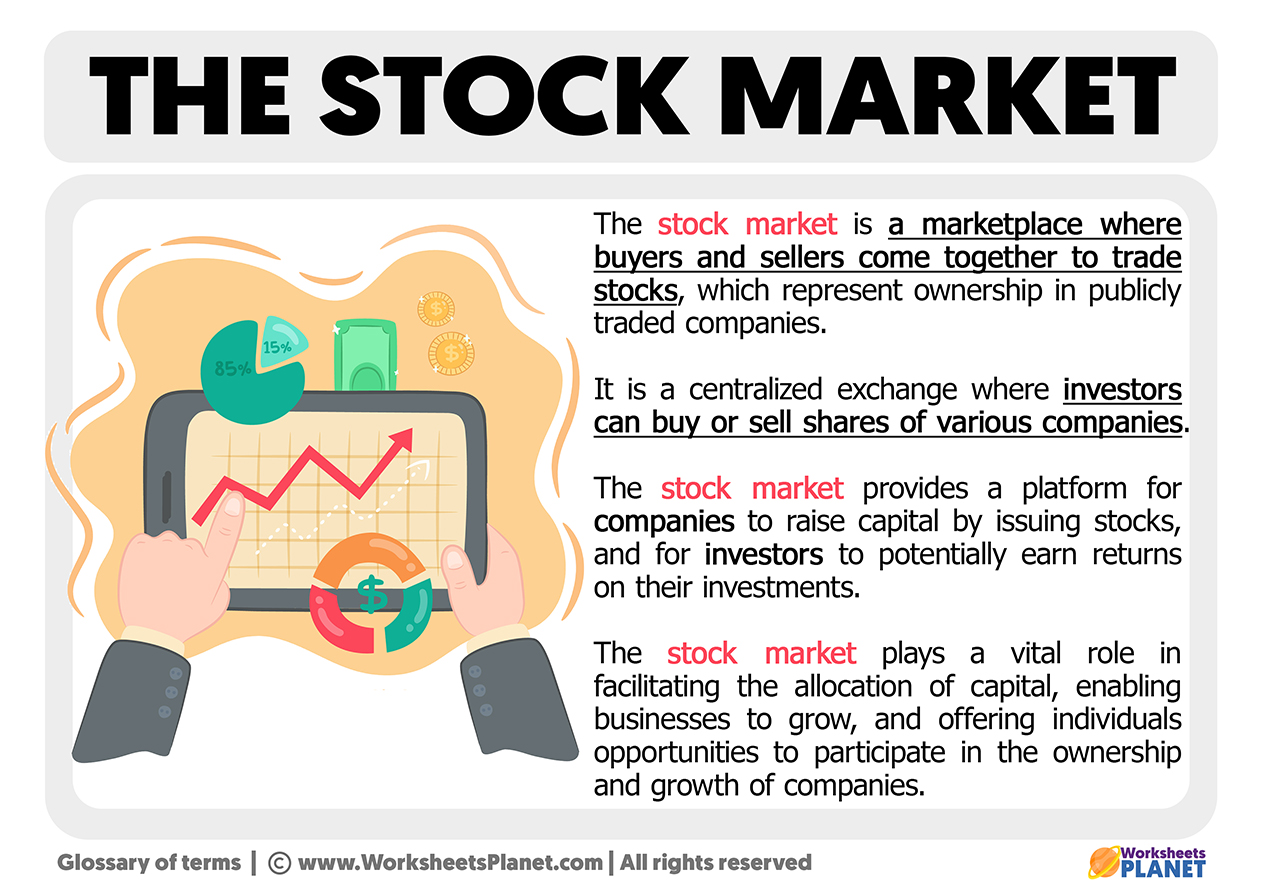
The Fundamental Mechanics of Wealth Creation
The primary reason to engage with the stock market is its unparalleled ability to generate long-term capital appreciation. Unlike a savings account, which offers a fixed interest rate that often fails to keep pace with the cost of living, stocks represent an ownership stake in businesses that have the capacity to grow, innovate, and increase their earnings over time.
The Power of Compound Interest
Albert Einstein famously referred to compound interest as the eighth wonder of the world. In the context of the stock market, compounding occurs when the returns on your investment—both from capital gains and dividends—are reinvested to generate their own returns. Over a period of twenty, thirty, or forty years, this creates an exponential growth curve. The “why” of the stock market is often found in the math: a modest monthly contribution can transform into a substantial nest egg through the sheer force of time and consistency. By starting early, investors allow the “snowball effect” to take hold, where the growth in the later years often exceeds the total contributions made during the early years.
Protecting Purchasing Power Against Inflation
Inflation is the silent thief of wealth. If the annual inflation rate is 3%, and your money is sitting in a cash account earning 0.1%, you are effectively losing 2.9% of your purchasing power every year. Stocks have historically served as an excellent hedge against inflation. Because companies can often raise prices for their goods and services as their own costs rise, their earnings—and by extension, their stock prices—tend to track or exceed inflation over the long run. Owning equities means owning the means of production, ensuring that your net worth is tied to the real economy rather than a depreciating currency.
Participation in Global Innovation
When you buy shares of a company, you are not just betting on a ticker symbol; you are providing capital to organizations that are solving global problems. Whether it is a pharmaceutical company developing life-saving medicine, a technology firm building the next generation of communication tools, or a renewable energy company transitioning the world away from fossil fuels, the stock market allows you to profit from human ingenuity. This alignment of financial interest with global progress is a unique feature of equity investing that few other asset classes can match.
Strategic Approaches to Market Participation
Understanding why one should invest is only half the battle; the other half is understanding “how” to navigate the various vehicles available in the modern financial landscape. The evolution of the stock market has democratized access, moving from a playground for the elite to a transparent system available to anyone with a smartphone.
The Rise of Passive Investing and ETFs
For the majority of individual investors, the most effective way to harness the stock market is through passive investing, specifically via Exchange-Traded Funds (ETFs) and index funds. These vehicles allow an investor to own a broad slice of the market—such as the S&P 500—without having to pick individual winners and losers. By tracking a broad index, you capture the average return of the market, which historically has hovered around 7-10% annually after inflation. This approach mitigates “idiosyncratic risk”—the risk that a single company will fail—and focuses instead on the growth of the economy as a whole.
Dividend Growth Investing for Cash Flow
While many investors focus on share price appreciation, others prioritize the stock market as a source of passive income. Dividend-paying stocks, particularly those known as “Dividend Aristocrats” (companies that have increased their dividends for at least 25 consecutive years), provide a steady stream of cash flow. This strategy is particularly effective for those seeking financial independence or retirement income. Reinvesting these dividends during the wealth-building phase accelerates compounding, while taking them as cash later provides a “raise” that often outpaces inflation.
Value vs. Growth: Finding Your Edge
Investors often categorize their strategies into “Value” or “Growth.” Growth investing focuses on companies that are expected to grow at an above-average rate compared to the rest of the market, often reinvesting all profits back into the business. Value investing, conversely, involves looking for companies that are currently undervalued by the market—buying a dollar for eighty cents. Understanding these styles helps investors align their portfolios with their risk tolerance and financial goals, ensuring that their “why” matches their “how.”

Navigating Risk and Volatility
A common deterrent for potential investors is the fear of market volatility. However, to be a successful participant in the stock market, one must redefine their relationship with risk. In finance, risk and reward are inextricably linked; the “premium” earned by stock investors is essentially a reward for enduring the uncertainty of price fluctuations.
Diversification: The Only Free Lunch
The most effective tool for managing risk is diversification. By spreading investments across different sectors (technology, healthcare, energy, etc.) and geographic regions, an investor ensures that a downturn in one area does not derail their entire portfolio. Modern financial tools make international diversification easier than ever, allowing investors to participate in the growth of emerging markets alongside established economies. Diversification does not eliminate risk, but it dramatically reduces the impact of volatility on a long-term plan.
Time in the Market vs. Timing the Market
One of the most dangerous traps for investors is the attempt to “time the market”—selling before a crash and buying before a recovery. Data consistently shows that the most successful investors are those who stay invested through all market cycles. Missing just a few of the market’s best-performing days can lead to a significant reduction in long-term returns. The stock market rewards patience, not activity. By focusing on “time in the market” rather than “timing the market,” investors can ignore the noise of the news cycle and focus on their ultimate financial destination.
Understanding Systemic vs. Non-Systemic Risk
Investors must distinguish between systemic risk (risks that affect the entire market, like a global recession) and non-systemic risk (risks specific to a single company, like a product recall). While non-systemic risk can be diversified away, systemic risk is something that must be managed through asset allocation—balancing stocks with bonds, cash, or other assets based on one’s time horizon. A younger investor with decades before retirement can afford to embrace systemic risk for higher returns, whereas someone closer to retirement may shift toward capital preservation.
The Psychology of the Successful Investor
Perhaps the most overlooked aspect of why the stock market works is the psychological discipline required to succeed. The market is a mechanism that transfers wealth from the impatient to the patient. Mastering one’s emotions is often more important than mastering financial spreadsheets.
Avoiding the Herd Mentality
Human beings are hardwired for social belonging, which often translates into “herd mentality” in the financial markets. When prices are soaring, everyone wants to buy (FOMO), and when prices are crashing, everyone wants to sell (panic). Successful investors develop a contrarian streak, or at the very least, a commitment to their original strategy regardless of public sentiment. They view market corrections not as disasters, but as opportunities to acquire high-quality assets at a discount.
The Importance of a Written Investment Policy
To combat emotional decision-making, professional investors often use a written Investment Policy Statement (IPS). This document outlines their goals, risk tolerance, and the specific rules they will follow for buying and selling. Having a pre-determined plan prevents “knee-jerk” reactions during times of market stress. If your “why” is clearly defined—for example, “to fund a comfortable retirement in 2045″—the temporary dip of a single quarter becomes an irrelevant data point in a multi-decade journey.
Developing a Growth Mindset
Investing in the stock market requires a fundamental belief in the future. To be an investor is to be an optimist; it is a bet that tomorrow will be better, more efficient, and more technologically advanced than today. This growth mindset allows investors to look past the crises of the day—be they political, economic, or social—and focus on the long-term trajectory of human progress. The history of the stock market is a history of resilience; despite world wars, depressions, and pandemics, the market has always eventually reached new highs.

Conclusion: Starting the Journey
The stock market is the great equalizer of the modern economy. It does not care about your background, your education, or your social status; it only requires capital, patience, and discipline. By understanding the mechanics of compounding, the necessity of inflation protection, and the strategies for risk management, anyone can leverage the power of the market to build a more secure financial future. The question is not “why the stock market,” but rather “why wait?” Every day spent on the sidelines is a day of missed compounding, making the present moment the most opportunistic time to begin the transition from a consumer to an owner. Through the stock market, financial freedom is not just a dream reserved for the few, but a systematic reality for those willing to participate in the global engine of growth.
aViewFromTheCave is a participant in the Amazon Services LLC Associates Program, an affiliate advertising program designed to provide a means for sites to earn advertising fees by advertising and linking to Amazon.com. Amazon, the Amazon logo, AmazonSupply, and the AmazonSupply logo are trademarks of Amazon.com, Inc. or its affiliates. As an Amazon Associate we earn affiliate commissions from qualifying purchases.