
For many investors, opening a brokerage app to see a sea of red can be a visceral, unsettling experience. Whether you are a seasoned trader or a long-term retirement saver, the question is always the same: Why did the stocks drop today? While the financial news cycle often looks for a single “smoking gun,” market downturns are rarely the result of one isolated event. Instead, they are typically the culmination of macroeconomic shifts, corporate performance, geopolitical friction, and the complex psychology of millions of participants.
Understanding the mechanics behind a market slide is the first step toward becoming a more disciplined investor. By deconstructing the primary drivers of volatility, you can move away from emotional reactions and toward a strategic, data-driven perspective on your portfolio.
The Macroeconomic Engine: Interest Rates and Inflation
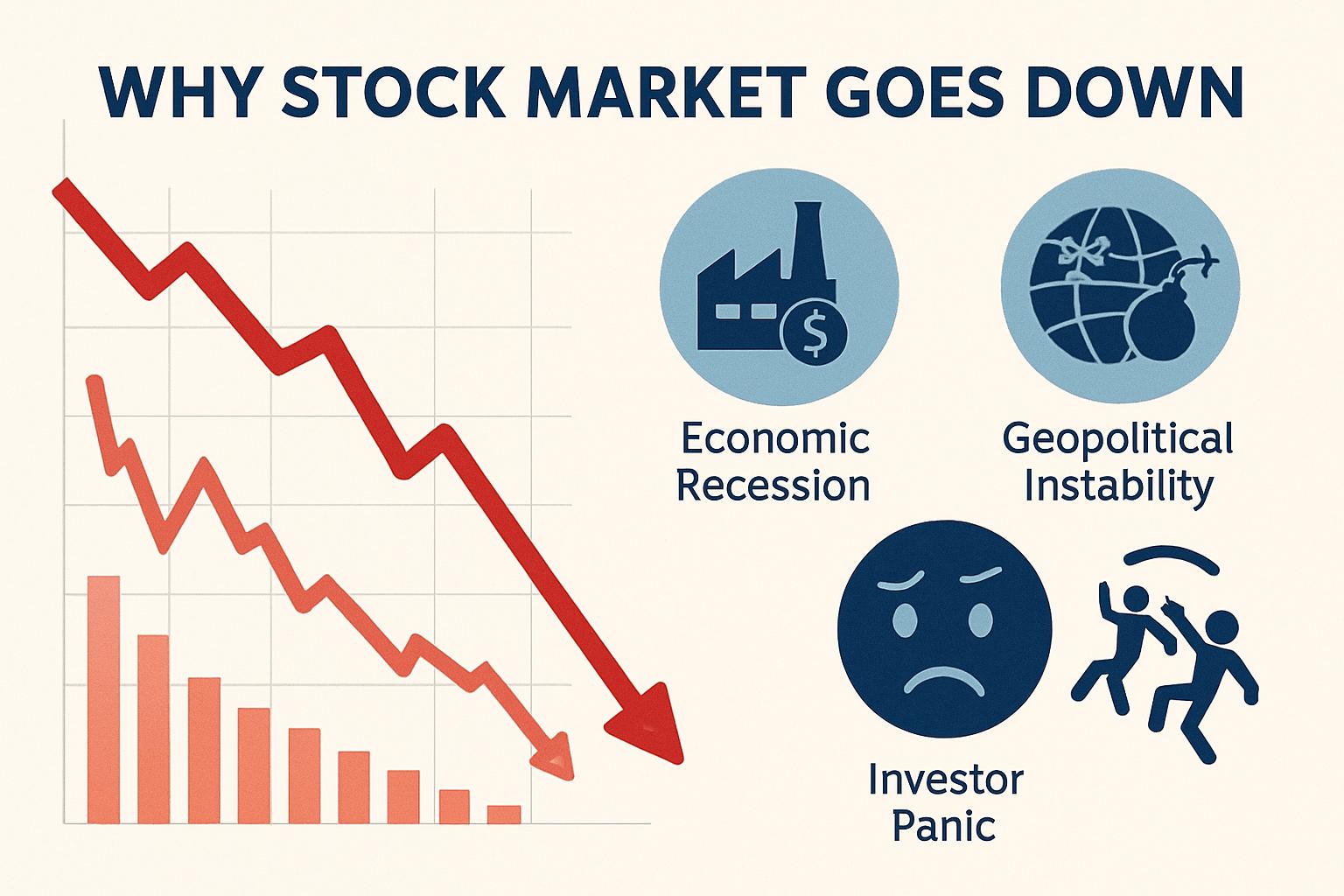
The most common catalyst for a broad market sell-off is a change in the macroeconomic environment, specifically regarding the relationship between inflation and interest rates. The Federal Reserve and other global central banks act as the ultimate arbiters of liquidity. When the economic “weather” changes, the market is usually the first to react.
The Shadow of Inflation
Inflation is perhaps the most significant antagonist for equity markets. When the cost of goods and services rises too quickly, it erodes the purchasing power of consumers and increases the input costs for businesses. If a company cannot pass these costs on to the consumer, its profit margins shrink. When the market sees data suggesting that inflation is “sticky” or accelerating—such as a higher-than-expected Consumer Price Index (CPI) report—investors often sell stocks in anticipation of a cooling economy.
Interest Rates and Discounted Cash Flows
Equity valuation is essentially the process of determining the present value of a company’s future earnings. When interest rates rise, the “discount rate” used in these financial models also increases. This makes a dollar earned five years from now worth less today than it was when interest rates were low.
High interest rates also offer investors a viable alternative to the volatility of the stock market. If a ten-year Treasury bond offers a guaranteed yield of 4% or 5%, the relative appeal of a “risky” stock diminishes. This “flight to safety” often results in capital migrating out of the S&P 500 or Nasdaq and into the fixed-income market, causing stock prices to tumble.
The Role of Bond Yields
The bond market often leads the stock market. When the yield on the 10-year Treasury note spikes, it signals that investors expect higher rates for longer. This puts immediate pressure on high-growth sectors, particularly technology, which relies heavily on future earnings potential. A rapid move in yields is frequently the direct cause of an intraday drop in the major indices.
Corporate Earnings and the Reality of Valuation
While the “macro” sets the stage, the “micro”—the performance of individual companies—provides the script. The stock market is often described as a “voting machine” in the short term but a “weighing machine” in the long term. Today’s drop may simply be the market “weighing” new data and finding it wanting.
Guidance vs. Reality
During earnings season, it is not enough for a company to report a profit. Investors look at “guidance”—the company’s forecast for the coming quarters. Even if a corporation beats its revenue targets today, a cautious outlook from the CEO regarding future demand or rising labor costs can trigger a massive sell-off. Because the stock market is forward-looking, any hint of a slowdown in growth is often met with aggressive selling.
The Correction of Overvaluation
Markets occasionally move into “overbought” territory, where stock prices have outpaced the underlying earnings power of the companies. In these scenarios, the market becomes fragile. A minor piece of negative news can act as a catalyst for a “valuation correction.” This is a healthy, albeit painful, process where the market sheds “froth” and returns to more historical averages of Price-to-Earnings (P/E) ratios. If the stocks dropped today without a major headline, it might simply be the market catching its breath after an unsustainable rally.
Sector Rotations
Sometimes, the broader index drops because of a massive rotation out of one specific sector. If a major tech giant misses expectations, it can drag down the entire Nasdaq. Conversely, if there is a sudden drop in oil prices, the energy sector may pull the S&P 500 lower. Investors often move capital from “growth” stocks to “value” stocks (or vice versa) depending on the economic cycle, and these shifts often result in localized volatility.
Geopolitical Friction and Global Uncertainty

Markets crave stability and predictability. Geopolitical events introduce “tail risk”—unpredictable events that can have catastrophic impacts on global trade, energy prices, and corporate supply chains.
Trade Policy and International Relations
In a globalized economy, very few large-cap companies operate in a vacuum. Trade wars, tariffs, or diplomatic tensions between major economies (such as the U.S. and China) can disrupt the flow of components and finished goods. If a new trade restriction is announced or a diplomatic relationship sours, stocks—particularly those in the semiconductor, automotive, and manufacturing sectors—often react violently.
Energy Shocks and Commodity Prices
Geopolitical instability in oil-producing regions often leads to a spike in energy prices. Because energy is a fundamental input for almost every industry, a surge in the price of crude oil acts like a tax on both corporations and consumers. High energy costs reduce discretionary spending and increase shipping costs, leading to a “risk-off” sentiment where investors flee equities in favor of more stable assets.
The “Black Swan” and the Unknown
The most severe market drops often stem from “Black Swan” events—unforeseen developments like a global pandemic, a sudden bank failure, or a localized military conflict that threatens to expand. When uncertainty reaches a certain threshold, the default response for many institutional investors is to “sell first and ask questions later.” This liquidity crunch can lead to rapid, cascading price declines across all asset classes.
Market Psychology and Technical Indicators
While fundamental data points like earnings and interest rates are crucial, the stock market is also a reflection of human emotion. Greed and fear are powerful drivers that can cause prices to deviate significantly from their intrinsic value.
The Fear and Greed Index
Investor sentiment can shift in an instant. When the market is in a state of “extreme greed,” it is susceptible to even the slightest disappointment. Conversely, when fear takes over, selling can become indiscriminate. If a key psychological level is broken—such as the Dow Jones falling below a round number like 35,000—it can trigger a wave of panic selling from retail investors who fear “the big one” is finally happening.
Algorithmic and High-Frequency Trading
In the modern era, a significant portion of market volume is driven by computer algorithms. These programs are designed to execute trades based on specific technical triggers, such as a stock falling below its 50-day or 200-day moving average. When these technical levels are breached, it can trigger a “stop-loss” cascade. The machines begin selling automatically, which pushes the price lower, which then triggers more algorithms to sell. This creates a feedback loop that can cause a 1% drop to turn into a 3% drop in a matter of minutes.
Margin Calls and Liquidity
During a sharp decline, some investors who have borrowed money to buy stocks (trading on margin) may receive “margin calls.” If they cannot deposit more cash, their broker will automatically sell their positions to cover the loan. This forced selling adds further downward pressure to the market, often regardless of the fundamental quality of the stocks being sold.
Navigating the Downward Trend
While a dropping market is uncomfortable, it is a prerequisite for long-term wealth creation. Without volatility, there would be no risk premium to harvest. For the disciplined investor, understanding why the stocks dropped today is less about finding an excuse to panic and more about identifying the current phase of the market cycle.
Reassessing Your Time Horizon
The primary antidote to market drops is time. For an investor with a 20-year horizon, a 2% or even 10% drop in a single day is a statistical “blip” in a long-term upward trajectory. The danger lies in turning a temporary “paper loss” into a permanent “realized loss” by selling at the bottom of a cycle.
Diversification and Risk Management
If today’s drop caused you undue stress, it may be a sign that your portfolio’s risk profile is not aligned with your actual risk tolerance. Diversification across different asset classes—including international stocks, bonds, real estate, and cash—can help dampen the blow of a localized market crash.
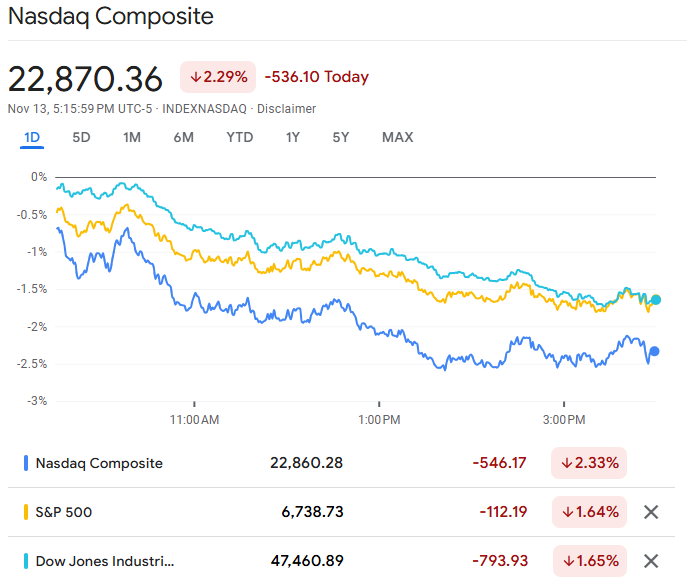
The Opportunity in the Red
Historically, the best time to buy stocks is when others are afraid. Value investors often view market drops as a “clearance sale” on high-quality companies. By focusing on the fundamentals—strong balance sheets, consistent cash flow, and competitive advantages—investors can use days of red to build positions in companies that will likely lead the next market recovery.
In summary, stocks drop for a myriad of reasons: a hawkish Federal Reserve, a disappointing earnings forecast, a geopolitical flare-up, or a technical breakdown. While the specific “why” of today’s drop is important for context, the “how” of your reaction is what will ultimately determine your financial success. Market volatility is not an obstacle to a successful investment strategy; it is a fundamental part of it.
aViewFromTheCave is a participant in the Amazon Services LLC Associates Program, an affiliate advertising program designed to provide a means for sites to earn advertising fees by advertising and linking to Amazon.com. Amazon, the Amazon logo, AmazonSupply, and the AmazonSupply logo are trademarks of Amazon.com, Inc. or its affiliates. As an Amazon Associate we earn affiliate commissions from qualifying purchases.