
In the interconnected ecosystem of modern finance, the “world market” is not a single entity with a single set of operating hours. Instead, it is a global relay race of capital that never truly sleeps. For the strategic investor, understanding when the world market opens is more than a matter of checking a clock; it is about understanding the flow of liquidity, the impact of time zones on volatility, and the windows of opportunity that arise as one regional powerhouse hands the baton to the next.
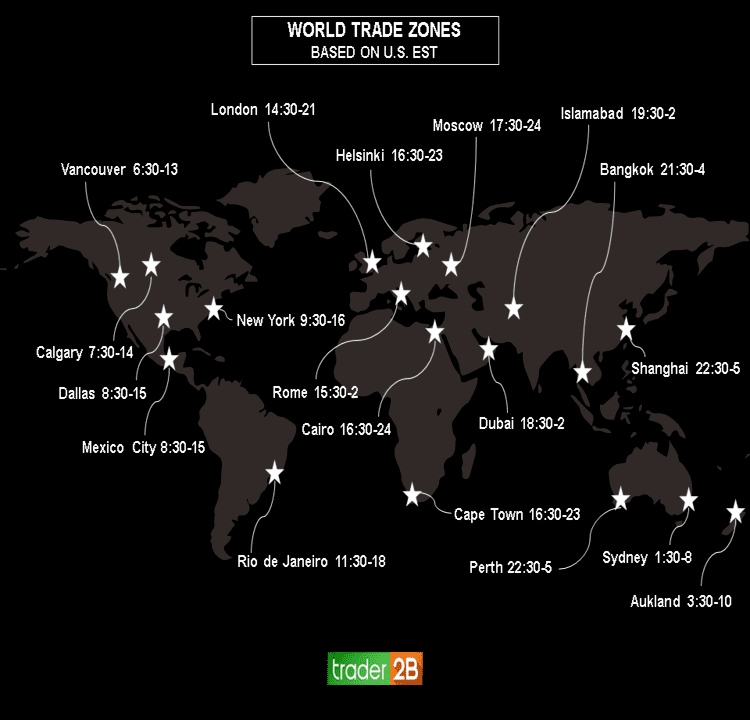
From the first opening bell in Sydney to the final closing trade in New York, the global financial landscape operates in a state of constant motion. This guide provides a deep dive into the operational hours of the world’s most influential exchanges, the mechanics of extended trading, and how these timings influence investment strategies.
The Global Market Cycle: The Sun Never Sets on Finance
To understand when the world market opens, one must first view the financial world through the lens of Coordinated Universal Time (UTC). Because the Earth is divided into 24 time zones, there is almost always a major exchange open somewhere in the world during the traditional work week. This sequence creates a continuous cycle of price discovery and capital movement.
The Concept of Sequential Liquidity
Liquidity refers to the ease with which assets can be bought or sold without causing a significant change in price. In the global market, liquidity flows geographically. It begins in the East—specifically in the Asia-Pacific region—and moves westward through Europe before culminating in the massive depth of the North American markets.
When multiple major markets overlap—such as the late afternoon in London coinciding with the morning in New York—liquidity reaches its peak. During these windows, the volume of trades increases significantly, bid-ask spreads typically narrow, and price movements become more reflective of global sentiment rather than local fluctuations.
The Role of Time Zone Arbitrage
For institutional investors and sophisticated retail traders, the opening of different global markets presents opportunities for arbitrage. If a multi-listed company (like a large tech firm or a global bank) sees a significant price movement on the Hong Kong Stock Exchange, traders in London and New York will react to that data before their own markets even open. Understanding the “opening” of the world market is therefore essential for anticipating how news that broke overnight will be “priced in” once local bells ring.
Major Market Operating Hours: A Regional Breakdown
While digital trading has made 24-hour access more common, the primary stock exchanges still operate on set schedules. These hours represent the periods of “lit” liquidity where the vast majority of public trading occurs.
North American Markets: The Hub of Global Liquidity
The North American markets, anchored by the New York Stock Exchange (NYSE) and the NASDAQ, are the most influential in the world.
-
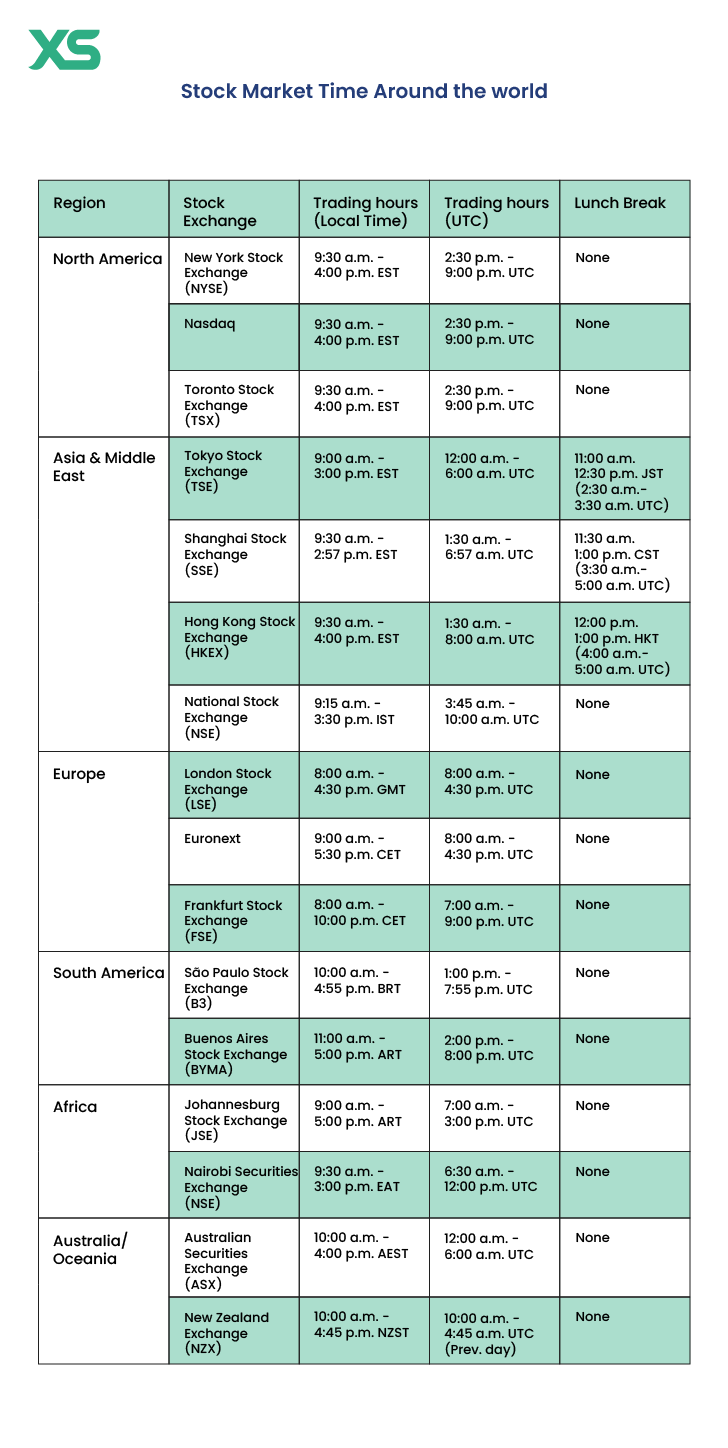
NYSE and NASDAQ (United States): These exchanges are open from 9:30 AM to 4:00 PM Eastern Time (ET), Monday through Friday. Unlike many exchanges in Asia, the U.S. markets do not close for a lunch break.
-
Toronto Stock Exchange (Canada): The TSX mirrors the U.S. hours, operating from 9:30 AM to 4:00 PM ET.
The 9:30 AM ET opening bell is perhaps the most watched moment in global finance. It often marks the “repricing” of the world’s largest companies based on news that occurred while the U.S. was asleep.
European Markets: The Bridge Between East and West
European markets play a critical role because they bridge the gap between the Asian closing sessions and the North American opening sessions.
-
London Stock Exchange (United Kingdom): The LSE is one of the oldest and most important hubs. It operates from 8:00 AM to 4:30 PM GMT.
-
Euronext (Paris, Amsterdam, Brussels): These markets typically operate from 9:00 AM to 5:30 PM Central European Time (CET).
-
Frankfurt Stock Exchange (Germany): The Xetra system operates from 9:00 AM to 5:30 PM CET.
A unique feature of the European session is its overlap with the U.S. market. Between 8:00 AM and 11:30 AM ET, both the London and New York markets are open. This is widely considered the most volatile and liquid period of the day for currency pairs (Forex) and global equities.
Asian and Oceanic Markets: Where the Day Begins
The global trading day technically begins in the Asia-Pacific region. These markets are often the first to react to weekend news or late-night developments in the West.

-
Australian Securities Exchange (ASX): Located in Sydney, the ASX opens at 10:00 AM and closes at 4:00 PM local time (AEST). It is often the first major market to provide a “temperature check” on global sentiment.
-
Tokyo Stock Exchange (Japan): The TSE operates from 9:00 AM to 3:00 PM local time (JST), with a mandatory lunch break from 11:30 AM to 12:30 PM.
-
Hong Kong Stock Exchange (HKEX): The HKEX operates from 9:30 AM to 4:00 PM local time, with a lunch break between 12:00 PM and 1:00 PM.
-
Shanghai Stock Exchange (China): Similar to Hong Kong, it operates from 9:30 AM to 3:00 PM with a break from 11:30 AM to 1:00 PM.
The presence of lunch breaks in Asian markets is a distinct cultural and operational difference from Western markets. These breaks can sometimes lead to “gaps” in pricing if major news breaks while traders are away from their desks.
Pre-Market and After-Hours Trading: Beyond the Opening Bell
In the modern era, the “opening” and “closing” bells are somewhat symbolic. Through Electronic Communication Networks (ECNs), trading continues long after the physical floor has cleared.
How Extended Hours Work
Most major brokerages now offer clients access to pre-market and after-hours sessions. In the U.S., for example, pre-market trading can begin as early as 4:00 AM ET, and after-hours trading can extend until 8:00 PM ET.
These sessions are vital for reacting to “market-moving” events that occur outside of standard hours. Most publicly traded companies release their quarterly earnings reports either immediately before the market opens or shortly after it closes to prevent extreme volatility during the main trading session.
The Risks and Rewards of Non-Traditional Trading
While extended-hours trading offers flexibility, it comes with specific risks that the average investor must consider:
-
Lower Liquidity: There are far fewer participants in these sessions. This means it can be harder to execute a trade at a desired price.
-
Higher Volatility: Because of the lower volume, a single large trade can cause a significant swing in a stock’s price.
-
Wider Spreads: The difference between the bid and ask price is usually much wider, increasing the “cost” of the trade for the investor.
Despite these risks, the pre-market session is an essential tool for institutional “price discovery,” setting the stage for what will happen when the opening bell finally rings.
Strategic Implications for Investors and Traders
Knowing when the world market opens is a tactical advantage. The timing of your trades can be just as important as the assets you choose to buy.
Volatility at the Open and Close
The first 30 minutes and the final 30 minutes of a market’s operating hours are typically the most volatile. At the “open,” the market is digesting all the news, data, and orders that accumulated while it was closed. This leads to high volume and rapid price changes. At the “close,” institutional investors often rebalance their portfolios or “window dress” their holdings, leading to another surge in activity.
Conservative investors often avoid trading during the first half-hour of the market open to allow the initial “noise” to settle and a clearer trend to emerge.
The Impact of Global Economic Data
Investors must align their awareness of market hours with the release of economic indicators. For example, the U.S. Bureau of Labor Statistics typically releases the “Jobs Report” at 8:30 AM ET—one hour before the New York opening bell. This data immediately impacts the futures markets and the European session, which is in its afternoon. By the time the NYSE opens at 9:30 AM, the market has already moved significantly in response to the data.
Managing a Cross-Border Portfolio
If you hold a diversified portfolio that includes Japanese tech stocks, German automotive shares, and American software companies, you are effectively managing a 24-hour operation.
-
Currency Risk: Because markets open at different times, currency fluctuations can erode gains. A gain in the Tokyo session might be offset by a sudden drop in the Yen’s value before you can liquidate the position in your home currency.
-
Stop-Loss Orders: Standard stop-loss orders may not execute during “gaps.” If a stock closes at $100 in New York but bad news breaks overnight, it might “gap down” and open at $85 the next morning. Your stop-loss at $95 would be triggered, but the sale would execute at the next available price—$85.
Conclusion: Navigating the 24-Hour Financial Landscape
The question of when the world market opens is answered by a complex tapestry of geography, technology, and economics. For the professional investor, the “market” is a global conversation that begins in the Pacific and follows the sun across the continents.
By understanding the specific hours of major exchanges like the NYSE, LSE, and TSE—and by mastering the nuances of the overlaps between them—investors can better navigate liquidity cycles and manage risk. In a world where information travels instantly, the clock remains one of the most powerful tools in a financier’s arsenal. Success in the global market requires not just knowing what to trade, but precisely when the doors of opportunity swing open in each corner of the globe.
aViewFromTheCave is a participant in the Amazon Services LLC Associates Program, an affiliate advertising program designed to provide a means for sites to earn advertising fees by advertising and linking to Amazon.com. Amazon, the Amazon logo, AmazonSupply, and the AmazonSupply logo are trademarks of Amazon.com, Inc. or its affiliates. As an Amazon Associate we earn affiliate commissions from qualifying purchases.