
For the modern investor, the question of when the market opens is more than a matter of simple timing; it is a fundamental component of a successful trading strategy. In the United States, the heartbeat of the global financial system is centered on Wall Street, where trillions of dollars change hands daily. However, the concept of a “market open” has become increasingly complex in a digital, globalized economy. While the physical ringing of the bell at the New York Stock Exchange (NYSE) signals the start of the standard session, the reality of contemporary finance involves a nearly continuous cycle of activity that spans time zones and asset classes.
Understanding the specific operating hours of the stock market is essential for managing risk, ensuring liquidity, and capitalizing on volatility. Whether you are a long-term value investor or a high-frequency day trader, knowing the schedule of the exchanges is the first step in mastering the mechanics of the market.
The Standard Trading Session in the United States
The primary trading session for the two largest stock exchanges in the world—the New York Stock Exchange (NYSE) and the Nasdaq—operates on a strictly defined schedule. For the vast majority of retail investors, these are the hours that matter most.
Core Hours: 9:30 AM to 4:00 PM ET
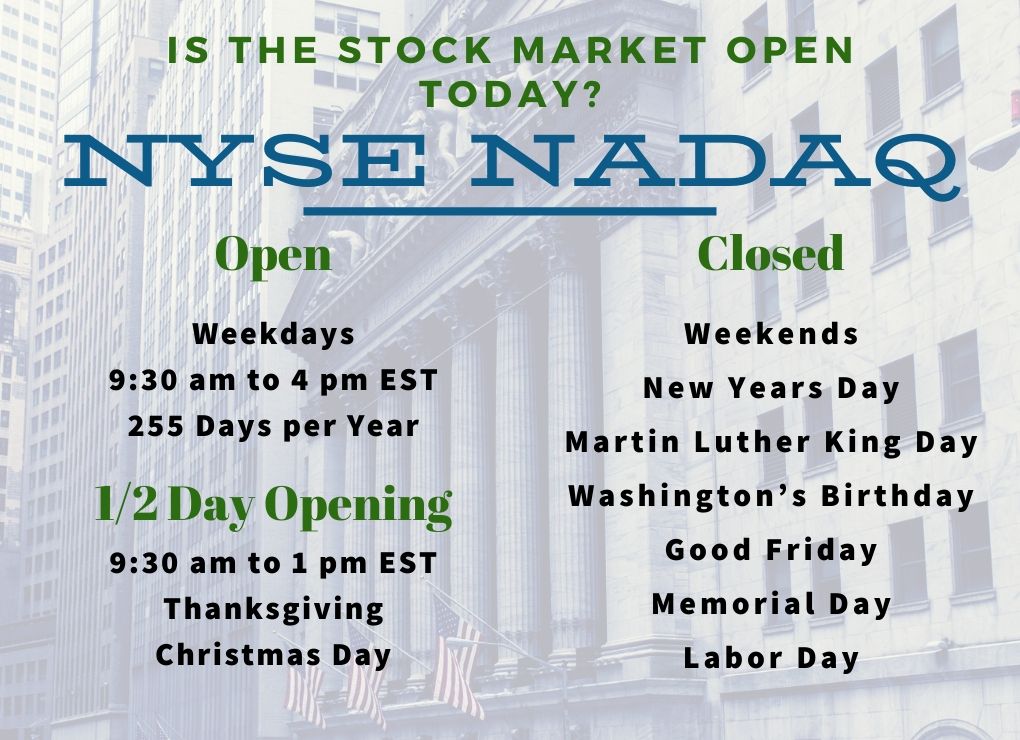
The standard trading day in the U.S. begins at 9:30 AM Eastern Time (ET) and concludes at 4:00 PM ET. These hours are designed to concentrate liquidity, ensuring that there are enough buyers and sellers to facilitate smooth price discovery. During this window, the markets are at their most efficient. Spreads—the difference between the bid and the ask price—are typically at their narrowest, and transaction costs are at their lowest.
Professional traders often refer to the first and last hours of this session as the “power hours.” The opening hour (9:30 AM to 10:30 AM) is characterized by intense volatility as the market absorbs news that occurred overnight or during the pre-market session. Conversely, the final hour (3:00 PM to 4:00 PM) often sees a surge in volume as institutional investors rebalance portfolios and day traders close out their positions before the closing bell.
The Significance of the Opening Bell
The opening bell is not merely ceremonial. It triggers the “opening auction,” a sophisticated process where buy and sell orders that have accumulated overnight are matched to determine the opening price for each security. This process is vital for stability, as it prevents extreme price gaps that could occur if trades were processed individually without a centralized matching mechanism. For investors, the opening price serves as a benchmark for the rest of the day’s performance.
Navigating Extended Hours Trading: Pre-Market and After-Hours
While the standard session is the most active, the stock market does not truly sleep. Electronic Communication Networks (ECNs) allow for trading outside of the 9:30 AM to 4:00 PM window. This is known as extended-hours trading, and it plays a critical role in how professional investors react to breaking news.
Pre-Market Trading
Pre-market trading in the U.S. generally occurs between 4:00 AM and 9:30 AM ET. This early session is often where the initial reaction to corporate earnings reports, economic data releases (such as the Consumer Price Index or jobs reports), and international geopolitical events takes place.
For the average investor, pre-market trading carries significant risks. Because there are fewer participants, liquidity is lower, which can lead to “slippage”—where an order is executed at a significantly different price than expected. Furthermore, price movements in the pre-market can be deceptive; a stock may surge on low volume at 7:00 AM only to plummet when the broader market opens at 9:30 AM and institutional selling pressure begins.
After-Hours Trading
After-hours trading begins immediately following the 4:00 PM ET close and typically runs until 8:00 PM ET. This session is most famous for its reaction to earnings calls. Since most major public companies release their quarterly results after the closing bell to allow investors time to digest the information, the after-hours market is where the most dramatic price swings occur.
If a company beats its revenue estimates and raises guidance at 4:15 PM, its stock price may jump 10% in the after-hours session. However, much like the pre-market, the lack of volume means that these moves can be exaggerated. Many brokerage firms require retail clients to use limit orders during these sessions to protect them from the extreme volatility and wide spreads characteristic of late-day trading.
Global Market Hours: A Synchronized Financial Clock
Investing is increasingly a global endeavor. Diversified portfolios often include exposure to international markets, and what happens in London or Tokyo can have a profound impact on New York. Following the sun across the globe reveals a 24-hour cycle of price discovery.
European Markets
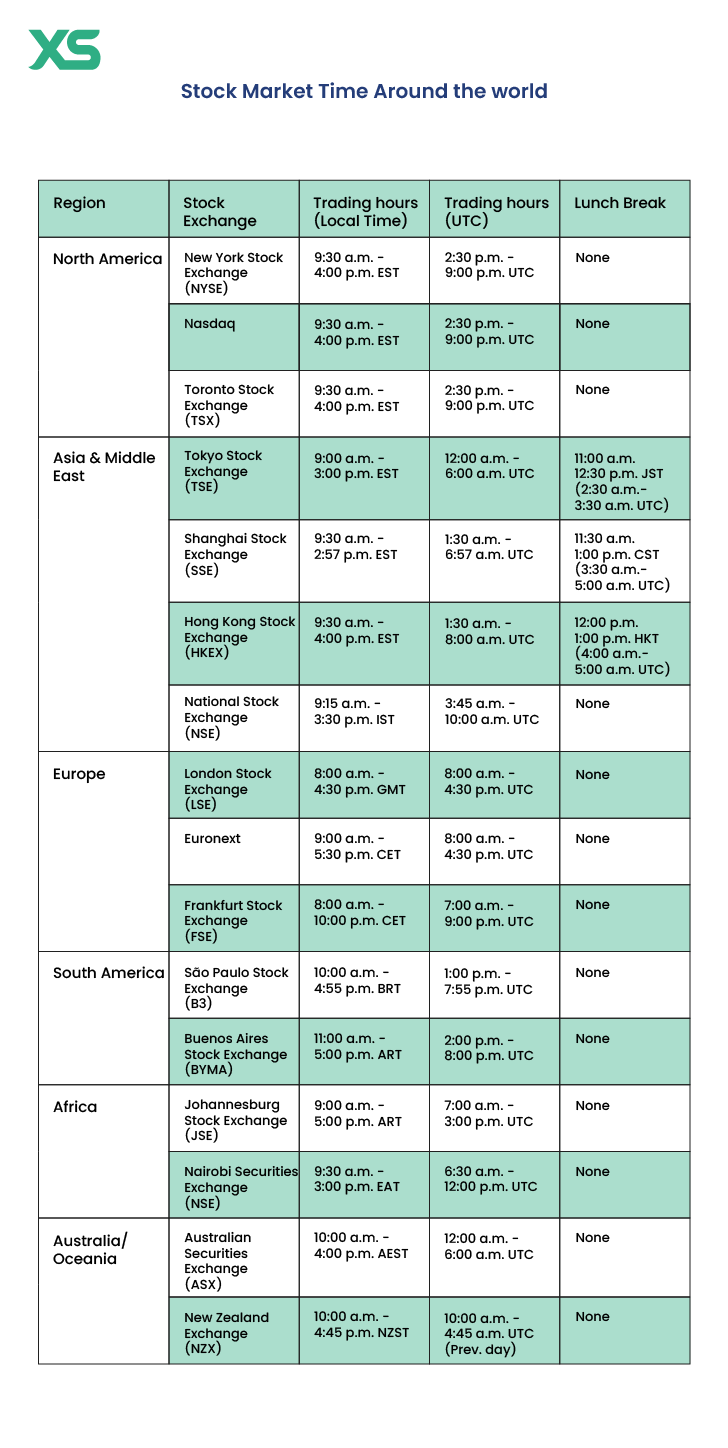
The European markets typically bridge the gap between the Asian close and the U.S. open. The London Stock Exchange (LSE), one of the oldest and most influential in the world, opens at 8:00 AM and closes at 4:30 PM local time (GMT/BST). For traders in New York, the LSE open occurs at 3:00 AM ET.
There is a critical “overlap” period between 9:30 AM and 11:30 AM ET when both the U.S. and European markets are open simultaneously. This is often the period of highest liquidity for global assets, as traders on both sides of the Atlantic are active at once.
Asian and Pacific Markets
The trading day effectively begins in New Zealand and Australia before moving to Japan, China, and Hong Kong. The Tokyo Stock Exchange (TSE) operates from 9:00 AM to 3:00 PM local time, with a lunch break between 11:30 AM and 12:30 PM.
The Hong Kong Stock Exchange (HKEX) and the Shanghai Stock Exchange also follow a similar pattern with mid-day breaks. These markets are essential for investors tracking the global tech supply chain or commodity demand. Because these markets close before the U.S. market opens, their performance often sets the “tone” or “sentiment” for the American trading day.
Understanding Market Holidays and Seasonal Adjustments
While the markets operate on a standard Monday-through-Friday schedule, there are several exceptions that investors must account for. These closures can impact liquidity and influence trading volume in the days leading up to and following the break.
U.S. Federal Holidays
The NYSE and Nasdaq observe nine major holidays per year, during which the markets are completely closed:
-
New Year’s Day
-
Martin Luther King, Jr. Day
-
Presidents’ Day
-
Good Friday
-
Memorial Day
-
Juneteenth National Independence Day
-
Independence Day (July 4th)
-
Labor Day
-
Thanksgiving Day
-
Christmas Day
When a holiday falls on a Saturday, the market usually closes on the preceding Friday. If it falls on a Sunday, the market closes on the following Monday.
Early Closures and “Half-Days”
The markets also observe early closures on specific dates, typically ending at 1:00 PM ET. The most common early closures occur on the day after Thanksgiving (Black Friday) and on Christmas Eve (if it falls on a business day).
Trading volume on these days is usually quite thin, as many institutional traders are away. This low volume can lead to “drift,” where the market moves upward or downward on very little news simply because the usual liquidity providers are absent. For the savvy investor, these low-volume days can be a time for quiet observation rather than aggressive action.
Professional Strategies for the Market Open
Timing your entry and exit around the market open requires a blend of technical analysis and psychological discipline. Professionals rarely “chase” the opening price; instead, they use the first few minutes of the day to gauge the market’s internal strength.
The 30-Minute Rule
Many experienced traders follow the “30-minute rule,” which suggests waiting until 10:00 AM ET before placing any major trades. The rationale is that by 10:00 AM, the initial “noise” of the opening auction has settled, and the market’s true direction for the day begins to emerge. This helps avoid the “fake-outs” that often occur in the first few minutes of trading when emotions are high.
Managing Orders: Limit vs. Market
One of the most important rules for trading the open is the use of limit orders. A market order at 9:30 AM is a gamble; you are essentially telling the exchange to buy the stock at whatever price is currently available. In a volatile open, you could end up paying significantly more than you intended. A limit order allows you to specify the maximum price you are willing to pay, ensuring that you do not get caught on the wrong side of a sudden price spike.

Psychological Preparation
The opening bell represents a moment of high adrenaline. News that seemed catastrophic at 8:00 AM might be “priced in” by 9:45 AM. Success in the markets requires the ability to distinguish between a temporary price fluctuation caused by the mechanics of the opening and a genuine shift in a company’s fundamental value. By understanding the timing, the global context, and the rules of the exchange, investors can transform the “when” of the market into a strategic “how.”
In conclusion, knowing when the stock markets open today is only the beginning. The sophisticated investor views market hours as a framework within which different phases of liquidity and volatility operate. By respecting the core hours, navigating the risks of extended trading, and understanding the global flow of capital, you can better position your portfolio to thrive in the complex world of modern finance.
aViewFromTheCave is a participant in the Amazon Services LLC Associates Program, an affiliate advertising program designed to provide a means for sites to earn advertising fees by advertising and linking to Amazon.com. Amazon, the Amazon logo, AmazonSupply, and the AmazonSupply logo are trademarks of Amazon.com, Inc. or its affiliates. As an Amazon Associate we earn affiliate commissions from qualifying purchases.