
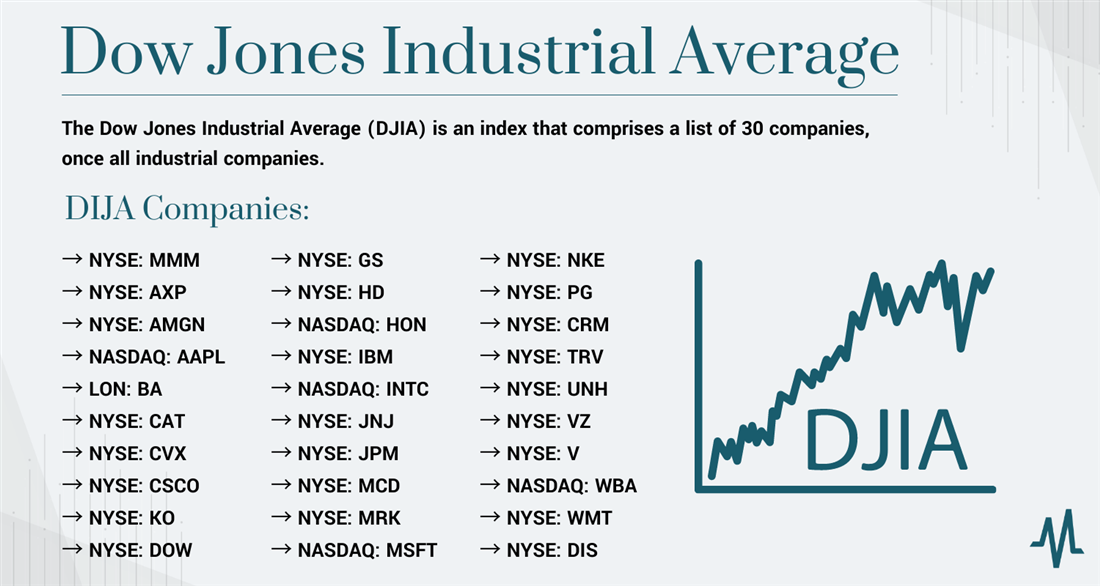
The Dow Jones Industrial Average (DJIA), often referred to simply as “the Dow,” is perhaps the most iconic stock market index in the world. Established in 1896 by Charles Dow and Edward Jones, it serves as a pulse check for the American economy. Unlike the S&P 500 or the Nasdaq Composite, which track hundreds or thousands of companies, the Dow is comprised of just 30 “blue-chip” companies. These are established, financially sound, and influential corporations that represent the broad health of the U.S. industrial landscape.
Understanding which stocks make up the Dow is essential for any investor looking to comprehend market movements. Because the index is price-weighted, the specific companies included—and their current share prices—dictate whether the “market” is up or down on any given day. To understand the Dow, one must look closely at its current members, the methodology of their selection, and the sectors they represent.

The 30 Components: A Sector-by-Sector Breakdown
The composition of the Dow Jones Industrial Average is not static. It is reviewed periodically to ensure it remains a relevant reflection of the U.S. economy. As of 2024, the index includes a diverse array of companies ranging from tech giants to healthcare conglomerates. Here is a breakdown of the current components categorized by their economic sectors.
Information Technology and Communication
Technology has become a dominant force in the Dow, reflecting the shift from a manufacturing-based economy to a digital one. The current tech and communication heavyweights include:
-
Apple (AAPL): A global leader in consumer electronics and services.
-
Microsoft (MSFT): The software and cloud computing giant.
-
Salesforce (CRM): A leader in customer relationship management software.
-
Cisco Systems (CSCO): A backbone of global networking and cybersecurity.
-
International Business Machines (IBM): A legacy player focusing now on hybrid cloud and AI.
-
Intel (INTC): A primary manufacturer of semiconductor chips.
-
Verizon Communications (VZ): Representing the telecommunications infrastructure.
Financial Services
The financial sector provides the capital necessary for economic growth, making it a cornerstone of the DJIA.
-
JPMorgan Chase (JPM): The largest bank in the United States.
-
Goldman Sachs (GS): A premier global investment banking and management firm.
-
American Express (AXP): A leader in the payments and credit space.
-
Visa (V): A dominant global digital payment network.
-
The Travelers Companies (TRV): A major provider of property and casualty insurance.
Healthcare
As the U.S. population ages and medical technology advances, healthcare has secured a significant footprint in the index.
-
UnitedHealth Group (UNH): The largest healthcare company by revenue, providing insurance and services.
-
Johnson & Johnson (JNJ): A diversified healthcare giant specializing in pharmaceuticals and medical devices.
-
Merck & Co. (MRK): A research-intensive biopharmaceutical company.
-
Amgen (AMGN): A leader in biotechnology and innovative therapies.
Consumer Discretionary and Staples
These companies represent the spending power of the American consumer, covering both essential goods and lifestyle choices.
-
Amazon (AMZN): The e-commerce and cloud giant (recently added to replace Walgreens).
-
Walmart (WMT): The world’s largest brick-and-mortar retailer.
-
Home Depot (HD): The leading home improvement retailer.
-
McDonald’s (MCD): The global leader in quick-service restaurants.
-
Coca-Cola (KO): An iconic beverage manufacturer.
-
Procter & Gamble (PG): A powerhouse of consumer packaged goods.
-
Nike (NKE): The premier global brand for athletic footwear and apparel.
-
Disney (DIS): A leader in global entertainment and media.
Industrials, Energy, and Materials
While the “Industrial” in the Dow’s name is less descriptive than it was a century ago, these sectors remain vital to the index.
-
Boeing (BA): A leading aerospace and defense manufacturer.
-
Caterpillar (CAT): The world’s leading manufacturer of construction and mining equipment.
-
Honeywell International (HON): A diversified technology and manufacturing company.
-
3M (MMM): Known for specialized industrial and consumer products.
-
Chevron (CVX): An integrated energy company representing the oil and gas sector.
The Mechanics of Price Weighting and the Dow Divisor
One of the most unique—and often criticized—aspects of the Dow Jones Industrial Average is that it is a price-weighted index. This distinguishes it from the S&P 500, which is market-capitalization-weighted. In a market-cap-weighted index, the size of the company (share price multiplied by shares outstanding) determines its influence. In the Dow, the only thing that matters is the share price itself.
The Influence of High-Priced Stocks
In a price-weighted system, a stock with a high share price has a greater impact on the index’s value than a stock with a low share price, regardless of the actual size of the company. For example, UnitedHealth Group (UNH) often carries a share price of over $500. Conversely, a company like Intel (INTC) might trade for $30 or $40. Even if Intel’s total market value were to skyrocket, a 1% move in UnitedHealth’s stock price will always move the Dow significantly more than a 1% move in Intel’s stock.

This leads to interesting dynamics. When Apple underwent a stock split in 2020, its influence on the Dow actually decreased because its share price dropped, even though its market capitalization remained the same. This is why the selection committee is often hesitant to add companies with extremely high share prices (like Berkshire Hathaway Class A) without a split, as they would dominate the index entirely.
Understanding the Dow Divisor
If you were to simply add up the prices of the 30 stocks and divide by 30, you would get a simple average. However, the Dow Jones Industrial Average is not that simple. Over decades, companies undergo stock splits, spin-offs, and substitutions. To ensure that these corporate actions don’t cause the index to “jump” or “drop” artificially, the committee uses the Dow Divisor.
The Dow Divisor is a continuously adjusted numerical value. When a stock split occurs, the divisor is adjusted so that the index value remains the same before and after the split. Currently, the divisor is a decimal much smaller than one (meaning the sum of the prices is actually multiplied rather than divided in a traditional sense). This ensures historical continuity, allowing investors to compare the market’s performance today with its performance decades ago.
The Evolution of the Index: Selection and Substitution
Who decides which stocks make up the Dow? Unlike many other indices that follow strict quantitative rules based on market cap or liquidity, the Dow is managed by a selection committee at S&P Dow Jones Indices.
The Criteria for Inclusion
There are no rigid rules for inclusion in the Dow, but there are strong guidelines. The committee looks for:
-
Reputation: The company must have an excellent reputation and a history of sustained growth.
-
Investor Interest: The stock must be of interest to a large number of investors.
-
U.S. Incorporation: The company must be incorporated and headquartered in the United States.
-
Sector Representation: The committee strives to maintain a balance that reflects the broader U.S. economy, excluding the transportation and utilities sectors (which have their own specific Dow averages).
Recent Changes and the “Amazon Era”
The Dow is a living entity. Historically, General Electric (GE) was the last original member of the 1896 index, but it was removed in 2018, signaling a massive shift in the American industrial landscape.
One of the most significant recent changes occurred in February 2024, when Amazon (AMZN) was added to the index, replacing Walgreens Boots Alliance. This move was driven by a desire to increase the index’s exposure to the retail and technology sectors while removing a company that had seen a significant decline in its share price and influence. Because the Dow is price-weighted, Walgreens’ low share price meant it had almost no impact on the index’s movement. Adding Amazon provided a more modern representation of how Americans shop and how businesses utilize cloud infrastructure.
The Practical Utility of the Dow for the Modern Investor
With the rise of the S&P 500 and various Total Market ETFs, some critics argue that the Dow Jones Industrial Average is an outdated relic. Because it only tracks 30 stocks, it is inherently less diversified than broader indices. However, the Dow remains a vital tool for the modern investor for several reasons.
A Mirror of “Blue-Chip” Stability
The Dow is not intended to track the entire market; it is intended to track the leaders. When an investor looks at the Dow, they are seeing how the “giants” of the industry are performing. During times of market volatility, the Dow often proves more resilient than the tech-heavy Nasdaq. This is because the companies in the Dow are typically “value” stocks—profitable corporations with massive balance sheets and, frequently, consistent dividend payments.
Psychological and Media Impact
The Dow remains the primary index reported on evening news broadcasts and in non-financial publications. For the general public, “the market” is the Dow. For investors, this means the Dow often drives retail investor sentiment. If the Dow drops 1,000 points, it triggers a psychological reaction that can lead to selling across other, broader indices.
The Role in Dividend Investing
For income-focused investors, the Dow is a treasure trove. Almost all 30 components are dividend payers. Many are “Dividend Aristocrats” or “Dividend Kings,” having raised their payouts for decades. Investors often use the “Dogs of the Dow” strategy—an investment strategy that involves buying the ten highest-dividend-yielding stocks in the index at the beginning of each year—to generate income while maintaining exposure to high-quality companies.
In conclusion, while the list of stocks that make up the Dow Jones Average changes infrequently, each member is a titan of industry. From the cloud computing of Microsoft to the retail dominance of Walmart and the financial reach of JPMorgan Chase, these 30 stocks represent the backbone of the American corporate world. By understanding how these companies are selected and how their share prices influence the index, investors gain a clearer view of the forces driving the global economy.
aViewFromTheCave is a participant in the Amazon Services LLC Associates Program, an affiliate advertising program designed to provide a means for sites to earn advertising fees by advertising and linking to Amazon.com. Amazon, the Amazon logo, AmazonSupply, and the AmazonSupply logo are trademarks of Amazon.com, Inc. or its affiliates. As an Amazon Associate we earn affiliate commissions from qualifying purchases.