
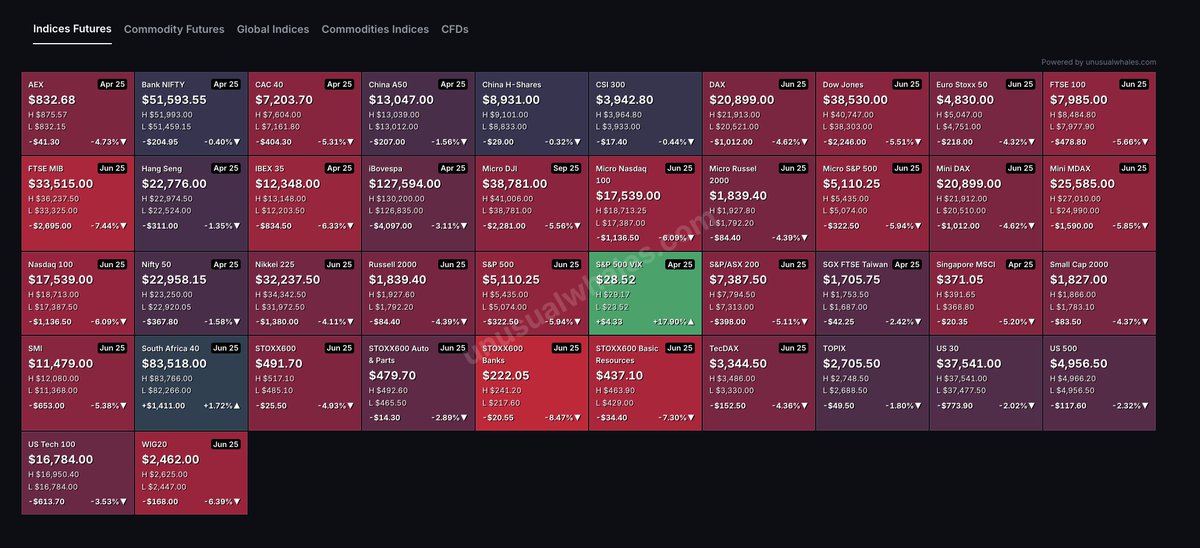
For many investors, the first ritual of the morning is checking the status of equity futures. These financial contracts, which track the projected opening prices of major indices like the S&P 500, the Dow Jones Industrial Average, and the Nasdaq-100, serve as a barometer for market sentiment before the opening bell rings on Wall Street. When futures are “in the red,” it signals that traders are anticipating a lower start to the trading day.
While a decline in futures can be unsettling, it is rarely a random occurrence. Futures markets operate nearly 24 hours a day, reacting in real-time to global events, economic data releases, and shifting investor psychology. Understanding why futures are down requires a deep dive into the interconnected web of global finance, central bank policy, and corporate performance.
The Role of Macroeconomic Data and Central Bank Policy
The most frequent driver of pre-market volatility is the release of significant macroeconomic data. Because the Federal Reserve and other central banks are “data-dependent,” every new report on the health of the economy can shift expectations regarding interest rates. Since the cost of borrowing affects everything from corporate profitability to consumer spending, interest rate expectations are the primary engine of futures pricing.
Inflation and the Consumer Price Index (CPI)
Inflation remains the most watched metric in the current economic landscape. When Consumer Price Index (CPI) or Producer Price Index (PPI) reports show higher-than-expected inflation, futures often plummet. High inflation suggests that the Federal Reserve may need to raise interest rates—or keep them elevated for longer—to cool the economy. For investors, higher rates mean a higher “discount rate” for future earnings, which lowers the present value of stocks. This is particularly punishing for high-growth tech companies that are valued based on profits they are expected to generate years into the future.
Interest Rate Expectations and Federal Reserve Rhetoric
It isn’t just the data itself that moves futures; it is how the Federal Reserve interprets that data. Speeches by Fed officials, or the release of the Federal Open Market Committee (FOMC) meeting minutes, can cause immediate swings in the futures market. If a Fed governor suggests that the central bank remains “hawkish” (inclined to raise rates), futures will likely trend downward. Conversely, a “dovish” tone (inclined to lower or maintain rates) usually provides a boost. When futures are down today, it may be because a central banker signaled that the fight against inflation is far from over.
Employment Data and Labor Market Health
The labor market provides a window into the underlying strength of the economy. Reports such as the Non-Farm Payrolls (NFP) or Job Openings and Labor Turnover Survey (JOLTS) are major market movers. Paradoxically, “good” news for the economy can sometimes be “bad” news for the stock market. If the labor market is too tight, it suggests that wage-push inflation might persist, prompting the Fed to keep rates high. Therefore, a robust jobs report can paradoxically cause futures to slide as investors price in a more aggressive central bank.
Geopolitical Instability and Global Supply Chain Disruption
Markets despise uncertainty, and nothing creates uncertainty quite like geopolitical conflict. Because the global economy is deeply integrated, a disruption in one part of the world can have a domino effect on asset prices across the globe.
Energy Price Fluctuations
Energy is the lifeblood of the global economy. When geopolitical tensions rise in oil-producing regions, or when organizations like OPEC+ announce unexpected production cuts, the price of crude oil typically spikes. Higher energy costs act as a tax on both consumers and businesses, increasing transportation costs and squeezing profit margins. If oil prices surge overnight, you will often see futures for major indices decline as investors worry about the inflationary impact and the potential for a slowdown in discretionary spending.
Trade Relations and Policy Shifts
Trade wars, tariffs, and changes in export policies can also weigh heavily on futures. For example, if a major economy announces new restrictions on semiconductor exports or levies new tariffs on imported goods, the futures for sectors reliant on those goods will react instantly. These policy shifts introduce “friction” into the global market, making it more expensive for companies to operate and potentially shrinking their total addressable market.
Currency Fluctuations and the Strength of the Dollar
The US Dollar (USD) plays a pivotal role in international trade. When the dollar is exceptionally strong, it can hurt the earnings of US-based multinational corporations. Because these companies sell goods in foreign currencies, those earnings are worth less when converted back into dollars. If the US Dollar Index (DXY) spikes due to global flight-to-safety or rising US interest rates, futures for the S&P 500—which is dominated by multinationals—often retreat.
Corporate Earnings and Sector-Specific Headwinds
While macroeconomics sets the stage, individual corporate performance provides the script. Because many large-cap companies report their earnings after the market closes or before it opens, the futures market is the first place where investors can express their reaction to these reports.
The Impact of Mega-Cap Tech Performance
The modern stock market is heavily weighted toward a handful of “Mega-Cap” technology companies. Because indices like the Nasdaq-100 are market-cap weighted, a poor earnings report from a single tech giant can drag down the entire index’s futures. If a leading AI or software firm misses revenue targets or provides a lackluster forecast, it sours sentiment for the entire sector, causing a broad-based decline in futures.
Guidance and Future Outlooks
Investors are forward-looking. A company can report a “beat” on both earnings and revenue for the previous quarter, yet see its stock—and the broader futures—sink if its “guidance” is weak. If executives suggest that consumer demand is softening, or that inventory costs are rising, traders will preemptively sell off futures in anticipation of a tougher environment ahead.
Contagion Effects in the Financial Sector
The financial sector is often seen as the backbone of the economy. If a major bank reports significant losses on loans or suggests that credit conditions are tightening, it can trigger a “contagion” effect. Investors worry that if the banks are struggling, the rest of the economy will soon follow. This systemic fear is a common reason why futures might be down significantly before the opening bell, as traders move to “de-risk” their portfolios.
Technical Indicators and Market Psychology
Not every move in the futures market is based on fundamental news. Sometimes, the decline is driven by the internal mechanics of the market itself, including technical levels and algorithmic trading.
Algorithmic Trading and “Stop-Loss” Cascades
In the modern era, a vast majority of trading is executed by algorithms. These programs are often set to sell when certain price levels are breached. If futures drop below a key “support level” (a price point where buyers have historically stepped in), it can trigger a wave of automated selling. This creates a feedback loop where the price drop triggers more selling, leading to a rapid decline in futures that might seem disconnected from the day’s headlines.
The Role of the VIX and Sentiment Shifts
The CBOE Volatility Index (VIX), often called the “fear gauge,” measures the market’s expectation of 30-day volatility. When the VIX spikes, it usually correlates with a drop in futures. Market psychology can be fragile; if there is a general sense of “overbought” conditions—meaning stocks have risen too far, too fast—traders may use any excuse to take profits. This collective shift from “greed” to “caution” can result in a sea of red in the pre-market hours.
Rebalancing and Options Expiration
Institutional investors and pension funds periodically rebalance their portfolios. If these large entities need to reduce their equity exposure to meet specific allocation targets, their selling pressure can be felt in the futures market. Additionally, events like “Triple Witching”—the simultaneous expiration of stock options, stock index futures, and stock index options—can lead to unusual volatility and downward pressure as traders close out or roll over their positions.
Strategies for Navigating a Downside Move in Futures
Seeing futures down in the morning does not necessarily mean the entire trading day will be a loss. Often, the market “prices in” the bad news early, leading to a “buy the dip” opportunity once the regular session begins. However, for the disciplined investor, a decline in futures is a time for analysis rather than panic.
Hedging with Options and Inverse ETFs
Sophisticated investors often use the futures market to hedge their positions. If you anticipate that futures will be down due to an upcoming economic report, you can use put options or inverse Exchange Traded Funds (ETFs) to protect your portfolio. These instruments gain value when the market falls, offsetting losses in your long-term holdings.
The Importance of a Long-Term Perspective
It is essential to remember that futures are a snapshot in time, not a permanent sentence. Intra-day volatility is a feature of the markets, not a bug. For long-term investors, a morning where futures are down can represent a strategic entry point for high-quality assets at a discount. By understanding the “why” behind the move—whether it is a temporary reaction to a CPI print or a fundamental shift in the global economy—investors can make informed decisions rather than emotional ones.
Monitoring why futures are down today allows you to see the “connective tissue” of the financial world. Whether the cause is a hawkish Fed, a geopolitical flare-up, or a technical correction, these pre-market movements are the market’s way of processing information and finding a new “fair value.” By keeping a pulse on these catalysts, you transform from a reactive spectator into a proactive participant in the global economy.
aViewFromTheCave is a participant in the Amazon Services LLC Associates Program, an affiliate advertising program designed to provide a means for sites to earn advertising fees by advertising and linking to Amazon.com. Amazon, the Amazon logo, AmazonSupply, and the AmazonSupply logo are trademarks of Amazon.com, Inc. or its affiliates. As an Amazon Associate we earn affiliate commissions from qualifying purchases.