
In the world of professional finance and active trading, few instruments command as much respect and volume as the “ES.” For the uninitiated, ES is the ticker symbol for the E-mini S&P 500 futures contract. Traded on the Chicago Mercantile Exchange (CME), it is perhaps the most liquid and widely followed equity index futures contract in the world. It provides traders and investors with a way to gain exposure to the performance of the S&P 500 Index—the primary benchmark for the U.S. stock market—without having to purchase the underlying shares of 500 different companies.
Understanding ES futures is a prerequisite for anyone looking to move beyond basic stock and ETF trading into the sophisticated realm of derivatives. These contracts offer a unique blend of leverage, liquidity, and tax efficiency that makes them a favorite for day traders, hedge fund managers, and institutional hedgers alike.
Understanding the Fundamentals of ES Futures
To grasp what ES futures are, one must first understand the concept of a futures contract. A futures contract is a legal agreement to buy or sell an asset at a predetermined price at a specified time in the future. In the case of ES futures, the “asset” is the S&P 500 Index. Unlike a commodity future, such as oil or gold, there is no physical delivery of a product. Instead, these contracts are cash-settled based on the numerical value of the index.
The Origin and Evolution of the E-mini
Before the E-mini was introduced in 1997, the standard S&P 500 futures contract was much larger—too large, in fact, for most individual traders to manage. The CME created the “E-mini” to make the market more accessible. The “E” stands for electronic, and “mini” refers to its smaller size compared to the original “Big” S&P 500 contract. While the original contract has since been delisted for most practical purposes, the E-mini has become the global standard for equity index trading.
Contract Specifications and Ticker Symbols
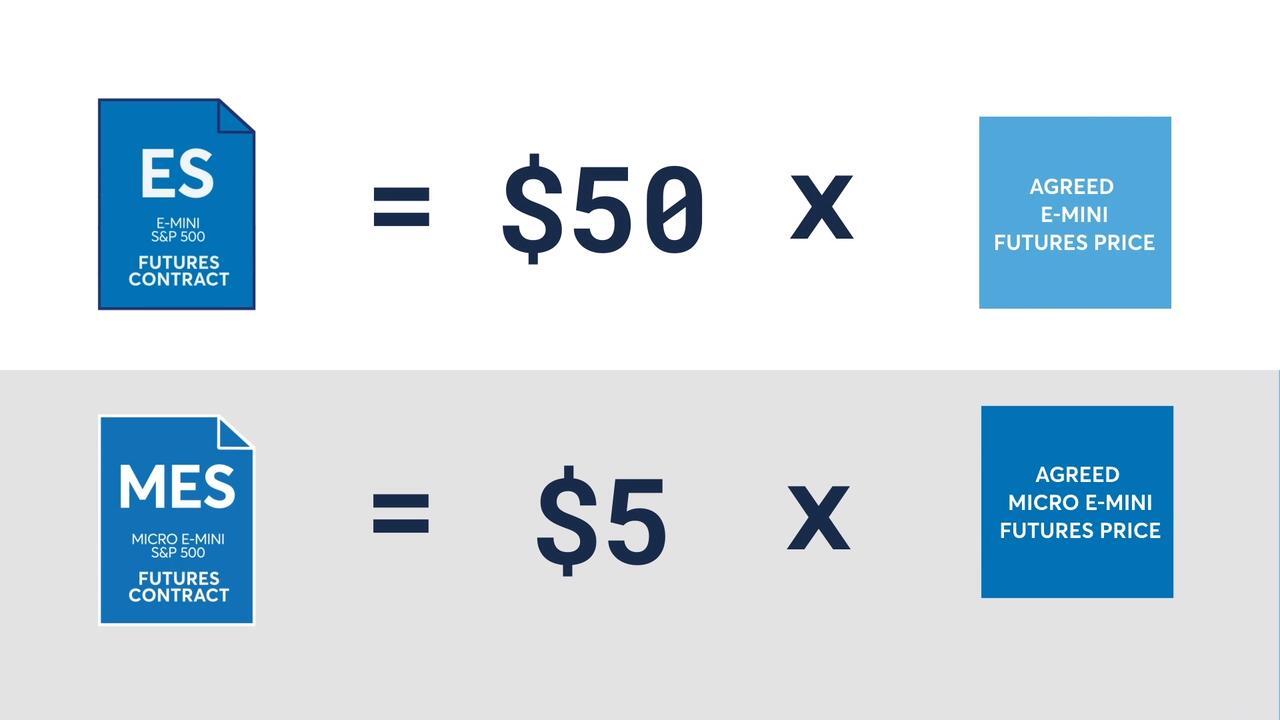
The ES contract is a standardized agreement. The “notional value” of one contract is calculated by taking the current level of the S&P 500 Index and multiplying it by $50. For example, if the S&P 500 is trading at 5,000, the notional value of one ES contract is $250,000 (5,000 x $50).
ES futures operate on a quarterly cycle, with contracts expiring in March, June, September, and December. Traders typically focus on the “front month” contract, which is the one closest to its expiration date, as it holds the highest volume and liquidity.
The Concept of Notional Value vs. Margin
One of the most important aspects of ES futures is that you do not need to put up the full notional value to trade. Instead, the exchange requires a “margin” or a “performance bond.” This is a fraction of the total value, often ranging from 5% to 10% for overnight positions, and even less for day-trading sessions depending on the broker. This inherent leverage is what allows for significant capital efficiency but also introduces higher levels of risk.
Why Traders Prefer ES Futures Over Other Instruments
While many investors are familiar with the SPY ETF (the SPDR S&P 500 ETF Trust), professional traders often prefer ES futures for several strategic reasons. The structure of the futures market offers distinct advantages that are not available in the traditional cash equity or ETF markets.
Leverage and Capital Efficiency
In the stock market, the Federal Reserve’s Regulation T limits most retail traders to 2:1 leverage on overnight positions. In contrast, the futures market offers significantly higher leverage. A trader might only need $12,000 in margin to control a position worth $250,000. This capital efficiency allows traders to utilize their balance more effectively, freeing up cash for other opportunities or allowing for larger positions with smaller initial outlays.
Liquidity and Execution Speed
The ES market is incredibly liquid. Hundreds of thousands—sometimes millions—of contracts change hands every day. This high volume ensures that the “bid-ask spread” (the difference between the price at which you can buy and sell) remains extremely tight, usually just a single “tick” (0.25 index points). For large institutional investors, this liquidity means they can enter and exit multi-million dollar positions with minimal “slippage” or price disruption.
The 24-Hour Global Market
Unlike the New York Stock Exchange, which is open from 9:30 AM to 4:00 PM Eastern Time, ES futures trade nearly 24 hours a day, five days a week. The market opens on Sunday evening and remains open through Friday afternoon, with only small daily breaks. This allows traders to react instantly to global news—such as economic data from Europe or central bank announcements in Asia—without having to wait for the U.S. market open.
Tax Advantages (The 60/40 Rule)
For U.S.-based traders, ES futures offer a significant tax advantage under Section 1256 of the Internal Revenue Code. Regardless of how long a position is held (whether for five minutes or five months), 60% of the capital gains are taxed at the lower long-term capital gains rate, and the remaining 40% are taxed at the short-term rate. This usually results in a much lower effective tax rate compared to trading ETFs or stocks, where short-term trades are taxed entirely at the trader’s ordinary income rate.
Mechanics of Trading: Ticks, Margins, and Settlement

To trade ES futures effectively, one must understand the “math” of the contract. Movement in the futures market is measured in “ticks” and “points” rather than cents and dollars.
Tick Value and Price Movement
The minimum price fluctuation for an ES contract is 0.25 index points. This is known as a “tick.”
-
One tick = 0.25 points = $12.50 per contract.
-
Four ticks = 1.00 point = $50.00 per contract.
If a trader buys one ES contract at 5,000.00 and sells it at 5,010.00, they have gained 10 points. Since each point is worth $50, the total profit is $500 (10 points x $50).
Initial, Maintenance, and Day-Trading Margins
Margins in futures are not the same as “margin loans” in stocks. There is no interest charged on futures margin.
-
Initial Margin: The amount required to open a new position and hold it overnight.
-
Maintenance Margin: The minimum amount you must keep in your account to sustain the position. If your account falls below this, you receive a “margin call.”
-
Day-Trading Margin: Many brokers offer reduced margins (sometimes as low as $500 per contract) for traders who open and close their positions within the same trading session.
Mark-to-Market and Cash Settlement
At the end of every trading day, the exchange performs a process called “marking to market.” This means that your gains or losses are settled daily. If the market moved in your favor, the cash is deposited into your account immediately. If it moved against you, the cash is withdrawn. This prevents the buildup of massive unrealized losses and ensures the stability of the clearinghouse.
Strategic Applications for ES Futures
ES futures are versatile tools used for a variety of financial goals. While they are often associated with aggressive day trading, they are equally useful for conservative portfolio management.
Hedging a Stock Portfolio
Large-scale investors use ES futures to protect their portfolios against market downturns. If an investor owns a diverse basket of U.S. stocks and fears a temporary market correction, they can “short” (sell) ES futures contracts. If the market drops, the profit made on the short futures position can offset the losses in the physical stock portfolio. This is often more cost-effective than selling off the actual stocks and incurring capital gains taxes and brokerage commissions.
Speculation and Macro-Economic Positioning
Because the S&P 500 is a barometer for the U.S. economy, many traders use ES futures to speculate on macroeconomic events. Whether it is an interest rate decision by the Federal Reserve, a monthly jobs report (Non-Farm Payrolls), or geopolitical shifts, the ES market is the primary venue for betting on how these events will impact equity valuations.
Arbitrage and Pair Trading
Institutional desks often engage in arbitrage between ES futures and the underlying stocks or the SPY ETF. If the futures price deviates too far from the “fair value” (the price of the index plus the cost of carry and minus dividends), arbitrageurs will step in to buy the cheaper asset and sell the more expensive one, pocketing the difference and keeping the markets aligned.
Risk Management and the Micro E-mini (MES)
While the rewards of trading ES futures can be significant, the risks are equally high due to the leverage involved. A small percentage move in the S&P 500 can result in a large percentage gain or loss relative to the margin deposited.
The Dangers of Over-Leveraging
The primary risk in ES trading is “over-leveraging”—taking on too many contracts for the size of your account. If a trader has a $20,000 account and trades two ES contracts, a 10% drop in the market (500 points) would represent a $50,000 loss, far exceeding the account’s total value. Professional traders use strict stop-loss orders and position-sizing rules to ensure that no single trade can ruin their financial standing.
Introducing the Micro E-mini (MES)
In 2019, the CME introduced the Micro E-mini S&P 500 futures (ticker: MES) to cater to retail traders with smaller accounts. The MES is exactly 1/10th the size of the standard ES contract.
-
MES Point Value: $5.00 per point.
-
MES Tick Value: $1.25 per tick.
The Micro contract has revolutionized the space, allowing individual investors to practice their strategies and manage risk with much smaller financial stakes while still benefiting from the same liquidity and 24-hour access as the larger contract.

Developing a Professional Trading Plan
To succeed in the ES market, one must view it through the lens of a business rather than a gamble. This involves developing a robust trading plan that includes:
-
Entry and Exit Criteria: Based on technical analysis, fundamental data, or order flow.
-
Risk-to-Reward Ratios: Aiming for trades where the potential profit significantly outweighs the potential loss.
-
Psychological Discipline: The ability to stick to the plan even during periods of market volatility.
The ES futures market remains the “gold standard” for equity derivatives. It is a high-speed, high-stakes environment that rewards precision, discipline, and a deep understanding of market mechanics. Whether used for hedging a retirement account or day-trading the latest economic headline, the E-mini S&P 500 futures contract is an essential tool in the modern investor’s toolkit.
aViewFromTheCave is a participant in the Amazon Services LLC Associates Program, an affiliate advertising program designed to provide a means for sites to earn advertising fees by advertising and linking to Amazon.com. Amazon, the Amazon logo, AmazonSupply, and the AmazonSupply logo are trademarks of Amazon.com, Inc. or its affiliates. As an Amazon Associate we earn affiliate commissions from qualifying purchases.