
The democratization of the stock market has transformed the financial landscape over the last decade. Gone are the days when placing a trade required a phone call to a high-commission broker or a clunky, expensive terminal. Today, the “best” trading platform is no longer a single, universal choice; rather, it is the one that aligns most closely with an individual’s financial goals, experience level, and trading frequency.
As retail investing continues to surge, the competition between legacy brokerages and fintech disruptors has led to a “race to the zero,” where commission-free trades are now industry standards. However, cost is only one piece of the puzzle. To find the right home for your capital, you must evaluate platforms based on execution quality, research capabilities, user interface, and the breadth of available financial instruments.
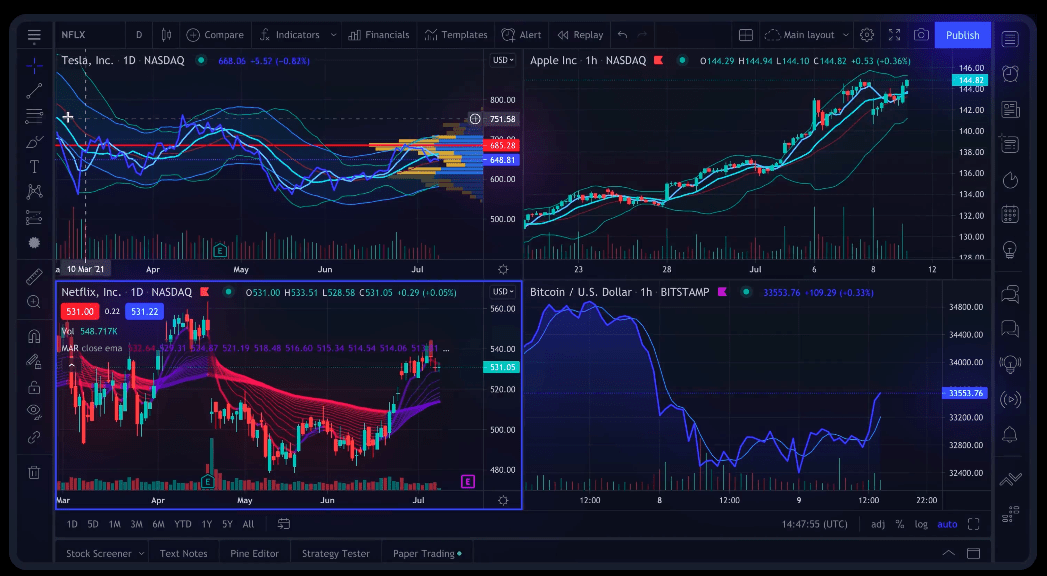
The Pillars of Modern Brokerage: Fidelity and Charles Schwab
For the majority of long-term investors and those seeking a comprehensive financial home, the legacy giants—Fidelity Investments and Charles Schwab—remain the gold standard. These institutions have successfully pivoted from traditional models to modern, tech-forward platforms without sacrificing the depth of service that high-net-worth individuals require.
Fidelity: The Best for All-Around Value
Fidelity consistently ranks at the top of the list for both beginners and seasoned investors. One of its most significant advantages in the “Money” niche is its commitment to low costs that go beyond $0 commissions. Fidelity is one of the few brokers that does not practice “payment for order flow” (PFOF) for stock and ETF trades. This means they do not sell your orders to market makers, often resulting in better price improvement and execution speeds—saving investors money on every share bought.
Furthermore, Fidelity’s “Fractional Shares” program is exceptionally robust. Investors can buy over 7,000 U.S. stocks and ETFs for as little as $1. For someone starting their financial journey with limited capital, this allows for immediate diversification into high-priced equities like Berkshire Hathaway or Amazon. Their research suite is equally impressive, offering reports from 20+ independent providers, including Morningstar and Argus.
Charles Schwab: The Powerhouse for Research and Education
Following its acquisition of TD Ameritrade, Charles Schwab has cemented its position as a leader in investor education and sophisticated trading tools. The integration of the legendary “thinkorswim” platform into the Schwab ecosystem provides users with one of the most powerful charting and analysis tools available to the public.
Schwab excels in providing a holistic view of personal finance. Their “Schwab Intelligent Portfolios” offer robo-advisory services for those who prefer a hands-off approach, while their physical branch network offers a level of human connection that fintech-only apps lack. For the international investor, Schwab’s Global Account provides access to dozens of foreign markets, making it a premier choice for those looking to hedge against domestic volatility.
The Fintech Disruptors: Robinhood and Webull
If the legacy brokers are the sturdy foundations of the investing world, Robinhood and Webull are the agile architects of the mobile-first era. These platforms are designed for the modern user who prioritizes speed, accessibility, and a seamless digital experience.
Robinhood: Redefining User Experience
Robinhood is creditably responsible for the industry-wide shift to $0 commissions. Its greatest strength remains its simplicity. The interface is intuitive, stripping away the jargon and complex spreadsheets that often intimidate new investors. For a casual investor focused on “Money” management via a smartphone, Robinhood’s cash management features and 24/7 access to certain stocks via their “24 Hour Market” offer unparalleled flexibility.
However, the platform is often criticized for its lack of deep fundamental research. While it is excellent for executing quick trades, it may not be the primary tool for an investor who wants to perform a 10-year discounted cash flow analysis on a potential holding.
Webull: The Intermediate Choice
Webull occupies the middle ground between the simplicity of Robinhood and the complexity of professional platforms. It offers a sophisticated mobile charting experience that outclasses almost every other app in its weight class. Webull provides free real-time Level 2 quotes (via Nasdaq TotalView), which gives traders a look at the “order book”—the pending buy and sell orders at various price levels. This is a critical tool for understanding market sentiment and price action, making it a favorite for those transitioning from passive investing to active swing trading.
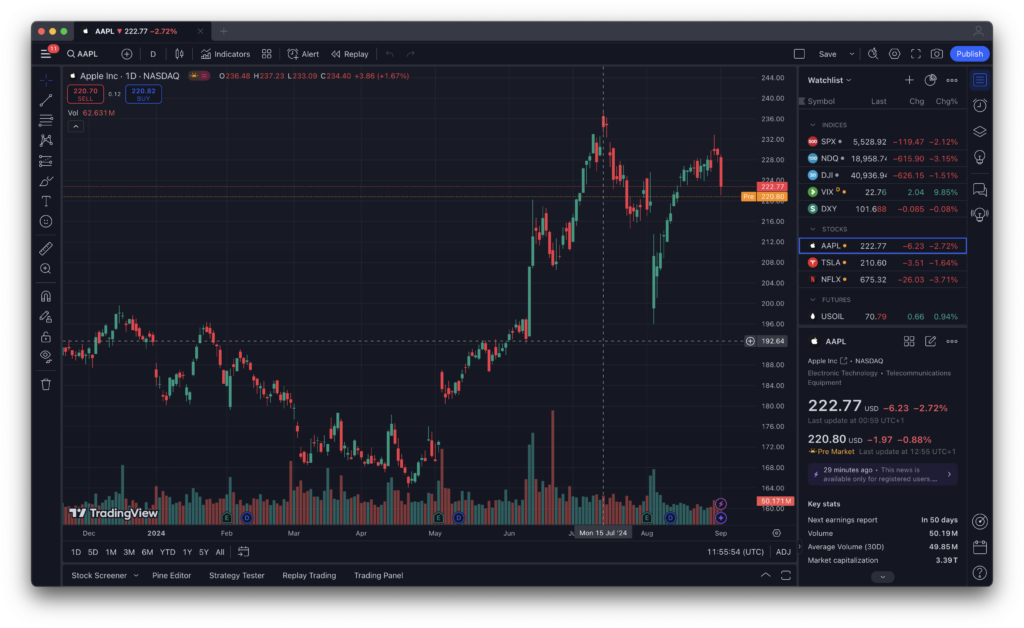
Best for Professionals and Global Access: Interactive Brokers
For the serious investor whose strategy involves more than just domestic stocks, Interactive Brokers (IBKR) is the undisputed leader. IBKR is often the platform of choice for hedge fund managers, professional traders, and high-frequency investors due to its unmatched reach and low margin rates.
Global Market Reach and Institutional Tools
Interactive Brokers provides access to over 150 markets in 33 countries. If you want to trade stocks in Hong Kong, bonds in Europe, or currencies in South America from a single account, IBKR is the primary gateway. Their “Trader Workstation” (TWS) is a professional-grade desktop application that supports complex algorithmic trading and offers a vast array of technical indicators.
Industry-Leading Margin Rates
One of the most critical factors for advanced investors in the “Money” niche is the cost of borrowing. Margin trading—using borrowed funds to leverage a position—can be expensive at traditional brokers, with rates often exceeding 10-12%. Interactive Brokers consistently offers the lowest margin rates in the industry, often hovering significantly closer to the benchmark Fed Funds rate. For sophisticated investors using leverage as part of a broader business or investment strategy, this cost difference can amount to thousands of dollars in savings annually.
Key Metrics: How to Evaluate a Platform for Your Financial Strategy
Selecting a platform is a strategic financial decision. Beyond the brand names, you must evaluate the underlying mechanics of how the platform handles your money and your data.
Cost Structure and Hidden Fees
While $0 commissions are standard, other fees can erode your returns. Look for:
-
Transfer Fees (ACATS): What does the broker charge to move your assets to another firm?
-
Options Contracts: Many “free” brokers still charge $0.50 to $0.65 per contract.
-
Margin Interest: As mentioned, this varies wildly and is crucial for those who don’t trade on a cash-only basis.
-
Inactivity Fees: Most modern brokers have abolished these, but some niche or international platforms still implement them.
Security and Insurance
In the world of personal finance, the safety of your principal is paramount. Any reputable U.S.-based trading platform must be a member of the Securities Investor Protection Corporation (SIPC). This protects your assets (up to $500,000, including a $250,000 limit for cash) if the brokerage firm fails. Many top-tier brokers also carry “excess of SIPC” insurance policies through Lloyd’s of London or other insurers to provide additional layers of protection for multi-million dollar accounts.
Asset Variety and Account Types
A platform is only as good as the opportunities it provides. A robust platform should offer:
-
Equities and ETFs: The bread and butter of investing.
-
Fixed Income: Access to Treasuries, municipal bonds, and corporate debt.
-
Retirement Accounts: The ability to open Traditional IRAs, Roth IRAs, and SEP IRAs is essential for tax-advantaged wealth building.
-
High-Yield Cash Management: In a high-interest-rate environment, the “uninvested” cash in your brokerage account should be earning a competitive yield (often 4-5% currently), rather than sitting idle.
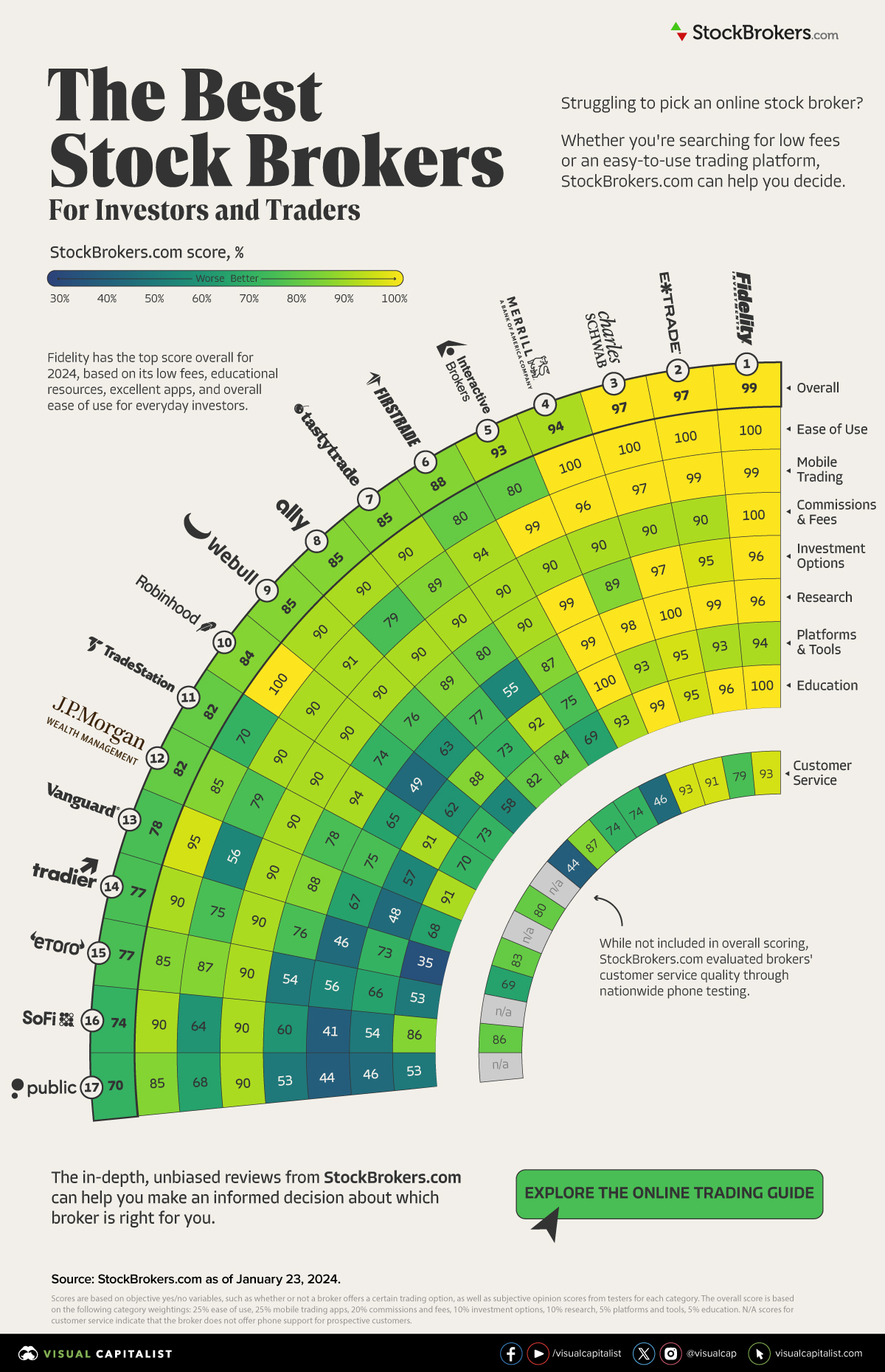
Conclusion: Matching Your Platform to Your Path
The “best” trading platform is a subjective title that depends entirely on your position in the financial lifecycle.
If you are a long-term wealth builder looking for a stable institution with world-class research and a full suite of banking and retirement services, Fidelity or Charles Schwab are the clear winners. They provide the tools necessary to move from your first hundred dollars to a multi-million dollar portfolio.
If you are a mobile-first, active trader who values technical analysis and a sleek interface on the go, Webull offers a superior data-to-design ratio that empowers informed decision-making.
If you are an advanced or international investor who treats trading as a professional endeavor and requires the lowest possible cost of capital, Interactive Brokers stands alone.
Ultimately, your trading platform is the engine of your investment strategy. By choosing a platform that matches your specific needs for education, execution, and expense management, you set the foundation for long-term financial success in the global markets.
aViewFromTheCave is a participant in the Amazon Services LLC Associates Program, an affiliate advertising program designed to provide a means for sites to earn advertising fees by advertising and linking to Amazon.com. Amazon, the Amazon logo, AmazonSupply, and the AmazonSupply logo are trademarks of Amazon.com, Inc. or its affiliates. As an Amazon Associate we earn affiliate commissions from qualifying purchases.