
In the modern landscape of digital brokerage firms, Robinhood has democratized access to various financial instruments that were once reserved for institutional investors or those with high-net-worth advisors. Among these tools, the margin account stands out as one of the most powerful—and potentially precarious—features available to retail traders. At its core, a margin account on Robinhood is a brokerage account that allows investors to borrow money from the platform to purchase securities. This practice, known as margin investing, uses the existing stocks and cash in your portfolio as collateral for a loan, effectively increasing your “buying power” beyond your actual cash balance.
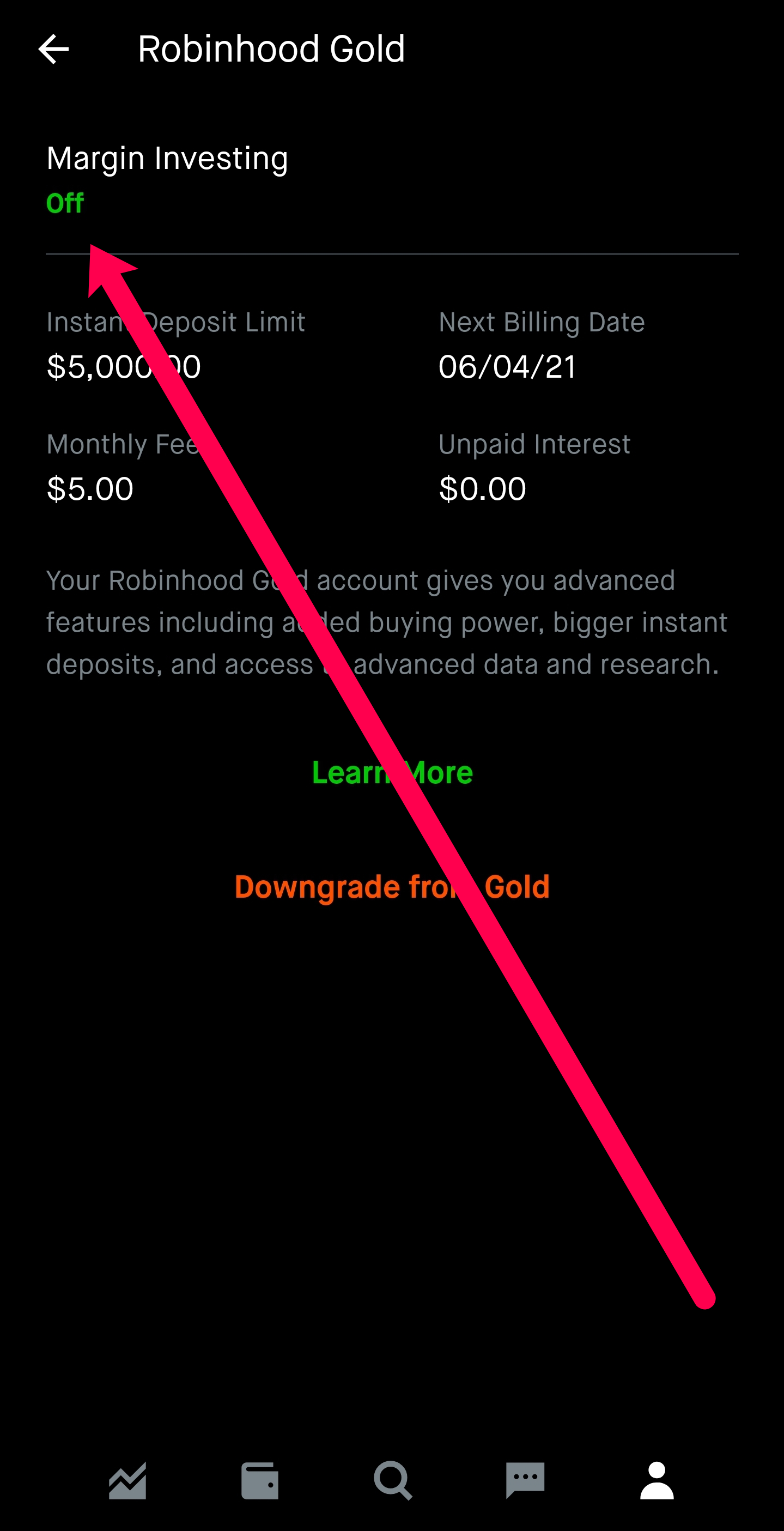
Understanding the nuances of a Robinhood margin account is essential for any investor looking to scale their portfolio. While the allure of amplified gains is significant, the mechanics of borrowing money to trade introduce a layer of complexity and risk that necessitates a disciplined approach to personal finance and risk management.
Understanding the Fundamentals of Robinhood Margin
To grasp how a margin account works on Robinhood, one must first distinguish it from a standard cash account. In a cash account, you can only trade using the settled funds you have deposited. If you have $1,000, you can buy exactly $1,000 worth of stock. A margin account, however, operates on the principle of leverage.
Cash Account vs. Margin Account
The primary difference lies in the source of capital. In a cash account, your risk is limited to the amount of money you have physically moved into the platform. In a margin account, Robinhood extends a line of credit to you. This credit allows you to purchase more shares of a company than you could afford outright. For example, if you have $5,000 in equity and are using 2:1 leverage, you could potentially control $10,000 worth of securities. The extra $5,000 is a loan from the brokerage, and like any loan, it comes with specific requirements and costs.
The Role of Robinhood Gold
On the Robinhood platform, margin investing is intrinsically linked to “Robinhood Gold,” the platform’s premium subscription service. While Robinhood offers basic margin features to comply with regulatory standards, the most robust margin tools are unlocked via this subscription. To use margin, users must opt-in to Robinhood Gold, which involves a monthly fee. This subscription provides access to a lower interest rate on borrowed funds and larger initial deposits that are made available instantly. Without Gold, the ability to leverage your portfolio is significantly restricted or subject to higher interest tiers.
The Regulatory Framework: Regulation T
Margin trading is not a financial “wild west”; it is strictly governed by the Federal Reserve Board’s Regulation T. Under these rules, investors are generally allowed to borrow up to 50% of the purchase price of a security. Robinhood must adhere to these federal mandates, ensuring that investors maintain a certain level of equity in their accounts at all times. This regulatory oversight is designed to protect both the brokerage and the investor from total systemic failure during periods of extreme market volatility.
The Financial Mechanics: Costs, Interest, and Requirements
Margin is not free money. It is a financial product with a specific cost structure that can impact your overall net returns. To use margin effectively, an investor must treat it as a business expense that needs to be offset by portfolio performance.
Interest Rates and Cost Structures
Robinhood charges interest on the margin balance you use. The interest is calculated daily based on the amount of borrowed money held overnight. If you borrow funds and sell your position within the same trading day (day trading), you typically do not accrue interest charges. However, holding a leveraged position for weeks or months can lead to substantial interest costs. For Robinhood Gold members, the first $1,000 of margin is often interest-free (depending on current promotional terms), with a fixed annual percentage rate (APR) applied to any amount borrowed beyond that. Because these rates can fluctuate based on the federal funds rate, investors must stay informed about the current cost of borrowing.
The $2,000 Minimum Equity Rule
Per FINRA (Financial Industry Regulatory Authority) regulations, you must have at least $2,000 in total equity in your account to be eligible for margin trading. This is known as the “minimum margin.” If your portfolio value drops below this threshold due to market fluctuations or withdrawals, you will lose access to margin features until your balance is restored. This requirement serves as a buffer, ensuring that the investor has enough “skin in the game” to cover potential losses on the borrowed funds.
Instant Deposits and Buying Power
One of the most popular features of the Robinhood margin account is the increase in “Instant Deposits.” In a standard account, when you initiate a bank transfer, it can take several days for the funds to settle. With a margin-enabled account (Gold), Robinhood effectively lends you the money you are transferring from your bank, allowing you to trade immediately. This “buying power” is a form of temporary margin that bridges the gap between your bank account and the stock market.
The High Stakes: Risks and the Dreaded Margin Call

The most critical aspect of a margin account is the shift in risk profile. Leverage is a double-edged sword: it magnifies gains on the way up, but it equally magnifies losses on the way down. If a stock you bought on margin drops in value, you are not just losing your own money; you are losing value on a loan that must be repaid in full.
Decoding the Maintenance Margin
When you trade on margin, Robinhood requires you to maintain a certain percentage of equity in your account relative to the total value of your securities. This is known as the “maintenance requirement.” For most stocks, this requirement is 25%, but for more volatile or “risky” stocks, Robinhood may increase this requirement to 50% or even 100% (meaning no margin can be used for that specific security).
The Mechanics of a Margin Call
A margin call occurs when the equity in your account falls below the maintenance requirement. If this happens, Robinhood will notify you that you need to either deposit more cash or sell some of your holdings to bring your account back into compliance. The timeline for a margin call can be very short. In periods of high volatility, the brokerage has the legal right to sell your securities without notifying you first to cover the deficiency. This is known as “forced liquidation.”
Portfolio Volatility and Liquidation
Liquidation is the nightmare scenario for a margin trader. Because the brokerage’s priority is to protect the money they lent you, they will sell your positions at the current market price—even if it is at the bottom of a crash—to recoup the loan. This can result in the realization of massive losses that might have been avoided if the investor had the “staying power” of a cash account. In a cash account, you can wait for a recovery; in a margin account, the market can force you out of your position at the worst possible time.
Strategic Use Cases for Margin Investing
Despite the risks, a margin account is a sophisticated tool that, when used conservatively, can enhance a financial strategy. It is not merely for aggressive speculation; it can also serve practical purposes for the savvy investor.
Enhancing Purchasing Power for Diversification
For an investor with a high conviction in multiple sectors but limited immediate cash, margin can allow for broader diversification. Instead of choosing between two promising stocks, an investor might use a small amount of margin to take positions in both, provided they have the risk tolerance and a plan to pay down the margin balance through future deposits or dividends.
Bridging Liquidity Gaps
Margin can act as a short-term liquidity bridge. If an investor needs cash for an emergency or a significant purchase but does not want to sell their stocks—perhaps to avoid triggering a capital gains tax event—they can use a “margin loan” for personal use. By borrowing against their securities, they gain access to cash while keeping their investment thesis intact. However, this strategy requires a very healthy margin of safety to avoid a margin call if the market dips while the loan is outstanding.
Hedging Strategies
Advanced investors use margin accounts to execute hedging strategies, such as short selling or complex options spreads. While Robinhood’s margin is primarily used for going “long” (buying stocks), the margin status of the account is what enables the user to engage in advanced options tiers. These strategies can be used to protect a portfolio against downside risk, although they come with their own unique sets of hazards.
Best Practices for Responsible Margin Management
Success with a Robinhood margin account depends less on picking the “right” stocks and more on rigorous capital management. To avoid the pitfalls of leverage, investors should adhere to several “golden rules” of margin.
Monitoring Your Maintenance Requirement
The Robinhood app provides a “Margin Health” meter. Investors should check this daily. A healthy account typically operates with a significant buffer above the maintenance requirement. If your “surplus” is thin, a minor 5% or 10% market correction could trigger a liquidation event. Professionals often recommend never using more than 10% to 20% of your available margin to ensure you can weather market storms.
Setting Personal Leverage Limits
Just because the brokerage offers you $10,000 in margin doesn’t mean you should use it. Disciplined investors set personal caps on their leverage. For example, you might decide that you will never let your borrowed funds exceed 15% of your total account value. This self-imposed limit acts as a firewall against the emotional urge to “double down” during periods of market exuberance.

The Importance of High-Quality Collateral
Margin is safest when used against stable, blue-chip stocks or broad-market ETFs. Using margin to buy highly volatile meme stocks or penny stocks is a recipe for disaster. Because volatile stocks have higher maintenance requirements, they are the most likely to trigger margin calls. By keeping the core of a margin-enabled portfolio in diversified, lower-volatility assets, the risk of a sudden liquidation is greatly reduced.
In conclusion, a margin account on Robinhood is a dual-purpose instrument. It is a gateway to greater financial flexibility and the potential for accelerated wealth creation, but it is also a path to rapid capital depletion for the unprepared. By understanding the interest costs, the regulatory requirements, and the mechanics of margin calls, investors can utilize leverage as a calculated component of their broader personal finance strategy rather than a gamble on market direction. Management of a margin account requires vigilance, a cool head, and an unwavering commitment to risk mitigation.
aViewFromTheCave is a participant in the Amazon Services LLC Associates Program, an affiliate advertising program designed to provide a means for sites to earn advertising fees by advertising and linking to Amazon.com. Amazon, the Amazon logo, AmazonSupply, and the AmazonSupply logo are trademarks of Amazon.com, Inc. or its affiliates. As an Amazon Associate we earn affiliate commissions from qualifying purchases.