
Managing personal finances requires a keen eye for detail, especially when it comes to the various fees associated with traditional banking. Among these, overdraft fees are often the most frustrating for consumers, acting as a significant hurdle to maintaining a healthy cash flow. For customers of Regions Bank, understanding the specific costs, triggers, and mitigation strategies for overdraft fees is essential for protecting their bottom line.
Currently, the standard Regions Bank overdraft fee is $36 per item. While this figure is consistent with the national average for large regional and national banks, the way these fees are applied—and the tools available to avoid them—has evolved significantly in recent years due to regulatory pressure and shifts in the competitive landscape of the financial services industry.

Breaking Down the Costs: The Current Regions Overdraft Fee Structure
To effectively manage a bank account, one must understand the difference between an “overdraft” and a “non-sufficient funds” (NSF) occurrence. In the past, both could result in heavy penalties, but the landscape has changed.
The Standard Overdraft Fee
When Regions Bank pays a transaction that exceeds your available balance, they charge a $36 fee. This fee applies whether the transaction is a check, an in-person withdrawal, an ACH payment, or a recurring debit card payment. It is important to note that for everyday, non-recurring debit card transactions (like buying groceries or gas) and ATM withdrawals, the bank will only charge this fee if you have specifically “opted-in” to their standard overdraft coverage. If you have not opted-in, these transactions will typically be declined at the point of sale with no fee charged.
Daily Limits and Caps
A critical component of financial planning is knowing the “worst-case scenario” for a single day of banking activity. Regions Bank currently limits the number of overdraft fees to three per day per account. This means that even if you have six transactions that overdraw your account in a single business day, you will be charged a maximum of $108 ($36 x 3). While this cap provides some protection against a total financial spiral, $108 remains a significant penalty for most households.
The Elimination of Non-Sufficient Funds (NSF) Fees
In a major win for consumer advocacy and personal finance health, Regions Bank, along with several other major institutions, eliminated Non-Sufficient Funds (NSF) fees in 2022. Previously, if the bank returned a check or an ACH payment unpaid because there was not enough money in the account, they would charge an NSF fee. Now, if an item is returned unpaid, the customer is not charged a fee by Regions. However, it is vital to remember that the merchant or the entity you were trying to pay may still charge their own late fee or returned-item fee.
Regions Overdraft Grace: A Modern Safety Net
One of the more innovative features introduced to help customers manage their money more effectively is the “Regions Overdraft Grace” period. This feature is designed to provide a cushion for those who may have accidentally mistimed a deposit or forgotten about a pending transaction.
How the Grace Period Works
Regions Overdraft Grace provides customers with extra time to bring their account balance to at least $0 (or to a balance that is overdrawn by $5 or less) to avoid overdraft fees. When an account is overdrawn by more than $5, the “grace period” clock begins. If you deposit or transfer enough funds to cover the overdrawn amount by 8:00 PM Central Time on the next business day, the bank will waive or refund the overdraft fees associated with those items.
Qualifying for the Waiver
To benefit from this safety net, the deposit must be “available” funds. This usually means a cash deposit at a branch or ATM, or a transfer from another Regions account. This feature is particularly useful for individuals who receive digital notifications of an overdraft and can quickly move money from a savings account or a side-hustle income stream to cover the gap. It transforms the overdraft fee from an inevitable penalty into a avoidable mistake, provided the customer remains engaged with their account monitoring.
Proactive Financial Management: Tools to Avoid Overdrafts
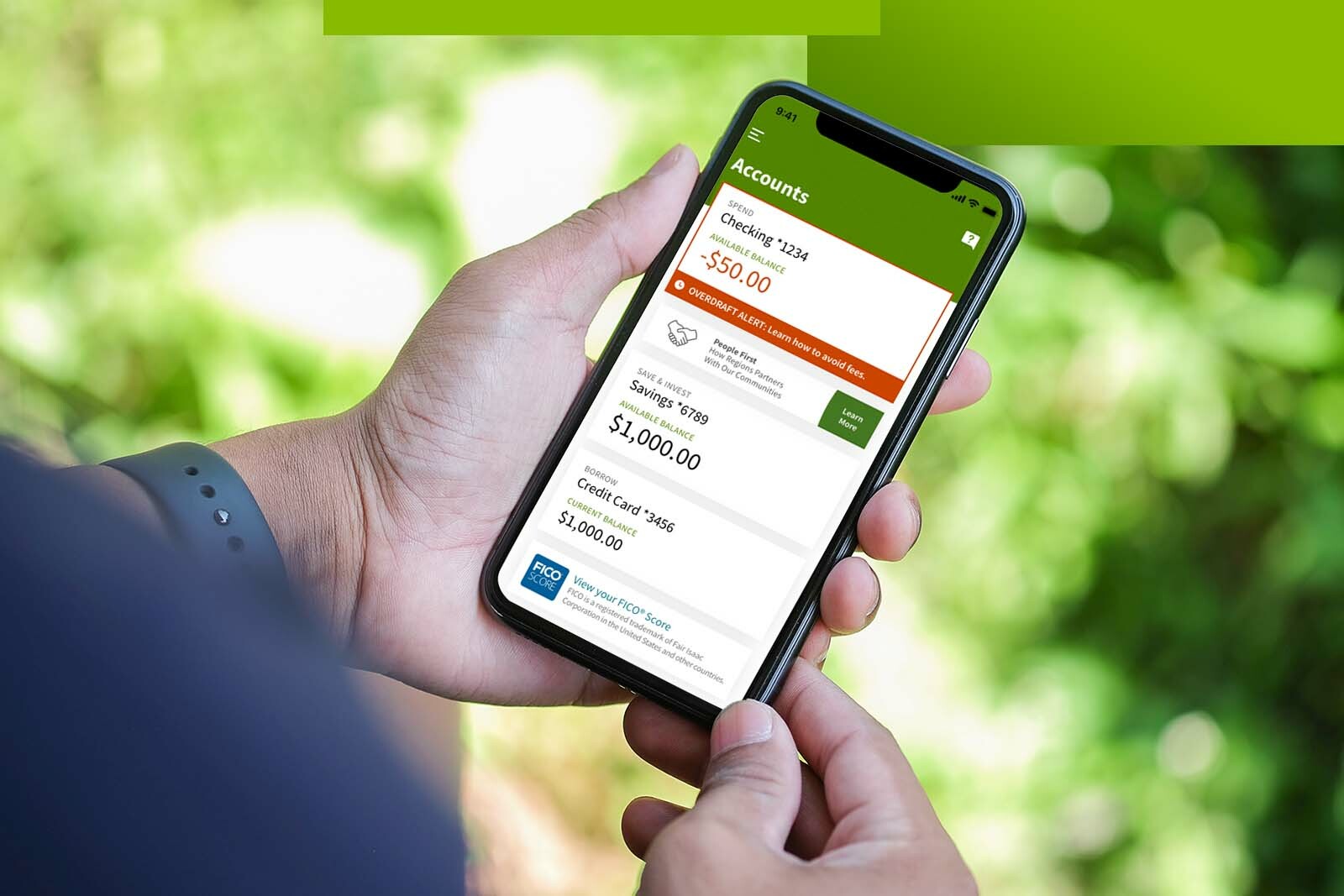
In the world of personal finance, prevention is always more cost-effective than cure. Regions Bank offers several tools that, when used correctly, can virtually eliminate the risk of incurring a $36 charge.
Setting Up Regions Mobile Alerts
In the digital age, ignorance is the greatest enemy of financial stability. By utilizing the Regions mobile app, customers can set up real-time alerts. These notifications can be configured to trigger when the account balance drops below a specific threshold (e.g., $50 or $100). Receiving a push notification the moment your balance hits a danger zone allows you to pause spending or shift funds before a transaction triggers a fee.
Linking Savings for Overdraft Protection
One of the most effective strategies for managing business or personal finance is linking accounts. You can link your Regions checking account to a Regions savings account, money market account, or a second checking account. If your primary account is overdrawn, the bank will automatically transfer the exact amount needed from the linked account to cover the transaction. While there was historically a fee for this transfer, many modern account tiers have reduced or eliminated these transfer fees, making it a much cheaper alternative to the $36 overdraft charge.
The Role of a Protection Line of Credit
For those who may not have a large cushion in a savings account, Regions offers a “Protection Line of Credit.” This is a revolving credit line subject to credit approval. If an overdraft occurs, the line of credit covers the deficit. While you will pay interest on the amount borrowed—similar to a credit card—the interest cost is usually a fraction of a single $36 overdraft fee. This is a sophisticated financial tool for those who want an extra layer of security without tying up liquid cash in a low-interest savings account.
The Financial Impact of Overdrafts on Personal Wealth
Understanding the cost of an overdraft fee is not just about the $36; it is about the opportunity cost and the long-term impact on your financial trajectory.
The True Cost of Borrowing from Your Future
When a bank charges a $36 fee on a $10 purchase, the “interest rate” on that short-term loan is astronomical. If you were to calculate the annual percentage rate (APR) on such a transaction, it would reach into the thousands. From a wealth-building perspective, every dollar paid in bank fees is a dollar that isn’t being invested in a diversified portfolio, paid toward high-interest debt, or saved for a down payment on a home. Over a decade, a person who averages just two overdrafts a year loses nearly $1,000 in principal and potential compound interest.
Banking Reputation and ChexSystems
Frequent overdrafts do more than just drain your wallet; they can damage your “banking reputation.” Banks report account mismanagement to agencies like ChexSystems. If an account is closed with a negative balance due to unpaid overdraft fees, it becomes significantly harder to open a new account at other financial institutions. This can push consumers toward “unbanked” status, forcing them to rely on expensive check-cashing services and money orders, further compounding their financial strain.
Comparing Regions with the Broader Banking Industry
As you refine your financial strategy, it is helpful to look at how Regions compares to the rest of the market. The banking industry is currently in a state of flux regarding fee structures.
The Shift Toward Fee-Free Banking
In recent years, “challenger banks” and fintech companies like Chime, Ally, and Varo have gained massive market share by offering $0 overdraft fees and early direct deposit. In response, traditional giants like Regions have had to innovate. The introduction of the “Regions Overdraft Grace” and the elimination of NSF fees are direct results of this competitive pressure. However, for a savvy consumer, the question remains: is the convenience of a physical branch network provided by Regions worth the potential $36 fee, or is a digital-only, fee-free model better for your specific financial needs?

How to Negotiate a Fee Waiver
If you do incur an overdraft fee at Regions, all is not lost. For customers with a long history of responsible account management, the bank is often willing to waive a fee as a gesture of goodwill. The key is to act quickly. Call the customer service line or visit a branch and politely explain the situation. If it is your first overdraft in a year, the likelihood of a reversal is high. This “soft skill” in personal finance—knowing how to advocate for yourself—can save hundreds of dollars over a lifetime.
Ultimately, while the Regions overdraft fee is a steep $36, it is no longer the “gotcha” it once was. With the 24-hour grace period, the elimination of NSF fees, and robust mobile alerting tools, customers have more power than ever to keep their money where it belongs: in their own pockets. By treating bank fees as avoidable expenses rather than a cost of doing business, you can tighten your financial ship and accelerate your journey toward long-term fiscal independence.
aViewFromTheCave is a participant in the Amazon Services LLC Associates Program, an affiliate advertising program designed to provide a means for sites to earn advertising fees by advertising and linking to Amazon.com. Amazon, the Amazon logo, AmazonSupply, and the AmazonSupply logo are trademarks of Amazon.com, Inc. or its affiliates. As an Amazon Associate we earn affiliate commissions from qualifying purchases.