
The first decade of the 20th century represents one of the most volatile, transformative, and foundational periods in the history of global finance. To understand the modern landscape of investing, personal finance, and corporate strategy, one must look back at the 1900s. This was an era defined by the transition from unregulated “robber baron” capitalism to the birth of the modern regulatory state. It was a time when the world’s financial center began its slow migration from London to New York, and when the precursors to today’s central banking systems were forged in the fires of systemic panic.

The Gilded Age Legacy and the Rise of Corporate Titans
As the 19th century gave way to the 1900s, the economic landscape was dominated by massive industrial “trusts.” These were essentially monopolies or near-monopolies that controlled entire sectors of the economy, from oil and steel to railroads and tobacco. The financial world in the early 1900s was not one of retail day-trading or democratized finance; it was an era of unprecedented capital concentration.
The Era of Monopolies and Trust-Busting
In the early 1900s, the concept of a “corporation” was evolving rapidly. The Sherman Antitrust Act of 1890 had been on the books for a decade, but it wasn’t until the presidency of Theodore Roosevelt, beginning in 1901, that the government began to aggressively challenge the dominance of corporate giants. This period saw the landmark legal battle against the Northern Securities Company, a massive railroad trust. The eventual dissolution of such entities signaled a shift in business finance: the era of absolute corporate sovereignty was ending, and the era of federal oversight was beginning.
Standard Oil and the Logic of Horizontal Integration
The financial story of the 1900s cannot be told without John D. Rockefeller and Standard Oil. By the turn of the century, Standard Oil controlled nearly 90% of the oil refined in the United States. From an investment perspective, this was the peak of horizontal integration. The company’s ability to dictate prices and crush competition created immense wealth for shareholders but created a fragile economic ecosystem. When the Supreme Court eventually ordered the breakup of Standard Oil in 1911 (a process that began in the mid-1900s), it inadvertently created a massive windfall for investors as the resulting “Baby Bells” of the oil industry grew even more valuable than the original parent company.
The Birth of Modern Banking and the Panic of 1907
The financial infrastructure of the 1900s was remarkably different from our current system. There was no Federal Reserve, no deposit insurance, and no standardized “lender of last resort.” The economy operated on the Gold Standard, which provided stability in exchange rates but made the money supply highly inelastic.
The Panic of 1907: A Financial Catalyst
The defining financial event of the decade was the Panic of 1907, also known as the Knickerbocker Crisis. It began with a failed attempt to corner the stock of the United Copper Company, which led to a run on the Knickerbocker Trust Company. Because there was no central bank to provide liquidity, the entire American banking system stood on the brink of collapse.
In a display of private financial power that would be unthinkable today, J.P. Morgan personally intervened. He organized a coalition of New York’s wealthiest bankers, locked them in his library, and forced them to contribute funds to bail out failing institutions and provide liquidity to the markets. While Morgan saved the system, the realization that the nation’s entire economy rested on the shoulders of one private individual sparked a massive political movement for banking reform.
Shifting from Private Power to Centralized Regulation
The aftermath of 1907 led directly to the creation of the National Monetary Commission. This body studied European central banking systems and eventually drafted the proposals that would lead to the Federal Reserve Act of 1913. For the modern investor or business strategist, the 1900s represent the “Great Pivot”—the moment when the financial community realized that private capital alone could not manage the systemic risks of a complex industrial economy. It was the birth of the idea that the “money supply” was something that needed to be managed, not just left to the whims of the gold mines.
Investing and Personal Finance in the Early 20th Century
For the average individual in the 1900s, “personal finance” looked very different than it does today. There were no 401(k)s, no low-cost index funds, and very few avenues for the middle class to participate in the stock market. However, the seeds of the modern consumer economy were being sown.

The Evolution of the Stock Market
In the 1900s, the New York Stock Exchange (NYSE) was primarily a playground for the ultra-wealthy and institutional players. Stocks were often traded in “round lots” of 100 shares, which made the price of entry prohibitively high for the working class. Most individuals saved their money in postal savings accounts or local building and loan associations.
However, this decade saw the rise of the “ticker tape.” As telegraph technology improved, stock prices began to be transmitted across the country in real-time. This democratization of information was the first step toward the democratization of capital. While the “retail investor” of the 1900s was a rarity, the public’s fascination with the fortunes of the Vanderbilts and Carnegies began to fuel a desire for broader market participation.
The Consumer Revolution and the Birth of Installment Credit
The 1900s marked the beginning of the end for the “cash-only” economy. With the rise of mass production—most notably the launch of the Ford Model T in 1908—companies needed a way to make expensive goods accessible to the burgeoning middle class. This period saw the early adoption of installment buying.
Retailers like Sears, Roebuck & Co. were transforming how Americans managed their household finances. The Sears catalog allowed rural families to access a dizzying array of goods, and the introduction of credit for larger purchases began to shift the cultural mindset from “save then buy” to “buy now and pay later.” This fundamental shift in consumer behavior laid the groundwork for the credit-driven economy of the late 20th century.
Labor Markets and the Shift in Economic Power
The 1900s were also a decade of extreme wealth inequality. The “Gilded Age” had created a small class of immensely wealthy individuals, while the vast majority of the population worked long hours in industrial jobs for subsistence wages. This tension created a highly volatile labor market that had direct impacts on business finance and corporate strategy.
The Rise of Organized Labor
As corporations grew larger and more impersonal, workers began to organize with greater frequency and intensity. The 1900s saw a surge in union membership and high-profile strikes, such as the Anthracite Coal Strike of 1902. From a business finance perspective, labor was no longer just a line-item expense; it was becoming a political and social force.
Companies began to realize that labor instability was a threat to long-term profitability. This led to the early stages of “welfare capitalism,” where corporations provided housing, healthcare, and pensions to keep workers loyal and productive. These early corporate benefits were the precursors to the modern employer-sponsored benefits packages that are a cornerstone of personal finance today.
Industrialization and the Wealth Gap
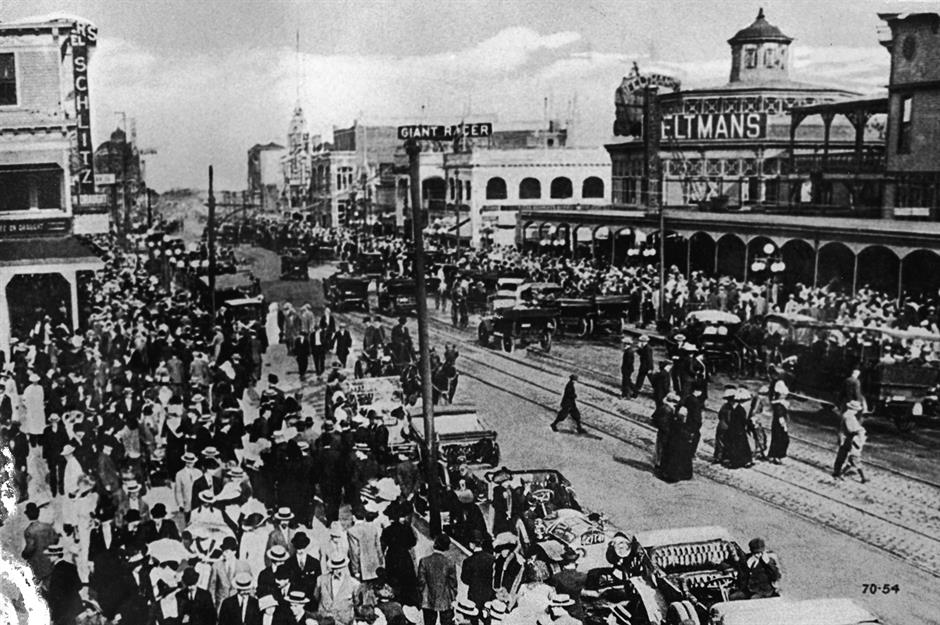
In 1900, roughly 40% of the U.S. population lived on farms. By the end of the decade, the migration to urban centers was in full swing. This shift from agrarian self-sufficiency to urban wage-earning fundamentally changed the nature of “wealth.” In the 1800s, wealth was land; in the 1900s, wealth became capital—stocks, bonds, and cash wages. This transition required a more sophisticated understanding of money management, leading to the rise of the first financial advisors and personal accounting manuals.
Lessons from the 1900s for the Modern Investor
Looking back at the 1900s, we see the blueprint for many of the challenges we face in the modern financial era. The decade reminds us that market volatility is not a modern invention, and that the tension between corporate power and government regulation is a permanent feature of capitalism.
The 1900s taught the financial world that liquidity is the lifeblood of the economy. The Panic of 1907 proved that even the strongest institutions can fail if they run out of cash. For the modern investor, this historical context underscores the importance of diversification and the role of the central bank in stabilizing markets during a crisis.
Furthermore, the 1900s highlight the power of technological disruption. Just as the internal combustion engine and the telephone revolutionized the economy then, AI and digital finance are doing so today. The companies that dominated the 1900s were those that leveraged new infrastructure to scale—a lesson that remains as relevant today as it was over a century ago. The 1900s were not just a bygone era of top hats and steam engines; they were the crucible in which the modern financial world was forged.
aViewFromTheCave is a participant in the Amazon Services LLC Associates Program, an affiliate advertising program designed to provide a means for sites to earn advertising fees by advertising and linking to Amazon.com. Amazon, the Amazon logo, AmazonSupply, and the AmazonSupply logo are trademarks of Amazon.com, Inc. or its affiliates. As an Amazon Associate we earn affiliate commissions from qualifying purchases.