
In the landscape of modern enterprise software, few names evoke as much intrigue and debate as Palantir Technologies. Often shrouded in a layer of mystery due to its deep-seated roots in the intelligence community, Palantir has evolved into one of the most significant players in the global big data and artificial intelligence sectors. To understand what Palantir does, one must look beyond the simplified labels of “data mining” or “consulting.” At its core, Palantir is a software company that builds platforms designed to integrate, manage, and secure vast amounts of disparate data, allowing human operators to make complex decisions in real-time.
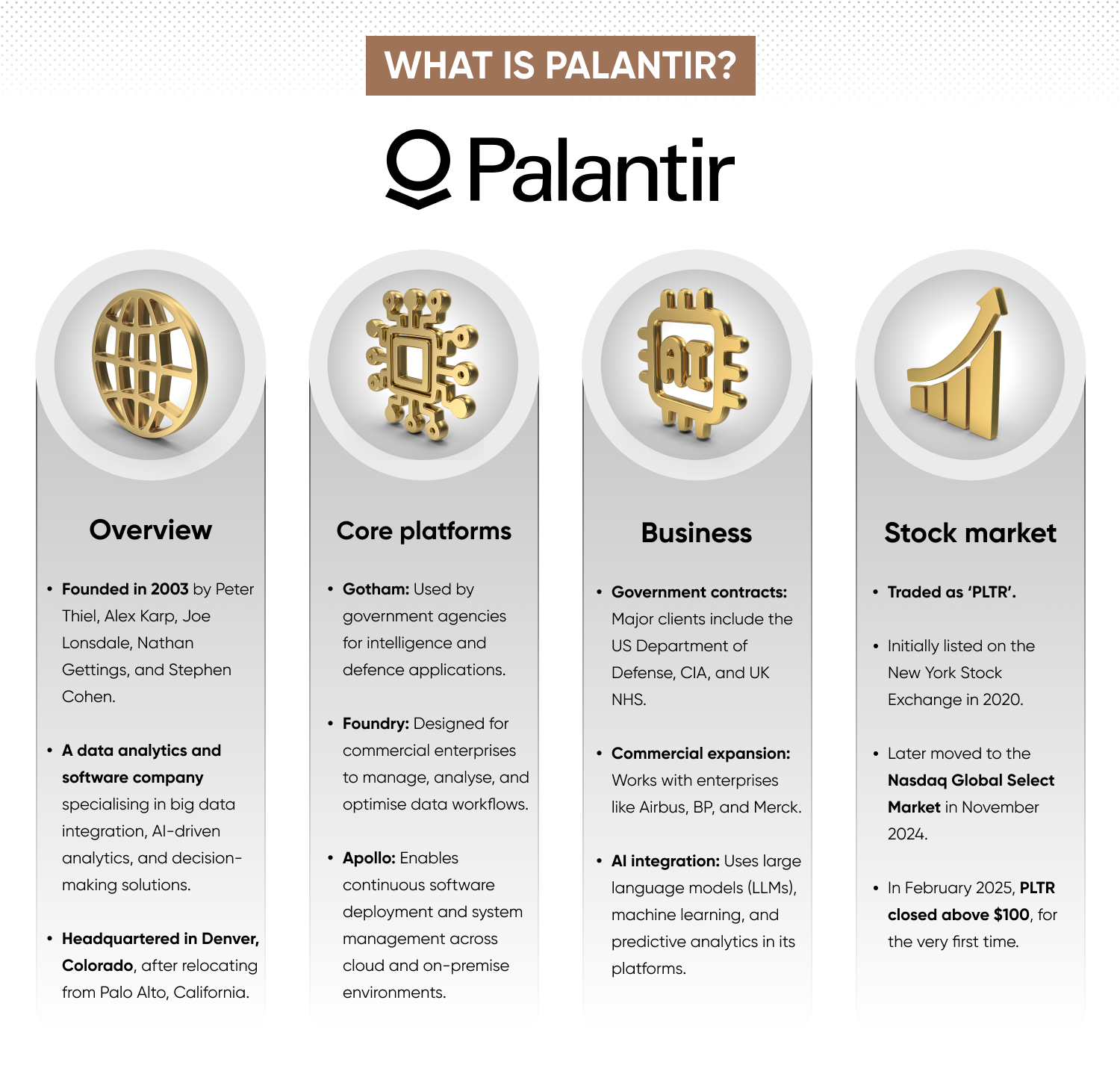
Named after the “seeing stones” from J.R.R. Tolkien’s The Lord of the Rings, Palantir focuses on a specific challenge that plagues large organizations: data fragmentation. Most large-scale entities, whether they are government agencies or Fortune 500 corporations, possess mountains of data stored across incompatible systems. Palantir provides the “connective tissue” that links these silos, creating a unified operating picture that enables predictive analytics and operational efficiency.
The Core Platforms: Gotham, Foundry, and Apollo
Palantir does not offer a single one-size-fits-all product. Instead, its ecosystem is built around three primary platforms, each tailored to different operational environments and user needs. These platforms represent the technical foundation of how the company processes information and delivers insights.
Palantir Gotham: Intelligence and Defense
Palantir Gotham was the company’s first major product, designed specifically for the needs of the intelligence community and defense agencies. The primary goal of Gotham is to help users find “needles in haystacks.” It excels at identifying patterns within massive, unstructured datasets—such as phone records, satellite imagery, financial transactions, and sensor logs.
In a practical sense, Gotham allows analysts to visualize relationships between entities. For example, if an intelligence agency is tracking a potential threat, Gotham can map out connections between individuals, locations, and movements that would be invisible to the human eye when looking at raw spreadsheets. It is used for counter-terrorism, disaster relief, and anti-fraud operations, providing a tactical advantage by turning fragmented data into actionable intelligence.
Palantir Foundry: The Commercial Operating System
While Gotham focuses on the defense sector, Palantir Foundry is built for the commercial world. Foundry is often described as an “operating system for the modern enterprise.” It addresses the reality that most businesses are struggling with data that is locked away in legacy systems, cloud buckets, and disconnected departments.
Foundry allows a company to create a “digital twin” of its entire operation. By integrating data from supply chains, manufacturing floors, sales pipelines, and HR systems, Foundry provides executives with a real-time view of their business. If a shipping delay occurs in the Pacific Ocean, Foundry can automatically calculate how that delay will impact manufacturing schedules in Europe and sales forecasts in North America, allowing the company to pivot before the crisis hits the bottom line.
Palantir Apollo: Continuous Delivery at the Edge
The third pillar of the Palantir stack is Apollo. While Gotham and Foundry are the platforms where data is analyzed, Apollo is the infrastructure that allows this software to run anywhere. In the tech world, software deployment is often a bottleneck, especially for organizations that need to run applications in “disconnected” or “hostile” environments, such as a submarine, a remote oil rig, or a frontline military vehicle.
Apollo is a continuous delivery system that manages the deployment and updates of Gotham and Foundry across varied environments. It ensures that software is always up-to-date, secure, and functional, regardless of whether it is hosted on a public cloud, a private server, or a specialized hardware device at the “edge” of the network.
The AIP Revolution: Integrating Generative AI into the Enterprise
As the world shifted toward Generative AI and Large Language Models (LLMs), Palantir introduced its most significant recent innovation: the Artificial Intelligence Platform (AIP). While many companies have experimented with chatbots, Palantir recognized that the true power of AI in a corporate or government setting lies in its ability to interact with private, proprietary data securely.
Bridging the Gap Between LLMs and Action
AIP is designed to bring the capabilities of LLMs into a controlled, enterprise environment. The primary challenge for businesses using AI is “hallucination”—the tendency of AI to generate confident but incorrect information. Palantir solves this by grounding the AI in the “Ontology” of the organization.

The Ontology is Palantir’s unique way of mapping data to real-world objects (like “an airplane,” “a customer,” or “a purchase order”) rather than just technical tables. When a user asks AIP a question, the system doesn’t just scan the internet; it queries the organization’s specific data structure. This ensures that the AI’s suggestions are based on reality and can be executed as actual business actions.
Ethical Guardrails and Security
A significant part of what Palantir does involves the ethical deployment of AI. AIP includes robust security and governance layers. It allows organizations to define exactly what the AI is allowed to see and do. Every action taken by the AI is logged and auditable, which is a critical requirement for highly regulated industries like banking, healthcare, and national security. This “human-in-the-loop” approach ensures that while the AI can suggest a course of action—such as rerouting a supply chain—a human operator must ultimately approve the decision.
How Palantir Solves Real-World Problems
To truly understand Palantir, one must look at its impact across various sectors. The company’s value proposition is best seen through the lens of complex problem-solving.
Supply Chain Optimization
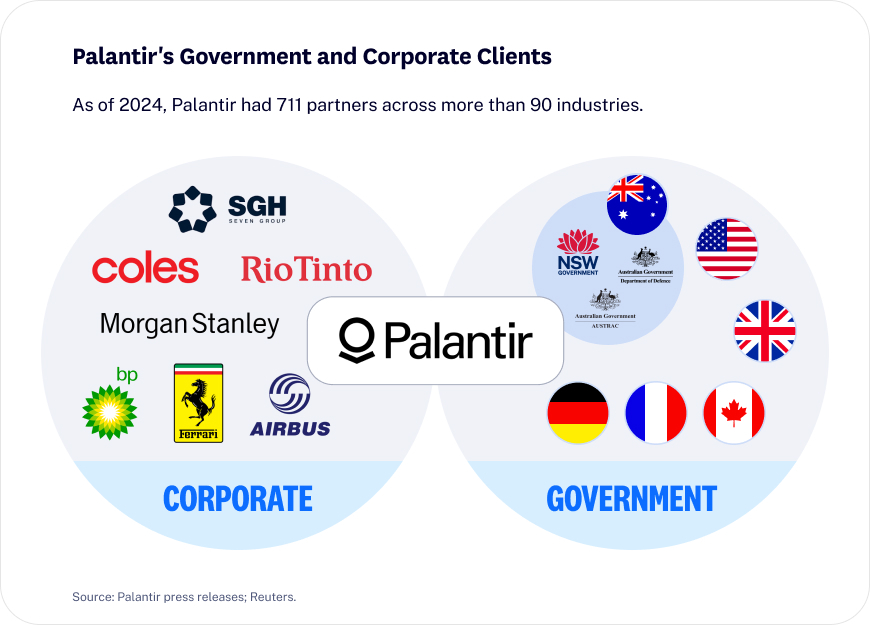
In the wake of global disruptions, supply chain resilience has become a top priority for manufacturers. Palantir works with companies like Airbus to manage the production of aircraft. By integrating data from thousands of suppliers, Palantir’s software helps Airbus identify potential bottlenecks months in advance. This visibility allows them to adjust production schedules and manage inventory more effectively, saving billions in potential delays.
Healthcare and Pandemic Response
During the COVID-19 pandemic, Palantir’s technology was utilized by various health organizations, including the NHS in the UK and the CDC in the United States. They used the software to track PPE inventory, monitor vaccine distribution, and analyze infection rates across different demographics. By providing a “single source of truth,” health officials could allocate resources to the areas that needed them most in real-time.
Financial Integrity and Fraud Detection
Large financial institutions use Palantir to combat money laundering and sophisticated financial crimes. Traditional systems often rely on simple rules-based alerts that generate too many false positives. Palantir’s platforms allow banks to integrate transaction data with external threat intelligence, creating a more holistic view of risk. This enables investigators to follow the “money trail” across borders and complex corporate structures more efficiently than ever before.
The Technology Philosophy: Ontology and Data Privacy
What differentiates Palantir from other tech giants is its philosophical approach to data. Many companies build “data lakes” where information is simply stored until someone decides to analyze it. Palantir argues that data without context is useless.
The Power of the Ontology
The “Ontology” is perhaps Palantir’s most important technical contribution. Most software requires users to understand code or complex database structures to get answers. Palantir’s Ontology translates that technical data into the language of the business. For an airline, the Ontology isn’t just rows in a database; it is a map of planes, pilots, flight paths, and maintenance schedules. This allows non-technical users to interact with the data naturally, making the entire organization more data-driven.
Granular Privacy and Security
From its inception, Palantir has been built with the understanding that data is both an asset and a liability. Their software includes some of the most advanced privacy and security features in the industry. This includes “granular access controls,” which ensure that users only see the specific data they are authorized to see. For example, a doctor might see a patient’s medical history, but a billing clerk might only see the insurance information. These protections are baked into the software architecture, not added as an afterthought, which is why Palantir is trusted by organizations with the world’s most sensitive information.
Conclusion: The Future of Palantir in a Data-Driven World
Palantir Technologies has moved from a niche defense contractor to a cornerstone of the global tech infrastructure. By focusing on the integration of data, the practical application of AI, and the importance of human-led decision-making, the company has carved out a unique position in the market.
As we move further into the era of artificial intelligence, the demand for platforms that can bridge the gap between raw data and operational action will only grow. Palantir’s role is to provide the technical foundation that allows the world’s most important institutions to function in an increasingly complex and volatile environment. Whether it is helping a company optimize its carbon footprint, assisting a hospital in managing patient flow, or supporting a government in crisis response, Palantir remains at the forefront of the technological effort to turn information into insight.
aViewFromTheCave is a participant in the Amazon Services LLC Associates Program, an affiliate advertising program designed to provide a means for sites to earn advertising fees by advertising and linking to Amazon.com. Amazon, the Amazon logo, AmazonSupply, and the AmazonSupply logo are trademarks of Amazon.com, Inc. or its affiliates. As an Amazon Associate we earn affiliate commissions from qualifying purchases.