
For investors navigating the modern equity markets, few names evoke as much passion and debate as Palantir Technologies (PLTR). Since its direct listing on the New York Stock Exchange in September 2020, the stock has become a barometer for the broader sentiment surrounding big data, artificial intelligence, and the intersection of Silicon Valley with global defense. When an investor asks, “What is the price of Palantir stock?” they are rarely asking for a single numerical figure on a ticker; they are asking about the underlying value, the growth trajectory, and the risk-reward profile of one of the most unique companies in the software sector.
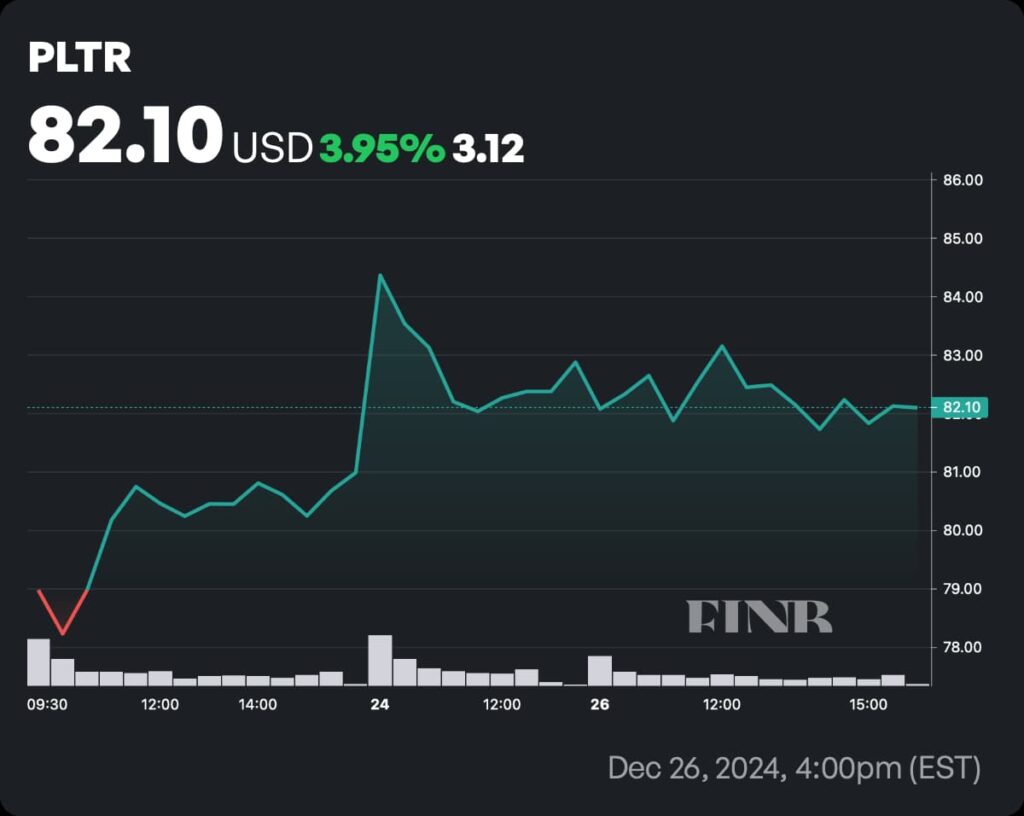
Understanding the price of Palantir requires a deep dive into its financial evolution, from a secretive government contractor to a powerhouse in the commercial enterprise software space. To evaluate whether the current market price represents a bargain or an overextension, one must analyze the company’s revenue streams, its shift toward sustained profitability, and its position within the burgeoning AI ecosystem.
The Evolution of Palantir’s Financial Performance
Palantir’s journey from its founding in 2003 to its current status as a public entity has been marked by a significant transformation in its revenue model. Historically, the company was viewed almost exclusively as a government service provider, relying on massive, multi-year contracts with the U.S. Department of Defense and various intelligence agencies. While these contracts provided a stable foundation and high barriers to entry for competitors, they also led to a valuation discount, as the market typically prefers the scalability of commercial software over the perceived “lumpiness” of government spending.
The Shift to Commercial Dominance
In recent years, the primary driver of Palantir’s stock price has been the explosive growth of its commercial segment. By offering its Foundry and AIP (Artificial Intelligence Platform) products to the private sector, Palantir has diversified its income. The “price” of the stock today reflects the market’s optimism regarding this expansion. Commercial revenue, particularly in the United States, has seen triple-digit year-over-year growth in certain quarters, signaling that Palantir is no longer just a “spy tech” firm but a critical operating system for modern business.
Path to GAAP Profitability
For years, a major drag on Palantir’s stock price was its lack of bottom-line profitability. Critics often pointed to high stock-based compensation (SBC) as a reason to avoid the stock. However, a pivotal moment occurred in 2023 when the company achieved its first full year of GAAP (Generally Accepted Accounting Principles) profitability. This milestone fundamentally changed the investment thesis. It allowed Palantir to be considered for inclusion in major indices, which triggered a massive wave of institutional buying. When institutional investors—such as pension funds and mutual funds—begin adding a stock to their portfolios, it provides a “floor” for the price and reduces the extreme volatility often seen in retail-heavy “meme” stocks.
The Impact of S&P 500 Inclusion and Market Sentiment
The price of a stock is often determined by more than just earnings reports; it is influenced by the company’s status within the financial ecosystem. One of the most significant catalysts for Palantir’s price appreciation in the mid-2020s was its official inclusion in the S&P 500 index. This move forced passive index funds to purchase millions of shares, creating a supply-demand imbalance that drove the price higher.
Institutional Confidence and “The Halo Effect”
Inclusion in the S&P 500 is more than just a mechanical boost to the share price; it is a seal of approval from the financial establishment. For Palantir, this signaled that the company had matured beyond its high-growth, high-risk startup phase. The “price” of the stock began to trade at a premium compared to its peers because of this newfound stability. Investors are often willing to pay a higher multiple for a company that is perceived as a “permanent” fixture of the American economy.
The AI Hype Cycle vs. Fundamental Value
It is impossible to discuss Palantir’s stock price without mentioning the Artificial Intelligence revolution. As companies across the globe scramble to integrate large language models (LLMs) and predictive analytics into their operations, Palantir’s AIP has emerged as a frontrunner. However, this has also introduced a level of “AI premium” into the stock price. When the broader market is bullish on AI, Palantir’s price tends to skyrocket; conversely, any cooling of the AI sector can lead to sharp pullbacks. Discerning the difference between speculative hype and fundamental value is the primary challenge for any investor looking at the ticker today.
Analyzing Valuation Multiples: Is the Price Justified?

When determining if the current price of Palantir is “fair,” professional analysts look at valuation multiples. Because Palantir is a high-growth software-as-a-service (SaaS) company, traditional metrics like the Price-to-Earnings (P/E) ratio can sometimes be misleading or appear exorbitantly high.
Price-to-Sales (P/S) and Revenue Quality
The P/S ratio is often a better metric for companies in Palantir’s stage of growth. Historically, Palantir has traded at a significant premium to the average software company. This is justified by its high “stickiness”—once a government or a major corporation integrates Palantir into their data workflow, the cost of switching to a competitor is immense. This high retention rate means that each dollar of revenue is more valuable than a dollar of revenue at a traditional, easily replaceable software firm.
Free Cash Flow and Capital Allocation
A more nuanced look at Palantir’s price involves its Free Cash Flow (FCF). Palantir has consistently generated strong FCF, which gives the company the flexibility to reinvest in R&D, acquire smaller competitors, or even initiate share buybacks. For the savvy investor, a rising FCF margin is often a more reliable indicator of long-term stock price appreciation than quarterly revenue beats. The ability of CEO Alex Karp and the management team to allocate this capital effectively will determine if the stock price can maintain its upward trajectory over the next decade.
Risk Factors Influencing Price Volatility
While the bull case for Palantir is strong, the stock remains susceptible to significant downside risks that can cause the price to crater in a short period. Understanding these risks is essential for managing a position in the stock.
Geopolitical and Ethical Considerations
Because a large portion of Palantir’s revenue comes from government defense and intelligence contracts, the stock price is sensitive to geopolitical shifts. Changes in U.S. administration, shifts in foreign policy, or public outcry over the ethical implications of data surveillance can all lead to sudden price drops. Palantir is a “polarizing” brand, and its stock often reflects that social and political tension.
Competition and Market Saturation
While Palantir claims its software is peerless, the enterprise data market is crowded. Giants like Microsoft, Amazon (AWS), and Snowflake are all vying for the same corporate budgets. If Palantir fails to maintain its technological lead, or if its “bootcamp” sales strategy (where they prove value to customers in days rather than months) fails to scale, the stock’s growth premium could evaporate. The price currently “bakes in” a scenario where Palantir becomes the dominant operating system for the modern enterprise; any deviation from that path will likely result in a downward revision of its valuation.
Long-Term Investment Strategy for Palantir
For those looking at the price of Palantir stock as a potential entry point, the strategy should ideally be focused on the long term. Palantir is not a “quick flip” stock; it is a bet on the future of data-driven decision-making.
Dollar-Cost Averaging in a Volatile Asset
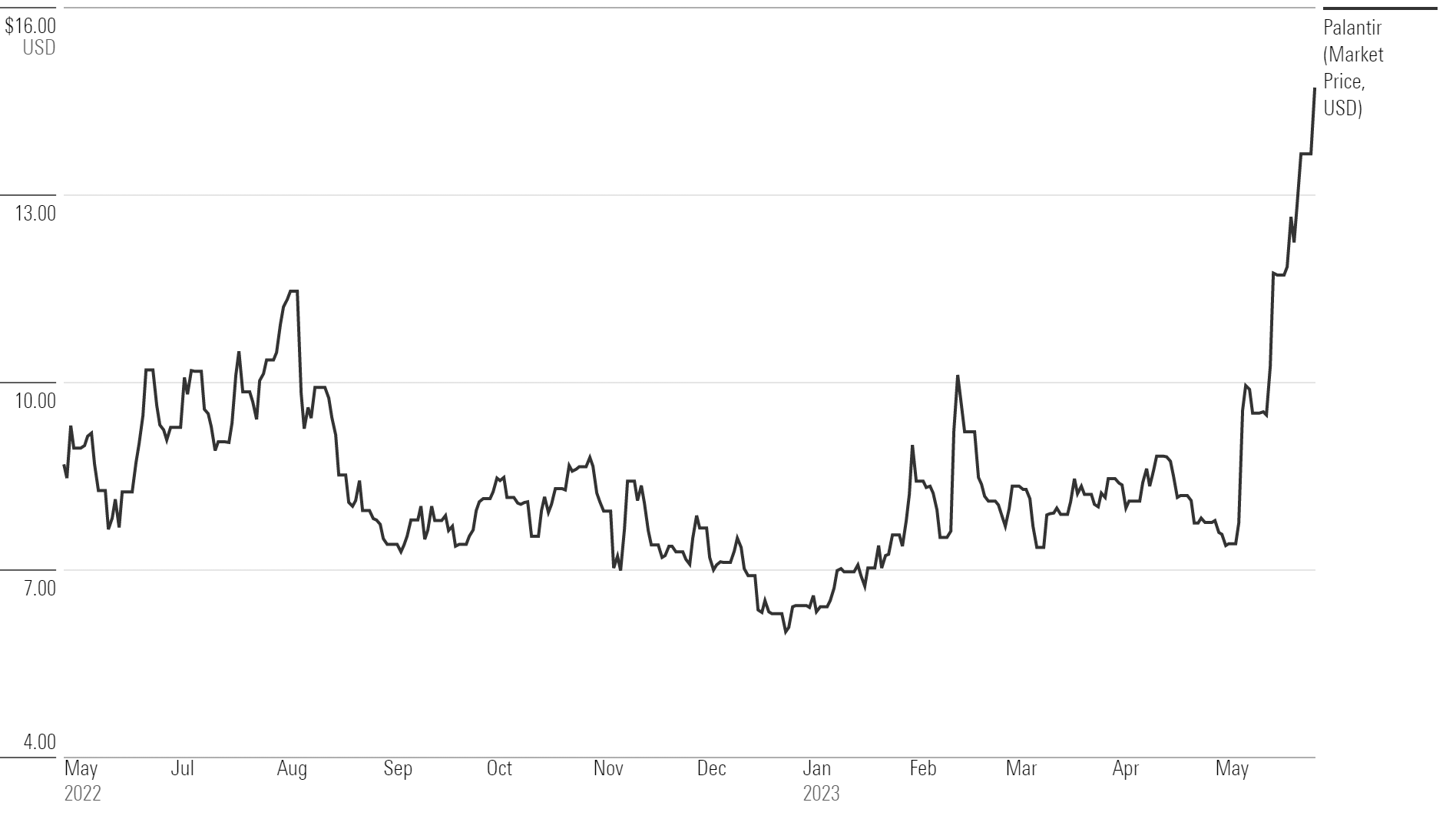
Given its historical volatility, many financial advisors suggest a dollar-cost averaging (DCA) approach to Palantir. By investing a fixed amount at regular intervals, an investor can mitigate the risk of buying at a local “peak” driven by AI euphoria. This strategy focuses on the “value” of the company over time rather than the “price” on any given Tuesday.
The Role of Palantir in a Diversified Portfolio
Palantir often fits into the “growth” or “satellite” portion of a portfolio. Because it carries a higher beta (meaning it moves more aggressively than the overall market), it can provide significant alpha during bull markets but can lead to outsized losses during contractions. Investors must weigh the current price against their personal risk tolerance and their belief in the inevitability of the “AI-first” enterprise.
In conclusion, the price of Palantir stock is a reflection of a complex tapestry of financial performance, institutional adoption, and the global race for AI dominance. While the sticker price provides a snapshot of current sentiment, the true value lies in the company’s ability to turn massive amounts of disparate data into actionable intelligence for the world’s most important institutions. Whether the current price is a “buy” depends on one’s conviction in Palantir’s role as the indispensable backbone of the 21st-century digital economy.
aViewFromTheCave is a participant in the Amazon Services LLC Associates Program, an affiliate advertising program designed to provide a means for sites to earn advertising fees by advertising and linking to Amazon.com. Amazon, the Amazon logo, AmazonSupply, and the AmazonSupply logo are trademarks of Amazon.com, Inc. or its affiliates. As an Amazon Associate we earn affiliate commissions from qualifying purchases.