
In the modern financial landscape, few companies have garnered as much polarized attention from Wall Street and retail investors alike as Palantir Technologies (Ticker: PLTR). To ask “what is the stock price of Palantir” is to look at a single data point in a much larger, complex narrative of data analytics, government defense, and the burgeoning artificial intelligence sector. While the nominal share price fluctuates by the second during trading hours, the true value of the company is determined by its underlying fundamentals, its aggressive expansion into the commercial sector, and its pivot toward sustained profitability.
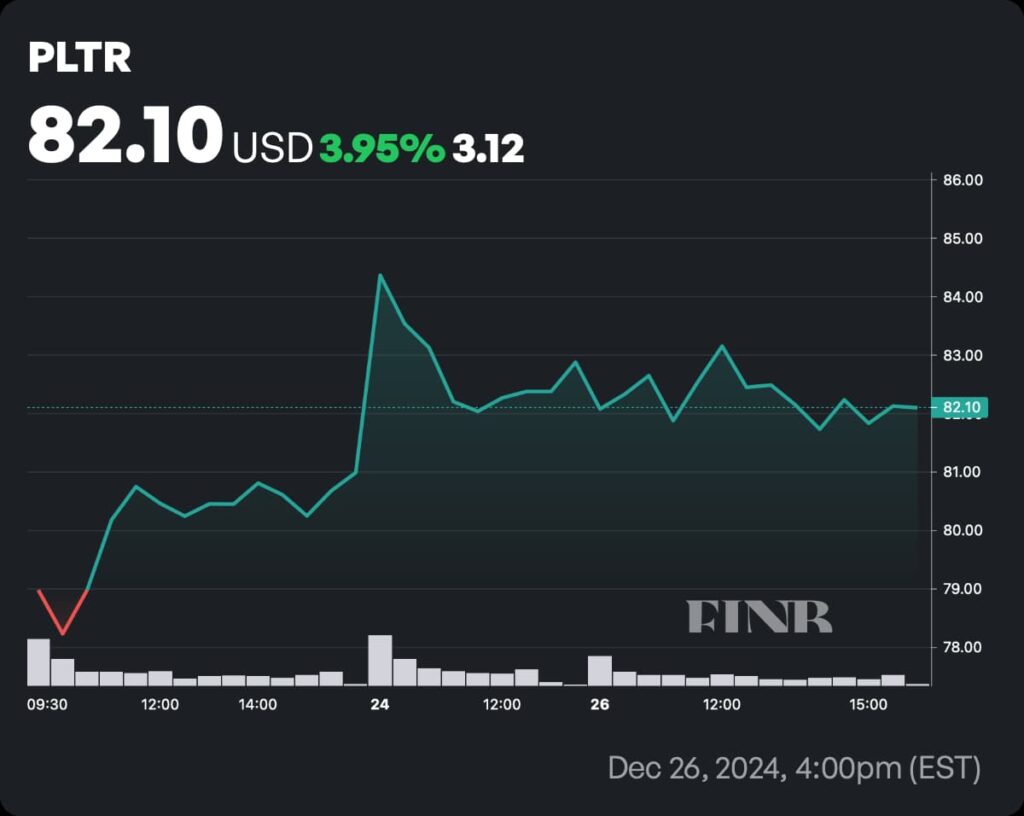
Understanding Palantir’s stock price requires more than just a glance at a ticker symbol. It requires an analysis of how the market values high-growth software-as-a-service (SaaS) companies, the impact of its inclusion in major indices like the S&P 500, and the strategic shifts that have moved the company from a perennially loss-making startup to a profitable powerhouse in the enterprise AI space.
The Dynamics of Palantir’s Market Valuation
When evaluating the stock price of Palantir, investors must first distinguish between the share price and the market capitalization. The stock price represents the cost of a single unit of ownership, but the market cap—the total value of all outstanding shares—is the figure that reflects the company’s size in the eyes of the global market.
Historical Price Performance and Volatility
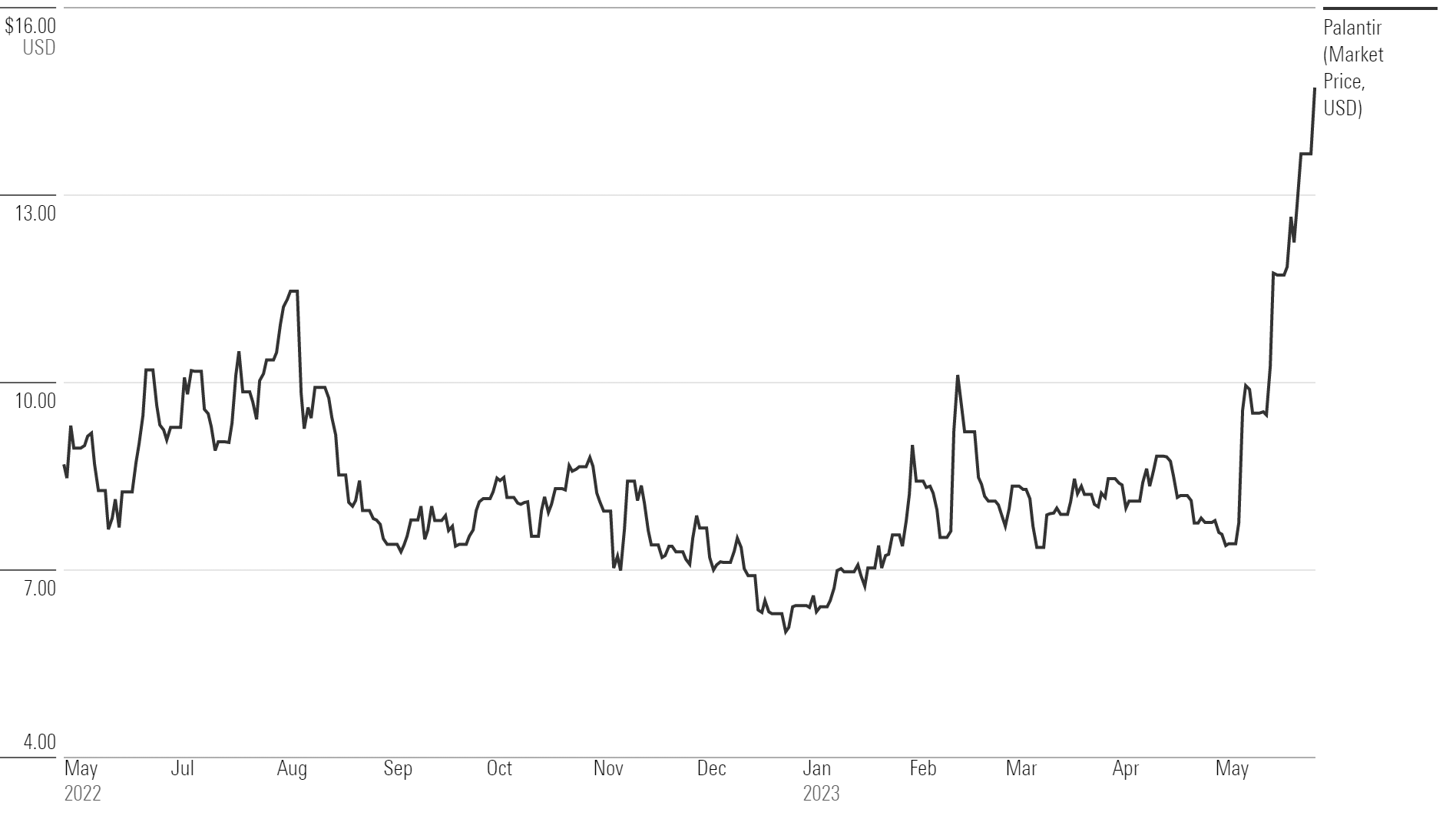
Since its direct listing on the New York Stock Exchange in September 2020, Palantir has been a case study in market volatility. Initially priced around $10, the stock saw a meteoric rise during the retail investing surge of 2021, only to experience a significant drawdown as interest rates rose and investors fled high-valuation tech stocks. This volatility is a key characteristic of PLTR. Because the company operates in a niche that blends national security with proprietary AI, its price is often sensitive to geopolitical events, government contract announcements, and shifts in federal spending.
The Impact of S&P 500 Inclusion
A major milestone in the evolution of Palantir’s stock price was its recent inclusion in the S&P 500. For any corporation, joining this prestigious index is a signal of institutional maturity. To qualify, a company must report GAAP profitability for four consecutive quarters—a feat Palantir achieved through disciplined cost management and a surge in demand for its Artificial Intelligence Platform (AIP). Inclusion often leads to a “forced” buying period where index funds and institutional managers must add the stock to their portfolios, providing a floor for the price and increasing liquidity.
Institutional vs. Retail Sentiment
Palantir maintains one of the most vocal retail investor bases in the stock market. However, the stock price is increasingly influenced by institutional heavyweights. Large asset managers look for consistency in revenue growth and margin expansion. As the ratio of institutional ownership increases, the stock price typically experiences less “meme-like” volatility and begins to trade more in line with its fundamental earnings per share (EPS) and revenue guidance.
Key Financial Metrics Driving the Share Price
To understand why Palantir’s stock price is where it is today, one must look at the specific financial drivers that analysts use to set their price targets. Unlike traditional manufacturing firms, software companies are valued on their ability to scale rapidly with high gross margins.
Revenue Growth and the “Rule of 40”
In the SaaS world, the “Rule of 40” is a benchmark used to measure the health of a company. It states that a company’s combined growth rate and profit margin should exceed 40%. Palantir has consistently aimed for this target. When the company reports revenue growth—particularly in its US Commercial segment—the stock price reacts sharply. Investors are currently paying a premium for Palantir because its growth is accelerating at a time when many other tech firms are seeing a slowdown.
The AIP (Artificial Intelligence Platform) Effect
The most significant catalyst for Palantir’s stock price in the current fiscal cycle is the rollout of its Artificial Intelligence Platform (AIP). AIP allows enterprises to apply large language models (LLMs) to their private data securely. The market views AIP not just as a product, but as a “land and expand” strategy. By offering “bootcamps”—short, intensive workshops where potential clients can see the software’s value in days rather than months—Palantir has drastically reduced its customer acquisition costs. This efficiency directly impacts the bottom line, which in turn elevates the stock price.
Profitability and Cash Flow
For years, the primary criticism of Palantir was its lack of GAAP profitability and its high stock-based compensation (SBC). However, recent quarters have shown a marked shift. The company has moved into positive net income territory. For investors, positive cash flow is the ultimate insurance policy. It means the company does not need to dilute shareholders by issuing more stock to fund operations. As Palantir continues to demonstrate that it can grow revenue while keeping expenses under control, the market re-rates its valuation multiples higher.
Fundamental Analysis: Why the Price Fluctuates

The stock price of Palantir does not move in a vacuum. It is the result of a constant tug-of-war between two main business segments: Government (Gotham) and Commercial (Foundry).
Government Contracts vs. Commercial Expansion
Historically, Palantir was viewed almost exclusively as a government contractor. Its Gotham platform is used by defense and intelligence agencies for everything from counter-terrorism to battlefield analytics. While government contracts provide stable, long-term “sticky” revenue, they often grow at a slower pace.
The “Money” story of Palantir changed when its Commercial segment began to outpace government growth. The commercial market is theoretically infinite, and as Palantir signs deals with hospitals, manufacturers, and financial institutions, its price-to-earnings (P/E) ratio begins to look more like a high-growth tech company and less like a traditional defense contractor. Investors monitor the “Commercial Customer Count” metric religiously, as it serves as a leading indicator for future stock price appreciation.
Earnings Reports and Guidance
Four times a year, Palantir releases its earnings report, and these dates are often the most volatile periods for the stock price. The market looks at two things: the results of the past quarter and the “guidance” for the next. If Palantir beats its revenue estimates but provides a cautious outlook for the future, the stock price may drop despite the good results. Conversely, raising “full-year guidance” is one of the strongest signals a management team can send to the market, often resulting in double-digit percentage gains in the stock price.
Valuation and P/E Ratios
By traditional metrics, Palantir often looks “expensive.” Its P/E ratio is frequently much higher than the market average. However, in growth investing, a high P/E ratio suggests that the market expects significant future earnings. The challenge for investors is determining if the growth justifies the price. If the company fails to meet the high expectations baked into its current price, the stock can undergo a valuation correction.
Investment Strategies for Palantir Stock
Deciding how to approach Palantir from an investment perspective depends on one’s financial goals and risk tolerance. Because it is a high-beta stock—meaning it moves more aggressively than the broader market—it requires a specific strategic mindset.
Long-term Growth vs. Short-term Speculation
There are generally two types of investors in PLTR. The first are the “long-term bulls” who believe Palantir will become the “operating system for the modern enterprise.” These investors tend to ignore daily price fluctuations, focusing instead on the company’s compounding revenue and increasing market share in the AI sector.
The second group includes short-term traders who look to capitalize on the stock’s volatility. Because Palantir is sensitive to news cycles, it is a popular target for options trading. However, this carries significant risk, as price movements can be unpredictable and disconnected from fundamentals in the short term.
Risks to Consider
No investment is without risk, and Palantir has several. First is the competition; while Palantir’s software is unique, tech giants like Microsoft and Amazon are also competing for the same enterprise AI dollars. Second is the concentration of revenue. Although it is diversifying, a significant portion of Palantir’s income still comes from a few large government contracts. If one of these were to be cancelled or reduced, the stock price would likely suffer. Finally, there is the “valuation risk.” If the broader market experiences a downturn or if interest rates remain high for an extended period, high-multiple stocks like Palantir are often the first to be sold off.
Dollar-Cost Averaging (DCA)
Given Palantir’s volatility, many financial advisors suggest a dollar-cost averaging approach for those who believe in the company’s long-term thesis. By investing a set amount of money at regular intervals, an investor buys more shares when the price is low and fewer when the price is high. This mitigates the risk of “buying the top” and allows the investor to build a position over time as the company matures.
The Future Outlook: What Influences the Next Milestone
As we look toward the future, several factors will dictate whether Palantir’s stock price continues its upward trajectory or plateaus. The primary factor will be the monetization of AI. We are currently in an “AI hype” cycle, where many companies claim to use AI, but few are generating significant revenue from it. Palantir is one of the few that is. If they can continue to prove that AIP provides a measurable Return on Investment (ROI) for its clients—such as reducing supply chain costs or increasing hospital efficiency—the stock price will likely follow the path of other successful platform companies like Oracle or Salesforce.
Furthermore, international expansion remains a major untapped opportunity. While Palantir has a strong foothold in the US and the UK, expanding its commercial presence in Europe and Asia could provide the next leg of growth. Any news regarding large-scale international partnerships or sovereign wealth fund investments would be a significant catalyst for the stock.
In conclusion, the stock price of Palantir is a reflection of the market’s confidence in a data-driven future. It is a price that prices in high expectations, innovative technology, and a management team that is unafraid to challenge Silicon Valley norms. For the investor, it represents an opportunity to participate in the “AI revolution,” provided they have the stomach for the volatility and the discipline to focus on the long-term financial health of the business. Whether the price is “cheap” or “expensive” depends entirely on your view of the company’s ability to remain the dominant force in enterprise-level data processing and artificial intelligence.
aViewFromTheCave is a participant in the Amazon Services LLC Associates Program, an affiliate advertising program designed to provide a means for sites to earn advertising fees by advertising and linking to Amazon.com. Amazon, the Amazon logo, AmazonSupply, and the AmazonSupply logo are trademarks of Amazon.com, Inc. or its affiliates. As an Amazon Associate we earn affiliate commissions from qualifying purchases.