
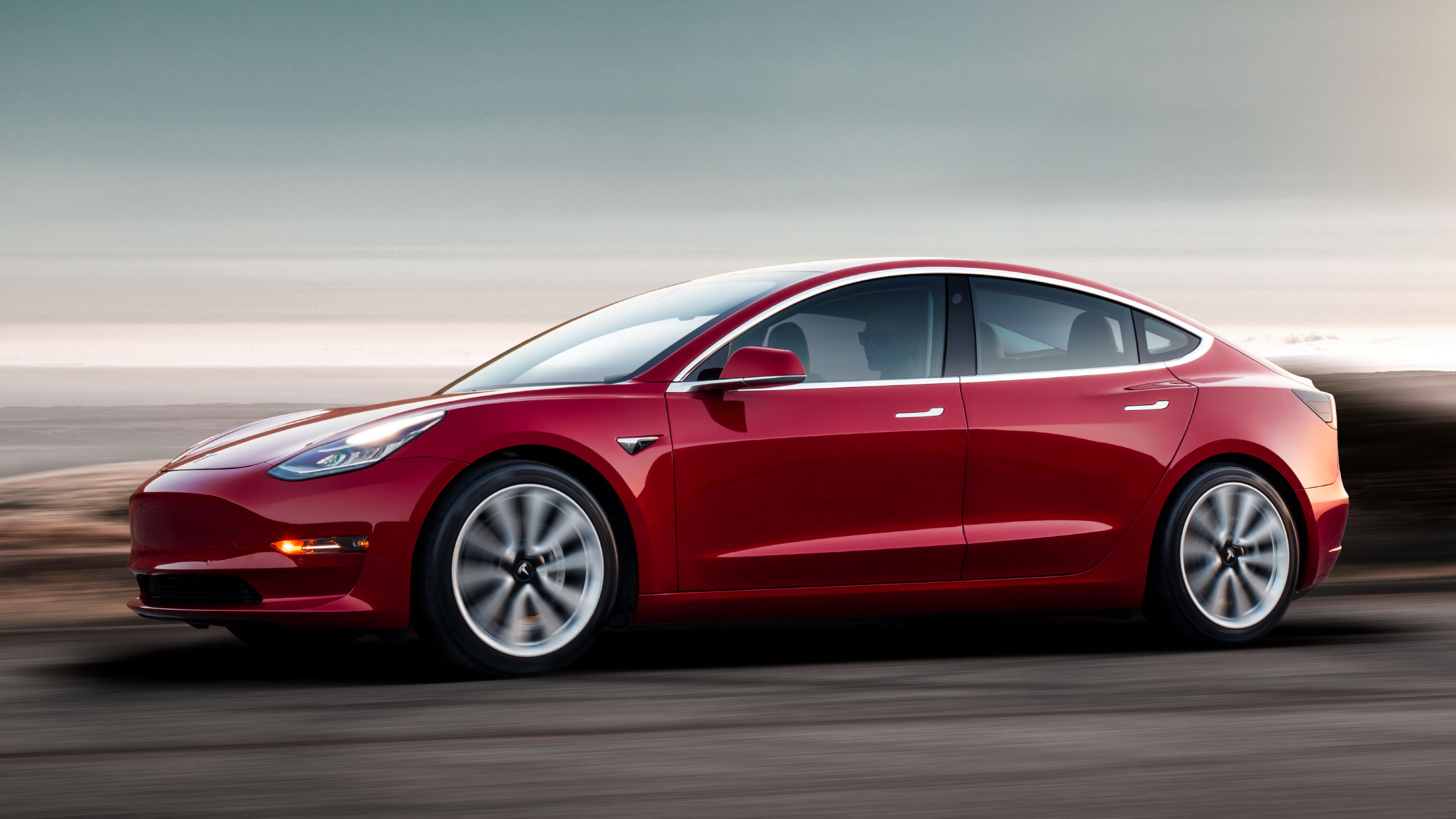
The Tesla Model 3 is often cited as the catalyst for the global shift toward electric mobility. While Tesla had already established itself as a luxury player with the Model S and Model X, the tech world was waiting for the “Master Plan, Part Deux” to come to fruition: a high-tech, long-range electric vehicle (EV) accessible to the mass market. To understand when the Tesla Model 3 came out, one must look past a single calendar date and examine the multi-stage rollout that redefined how hardware and software integrate in the automotive industry.

The official unveiling of the Model 3 took place on March 31, 2016, at Tesla’s design studio in Hawthorne, California. However, the first production units did not reach customers until July 28, 2017. This gap represented a period of intense engineering and “production hell” that would eventually lead to the Model 3 becoming the best-selling electric car in history at the time.
The Architecture of Innovation: 2016–2017 Launch Phase
When the Model 3 was first introduced, it wasn’t just the price point that shocked the tech industry; it was the radical departure from traditional automotive interior design and electronic architecture. Unlike internal combustion engine (ICE) vehicles that utilize hundreds of physical buttons and knobs, the Model 3 consolidated nearly all vehicular controls into a single 15-inch horizontal touchscreen.
The Silicon Valley Approach to Hardware
The Model 3’s launch marked a shift in how vehicles are constructed. Traditionally, cars are built around an engine and a transmission. The Model 3 was built around a battery pack and a centralized computer system. By using a “skateboarding” chassis, Tesla’s engineers were able to lower the center of gravity and maximize interior space, a feat of mechanical engineering that allowed a compact sedan to have the storage capacity of a much larger vehicle.
Battery Chemistry and the 2170 Cell
One of the most significant technological leaps during the 2017 release was the transition to the 2170 battery cell. Co-developed with Panasonic at the Gigafactory in Nevada, these cylindrical lithium-ion cells were larger and more energy-dense than the 18650 cells used in the Model S. This allowed for better thermal management and higher charging speeds, enabling the Model 3 to achieve a range of 220 to 310 miles depending on the configuration—specs that were unheard of for a vehicle in its price bracket during its debut year.
Software-Defined Mobility: The Model 3’s Digital Backbone
If the 2017 launch was about the hardware, the years following were defined by the Model 3’s identity as a “computer on wheels.” Tesla’s approach to the Model 3 mirrored that of a smartphone manufacturer rather than a legacy automaker.
Over-the-Air (OTA) Updates
The most disruptive technology the Model 3 brought to the masses was the robust implementation of Over-the-Air (OTA) updates. When the car first came out, it possessed the hardware necessary for features that hadn’t even been written into the code yet. Over the years, Tesla pushed updates that improved braking distances, increased horsepower, optimized battery pre-conditioning, and introduced complex entertainment features like “Tesla Theater” and “Cuphead.” This meant that a Model 3 purchased in 2017 actually became a technologically superior vehicle by 2020 without the owner ever visiting a service center.
The Evolution of the Full Self-Driving (FSD) Computer
At the time of its release, the Model 3 shipped with Autopilot Hardware 2.5. However, Tesla’s vision for autonomous driving required even more computational power. In 2019, Tesla transitioned to the “Hardware 3” or FSD Computer, featuring two redundant chips designed specifically for neural network processing. This chip, developed in-house by Tesla’s silicon team, was capable of processing 144 trillion operations per second (TOPS), a massive leap forward from the third-party Nvidia hardware previously used. This hardware evolution allowed the Model 3 to process 360-degree video feeds from its eight cameras in real-time, enabling features like Navigate on Autopilot and traffic light recognition.
Manufacturing Tech and the “Production Hell” Era
The timeline of the Model 3’s release is inseparable from the technological hurdles of its manufacturing process. In late 2017 and throughout 2018, Tesla famously struggled to scale production. This period led to several key innovations in how vehicles are assembled.
Automation and the Alien Dreadnought
Elon Musk’s original vision for the Model 3 production line was the “Alien Dreadnought”—a factory so automated that the machines moved faster than the human eye could follow. While Tesla eventually had to re-introduce human labor to solve complex assembly tasks, the attempt forced the development of high-speed robotics and advanced computer vision systems for quality control.
The Heat Pump and Thermal Efficiency
By 2020, the Model 3 underwent a significant internal tech refresh. One of the most important additions was the “Octovalve” and a dedicated heat pump system, first introduced in the Model Y. Before this, the Model 3 used resistive heating, which significantly drained the battery in cold climates. The heat pump utilized ambient heat and waste heat from the powertrain to warm the cabin and the battery, dramatically increasing winter efficiency. This represented a milestone in EV thermal management technology, setting a new standard for the industry.
The 2023 Refresh: Project Highland and the Modern Standard
In late 2023, Tesla released a major update to the Model 3, internally known as “Project Highland.” This wasn’t just a facelift; it was a comprehensive technological overhaul that addressed long-standing feedback regarding noise, vibration, and harshness (NVH), while pushing the digital experience even further.
Aerodynamics and Efficiency
The 2023 Model 3 came out with a redesigned front end that dropped the drag coefficient to a remarkably low 0.219 Cd. In the world of electric vehicle tech, aerodynamics are the most effective way to increase range without adding heavy, expensive battery cells. This improvement allowed the vehicle to travel further on a single charge while using the same battery chemistry as previous iterations.
Interior Digitization and Ambient Tech
The refresh further leaned into the “minimalist tech” aesthetic. Tesla removed the physical gear stalks and turn signal stalks, moving those functions to the steering wheel haptic buttons and the central touchscreen. While controversial, this move emphasized Tesla’s commitment to a purely software-driven interface. Additionally, the introduction of a rear 8-inch touchscreen for climate control and entertainment brought the Model 3’s interior tech in line with the more expensive Model S and Model X.
Hardware 4.0 and Enhanced Vision
With the 2023/2024 rollout, the Model 3 began shipping with Hardware 4 (HW4). This suite includes higher-resolution cameras and a more powerful FSD computer. Notably, Tesla moved toward a “Vision Only” approach, removing ultrasonic sensors and radar in favor of sophisticated neural networks that can estimate distance and depth using only camera data. This shift represents one of the boldest bets in the history of automotive technology, prioritizing AI and software over traditional sensor hardware.

Legacy: How the Model 3 Changed the Tech Landscape
Looking back at when the Tesla Model 3 came out, it is clear that its release was a pivot point for the entire technology sector. It proved that an EV could be more than a niche environmental statement; it could be a high-performance, desirable gadget.
The Model 3 forced legacy automakers to pivot their R&D budgets toward battery tech, power electronics, and software development. It validated the use of cylindrical cells for high-volume production and popularized the concept of the “Software-Defined Vehicle” (SDV). Today, every major tech player entering the automotive space—from Apple’s defunct car project to Xiaomi’s successful SU7—follows the blueprint established by the Model 3: a minimalist interior, a centralized computer architecture, and a focus on software ecosystem integration.
Whether it is the 2017 original or the refined 2023 “Highland” version, the Model 3 continues to serve as the benchmark for how technology can transform transportation. It remains a prime example of how iterative software updates can keep hardware relevant, ensuring that a car released years ago can still compete with the newest gadgets on the market today.
aViewFromTheCave is a participant in the Amazon Services LLC Associates Program, an affiliate advertising program designed to provide a means for sites to earn advertising fees by advertising and linking to Amazon.com. Amazon, the Amazon logo, AmazonSupply, and the AmazonSupply logo are trademarks of Amazon.com, Inc. or its affiliates. As an Amazon Associate we earn affiliate commissions from qualifying purchases.