
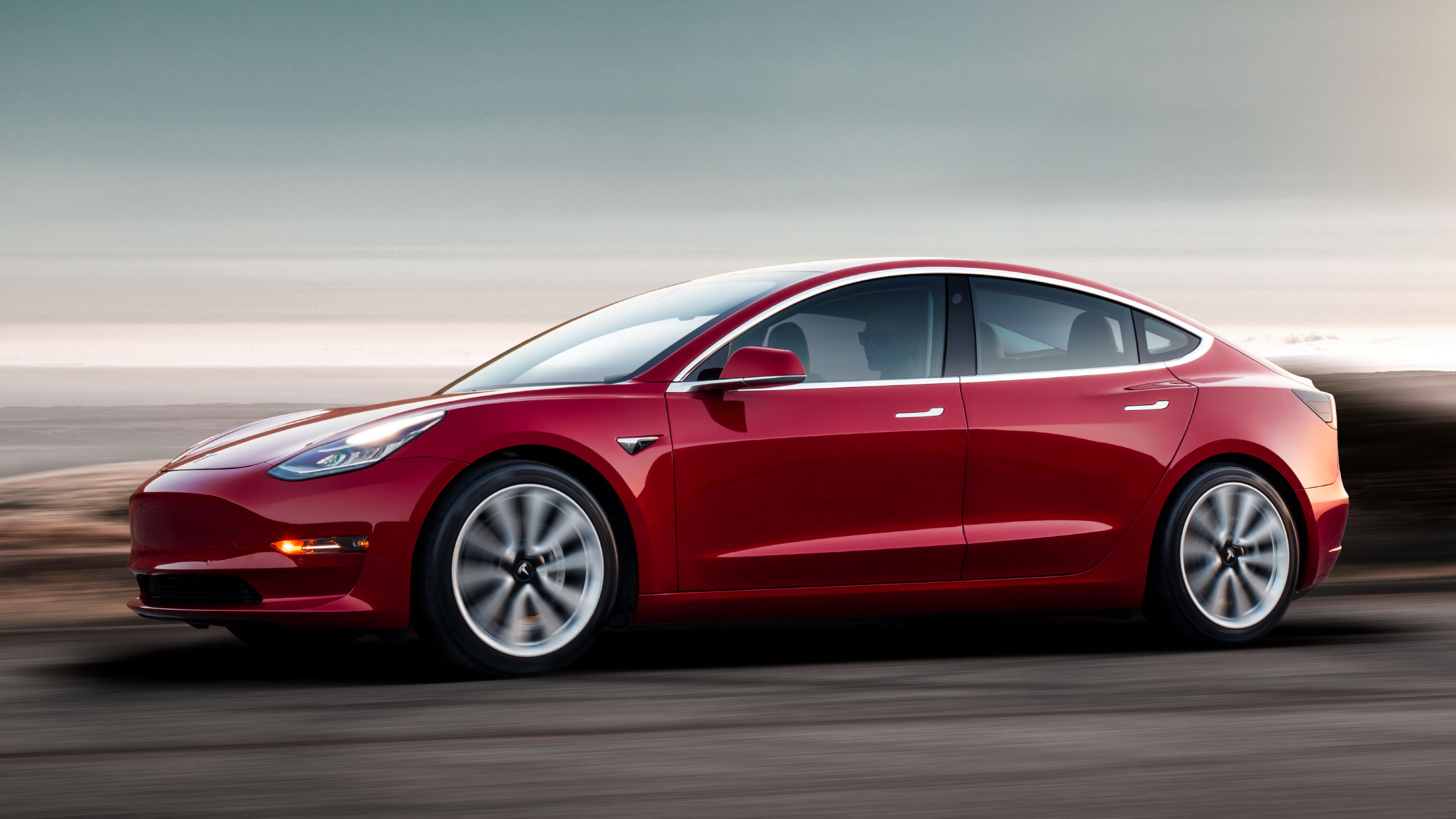
The automotive landscape shifted irreversibly on March 31, 2016. On that evening at Tesla’s design studio in Hawthorne, California, Elon Musk took the stage to unveil a vehicle that promised to bridge the gap between niche luxury electric vehicles (EVs) and the mass market. While the “unveiling” occurred in early 2016, the actual release and subsequent technological iterations of the Model 3 tell a much more complex story of hardware engineering, software innovation, and manufacturing scaling.
To understand when the Model 3 “came out” is to look at a timeline of technological milestones rather than a single calendar date. From the first handovers in 2017 to the massive “Highland” refresh in 2023, the Model 3 has served as a rolling laboratory for some of the most advanced consumer technology on the planet.

The Launch Timeline: From Prototype to Production
The journey of the Model 3 began with a massive surge of consumer interest that the tech world had previously only seen during flagship smartphone launches. Within 24 hours of the 2016 unveiling, Tesla received over 232,000 reservations. However, the transition from a prototype on a stage to a production vehicle in a driveway was a fraught technological endeavor.
The 2017 Delivery Milestone
The official production launch of the Model 3 occurred on July 7, 2017, when “SN1” (Serial Number 1) rolled off the assembly line. A few weeks later, on July 28, Tesla held a handover party for the first 30 customers, most of whom were employees. This marked the official “entry” of the Model 3 into the market. However, for the general public, the wait was much longer.
Throughout late 2017 and early 2018, Tesla famously entered “production hell,” a period where the company struggled to automate the assembly of the Model 3’s advanced battery packs and unique chassis. It wasn’t until mid-2018 that the car reached a production volume of 5,000 units per week, making it truly available to non-employee reservation holders.
Global Expansion and Manufacturing Tech
While the U.S. market saw deliveries begin in 2017, the global release happened in waves:
-
Europe and China: Deliveries began in early 2019.
-
Giga Shanghai: In late 2019, Tesla achieved a massive tech feat by building a manufacturing facility in China in record time, beginning local production of the Model 3 for the Asian market by January 2020. This version introduced localized supply chain improvements and the first use of Lithium Iron Phosphate (LFP) batteries in the Model 3 lineup.
Hardware Architecture: A Shift in Automotive Engineering
The Model 3 wasn’t just a smaller version of the Model S; it was a complete ground-up rethink of what a car’s hardware should look like. When it came out, it introduced several architectural shifts that have since been emulated by the entire industry.
The 2170 Battery Cell and Thermal Management
Prior to the Model 3, Tesla used the 18650-form factor cells (similar to those in laptop batteries). With the launch of the Model 3, Tesla and Panasonic introduced the 2170 cell. This larger cell offered a significantly higher energy density and improved thermal stability.
The Model 3’s cooling system—often referred to as the “Superbottle”—was a masterclass in integration. It combined multiple coolant loops for the battery, drive unit, and cabin electronics into a single housing. This reduced weight and complexity, showcasing a level of vertical integration that traditional automakers are still struggling to match.
The Minimalist Digital Brain
When the Model 3 came out, the most jarring change for traditional drivers was the interior. Tesla removed the instrument cluster and almost all physical buttons, moving every control to a single 15-inch horizontal touchscreen.
This wasn’t just a design choice; it was a hardware strategy. By centralizing the vehicle’s controls into a central computer, Tesla simplified the wiring harness of the vehicle significantly. This “zonal” architecture allows a central processor to manage everything from the windshield wipers to the motor torque, facilitating faster data transfer and easier software management.
Silicon Carbide Inverters
Hidden within the Model 3’s drive unit was another tech first: the use of Silicon Carbide (SiC) power MOSFETs in the inverter. At the time of its release, the Model 3 was the first mass-produced car to use this material. SiC inverters are more efficient and can handle higher temperatures than traditional silicon, allowing the Model 3 to achieve class-leading range from relatively small battery packs.
Software as the Core Product: The OTA Revolution
Perhaps the most significant aspect of when the Model 3 came out was the introduction of a vehicle that was designed to improve after purchase. Tesla’s Over-the-Air (OTA) update capability redefined the lifecycle of the automobile.
The Evolution of Autopilot and FSD
Every Model 3 produced since 2017 has been equipped with a suite of sensors intended to eventually enable autonomous driving. When the car first launched, it ran on Hardware 2.5 (HW2.5). In 2019, Tesla began transitioning to its custom-designed “Full Self-Driving” (FSD) computer, or Hardware 3.0.
This move from third-party chips to proprietary silicon was a pivotal moment. The FSD computer was optimized specifically for neural networks, allowing the Model 3 to process visual data from its eight cameras with incredible speed. Unlike other manufacturers who rely on LiDAR, the Model 3 tech stack is built on “Tesla Vision,” a computer-vision-based approach that mimics human sight.
Connectivity and the App Ecosystem
The Model 3 was among the first vehicles to treat a smartphone as the primary key. Using Bluetooth Low Energy (BLE), the car detects the owner’s phone and unlocks automatically. This integration extends to the Tesla App, which allows for remote climate control, software update scheduling, and real-time location tracking. For the tech-savvy consumer, the Model 3 felt less like a car and more like a connected gadget.
V11 and V12 Software Suites
The software interface has changed dramatically since 2017. Major version updates have brought new features like “Sentry Mode” (which uses the car’s cameras as a 360-degree security system), “Dog Mode,” and an integrated gaming theater featuring high-fidelity titles. The ability of the hardware to support these updates years after the manufacturing date is a testament to the forward-looking hardware specifications Tesla implemented at launch.
The “Highland” Refresh: A New Generation of Tech
In late 2023, after six years of incremental updates, Tesla released a major overhaul of the Model 3, internally known as Project Highland. This wasn’t just a facelift; it represented a maturation of the Model 3’s technology stack.
Aerodynamics and Efficiency
The 2023 refresh brought a redesigned front fascia that lowered the drag coefficient to 0.219 Cd, making it one of the most aerodynamic cars on the road. This hardware change directly translated to increased range without needing to increase battery size—a key tenet of Tesla’s engineering philosophy of “efficiency through design.”
Hardware 4.0 and Sensor Suite Changes
The refreshed Model 3 also introduced Hardware 4.0 (HW4). This suite includes higher-resolution cameras with better dynamic range, allowing the car to “see” further and more clearly in low-light conditions. Interestingly, this era also saw the complete removal of ultrasonic sensors (USS) in favor of a purely vision-based parking and distance-estimation system, a controversial but bold move in the tech community.
Interior Tech and Passenger Experience
The Highland refresh addressed long-standing criticisms of the 2017 hardware. Improvements included:
-
Acoustic Glass: Now on all windows to significantly reduce cabin noise.
-
Rear Passenger Display: An 8-inch screen in the back for climate control and entertainment.
-
Ventilated Seats: Integrating cooling hardware into the front seats.
-
Ambient Lighting: A programmable LED strip that integrates with the software UI.

The Legacy of the Model 3 Tech Stack
The Model 3 did more than just provide a timeline of release dates; it set the blueprint for the “Software Defined Vehicle” (SDV). When the Model 3 came out in 2017, it was an outlier. Today, the technologies it pioneered—large-scale casting, centralized compute, OTA updates, and high-density cylindrical cells—have become the industry standard.
The car’s release proved that an EV could be a high-performance tech product rather than just an eco-conscious compromise. By focusing on a minimalist hardware footprint and a robust software layer, Tesla ensured that a Model 3 purchased in 2018 remains technologically relevant in 2024.
As we look toward the future, the Model 3 continues to evolve. With the transition toward AI-driven FSD versions and the potential for bidirectional charging in future hardware revisions, the “release” of the Model 3 is an ongoing process. It is a vehicle that refuses to stay static, constantly being redefined by the software it runs and the data it collects, cementing its place as a cornerstone of modern technological history.
aViewFromTheCave is a participant in the Amazon Services LLC Associates Program, an affiliate advertising program designed to provide a means for sites to earn advertising fees by advertising and linking to Amazon.com. Amazon, the Amazon logo, AmazonSupply, and the AmazonSupply logo are trademarks of Amazon.com, Inc. or its affiliates. As an Amazon Associate we earn affiliate commissions from qualifying purchases.