
While the public often views Tesla through the narrow lens of an automotive manufacturer, the company’s internal roadmap suggests a far more complex identity. Tesla is, at its core, a vertically integrated technology conglomerate. It produces high-performance hardware, proprietary software, advanced energy storage systems, and pioneering artificial intelligence. To understand what Tesla makes is to understand a multi-faceted ecosystem designed to accelerate the transition to sustainable energy and automated labor.
The Evolution of Electric Propulsion and Vehicle Architecture
At the most visible level, Tesla produces electric vehicles (EVs), but the “product” is less about the car as a status symbol and more about the engineering of the platform. Tesla has redefined the vehicle as a mobile computer, prioritizing efficiency, thermal management, and structural innovation.
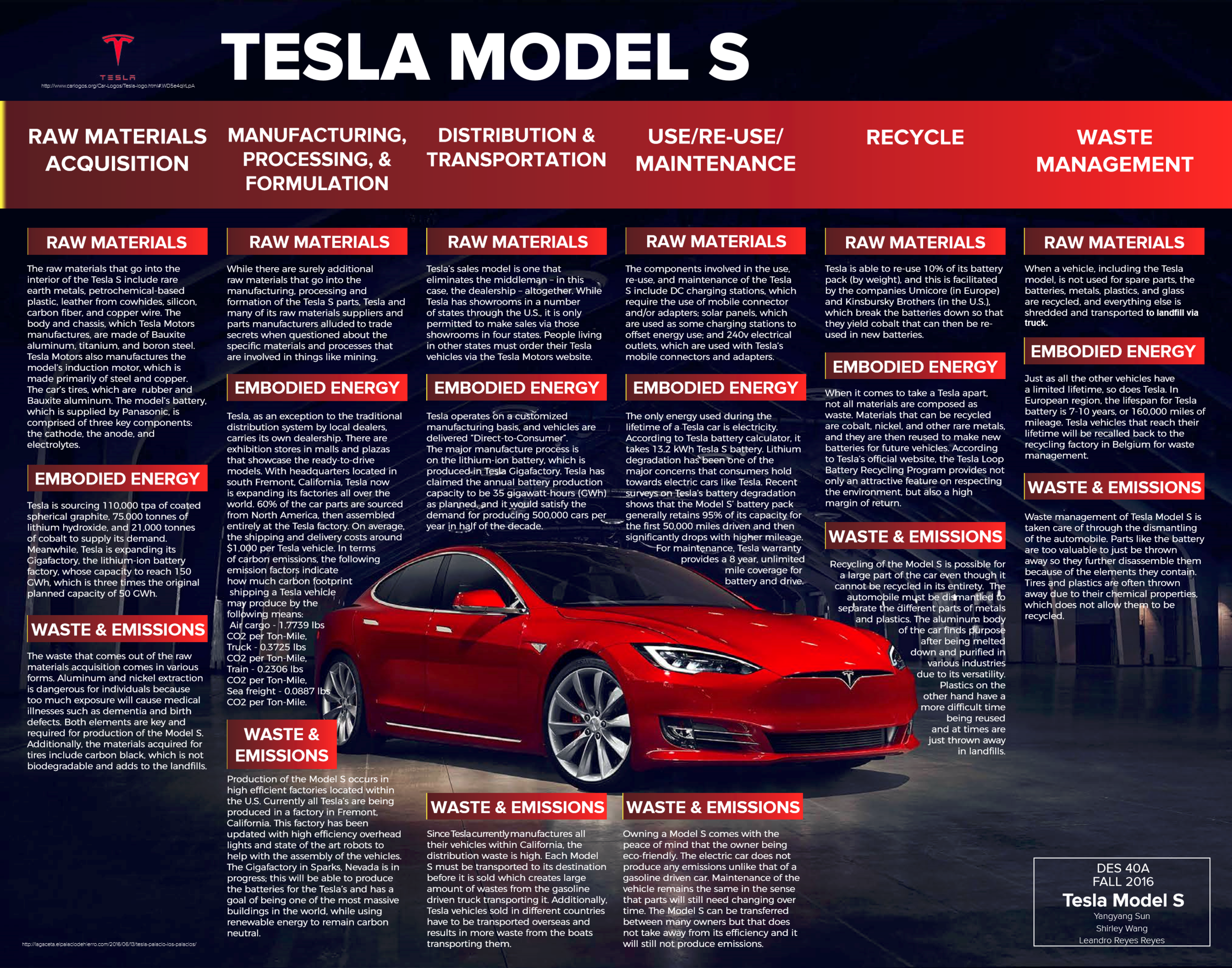
The 4680 Cell and Structural Battery Packs
Tesla’s most critical manufacturing achievement isn’t the car body; it is the battery. With the introduction of the 4680 cylindrical cell, Tesla transitioned from buying off-the-shelf components to designing the chemistry and form factor from the ground up. These cells are designed for higher energy density and lower production costs.
Beyond the cell itself, Tesla makes “structural battery packs.” In traditional vehicle design, the battery is a weight burden carried by the chassis. In Tesla’s latest architecture, the battery pack is a structural element of the car, providing rigidity and reducing total parts. This integration reduces the mass of the vehicle, which in turn increases range—a core technological metric where Tesla consistently leads the market.
Next-Generation Powertrains and the Carbon-Sleeved Motor
The hardware that drives a Tesla is a masterclass in power electronics. Tesla designs and manufactures its own permanent magnet motors, including the innovative carbon-sleeved rotors found in the Model S Plaid. By wrapping the rotor in carbon fiber, Tesla allows the motor to spin at much higher RPMs without the copper elements expanding due to centrifugal force. This tech allows for high-speed performance without the need for a complex multi-speed gearbox, simplifying the mechanical requirements of the vehicle while maximizing power output.
The Giga Press and Unitary Casting
In terms of manufacturing tech, Tesla “makes” its own production processes. The “Giga Press” is a massive high-pressure die-casting machine that allows Tesla to cast large portions of the car’s frame as a single piece of aluminum. Where traditional manufacturers might weld or glue 70 different pieces of metal to form the rear underbody, Tesla produces one casting. This reduces weight, improves crash safety, and significantly lowers the complexity of the assembly line.
Software as a Product: The Intelligence Layer
In the tech world, Tesla is often described as a software company that happens to build hardware. The software stack is arguably the company’s most valuable asset, transforming a static piece of machinery into a platform that improves over time through over-the-air (OTA) updates.
Full Self-Driving (FSD) and Computer Vision
Tesla’s most ambitious product is its Full Self-Driving (FSD) software. Unlike competitors who rely on expensive LiDAR (Light Detection and Ranging) sensors, Tesla has doubled down on a “vision-only” approach. They produce a suite of neural networks that process data from eight external cameras to create a 3D reconstruction of the world.
This software is built on an end-to-end neural network architecture. Tesla’s software engineers have moved away from “if-then” heuristic coding—where a programmer tells the car exactly what to do in every scenario—toward a system where the AI learns by watching millions of miles of human driving data. This makes the software a living product that evolves as the fleet grows.
Dojo Supercomputer: Scaling the AI Training Horizon
To support its software ambitions, Tesla has branched into high-performance computing (HPC). They have designed and produced the Dojo supercomputer, powered by the custom-designed D1 chip. Dojo is built specifically for AI machine learning, specifically the training of video data for the FSD neural networks. By creating their own silicon, Tesla circumvents the bottlenecks of the global chip market and optimizes the hardware specifically for the high-bandwidth requirements of autonomous driving data.
The In-Car Operating System
Tesla makes its own proprietary operating system based on a Linux kernel. This OS controls everything from the infotainment system and climate control to the battery management system (BMS). Because Tesla controls the entire software stack, they can push updates that actually improve the physical performance of the car, such as increasing braking efficiency or enhancing the acceleration curves of existing vehicles on the road.

Sustainable Energy Ecosystems: Generation and Storage
Tesla’s mission statement focuses on “sustainable energy,” and their product line reflects a push into the global energy infrastructure. They are not merely making consumer gadgets; they are building the components of a decentralized power grid.
Residential Energy: Powerwall and Solar Integration
For the consumer market, Tesla produces the Powerwall, a lithium-ion home battery system. The Powerwall serves two functions: it provides backup power during grid outages and allows homeowners to store energy generated by solar panels for use at night.
Complementing the storage is Tesla’s solar hardware. This includes traditional solar panels and the more advanced Solar Glass Roof. The Solar Roof is a unique product that replaces standard roofing tiles with tempered glass tiles embedded with solar cells. It represents an aesthetic and engineering solution to the “ugly” solar panel problem, integrating energy generation directly into the home’s architecture.
Utility-Scale Storage: Megapack and Grid Stabilization
On a larger scale, Tesla makes the Megapack, a massive battery system designed for utility companies and commercial facilities. Each Megapack can store enough energy to power thousands of homes. These systems are being deployed globally to replace “peaker” plants—traditional fossil fuel plants that only turn on during periods of high demand. By storing renewable energy (wind and solar) and discharging it when needed, Tesla’s Megapacks are becoming a critical component of modern grid stabilization technology.
The Supercharger Network
Tesla also makes the world’s most robust EV charging infrastructure. The Supercharger V4 represents the latest in high-speed charging tech, capable of delivering peak power outputs that can add hundreds of miles of range in minutes. Tesla has turned its charging connector, the North American Charging Standard (NACS), into the industry benchmark, with almost every major automaker now adopting Tesla’s hardware design for their own future vehicles.
The Robotics Pivot: From Factories to General Purpose AI
Perhaps the most significant indicator of Tesla’s future as a tech company is its move into humanoid robotics. This transition leverages all of Tesla’s existing core competencies: battery tech, electric motors, and AI software.
Tesla Bot (Optimus Gen 2)
Tesla is currently developing Optimus, a general-purpose robotic humanoid. Optimus uses the same AI “brain” as the FSD software in Tesla vehicles. It utilizes computer vision to navigate complex environments and neural networks to learn tasks.
Technologically, the challenge of Optimus lies in the actuators—the motors that move the joints. Tesla found that off-the-shelf actuators were not efficient or powerful enough for a humanoid form factor, so they began designing and manufacturing their own custom actuators. These components allow for high torque, precise movement, and human-like dexterity in the hands, which are equipped with tactile sensors.
The Manufacturing “Machine that Builds the Machine”
Elon Musk has often stated that the “factory is the product.” Tesla makes highly automated manufacturing environments, often referred to as “The Machine that Builds the Machine.” At factories like Giga Texas and Giga Berlin, the level of vertical integration is staggering. Tesla produces their own seats, their own plastic components, and even their own specialized tools. This focus on manufacturing tech allows them to iterate on vehicle designs at a pace that traditional manufacturers, who rely on a vast web of third-party suppliers, simply cannot match.

Conclusion: A Hardware-Software Synthesis
In summary, Tesla makes a cohesive ecosystem of high-tech products designed to work in tandem. They make the silicon that powers the AI, the AI that drives the cars, the cars that transport the people, the batteries that power the cars, and the solar systems that charge the batteries.
By refusing to outsource the core technological components of their products, Tesla has built a massive moat of intellectual property. Whether it is a 4680 battery cell, a D1 supercomputing chip, or an Optimus actuator, every product Tesla makes is a building block in a larger vision of an automated, electrified future. They are not just making “stuff”; they are building the fundamental infrastructure of the 21st-century technological landscape.
aViewFromTheCave is a participant in the Amazon Services LLC Associates Program, an affiliate advertising program designed to provide a means for sites to earn advertising fees by advertising and linking to Amazon.com. Amazon, the Amazon logo, AmazonSupply, and the AmazonSupply logo are trademarks of Amazon.com, Inc. or its affiliates. As an Amazon Associate we earn affiliate commissions from qualifying purchases.