
The valuation of Tesla, Inc. (TSLA) remains one of the most debated topics in the modern financial landscape. To understand the current price of Tesla stock, an investor must look beyond the flashing numbers on a ticker tape and delve into the complex machinery of market sentiment, fundamental financials, and the disruptive potential of the renewable energy sector. Tesla is rarely valued as a traditional legacy automaker; instead, it is priced as a high-growth technology hybrid, leading to a volatility that attracts both institutional titans and retail day traders.
To assess where the price stands today, one must evaluate the convergence of quarterly delivery numbers, profit margins, and the overarching macroeconomic environment. Tesla’s stock price is a reflection of the market’s belief in Elon Musk’s vision of an autonomous, electrified future, weighed against the immediate reality of high interest rates and increasing global competition.

Understanding Tesla’s Market Valuation and Price Dynamics
The current price of Tesla stock is fundamentally driven by its unique position at the intersection of the automotive and software industries. Unlike Ford or General Motors, which are often valued based on steady dividends and historical earnings multiples, Tesla’s price is heavily influenced by “forward-looking” growth. This means that when investors purchase shares, they are paying a premium for earnings that are expected to materialize five to ten years down the road.
The Volatility Factor and Market Sentiment
Tesla is known for its high beta, a technical measure of a stock’s volatility in relation to the overall market. When the S&P 500 moves, Tesla often moves with greater intensity. This volatility is fueled by the company’s retail-heavy investor base and the constant news cycle surrounding its CEO. Price swings of 5% to 10% in a single week are not uncommon. For an investor monitoring the current price, it is essential to distinguish between “noise”—short-term fluctuations caused by social media or news headlines—and “signal”—long-term changes in the company’s production capacity or technological breakthroughs.
Earnings Reports and Profit Margins
A primary driver of the current stock price is the company’s quarterly earnings report. In recent years, the market has shifted its focus from “how many cars did Tesla deliver?” to “how much profit did Tesla make per car?” As Tesla initiated several rounds of price cuts to maintain market share in a tightening economy, its gross margins came under intense scrutiny. A contraction in margins typically leads to a downward adjustment in the stock price, as it suggests the company is losing its “pricing power.” Conversely, when Tesla demonstrates an ability to reduce manufacturing costs through its “Giga Presses” and streamlined supply chains, the stock price often finds a strong floor.
Key Drivers Influencing the TSLA Stock Price
The current trading range of Tesla is influenced by a specific set of catalysts that are unique to the electric vehicle (EV) ecosystem. Investors analyze these drivers to determine whether the stock is undervalued or overbought at its current level.
EV Market Share and Global Competition
For nearly a decade, Tesla enjoyed a near-monopoly on the premium EV market. Today, the landscape is radically different. In China, manufacturers like BYD have surged, offering competitive models at lower price points. In Europe and North America, legacy brands are finally scaling their electric offerings. The current price of Tesla stock reflects the market’s assessment of how well Tesla can defend its “moat.” Investors look closely at market share data in key regions like Shanghai and California to gauge whether Tesla can continue to grow its volume at a rate of 30% to 50% annually.
The “Elon Musk Premium” and Leadership Risks
It is impossible to discuss the price of Tesla without discussing Elon Musk. Many investors view Musk as a visionary whose involvement justifies a higher valuation—a “premium” that other companies do not enjoy. However, this also introduces a specific type of risk. Musk’s involvement in other ventures, such as X (formerly Twitter) and SpaceX, can lead to concerns regarding “CEO distraction.” Furthermore, Musk’s occasional sale of TSLA shares to fund other projects has historically created downward pressure on the stock price. The current valuation always factors in the stability and public perception of its leadership.
Full Self-Driving (FSD) and AI Integration
A significant portion of Tesla’s current stock price is attributed to its software potential. Tesla is not just selling hardware; it is selling a platform. The Full Self-Driving (FSD) beta program is a critical component of the bull case for Tesla. If Tesla can successfully transition from a car company to a robotics and AI company, its valuation could skyrocket far beyond that of a traditional manufacturer. Investors monitor FSD take-rates and regulatory milestones closely, as any progress toward Level 4 or Level 5 autonomy is usually met with a sharp increase in the stock price.
Fundamental Analysis vs. Growth Sentiment

When looking at the current price of Tesla stock, financial analysts often fall into two camps: those who look at the current fundamentals and those who look at the future narrative.
Price-to-Earnings (P/E) Ratio Comparisons
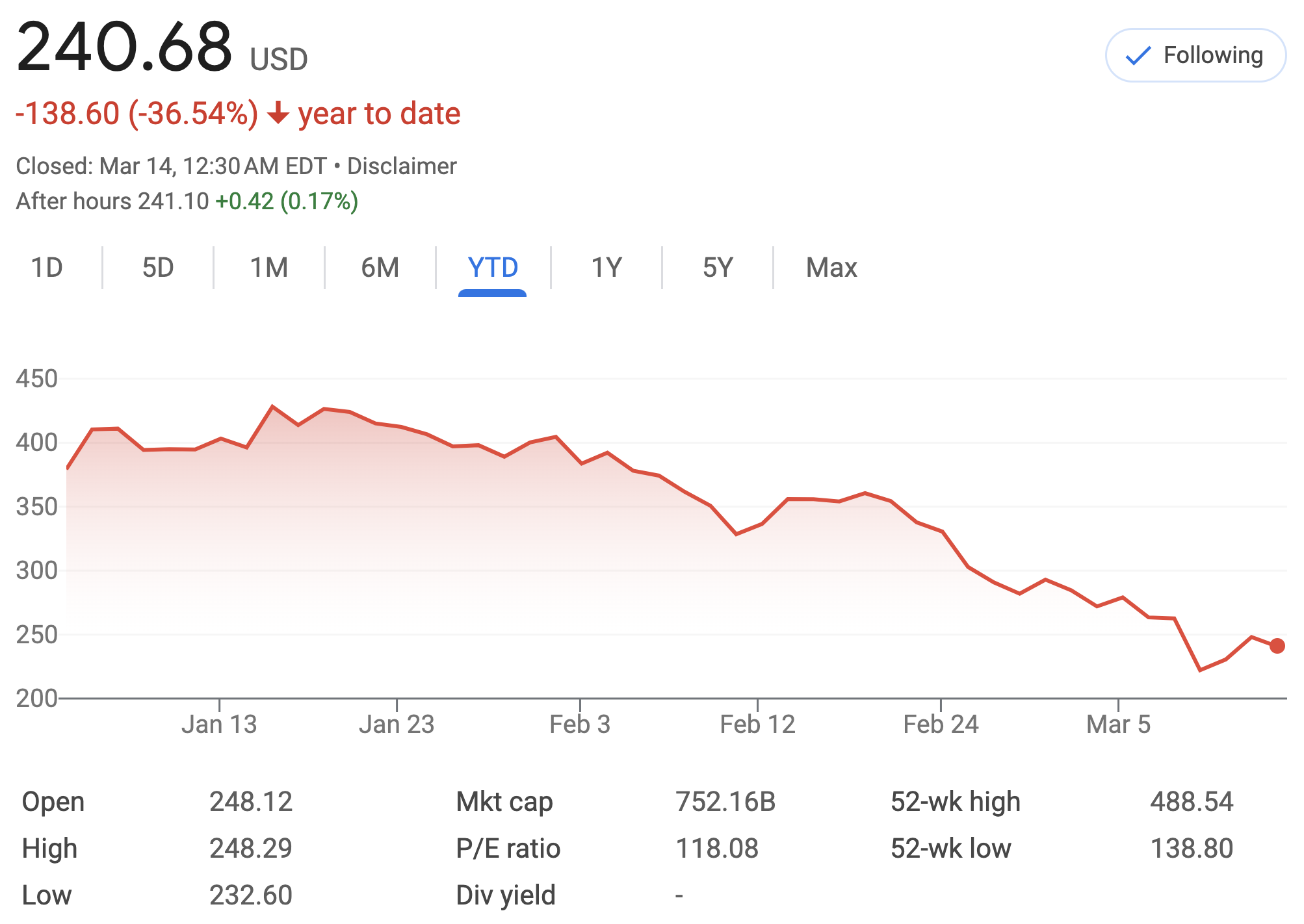
Tesla’s P/E ratio has historically been much higher than the automotive industry average. While a traditional car company might trade at a P/E of 6 to 10, Tesla has frequently traded at a P/E of 40, 60, or even over 100. This disparity exists because the market views Tesla’s software-like margins (from FSD and over-the-air updates) as more valuable than the low-margin business of selling physical vehicles. If the current price of the stock drops while earnings remain stable, the P/E ratio becomes more attractive to value investors, potentially creating a “buy the dip” opportunity.
Cash Flow and Capital Expenditures
Tesla’s ability to generate free cash flow while simultaneously building multi-billion dollar “Gigafactories” is a testament to its operational efficiency. Unlike many EV startups that are burning through cash and nearing bankruptcy, Tesla has a robust balance sheet. The current stock price is bolstered by the company’s ability to self-fund its growth. High capital expenditure (CapEx) is often viewed positively by Tesla investors because it signals that the company is reinvesting in its own future, whether that be through battery chemistry research or the expansion of the Supercharger network.
Macroeconomic Pressures on the Automotive Sector
No stock exists in a vacuum, and Tesla is particularly sensitive to the broader economic climate. The current price is often a reflection of global fiscal policy as much as it is a reflection of the company’s internal performance.
Interest Rates and Consumer Borrowing
Most consumers do not buy cars with cash; they finance them. When central banks raise interest rates to combat inflation, the cost of borrowing increases. This makes a $45,000 Tesla Model 3 significantly more expensive on a monthly payment basis than it was during the era of “easy money.” Consequently, high interest rates can dampen demand, leading the market to price in lower sales expectations. The current price of Tesla stock is highly sensitive to Federal Reserve announcements regarding interest rate hikes or pauses.
Global Supply Chain and Regulatory Credits
Tesla has historically benefited from selling regulatory credits to other automakers who fail to meet emissions standards. While this was once a primary driver of Tesla’s profitability, it is becoming a smaller piece of the pie as other companies produce more EVs. Additionally, the price of lithium, cobalt, and nickel—essential for battery production—directly impacts Tesla’s bottom line. Fluctuations in these commodity prices are quickly reflected in the stock’s daily movements.
Long-term Investment Outlook for Tesla Shareholders
For the long-term investor, the current price of Tesla stock is merely a data point in a much larger trajectory. The investment thesis for Tesla usually extends beyond the next quarter and focuses on the “energy ecosystem.”
The Energy Storage Opportunity
While vehicles are the most visible part of Tesla’s business, the Tesla Energy division is growing rapidly. Megapack and Powerwall installations are becoming a critical part of the global transition to renewable energy. Some analysts believe that the energy storage side of the business could eventually rival the automotive side in terms of revenue and profit. The current stock price may not fully reflect the long-term value of Tesla as a utility-scale energy provider.
Strategic Diversification and the Robotaxi Future
The ultimate goal for many Tesla bulls is the realization of a “Robotaxi” fleet. This would allow Tesla owners to opt their cars into an autonomous ride-sharing network, creating a recurring revenue stream for both the owner and the company. While this remains a futuristic concept, the current price of Tesla stock contains a “lottery ticket” element based on this possibility. If Tesla achieves autonomy before its competitors, the current price may one day be seen as a significant bargain.
In conclusion, the current price of Tesla stock is a complex summation of its manufacturing prowess, its leadership in artificial intelligence, and the global economic forces shaping the transition to sustainable energy. Whether the stock is perceived as a “buy,” “hold,” or “sell” depends entirely on an investor’s belief in the company’s ability to execute its ambitious roadmap in an increasingly competitive world. Monitoring the price requires a disciplined approach, focusing on the core business metrics that drive long-term value while ignoring the ephemeral volatility of the daily market.
aViewFromTheCave is a participant in the Amazon Services LLC Associates Program, an affiliate advertising program designed to provide a means for sites to earn advertising fees by advertising and linking to Amazon.com. Amazon, the Amazon logo, AmazonSupply, and the AmazonSupply logo are trademarks of Amazon.com, Inc. or its affiliates. As an Amazon Associate we earn affiliate commissions from qualifying purchases.