
In the landscape of modern business finance and personal fiscal responsibility, few acronyms carry as much weight as EFTPS. Standing for the Electronic Federal Tax Payment System, EFTPS is a free service provided by the U.S. Department of the Treasury that allows businesses and individual taxpayers to pay their federal taxes electronically. While the name might seem straightforward, the system represents a critical shift from traditional, manual tax processing to a streamlined, digital-first approach to government revenue collection. For business owners, financial officers, and high-net-worth individuals, understanding EFTPS is not merely an academic exercise; it is a fundamental requirement for maintaining compliance, managing cash flow, and ensuring the long-term health of one’s financial portfolio.
The Mechanics of EFTPS: A Cornerstone of Modern Financial Compliance
The Electronic Federal Tax Payment System was designed to modernize the way the Internal Revenue Service (IRS) and the Treasury Department interact with taxpayers. Before its widespread adoption, tax payments were largely handled through paper checks and physical coupons, a process that was slow, prone to clerical errors, and difficult to track in real-time. EFTPS replaced this antiquated methodology with a secure, internet-based platform that facilitates the transfer of funds directly from a bank account to the Treasury.
How the System Operates for Businesses and Individuals
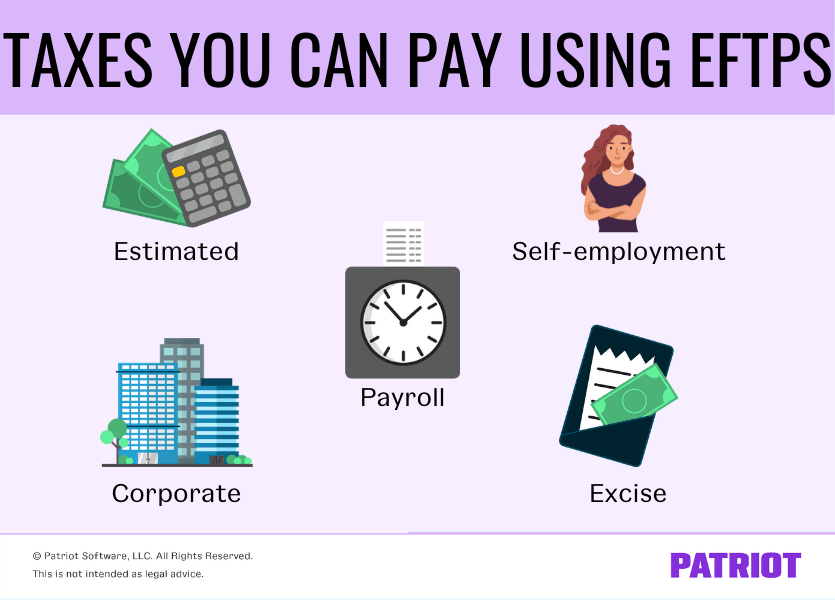
At its core, EFTPS acts as a secure portal for any federal tax obligation. This includes corporate income taxes, employment taxes (such as Social Security and Medicare), excise taxes, and estimated quarterly taxes for self-employed individuals or those with significant investment income. To use the system, a taxpayer must first go through a formal enrollment process. This involves providing a Taxpayer Identification Number (TIN)—typically an Employer Identification Number (EIN) for businesses or a Social Security Number (SSN) for individuals—and linking a valid bank account through which the Automated Clearing House (ACH) transfers will occur.
Once enrolled, the user receives a Personal Identification Number (PIN) via traditional mail to ensure the highest level of security. This multi-factor authentication process reflects the Treasury’s commitment to protecting financial data. From a functional standpoint, the system allows users to log in at any time, 24 hours a day, 7 days a week, to schedule payments. This flexibility is a significant upgrade over traditional banking hours or the reliance on postal service delivery times.
The Role of the Treasury and IRS Partnership
It is important to distinguish that while the IRS manages tax law and enforcement, EFTPS is a service of the U.S. Bureau of the Fiscal Service, a division of the Department of the Treasury. This distinction highlights the system’s role as a financial tool rather than just a reporting mechanism. It is a bridge between private capital and the public ledger. By using EFTPS, taxpayers ensure that their funds are credited to the correct tax period and the specific type of tax they are intending to pay, reducing the risk of “misapplied payments” that often plague manual filers.
Strategic Financial Management Through EFTPS
For the savvy financial manager, EFTPS is far more than a simple payment gateway; it is a strategic asset for liquidity management. In the world of business finance, timing is everything. The ability to control exactly when cash leaves a corporate account can be the difference between a healthy balance sheet and a short-term liquidity crisis.
Cash Flow Optimization and Scheduled Payments
One of the most powerful features of EFTPS is the ability to schedule payments in advance. Businesses can schedule payments up to 120 days in advance, while individuals can schedule estimated tax payments up to 365 days in advance. From a “Money” perspective, this allows for precise cash flow forecasting. Instead of reacting to a tax deadline at the last minute, a Chief Financial Officer (CFO) can align tax disbursements with expected accounts receivable cycles.
For example, if a company knows it has a significant contract payment arriving in mid-September, it can schedule its quarterly estimated tax payment for the third week of September. This ensures that the tax obligation is met on time to avoid penalties, while simultaneously ensuring that the company’s operating capital remains available for as long as possible. This level of granular control over outflows is essential for businesses operating on tight margins or those in capital-intensive industries.
Ensuring Accuracy and Reducing Administrative Overhead
The administrative cost of tax compliance is a significant burden for many enterprises. Manual check-writing, tracking certified mail receipts, and reconciling bank statements against tax filings consume valuable hours that could be better spent on revenue-generating activities. EFTPS automates much of this process. Every transaction generates an immediate EFT Acknowledgement Number. This digital receipt serves as an immutable record of the payment, which can be easily cross-referenced by accounting teams during month-end closes or annual audits.
Furthermore, the system minimizes the risk of human error. When a payment is made through EFTPS, the taxpayer selects the specific tax form (such as Form 941 for quarterly employer returns or Form 1120 for corporate income tax) and the appropriate tax period. This direct data entry significantly reduces the likelihood that a payment will be credited to the wrong year or the wrong tax category—errors that often lead to frustrating and expensive “Notice of Intent to Levy” letters from the IRS.

Security and Risk Mitigation in Federal Tax Obligations
In an era where cyber threats are a constant concern for financial institutions and private enterprises, the security of tax payments is paramount. EFTPS utilizes industry-leading encryption and security protocols to protect the integrity of the funds being transferred.
The Role of Digital Security in Tax Transfers
When a taxpayer initiates a payment through EFTPS, the information does not just sit on a public server. It is transmitted through secure channels to the financial institution designated by the Treasury. The use of a dedicated PIN, a password, and a TIN creates a triple-layered security environment. For businesses, this is particularly important because it prevents unauthorized personnel from siphoning funds under the guise of tax payments. The system also allows for “Inquiry Only” access, where certain employees (like an outside bookkeeper or a junior accountant) can view payment history without having the authority to initiate new transfers.
From a risk management perspective, using EFTPS is significantly safer than mailing checks. Paper checks contain a wealth of sensitive information, including bank account numbers and routing numbers, and they can be intercepted, altered, or lost in the mail. By moving to a digital-only system, a business effectively closes a significant vulnerability in its financial operations.
Navigating Deadlines to Avoid Costly Penalties
The IRS is notorious for its strict adherence to deadlines, and the penalties for late payments can be draconian. For many federal taxes, the failure-to-pay penalty is 0.5% of the unpaid taxes for each month or part of a month the tax remains unpaid, up to 25%. For employment taxes, the stakes are even higher, as the “Trust Fund Recovery Penalty” can hold business owners personally liable for unpaid payroll taxes.
EFTPS provides a safety net against these risks through its “same-day” and “next-day” settlement capabilities. To be considered timely, an EFTPS payment must usually be initiated by 8:00 PM Eastern Time the day before the due date. This clear, definitive cut-off time eliminates the ambiguity of “postmarked by” dates. For emergency situations, the Treasury also allows for Same-Day Wire transfers through the Federal Tax Collection Service (FTCS), though these often incur fees from the user’s bank. Having EFTPS as the primary vehicle for payments ensures that the vast majority of obligations are met with plenty of time to spare.
Integrating EFTPS into Your Business Finance Ecosystem
The modern business does not operate in a vacuum. Financial tools must talk to one another to provide a holistic view of an organization’s health. EFTPS is designed to integrate into this broader ecosystem, working alongside payroll providers, accounting software, and tax professionals.
Coordination with Payroll and Accounting Software
For companies with employees, payroll is often the largest recurring expense. Most major payroll service providers integrate directly with EFTPS. In these arrangements, the payroll provider acts as a “Reporting Agent,” using their own EFTPS credentials to remit taxes on behalf of the client. However, the Treasury Department strongly recommends that business owners maintain their own EFTPS “Inquiry” account to verify that these third parties are actually making the payments as promised. This provides an essential layer of internal control and fiduciary oversight.
For smaller businesses or sole proprietors who handle their own finances, EFTPS data can be exported and imported into accounting software like QuickBooks or Xero. This ensures that the general ledger remains accurate and that “Taxes Paid” accounts are reconciled with the actual cash moved out of the business bank account.
The Importance of Record Keeping for Financial Audits
In the event of an IRS audit or a financial due diligence process (such as during a business sale or a venture capital round), the ability to produce a clean, verifiable history of tax compliance is invaluable. EFTPS stores up to 16 months of payment history online. For longer-term record keeping, financial managers can download these reports to maintain a permanent archive.
This digital trail is far superior to a folder full of cancelled checks. It demonstrates to auditors, investors, and lenders that the business is managed with professional rigor and that its tax obligations are handled with transparency. In the world of high-stakes finance, this level of organization builds trust and can even impact a company’s valuation or its ability to secure favorable loan terms.

Conclusion: The Strategic Value of EFTPS
In summary, EFTPS stands for the Electronic Federal Tax Payment System, but for the modern taxpayer, it stands for much more. It is a tool for precision, a shield for security, and a facilitator of sophisticated cash management. By embracing this digital infrastructure, businesses and individuals move away from the reactive, paper-based struggles of the past and toward a proactive, integrated financial future. Whether you are managing a multinational corporation’s tax strategy or simply ensuring your own quarterly estimated payments are accurate, EFTPS is an indispensable component of a sound financial foundation. In a world where “time is money,” the efficiency and reliability of EFTPS provide a return on investment that far exceeds the simple act of paying a bill.
aViewFromTheCave is a participant in the Amazon Services LLC Associates Program, an affiliate advertising program designed to provide a means for sites to earn advertising fees by advertising and linking to Amazon.com. Amazon, the Amazon logo, AmazonSupply, and the AmazonSupply logo are trademarks of Amazon.com, Inc. or its affiliates. As an Amazon Associate we earn affiliate commissions from qualifying purchases.