
The United States tax system operates on a “pay-as-you-go” basis. This means the Internal Revenue Service (IRS) expects to receive tax payments as you earn or receive income throughout the year, rather than in one lump sum during the spring filing season. While W-2 employees fulfill this obligation through automatic payroll withholding, entrepreneurs, freelancers, and investors must take a proactive approach. Understanding how to make a quarterly tax payment is not just a matter of compliance; it is a fundamental pillar of sound financial management that prevents liquidity crises and costly penalties.
Understanding Estimated Taxes: Who Needs to Pay?
The first step in mastering your business finances is determining whether you are legally required to make estimated quarterly payments. Generally, if you expect to owe at least $1,000 in tax for the current year after subtracting your withholding and credits, you likely fall into the category of taxpayers who must pay quarterly.
The Self-Employed and Freelance Workforce
For those in the “gig economy,” independent contractors, and sole proprietors, there is no employer to facilitate tax withholding. Every dollar earned is “gross” income, and the responsibility for both the employer and employee portions of Social Security and Medicare taxes—collectively known as self-employment tax—falls entirely on the individual. If your freelance business is your primary source of income, or even a significant side hustle, you must evaluate your tax liability every three months.
Investors and Passive Income Earners
Estimated tax requirements are not limited to active labor. If you receive substantial income from dividends, interest, capital gains, or rental properties, these funds are often distributed without tax being withheld. High-net-worth individuals or those with diverse investment portfolios often find that their year-end tax bill exceeds the thresholds for safe filing, necessitating quarterly installments to avoid underpayment penalties.
Corporations and Partnerships
S-corporation shareholders and partners in a partnership generally pay taxes on their share of the business’s income on their individual tax returns. However, C-corporations have their own set of requirements. If a C-corporation expects to owe $500 or more in tax, it must make estimated payments. Regardless of the business structure, the principle remains the same: the government requires consistent access to the revenue generated by economic activity.
Calculating Your Quarterly Liability
The most daunting aspect of quarterly payments for many is the calculation. Unlike a year-end return where all figures are finalized, quarterly payments require a degree of forecasting. However, the IRS provides frameworks to ensure you remain compliant even if your income fluctuates.
The Safe Harbor Rule
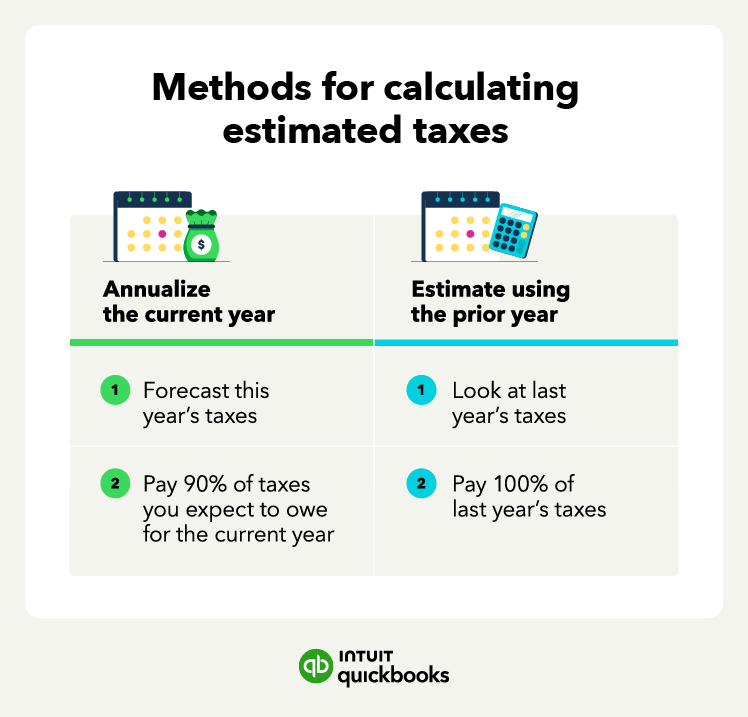
To protect taxpayers from the volatility of business cycles, the IRS offers “Safe Harbor” provisions. You can generally avoid an underpayment penalty if you pay at least 90% of the tax shown on your return for the current year or 100% of the tax shown on your return for the prior year (whichever is smaller). For individuals with an adjusted gross income (AGI) over $150,000, the prior-year threshold increases to 110%. Following the prior-year rule is often the simplest strategy for business owners because it is based on a known, fixed number rather than an estimate of future earnings.
Using Form 1040-ES
The IRS provides Form 1040-ES (Estimated Tax for Individuals) to help taxpayers calculate their liability. This document includes a worksheet that guides you through estimating your expected adjusted gross income, taxable income, taxes, deductions, and credits. It is a vital tool for those whose income has changed significantly from the previous year. If you expect your income to be much higher this year, relying solely on the prior-year safe harbor might result in a massive tax bill in April, even if you avoid penalties. Calculating based on current projections helps manage cash flow more effectively.
Adjusting for Fluctuating Income
If your business is seasonal—for example, a retail business that makes 60% of its revenue in the fourth quarter—you may use the “annualized income installment method.” This allows you to pay an amount that reflects the income you actually earned during specific periods. While this method requires more complex record-keeping and the filing of Form 2210 with your annual return, it prevents you from having to pay high tax installments during your slow months.
Methods for Submitting Your Payments
Once you have determined how much you owe, the next step is the actual transfer of funds. The IRS has modernized its systems, offering several digital pathways that are faster and more secure than traditional mail.
IRS Direct Pay
For individuals and sole proprietors, IRS Direct Pay is the most efficient method. This service allows you to pay directly from your checking or savings account without any processing fees. You do not need to register for an account; you simply verify your identity using information from a previous year’s tax return. After the payment is submitted, you receive an immediate confirmation number, which is essential for your financial records.
Electronic Federal Tax Payment System (EFTPS)
The EFTPS is a free service provided by the U.S. Department of the Treasury and is highly recommended for businesses, especially those with employees or complex corporate structures. Unlike Direct Pay, EFTPS requires an initial registration process, after which you receive a PIN by mail. Once set up, it offers a robust dashboard where you can schedule payments up to 365 days in advance and view a detailed history of all past transactions. This is the gold standard for maintaining a professional audit trail.
Credit, Debit, and Digital Wallets
The IRS utilizes third-party payment processors to accept credit and debit card payments, as well as digital wallets like PayPal or Click to Pay. While convenient, these methods come with processing fees that are usually a percentage of the total payment. For a large tax bill, these fees can be substantial. Business owners should weigh the benefit of earning credit card rewards against the cost of the processing fee to ensure it makes financial sense.
Traditional Mail (Form 1040-V)
For those who prefer physical documentation, you can mail a check or money order along with a payment voucher (Form 1040-V). However, this method is increasingly discouraged due to the risk of mail delays or lost documents. If you choose this route, it is wise to send the payment via certified mail with a return receipt requested to prove the payment was sent before the deadline.
Important Deadlines and the Cost of Non-Compliance
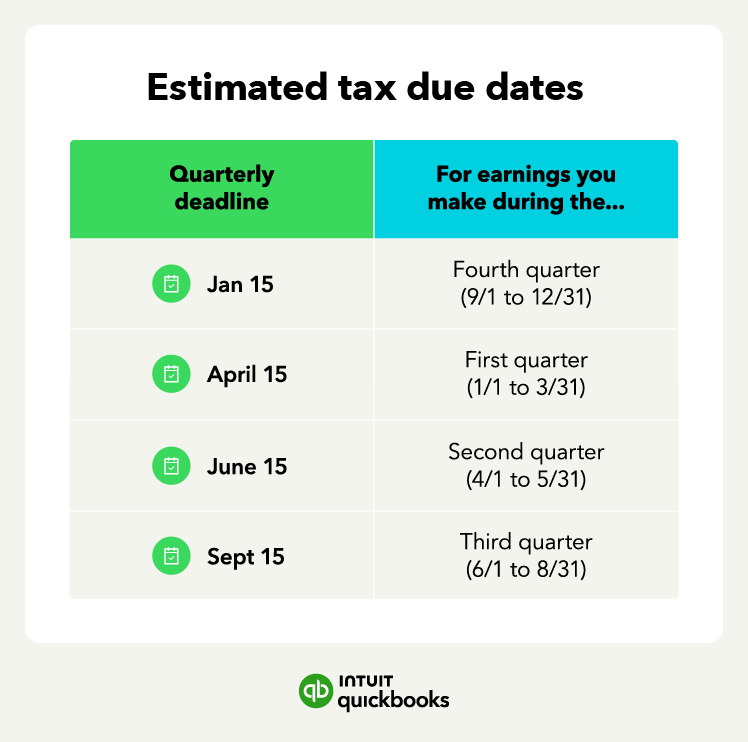
Quarterly taxes are not paid at the end of each calendar quarter. Instead, the IRS follows a specific schedule that divides the year into four distinct payment periods.
The Standard Schedule
The deadlines generally fall as follows:
-
Period 1 (Jan 1 – March 31): Payment due April 15.
-
Period 2 (April 1 – May 31): Payment due June 15.
-
Period 3 (June 1 – Aug 31): Payment due September 15.
-
Period 4 (Sept 1 – Dec 31): Payment due January 15 of the following year.
If these dates fall on a weekend or a legal holiday, the deadline is pushed to the next business day. Missing these dates, even by a day, can trigger an underpayment penalty.
Calculating Underpayment Penalties
The penalty for underpayment is essentially interest charged on the amount you should have paid from the date it was due. The rate is set quarterly by the IRS and is based on the federal short-term rate plus three percentage points. Because the penalty is calculated on a per-quarter basis, you cannot “make up” for a missed first-quarter payment by doubling your second-quarter payment; the penalty for the first quarter will still apply for the duration that the funds were missing.
Best Practices for Financial Management
Managing quarterly taxes is less about math and more about discipline. Integrating tax preparation into your monthly business routine can eliminate the stress of “tax season” and ensure your business remains liquid.
Automating Your Tax Savings
The most common mistake freelancers make is treating their entire gross check as spendable income. A best practice is to open a separate, high-yield savings account specifically for taxes. Every time you receive a payment from a client, immediately transfer 25% to 30% of that check into the tax account. By the time the quarterly deadline arrives, the money is already set aside, and you may even earn a small amount of interest in the meantime.
Keeping Meticulous Records
Digital accounting software is an invaluable asset for the modern professional. Tools like QuickBooks, Xero, or specialized apps for freelancers can track your income and expenses in real-time, providing an ongoing estimate of what your tax liability looks like. Keeping digital copies of all receipts and invoices ensures that when you calculate your quarterly payment, you are taking full advantage of all available deductions, thereby reducing your overall tax burden.

When to Consult a Professional
While many small business owners handle their own quarterly payments, there comes a point where complexity outpaces DIY methods. If you are dealing with multi-state income, international clients, complex depreciation schedules, or significant changes in business structure, a Certified Public Accountant (CPA) or Enrolled Agent (EA) is a vital investment. A professional can help you navigate the nuances of the tax code, ensuring you aren’t overpaying while keeping you safely within the bounds of the law.
Quarterly tax payments are a sign of a growing, successful enterprise. By treating these payments as a regular operational expense rather than a surprise hurdle, you position your business for long-term stability and growth. Accuracy in your estimations and timeliness in your submissions are the hallmarks of a sophisticated financial strategy.
aViewFromTheCave is a participant in the Amazon Services LLC Associates Program, an affiliate advertising program designed to provide a means for sites to earn advertising fees by advertising and linking to Amazon.com. Amazon, the Amazon logo, AmazonSupply, and the AmazonSupply logo are trademarks of Amazon.com, Inc. or its affiliates. As an Amazon Associate we earn affiliate commissions from qualifying purchases.