
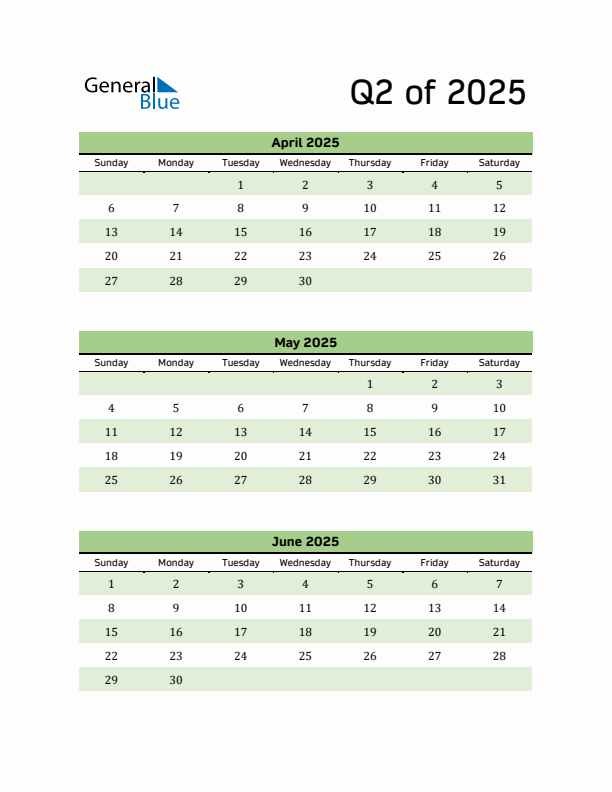
In the world of finance, the transition from the second quarter (Q2) to the third quarter (Q3) is more than just a date on a calendar; it is a critical pivot point for investors, business owners, and personal finance enthusiasts. For the vast majority of the global financial world, Q2 2025 officially ends at midnight on June 30, 2025.
Understanding this deadline is essential for accurate reporting, tax compliance, and strategic rebalancing. Whether you are tracking corporate earnings, managing a small business budget, or auditing your personal investment portfolio, the end of Q2 represents the halfway mark of the year—a time to assess performance against annual goals and adjust course for the remaining six months.

The Standard Calendar: Why June 30 is the Universal Pivot Point
For those following the standard Gregorian calendar, the second quarter of 2025 begins on April 1 and concludes on June 30. This ninety-one-day window serves as the primary metric for measuring short-term economic health. Economists and market analysts view the conclusion of Q2 as the “Mid-Year Review” period, where the initial momentum of Q1 is either validated or corrected.
The Significance of the June 30 Deadline
The June 30 deadline serves as a hard stop for quarterly financial statements. Publicly traded companies are required by regulatory bodies, such as the Securities and Exchange Commission (SEC) in the United States, to file Form 10-Q within a specific timeframe after the quarter closes. This document provides a comprehensive view of the company’s financial position, including its balance sheet, income statement, and cash flow statement.
For individual investors, June 30 marks the final opportunity to execute trades that will be reflected in mid-year brokerage statements. It is the date when mutual funds and ETFs often perform “window dressing”—a practice where fund managers buy high-performing stocks and sell losers to make their quarterly reports look more attractive to shareholders.
Global Variations in Fiscal Year Ends
While June 30 is the end of the second calendar quarter, it is important to note that many institutions operate on a different fiscal schedule. For example:
-
The Australian Fiscal Year: In Australia, June 30 is not just the end of Q2; it is the end of the entire fiscal year. This makes the June deadline the most significant date for tax filing and annual reporting for Australian businesses and individuals.
-
The U.S. Federal Government: The U.S. government operates on a fiscal year that begins on October 1. In this context, June 30 marks the end of the third fiscal quarter (Q3), with the fourth quarter beginning on July 1.
-
Retail and Consumer Goods: Many retailers use a 4-5-4 calendar, often ending their fiscal years in January to account for the post-holiday return season. For these entities, “Q2” may end in late July or early August.
The Investor’s Lens: Why June 30, 2025, Matters for Your Portfolio
As Q2 2025 draws to a close, investors must prepare for the “Earnings Season” that typically begins in mid-July. The data gathered up until June 30 dictates the narrative for the second half of the year.
Mid-Year Portfolio Rebalancing
One of the most effective strategies for maintaining a healthy portfolio is mid-year rebalancing. If the equity markets have performed exceptionally well during the first half of 2025, your portfolio may now be “top-heavy” with stocks, exposing you to more risk than your original asset allocation intended.
By the end of Q2, savvy investors review their holdings. If your target allocation is 60% stocks and 40% bonds, but a market surge has pushed your stocks to 70%, June 30 is the logical time to sell a portion of those equities and reinvest in bonds or cash equivalents. This locks in gains and maintains your intended risk profile.
Analyzing Earnings Expectations
The weeks leading up to the end of Q2 are often characterized by “guidance” releases. Companies may issue warnings if they expect to miss their Q2 targets or provide optimistic outlooks if they are exceeding expectations. For investors, monitoring these shifts before June 30 can be the difference between capitalizing on a price movement and being caught in a post-earnings sell-off.
Tax-Loss Harvesting: A Mid-Year Approach
While tax-loss harvesting is traditionally associated with December, doing a preliminary sweep at the end of Q2 can be beneficial. By identifying underperforming assets and realizing losses in June, you can offset any capital gains realized in the first half of the year. This proactive approach prevents a massive tax bill in April 2026 and allows for more strategic reinvestment of the proceeds during the Q3 market shifts.
Corporate Financial Management: Navigating the End of the Quarter
For business owners and finance department heads, the end of Q2 2025 is a period of intense logistical and analytical work. It is the time to finalize the “Books” and ensure that the company’s financial health is accurately represented.
Closing the Books and Reconciling Accounts
The primary task at the end of June is account reconciliation. This involves ensuring that every transaction—from payroll and vendor payments to client invoices—is correctly recorded in the general ledger.
-
Accounts Receivable (AR): Businesses often push for a “collection blitz” in the final two weeks of June to ensure that cash on hand is maximized for the quarterly report.
-
Accounts Payable (AP): Conversely, some businesses may strategically time their payments to vendors to manage their cash-on-hand metrics, though this must be done within the bounds of ethical accounting practices.

Mid-Year Budget vs. Actual (BVA) Analysis
By June 30, a business has six months of solid data. This is the optimal time to conduct a Budget vs. Actual analysis. Are you overspending on marketing? Is the cost of goods sold (COGS) higher than projected due to inflation in early 2025?
The end of Q2 allows management to “re-forecast.” If the company is significantly ahead of its revenue targets, leadership might approve additional capital expenditures (CapEx) for Q3 and Q4. If the company is underperforming, the Q2 close provides the necessary data to implement cost-cutting measures before the fiscal year reaches its final stretch.
Evaluating Key Performance Indicators (KPIs)
Beyond the balance sheet, Q2’s end is the deadline for measuring non-financial KPIs that impact the bottom line. This includes customer acquisition costs (CAC), lifetime value (LTV), and employee turnover rates. High-growth firms use the June 30 data to determine if they need to scale their operations or pivot their strategy to meet year-end objectives.
Tax Obligations and Regulatory Deadlines in Q2 2025
The end of the second quarter is intrinsically linked to the tax calendar. In the United States, the Internal Revenue Service (IRS) sets specific deadlines that coincide with the quarterly cycle.
Estimated Quarterly Tax Payments
For freelancers, independent contractors, and small business owners, the end of Q2 signals one of the most important tax dates: June 15. Although technically occurring two weeks before the quarter officially ends, the second installment of estimated tax payments (Form 1040-ES) is due in mid-June.
Missing this deadline or underpaying can result in penalties. Therefore, the weeks leading up to the end of Q2 should be spent calculating net income from April and May to ensure the June payment is accurate. Using the end of Q2 to review these payments helps avoid surprises when filing the annual return.
Compliance for Corporations and International Entities
For larger corporations, the end of Q2 may trigger specific regulatory filings. In the UK, companies must be mindful of their “Quarterly Instalment Payments” (QIPs) if their profits exceed certain thresholds. In many European jurisdictions, VAT (Value Added Tax) returns are filed on a quarterly basis, making the end of June a critical deadline for tax compliance.
The Mid-Year Personal Finance Audit: Preparing for H2 2025
For the individual focused on wealth building and financial freedom, June 30, 2025, should be treated as a “Personal Financial New Year.” It is the perfect moment to step back and evaluate your financial trajectory.
Tracking Savings and Debt Reduction Goals
Did you resolve to save $10,000 in 2025? By June 30, you should ideally be at the $5,000 mark. If you are behind, the end of Q2 is the time to identify “lifestyle creep” or unexpected expenses that hindered your progress.
Similarly, for those focused on debt reduction, the mid-year mark is the time to look at the interest rates on credit cards or personal loans. If rates have shifted or if your credit score has improved during Q1 and Q2, the end of the quarter is an excellent time to explore refinancing options or debt consolidation strategies to accelerate your progress in the second half of the year (H2).
Retirement Account Contributions
The end of Q2 is a logical time to check your 401(k) or IRA contribution levels. If you are not on track to hit the annual contribution limit, you can increase your payroll deductions starting with the first paycheck in July. This “set it and forget it” adjustment ensures that you maximize tax-advantaged growth for the remainder of 2025.
Reviewing Insurance and Estate Plans
Financial health isn’t just about the numbers in your bank account; it’s about protection. The end of Q2 is a good time to review insurance premiums—home, auto, and life. Often, rates can be lowered by shopping around or bundling services at the mid-year mark. Furthermore, if you’ve had a major life event in the first half of 2025 (marriage, birth, or home purchase), June 30 serves as a reminder to update beneficiaries on your accounts and review your estate planning documents.
Looking Ahead: The Transition to Q3 and Beyond
As the clock strikes midnight on June 30, 2025, the financial focus shifts immediately to the third quarter. Q3 is historically a unique period in the markets, often characterized by “summer doldrums” in July and August, followed by increased volatility in September.
By mastering the end of Q2, you position yourself to navigate these shifts with confidence. The data you finalize in June becomes the foundation for your Q3 strategy. For the business owner, it’s the blueprint for the next growth phase. For the investor, it’s the benchmark for performance. For the individual, it’s the peace of mind that comes with being in total control of your financial destiny.
Q2 2025 ends on June 30, but the impact of how you manage that deadline will resonate throughout the rest of the year and into your financial future. Use this mid-year milestone to refine your vision, secure your assets, and prepare for the opportunities that the second half of 2025 will undoubtedly bring.
aViewFromTheCave is a participant in the Amazon Services LLC Associates Program, an affiliate advertising program designed to provide a means for sites to earn advertising fees by advertising and linking to Amazon.com. Amazon, the Amazon logo, AmazonSupply, and the AmazonSupply logo are trademarks of Amazon.com, Inc. or its affiliates. As an Amazon Associate we earn affiliate commissions from qualifying purchases.