
The landscape of interactive entertainment has undergone a seismic shift over the last decade. While the traditional model of gaming required expensive, high-end hardware—bulky towers with power-hungry graphics cards or the latest home consoles—a new paradigm has emerged. At the forefront of this transformation is NVIDIA’s GeForce Now. In simple terms, GeForce Now is a cloud gaming service that allows users to stream high-end video games over the internet to almost any device. However, beneath that simple definition lies a complex infrastructure of data centers, cutting-edge GPU technology, and a unique business model that separates it from its competitors.
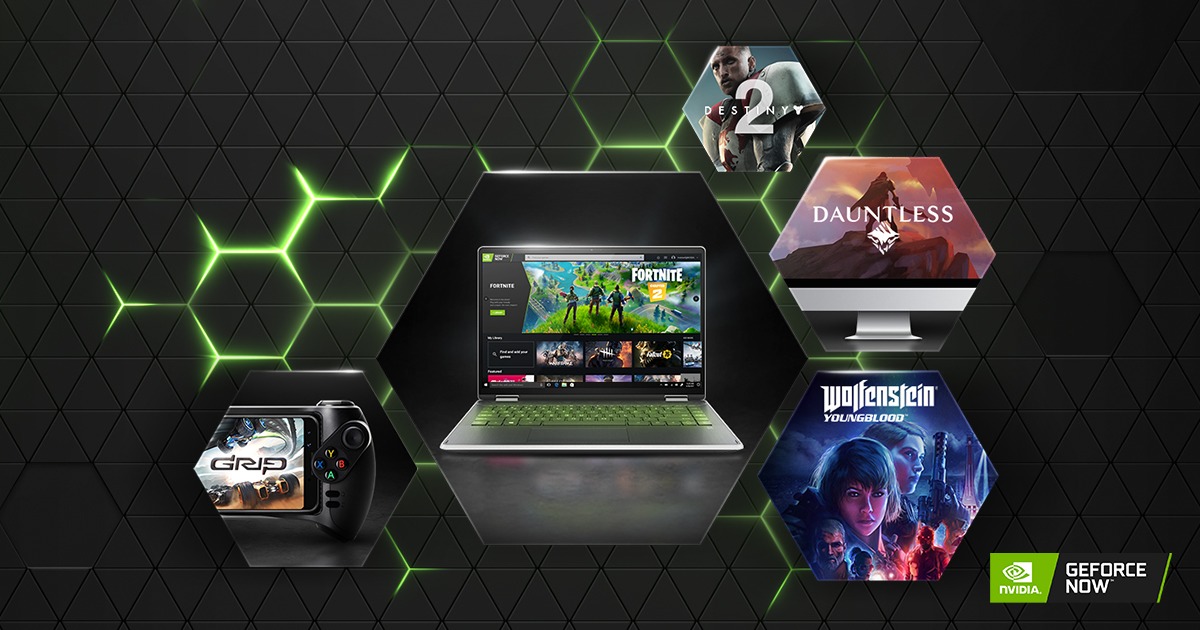
GeForce Now represents the culmination of NVIDIA’s decades of expertise in graphics processing. It is not merely a library of games; it is a high-performance gaming PC in the cloud. By leveraging the power of remote servers, it removes the hardware barrier to entry, democratizing access to triple-A gaming titles for anyone with a stable internet connection.
Understanding the Core Technology: How Cloud Gaming Works
To understand GeForce Now, one must first understand the mechanics of cloud streaming. Traditionally, when you play a game, your local hardware (CPU and GPU) handles all the calculations—rendering textures, calculating physics, and processing AI. In the cloud gaming model, these intensive tasks are moved to a remote data center.
The Infrastructure of GeForce Now
NVIDIA utilizes its world-class data centers, populated with server-grade versions of its consumer graphics cards. When a user launches a game on GeForce Now, they are essentially taking control of a virtual machine equipped with a high-end NVIDIA GeForce RTX GPU. The game runs on this remote machine, and the visual output is encoded into a video stream and sent back to the user’s device.
The user’s inputs—keystrokes, mouse movements, or controller button presses—are sent back to the server in milliseconds. This loop must be incredibly fast to maintain the illusion of local play. This is where NVIDIA’s proprietary streaming protocols come into play, optimizing the delivery of video frames to minimize latency and maximize visual fidelity.
Latency and Connection Requirements
The primary challenge of any cloud service is latency, often referred to as “ping.” Because data must travel from the user to the server and back, there is an inherent delay. NVIDIA has mitigated this through several technological breakthroughs. By using low-latency encoders and a global network of data centers, they ensure that the server is physically as close to the user as possible.
For a high-quality experience, GeForce Now requires a stable internet connection. While it can function on speeds as low as 15Mbps for 720p at 60fps, the service truly shines at 35Mbps or higher for 1080p, and 45Mbps+ for 4K streaming. Crucially, the quality of the connection (jitter and packet loss) is often more important than raw speed, making wired Ethernet or 5GHz Wi-Fi the preferred methods of connection.
The “Bring Your Own Library” Model: A Unique Value Proposition
One of the most significant distinctions between GeForce Now and other cloud services, such as the now-defunct Google Stadia or Xbox Cloud Gaming, is its “Bring Your Own Games” (BYOG) philosophy.
Integration with Digital Storefronts
Unlike other platforms that require you to purchase games specifically for their service or subscribe to a closed rotating catalog, GeForce Now connects to existing digital storefronts. It supports major platforms including Steam, the Epic Games Store, Ubisoft Connect, GOG, and the Xbox PC Game Pass library.
This model is highly advantageous for the consumer. If you have spent years building a library of hundreds of games on Steam, you do not need to buy them again to play them in the cloud. Furthermore, if you ever decide to stop using GeForce Now and buy a physical gaming PC, your games stay with you. You are paying for the access to the hardware, not the software itself.
Game Compatibility and Support
While GeForce Now supports over 1,800 titles, it is important to note that not every game in existence is available. Game publishers must opt-in to the service. While most major publishers like Ubisoft, Electronic Arts, and Microsoft (following their acquisition of Activision Blizzard) are on board, some developers choose to keep their titles exclusive to other platforms. However, the library is constantly expanding, with “GfN Thursdays” serving as a weekly update where new titles are added to the compatibility list.
Subscription Tiers and Performance Benchmarks

NVIDIA offers a tiered approach to GeForce Now, catering to different budgets and performance requirements. This flexibility is a key part of its appeal, allowing users to choose the level of graphical fidelity they desire.
Free Tier vs. Priority
The Free Tier is a testament to NVIDIA’s confidence in their tech. It allows users to play their own games on a “Basic Rig” with standard access to servers. While it involves a one-hour session limit and may require waiting in a queue during peak times, it serves as a perfect “proof of concept” for users to test their internet connection before committing financially.
The Priority Tier upgrades the experience significantly. Subscribers gain “Premium Portal” access, meaning they bypass queues and get longer session lengths (up to six hours). More importantly, it unlocks RTX features, including Real-Time Ray Tracing and DLSS (Deep Learning Super Sampling), providing a visual experience comparable to a mid-to-high-range gaming PC.
The Ultimate Tier: The Power of the RTX 4080
The Ultimate Tier is the crown jewel of GeForce Now. This tier grants users access to the “GeForce Now SuperPODs,” which are powered by NVIDIA’s flagship RTX 4080-class performance. This tier supports 4K resolution at up to 120 frames per second (fps), or even 240 fps in a specialized “Competitive Mode” at 1080p.
Ultimate subscribers also benefit from NVIDIA Reflex technology, which reduces system latency to levels that rival local hardware. This makes the service viable even for fast-paced competitive shooters like Counter-Strike 2 or Apex Legends, where every millisecond counts. By providing the power of a $1,600 graphics card for a monthly subscription fee, NVIDIA offers an incredible value proposition for enthusiasts who don’t want to deal with the heat, noise, or upfront cost of a high-end PC.
Cross-Platform Accessibility: Gaming Without Limits
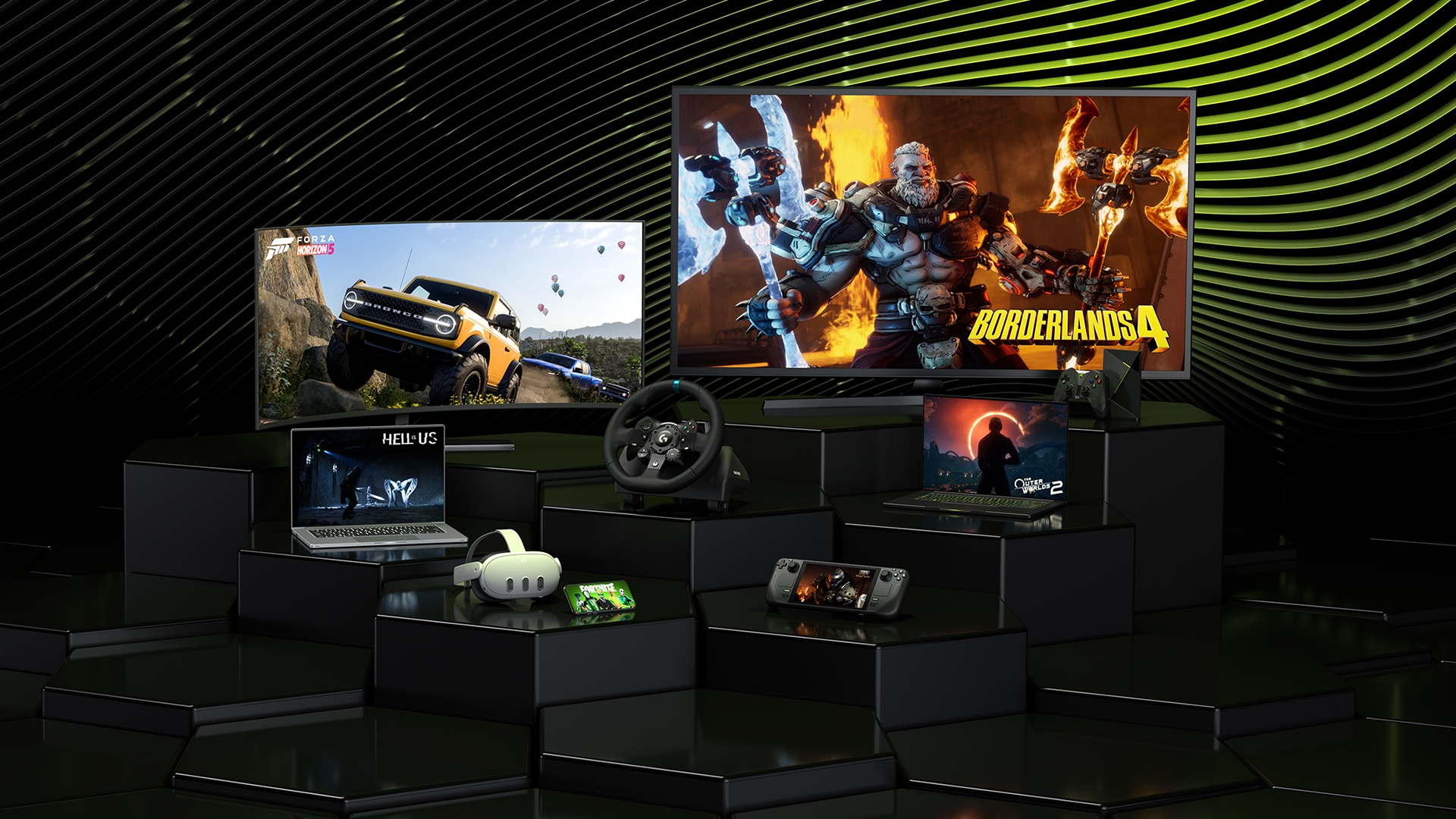
The true power of GeForce Now lies in its versatility. It effectively turns almost any screen into a high-end gaming rig.
Transforming Low-End Hardware
Because the heavy lifting is done in the cloud, the device used to display the game doesn’t need to be powerful. An aging MacBook Air, a cheap Chromebook, or a decade-old office PC can suddenly run Cyberpunk 2077 at max settings with Ray Tracing enabled. This extends the lifecycle of hardware and makes gaming accessible to people who cannot justify the cost of a dedicated gaming machine.
Mobile and Smart TV Integration
GeForce Now has robust support for mobile devices. On Android, a dedicated app provides a seamless experience, while iOS users can access the service via a Safari web app (due to Apple’s App Store policies). When paired with a mobile controller like the Backbone One or a Razer Kishi, a smartphone becomes a portable powerhouse.
Furthermore, NVIDIA has integrated GeForce Now directly into modern Smart TVs from manufacturers like LG and Samsung. By simply connecting a Bluetooth controller to the TV, users can play high-fidelity games without a console ever touching their living room setup. This “app-based” approach to gaming hardware is likely where the industry is headed in the long term.
The Future of Gaming: Why GeForce Now Matters
As we look toward the future of technology, GeForce Now is more than just a convenience; it is a preview of the next era of computing. We are moving toward a world where the specific capabilities of our local devices matter less than the quality of our connectivity.
AI and Cloud Synergy
NVIDIA is a leader in Artificial Intelligence, and they are increasingly integrating AI into the GeForce Now experience. Technologies like DLSS 3.5 with Ray Reconstruction are handled on the server side, allowing the cloud stream to look better than what most local PCs can produce. As AI continues to evolve, we can expect the cloud to provide even more sophisticated features, such as AI-generated textures or real-time language translation in multiplayer games, which would be too taxing for home hardware to handle alone.
Sustainability and Efficiency
There is also an environmental and economic argument for GeForce Now. Centralizing high-performance computing in data centers is often more energy-efficient than having millions of individual gaming PCs running at high wattage in homes. For the consumer, it eliminates the “e-waste” associated with constant hardware upgrade cycles. Instead of buying a new GPU every three years, the user simply waits for NVIDIA to upgrade their data centers, which they do regularly at no additional cost to the subscriber.
In conclusion, GeForce Now is a sophisticated bridge between the present and the future of gaming. By combining the ownership model of traditional PC gaming with the flexibility of the cloud, NVIDIA has created a service that appeals to both casual players and hardcore enthusiasts. It challenges the notion that high-end gaming must be expensive or stationary, proving that with a strong enough signal, the world’s most powerful gaming PC can exist anywhere you are.
aViewFromTheCave is a participant in the Amazon Services LLC Associates Program, an affiliate advertising program designed to provide a means for sites to earn advertising fees by advertising and linking to Amazon.com. Amazon, the Amazon logo, AmazonSupply, and the AmazonSupply logo are trademarks of Amazon.com, Inc. or its affiliates. As an Amazon Associate we earn affiliate commissions from qualifying purchases.