
For the modern investor, few events on the financial calendar carry as much weight as the quarterly earnings reports of major technology leaders. Since its high-profile return to the public markets in 2023, Arm Holdings plc (ARM) has become a focal point for institutional and retail investors alike. As the primary architect of the processors found in nearly every smartphone on the planet, Arm’s financial performance serves as a bellwether for the global semiconductor industry, the health of consumer electronics, and the rapid expansion of artificial intelligence. Understanding when Arm reports earnings, what those reports signify, and how to navigate the surrounding market volatility is essential for anyone looking to build a robust investment strategy in the tech-finance space.
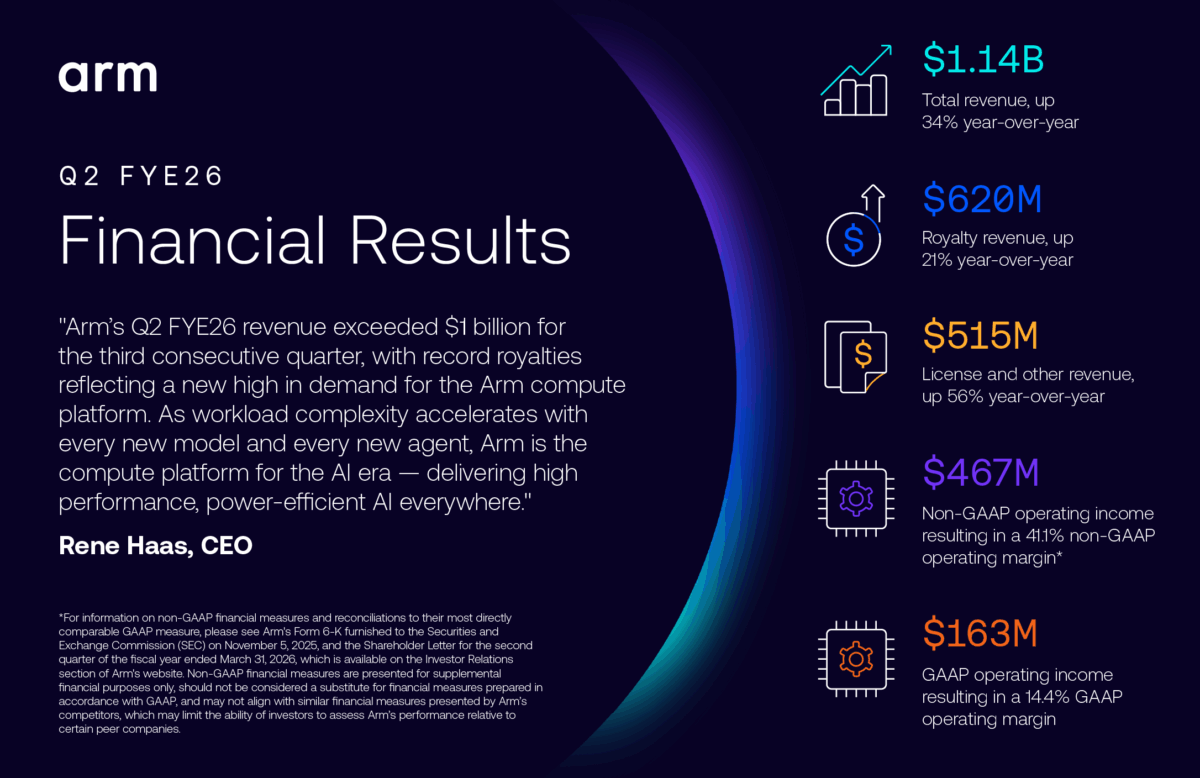
Understanding Arm’s Reporting Cycle and Financial Significance
Arm operates on a fiscal year that differs from the standard calendar year, a common practice among global corporations that requires investors to pay close attention to the specific timing of their releases. Arm’s fiscal year typically ends on March 31. Consequently, their “First Quarter” results cover the period from April to June, with the report usually released in August. Their “Second Quarter” (July to September) is reported in November, the “Third Quarter” (October to December) in February, and the “Fourth Quarter” and full-year results are typically shared in May.
The Importance of Earnings Dates for Investors
In the world of investing, earnings dates are moments of price discovery. For a company like Arm, which carries a high valuation multiple compared to traditional manufacturing firms, these reports are the primary mechanism through which the market validates or refutes the current stock price. When the reporting date approaches, trading volume often increases as hedge funds and retail traders position themselves based on anticipated results.
For the long-term investor, the earnings date is less about short-term price movement and more about the qualitative updates provided by management. This is the moment when the CEO and CFO provide guidance—projections for future revenue and earnings—which often influences the stock price more than the actual historical numbers from the previous quarter.
Navigating the Fiscal Calendar
To stay ahead, investors should monitor Arm’s Investor Relations website. Generally, the company announces the exact date and time of its earnings call two to three weeks in advance. These announcements typically occur after the market closes on a Wednesday or Thursday. By marking these dates, investors can ensure they are prepared for the “implied move”—the percentage the market expects the stock to swing based on options pricing—which can often be significant for high-growth semiconductor stocks.
Key Metrics to Watch in Arm’s Financial Disclosures
To truly understand “when” Arm reports, one must understand “what” they are reporting. Arm’s business model is unique in the semiconductor world. Unlike Intel, they do not manufacture chips; unlike Nvidia, they do not sell the physical chips to end-users. Instead, they license the intellectual property (IP) that allows others to build chips. This creates a high-margin, recurring revenue stream that is analyzed through specific financial lenses.
Royalty Revenue vs. Licensing Fees
The most critical distinction in an Arm earnings report is the split between licensing revenue and royalty revenue. Licensing revenue is an upfront payment made by a company (like Apple or Qualcomm) to gain access to Arm’s designs. This is often seen as a leading indicator of future growth; if licensing is up, it means more companies are starting new projects using Arm architecture.
Royalty revenue, however, is the lifeblood of Arm’s valuation. This is a fee paid for every single chip sold that contains Arm IP. Because these chips are in billions of devices, even a fractional increase in the royalty rate per chip can lead to massive jumps in profitability. Investors look for the transition to “Armv9” architecture, which commands roughly double the royalty rate of previous versions.
Market Expansion in Data Centers and AI
While Arm historically dominated the mobile market, the “Money” story has shifted to the data center and artificial intelligence sectors. During earnings calls, analysts scrutinize Arm’s progress in the cloud space. Companies like Amazon (with their Graviton processors) and Microsoft are increasingly moving away from traditional x86 architecture toward Arm-based solutions because of their superior energy efficiency. High energy efficiency translates to lower operating costs for data centers, making Arm’s financial success intrinsically linked to the “green” transition in high-performance computing.
How to Track Arm Earnings and Interpret Financial Data
Tracking a company’s financial health requires moving beyond headlines to the primary sources of data. For Arm, this involves a combination of regulatory filings and live commentary.
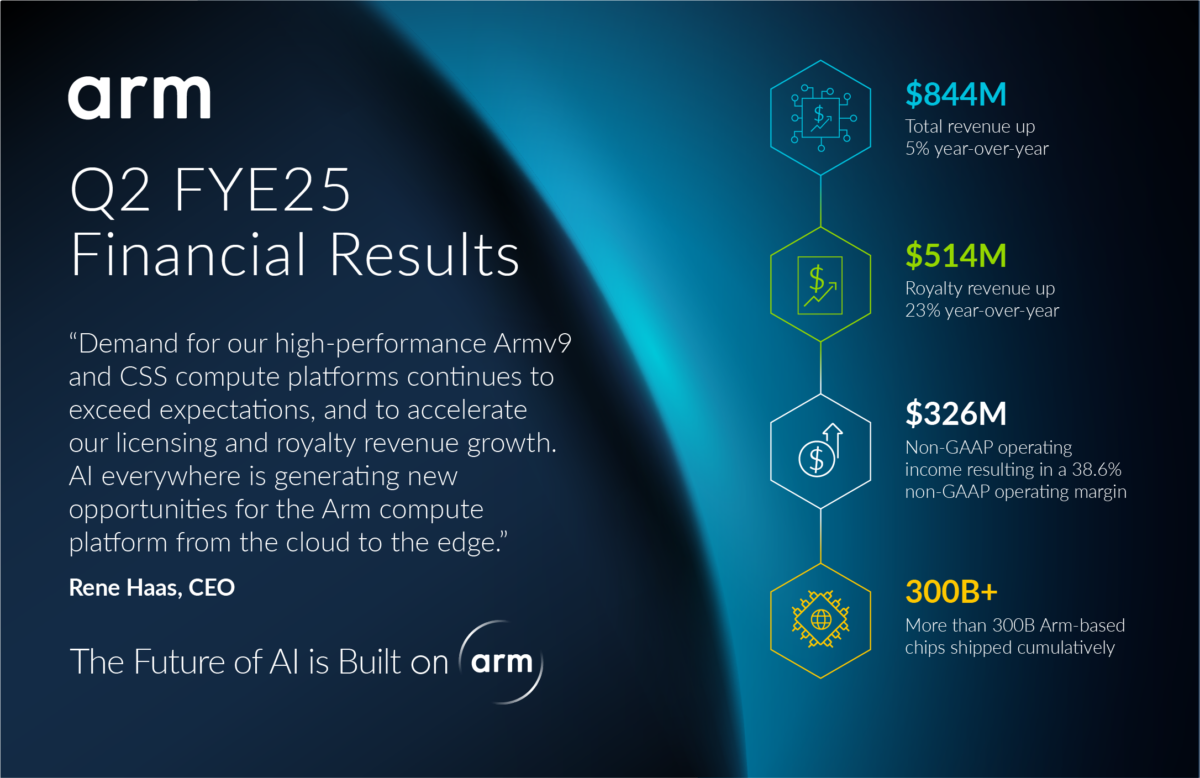
Where to Find Official Reports
The most reliable source for Arm’s financial data is the SEC EDGAR database, where the company files its Form 6-K (for foreign private issuers) or 10-Q/10-K. However, for a more digestible format, the Arm Investor Relations portal provides “Earnings Presentations” and “Shareholder Letters.” These documents often contain charts and infographics that break down revenue by market segment—mobile, IoT, automotive, and data center—allowing investors to see exactly where the growth is coming from.
Analyzing the Earnings Call Transcript
The live earnings call is where the “flavor” of the quarter is revealed. After the financial results are read, there is a Question and Answer (Q&A) session with Wall Street analysts. This is often the most insightful part of the reporting process. Professional investors listen for “tone”—is management confident about the next six months? Are they seeing headwinds in China? Is the ramp-up of AI-capable PCs moving faster than expected?
Reading the transcript of these calls allows an investor to identify recurring themes. If management mentions “AI” or “Compute Subsystems” (CSS) frequently, it indicates a strategic shift toward higher-value, integrated solutions rather than just individual IP blocks.
Strategies for Investing Around Arm’s Earnings Reports
Investing in a high-growth tech stock like Arm requires a disciplined approach to risk management, especially during earnings season when volatility is at its peak.
Navigating Short-Term Volatility
For many traders, earnings are a “binary event”—the stock will either go up significantly or down significantly based on whether the company beats or misses analyst expectations. “Beating” the numbers is often not enough; a company must also “beat and raise,” meaning they exceed current expectations and raise their guidance for the future.
If an investor is wary of this volatility but still wants exposure, they might look at “dollar-cost averaging” (DCA) in the weeks following an earnings report. This allows the market to digest the news and the price to stabilize before a major position is taken. Conversely, some use options strategies, such as straddles or strangles, to profit from the movement regardless of the direction, though these are high-risk maneuvers suited for experienced traders.
Long-Term vs. Short-Term Perspectives
From a business finance perspective, Arm is a “moat” company. Its architecture is so deeply embedded in the global software ecosystem that switching away from it would cost trillions of dollars in software rewrites. Therefore, an earnings miss in one quarter might provide a “buy the dip” opportunity for a long-term investor who believes in the multi-year shift toward Arm-based computing in the data center.
The sophisticated investor looks at the Price-to-Earnings (P/E) ratio and the Forward P/E. Arm often trades at a premium. If the earnings report shows that the company is growing its “Remaining Performance Obligations” (RPO)—essentially a backlog of contracted future revenue—it justifies a higher valuation even if the current quarter’s net income is modest.
The Future Outlook: What Arm’s Financials Mean for the Broader Market
Arm does not exist in a vacuum. Its earnings reports are a crucial data point for the entire “Magnificent Seven” and the broader semiconductor index (SOXX).
Arm as a Market Proxy
When Arm reports strong growth in its automotive sector, it signals health for companies like Nvidia and Wolfspeed. When it reports a slowdown in mobile royalties, it can act as a warning sign for Apple and Qualcomm. By watching when Arm reports, savvy investors gain a two-week head start on understanding the trends that will likely dominate the rest of the tech sector’s earnings season.

The AI Multiplier Effect
The final piece of the Arm financial puzzle is the AI multiplier. As generative AI moves from the cloud to “the edge” (meaning smartphones and laptops), the demand for high-performance, low-power processors will skyrocket. Arm’s ability to capture this market will be documented quarter-by-quarter in their earnings. For the investor, the “when” is just the beginning; the “how much” and “what’s next” are what ultimately determine the return on investment. By following the reporting cycle closely, analyzing the shift toward v9 architecture, and monitoring management’s guidance, investors can position themselves to benefit from one of the most significant architectural shifts in the history of computing.
aViewFromTheCave is a participant in the Amazon Services LLC Associates Program, an affiliate advertising program designed to provide a means for sites to earn advertising fees by advertising and linking to Amazon.com. Amazon, the Amazon logo, AmazonSupply, and the AmazonSupply logo are trademarks of Amazon.com, Inc. or its affiliates. As an Amazon Associate we earn affiliate commissions from qualifying purchases.