
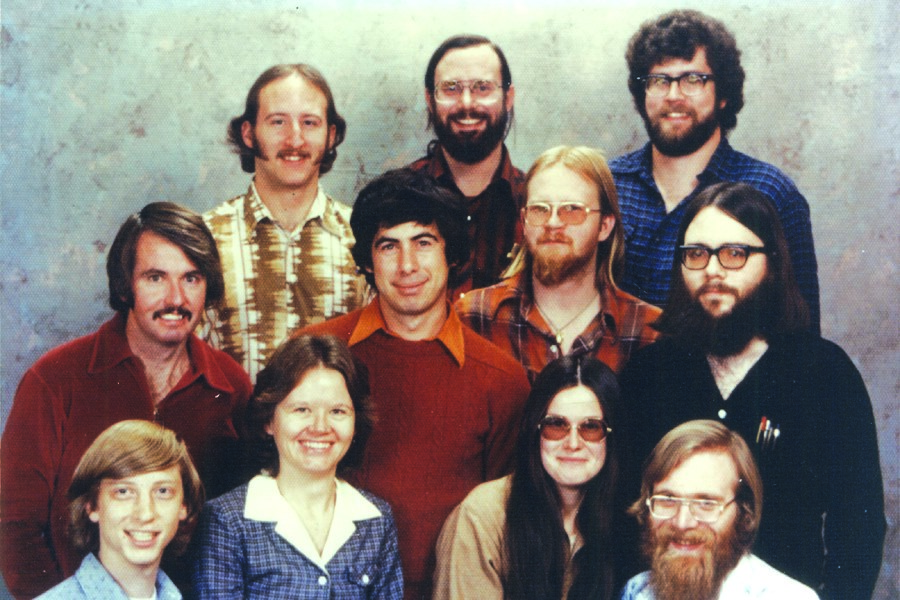
The trajectory of modern computing was fundamentally altered on April 4, 1975. This was the year Microsoft was established, a pivotal moment that transitioned the world from a hardware-centric focus to a software-driven reality. Founded by childhood friends Bill Gates and Paul Allen in Albuquerque, New Mexico, the company began not with a grand corporate headquarters, but with a specific technical challenge: writing a programming language for the first commercially successful microcomputer.
To understand why 1975 remains the most significant year in the history of software, one must look at the technological landscape of the era. Before Microsoft, computers were massive mainframes owned by governments and large corporations. The idea of a “personal computer” was a fringe concept shared by hobbyists. When the MITS Altair 8800 appeared on the cover of Popular Electronics in early 1975, it signaled a shift. Gates and Allen recognized that the hardware was only as useful as the software that could run on it. By establishing Microsoft in April of that year, they set the stage for a revolution that would eventually place a computer on every desk and in every home.

April 4, 1975: The Founding and the Altair BASIC Project
The establishment of Microsoft in 1975 was driven by a single piece of software: an interpreter for the BASIC programming language. Paul Allen and Bill Gates saw the Altair 8800 as the first machine that was affordable enough for individuals, but it lacked a user-friendly way to be programmed. The two founders contacted Ed Roberts, the creator of the Altair at MITS, claiming they had a functional BASIC interpreter for the machine. In reality, they had not even started writing the code.
The Albuquerque Beginnings
Because MITS was based in Albuquerque, Microsoft (initially hyphenated as “Micro-Soft”) was established there rather than in their hometown of Seattle. The technical feat accomplished in those first few months was staggering. Working without an actual Altair 8800, Allen wrote a simulator for the machine’s Intel 8080 processor on a PDP-10 mainframe at Harvard. This allowed Gates to write the code for the BASIC interpreter. When Allen finally flew to Albuquerque to test the software on a real Altair, it worked on the first try. This success provided the initial revenue stream and the technical reputation required to expand the company.
From Micro-Soft to Microsoft
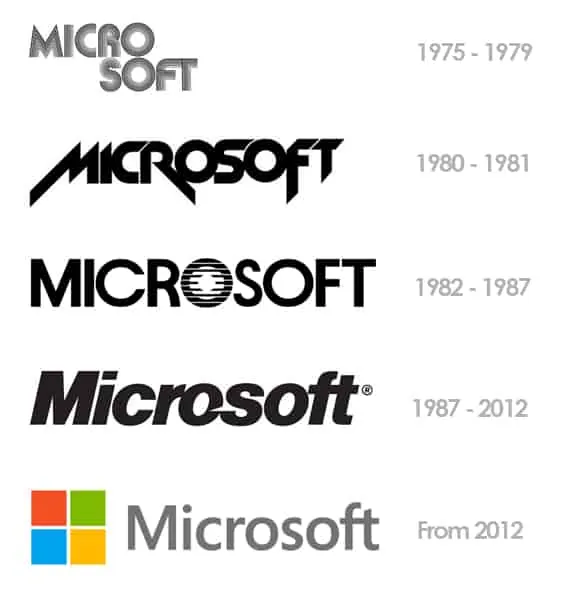
The name “Micro-Soft”—a portmanteau of microcomputer and software—was chosen to reflect their specific niche. In the mid-1970s, most tech companies were hardware companies. By focusing exclusively on the software layer, Gates and Allen pioneered the business model of licensing code. This was a radical departure from the industry standard, where software was often bundled for free with hardware or written specifically for a single machine. Microsoft’s decision to remain an independent software vendor allowed them to license their BASIC interpreter to other emerging computer manufacturers, such as Apple and Commodore, ensuring their code became the industry standard long before the 1980s.
Defining the PC Era: The Rise of MS-DOS and Windows
If 1975 was the year of establishment, the 1980s were the years of dominance. The turning point for Microsoft’s technical influence came in 1980 when IBM approached the company to provide an operating system for their upcoming IBM Personal Computer. Because Microsoft did not have an operating system ready, they purchased QDOS (Quick and Dirty Operating System) from Seattle Computer Products and refined it into MS-DOS (Microsoft Disk Operating System).
The IBM Deal and Technical Licensing
The deal with IBM was arguably the most significant contract in software history. Microsoft retained the right to license MS-DOS to other companies. As “IBM-compatible” clones flooded the market, MS-DOS became the universal platform for personal computing. This created a massive ecosystem where developers wrote software for MS-DOS, knowing it would run on millions of machines. This network effect solidified Microsoft’s position at the center of the technology world.
The Transition to Graphical User Interfaces (GUI)
While MS-DOS was powerful, its command-line interface was a barrier for the average user. In the mid-1980s, Microsoft began development on what would become Windows. Launched in 1985 as a graphical operating environment for MS-DOS, Windows 1.0 introduced the concept of overlapping windows, drop-down menus, and mouse support. It wasn’t until the release of Windows 3.0 in 1990 and the revolutionary Windows 95 that Microsoft fully successfully transitioned the world from text-based computing to a visual interface. Windows 95, in particular, introduced the “Start” button and the Taskbar—elements of user experience design that remain central to desktop computing today.
Software as a Service: The Transition to the Cloud
As the 21st century approached, Microsoft faced a new technological challenge: the internet. The company’s establishment in 1975 was predicated on local software—programs that lived on a hard drive or a floppy disk. However, the rise of high-speed connectivity required a shift in how software was architected, delivered, and secured.
The Evolution of Microsoft Office
The productivity suite, Microsoft Office, followed a similar trajectory to the operating system. Originally a collection of standalone applications like Word, Excel, and PowerPoint, it became the gold standard for business software. In the 2010s, under the leadership of Satya Nadella, the company underwent a massive technical pivot. They moved from selling “perpetual licenses” to a subscription-based model known as Microsoft 365. This shift to Software as a Service (SaaS) allowed for continuous updates, cloud storage integration through OneDrive, and real-time collaboration features that were impossible in the era of local-only files.
The Rise of Azure and Infrastructure as a Service (IaaS)
Perhaps the most significant technical evolution since the company was established in 1975 is Microsoft Azure. Launched in 2010, Azure represents Microsoft’s transition from a software company to a cloud computing powerhouse. Azure provides the backbone for millions of applications, offering virtual machines, databases, and AI services. By building a global network of data centers, Microsoft successfully challenged the dominance of Amazon Web Services (AWS). This transition reflected a fundamental change in tech: the move from owning hardware to renting compute power and storage in the cloud.
The AI Frontier: Copilot and the Next Era of Microsoft
Today, nearly half a century after Microsoft was established, the company is leading another technological shift: the integration of Artificial Intelligence (AI) into every facet of the digital experience. This is not merely an incremental update; it is a re-imagining of how humans interact with software.
The OpenAI Partnership and Large Language Models
Microsoft’s multi-billion-dollar investment in OpenAI has positioned it at the forefront of the generative AI revolution. By integrating GPT-4 technology into its products, Microsoft has created “Copilot,” an AI assistant that lives within Windows, Office, and the Edge browser. From a technical standpoint, this represents the culmination of decades of research into machine learning and natural language processing. Copilot can generate code for developers in GitHub, summarize complex data in Excel, and draft documents in Word, fundamentally changing the nature of digital productivity.
Digital Security in the AI Age
As Microsoft has grown from a two-man operation in 1975 to a global entity, the stakes of digital security have increased exponentially. In the modern tech landscape, security is no longer just about antivirus software; it is about identity management, threat intelligence, and zero-trust architecture. Microsoft now spends billions annually on cybersecurity, leveraging AI to analyze trillions of signals daily to preemptively block attacks. This focus on “Security by Design” is a far cry from the early days of BASIC, but it is a necessary evolution in an era where software governs critical infrastructure and global finance.
The year Microsoft was established—1975—marked the beginning of an era where software became the most powerful tool in human history. From the first lines of BASIC code written for the Altair 8800 to the sophisticated neural networks powering Azure AI today, Microsoft’s history is the history of the personal computing revolution. By consistently pivoting to meet the next wave of innovation—whether it was the GUI, the internet, the cloud, or AI—the company has maintained its relevance in a field where obsolescence is the norm. As we look toward the future of quantum computing and autonomous systems, the foundation laid on April 4, 1975, continues to serve as the blueprint for the technological world.
aViewFromTheCave is a participant in the Amazon Services LLC Associates Program, an affiliate advertising program designed to provide a means for sites to earn advertising fees by advertising and linking to Amazon.com. Amazon, the Amazon logo, AmazonSupply, and the AmazonSupply logo are trademarks of Amazon.com, Inc. or its affiliates. As an Amazon Associate we earn affiliate commissions from qualifying purchases.