
In the landscape of global finance and corporate dominance, few metrics provide as clear a window into a company’s operational health as its headcount. For Microsoft, a company that has redefined the intersection of software, cloud computing, and artificial intelligence, the sheer volume of its workforce is a testament to its massive market capitalization and its role as a cornerstone of the modern economy. As of the most recent fiscal reports, Microsoft employs approximately 228,000 people globally. However, for the astute investor or business analyst, this number is far more than a simple census; it is a critical indicator of the company’s scaling strategy, its geographical footprint, and its long-term financial viability.
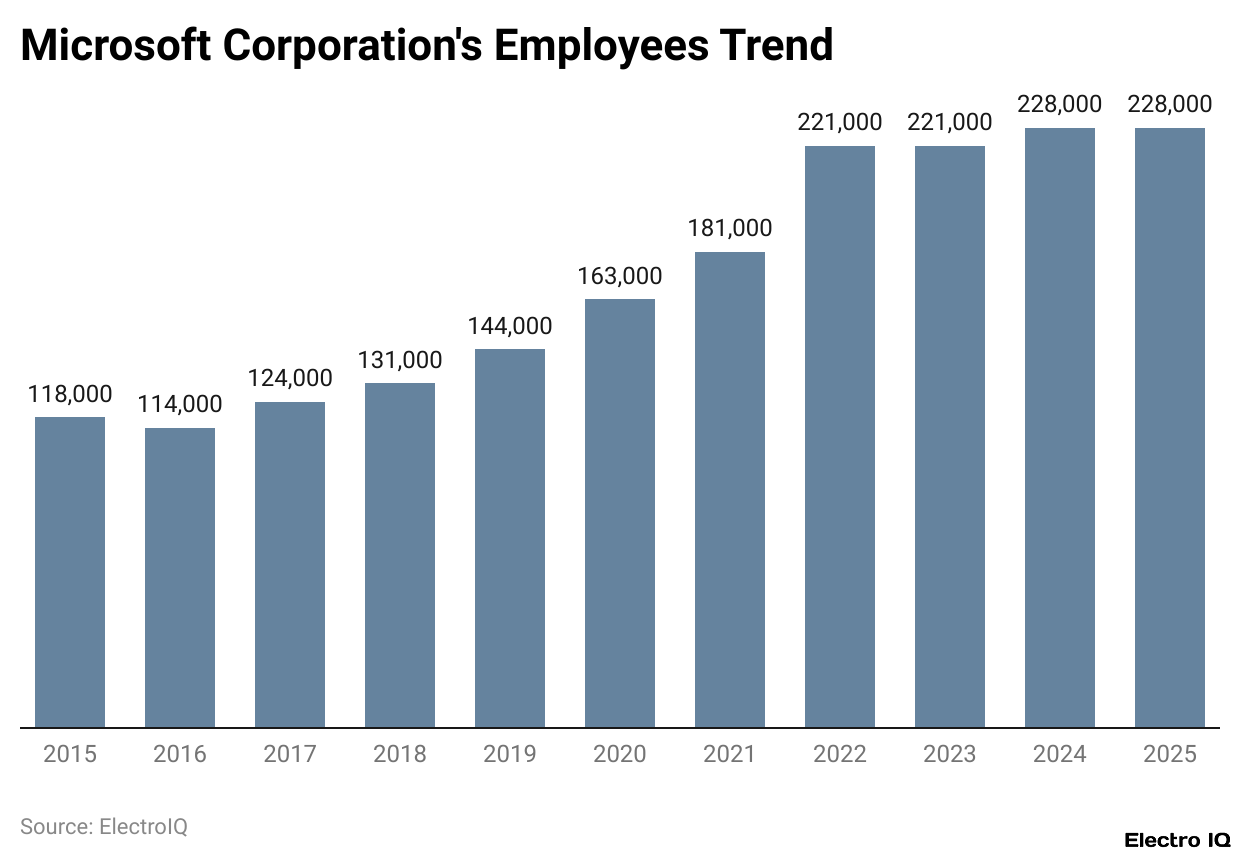
To understand how many people work at Microsoft is to understand the mechanics of a trillion-dollar enterprise. It involves looking at how the company manages human capital as its most expensive asset and its most powerful engine for growth. From the high-tech corridors of Redmond to the burgeoning tech hubs in Hyderabad and Dublin, the distribution of these employees dictates the company’s ability to innovate and capture market share in an increasingly competitive environment.
Decoding the Numbers: The Current State of Microsoft’s Workforce
Microsoft’s workforce has seen a dramatic trajectory over the last decade. Following the appointment of Satya Nadella as CEO in 2014, the company pivoted from a “devices and services” focus to a “cloud-first, mobile-first” strategy, and more recently, an “AI-first” mandate. This shift has necessitated a fundamental restructuring of who the company hires and where they are located.
Of the roughly 228,000 employees, approximately 60% are based in the United States, with the remaining 40% spread across international markets. This distribution is a strategic choice. While the U.S. remains the epicenter for core research and development (R&D) and high-level corporate strategy, international hubs allow Microsoft to tap into global talent pools and navigate local regulatory environments more effectively.
The workforce is further categorized by function. A significant plurality—nearly 40%—is dedicated to operations and support, which includes the massive infrastructure required to maintain Azure, Microsoft’s cloud platform. Research and engineering follow closely, representing the intellectual engine that drives the company’s patent portfolio and product innovation. Sales and marketing make up the third-largest segment, tasked with the monumental challenge of moving Microsoft’s diverse suite of products into the hands of enterprises and consumers alike.
The Geography of Employment
The concentration of talent in the Puget Sound region of Washington State remains the heart of Microsoft. With over 50,000 employees in the Seattle area alone, Microsoft is a primary driver of the regional economy. However, the expansion into global regions is a financial hedge against labor market fluctuations in the U.S. and a method to reduce operational costs. By establishing major engineering centers in India, China, and Europe, Microsoft optimizes its labor spend while maintaining a 24-hour development cycle.
The Economics of Human Capital: Revenue per Employee and Operational Efficiency
In the world of business finance, headcount is often viewed through the lens of efficiency. Investors frequently look at “Revenue per Employee” (RPE) to gauge how effectively a company is utilizing its human resources. For a company of Microsoft’s scale, maintaining a high RPE is a balancing act between hiring enough talent to drive innovation and keeping overhead low enough to protect profit margins.
Historically, Microsoft has maintained an impressive RPE, often hovering around the $900,000 to $1,000,000 mark. This is significantly higher than many traditional industrial firms and reflects the high-margin nature of software licensing and cloud services. When you compare Microsoft to other “Magnificent Seven” tech giants, you see a disciplined approach to scaling. While the company has grown its headcount, it has generally done so in lockstep with revenue growth, avoiding the hyper-inflation of staff that plagued other tech firms during the post-pandemic surge.
Operating Margins and Payroll Expense
Payroll and benefits represent the single largest operating expense for Microsoft. Beyond base salaries, the company utilizes Stock-Based Compensation (SBC) as a primary tool for talent retention. From a financial perspective, SBC is a double-edged sword. It allows the company to preserve cash flow in the short term, but it also leads to share dilution over time. For shareholders, monitoring the growth of the workforce is essential for understanding the future impact of dilution on earnings per share (EPS). As the headcount grows, so too does the potential for increased SBC, which requires the company to generate even higher net income to maintain its valuation.
Strategic Expansion: How M&A Activity Shapes Headcount and Market Dominance

One of the most significant factors influencing Microsoft’s headcount in recent years has been its aggressive Mergers and Acquisitions (M&A) strategy. Unlike organic growth, which happens gradually, M&A creates sudden spikes in employee numbers and introduces complex integration challenges.
The most notable recent example is the acquisition of Activision Blizzard. This $68.7 billion deal did more than just expand Microsoft’s gaming portfolio; it added approximately 13,000 employees to the payroll in a single stroke. Integrating a workforce of that size requires immense corporate resources and can often lead to “headcount rationalization”—a corporate euphemism for layoffs—as the company seeks to eliminate redundant roles in departments like HR, finance, and legal.
Case Study: LinkedIn and GitHub
Previous acquisitions have followed a similar pattern. When Microsoft acquired LinkedIn in 2016, it integrated roughly 10,000 employees. GitHub brought in several hundred more. These acquisitions are not just about buying technology; they are about acquiring “acqui-hires”—highly specialized talent that would be difficult to recruit individually. From a business finance standpoint, these acquisitions are capital-intensive ways to increase the workforce, but they provide immediate access to new revenue streams that justify the increased payroll.
The Cost of Integration
Integrating thousands of employees from different corporate cultures carries a financial risk. There is the direct cost of harmonizing benefits packages and IT systems, but there is also the indirect cost of potential talent attrition. If the integration is handled poorly, the most valuable assets (the people) may leave, leaving the parent company with the infrastructure but none of the innovation that made the acquisition attractive in the first place.
The Financial Future: Balancing AI Automation with Human Talent
As we look toward the future, the question of how many people work at Microsoft becomes inextricably linked to the rise of Artificial Intelligence (AI). Microsoft has positioned itself at the forefront of the AI revolution through its multi-billion dollar partnership with OpenAI and the integration of “Copilots” across its software stack. This technological shift has profound implications for the company’s future headcount and its bottom line.
AI acts as a force multiplier. If an engineer at Microsoft can use AI to write code 30% faster, the company theoretically needs fewer engineers to achieve the same output. This leads to a fascinating financial paradox: Microsoft may be able to grow its revenue exponentially while keeping its headcount relatively flat or even decreasing it in certain sectors.
The Pivot to High-Value Roles
We are already seeing Microsoft lean into this shift. Recent rounds of layoffs, while modest relative to the total workforce, have targeted areas like hardware and physical retail, while the company continues to hire aggressively in AI research and cloud architecture. This is a strategic reallocation of capital. Microsoft is betting that a smaller, more specialized workforce empowered by AI will be more profitable than a massive, generalized workforce.
From an investment perspective, this shift is highly favorable. If Microsoft can improve its operating margins by automating internal processes—such as customer support, basic coding, and administrative tasks—it will see a significant boost in free cash flow. This capital can then be returned to shareholders through dividends and buybacks or reinvested into the next generation of technology.
Investor Takeaways: Why Headcount Matters to Your Portfolio
For those who track Microsoft as part of their investment portfolio, the headcount is a vital sign of the company’s health. It reveals the management’s confidence in future growth and its ability to manage costs.
-
Scale vs. Agility: A workforce of over 200,000 people is a sign of immense power, but it also risks bureaucratic bloat. Investors should look for signs that Microsoft is remaining agile, such as its ability to pivot quickly to AI despite its size.
-
Labor Market Competitiveness: Microsoft’s ability to attract and retain 228,000 people in a tight labor market speaks to its brand equity and financial stability. If the company were to struggle with hiring, it would be a leading indicator of a decline in its competitive advantage.
-
Efficiency Trends: Keep a close eye on the Revenue per Employee metric. If the headcount continues to rise while revenue growth slows, it could signal a period of margin compression that might weigh on the stock price.
Ultimately, the number of people working at Microsoft is a reflection of the company’s ambition. It takes a global army of engineers, visionaries, and strategists to maintain a platform that billions of people rely on every day. As the company continues to navigate the complexities of the global economy and the disruptive potential of AI, its management of this massive human capital will remain the defining factor in its continued financial success. Microsoft is no longer just a software company; it is a global economic institution, and its 228,000 employees are the bedrock upon which that institution stands.
aViewFromTheCave is a participant in the Amazon Services LLC Associates Program, an affiliate advertising program designed to provide a means for sites to earn advertising fees by advertising and linking to Amazon.com. Amazon, the Amazon logo, AmazonSupply, and the AmazonSupply logo are trademarks of Amazon.com, Inc. or its affiliates. As an Amazon Associate we earn affiliate commissions from qualifying purchases.