
In the world of corporate finance and global investment, headcount is far more than a simple human resources statistic. For a behemoth like Microsoft Corporation, the number of employees serves as a primary indicator of its operational scale, its fiscal health, and its strategic priorities. As of the most recent fiscal reports, Microsoft employs approximately 221,000 people worldwide. To an investor or a business analyst, this figure represents a massive engine of productivity, but it also signifies one of the largest payroll liabilities in the history of the private sector.
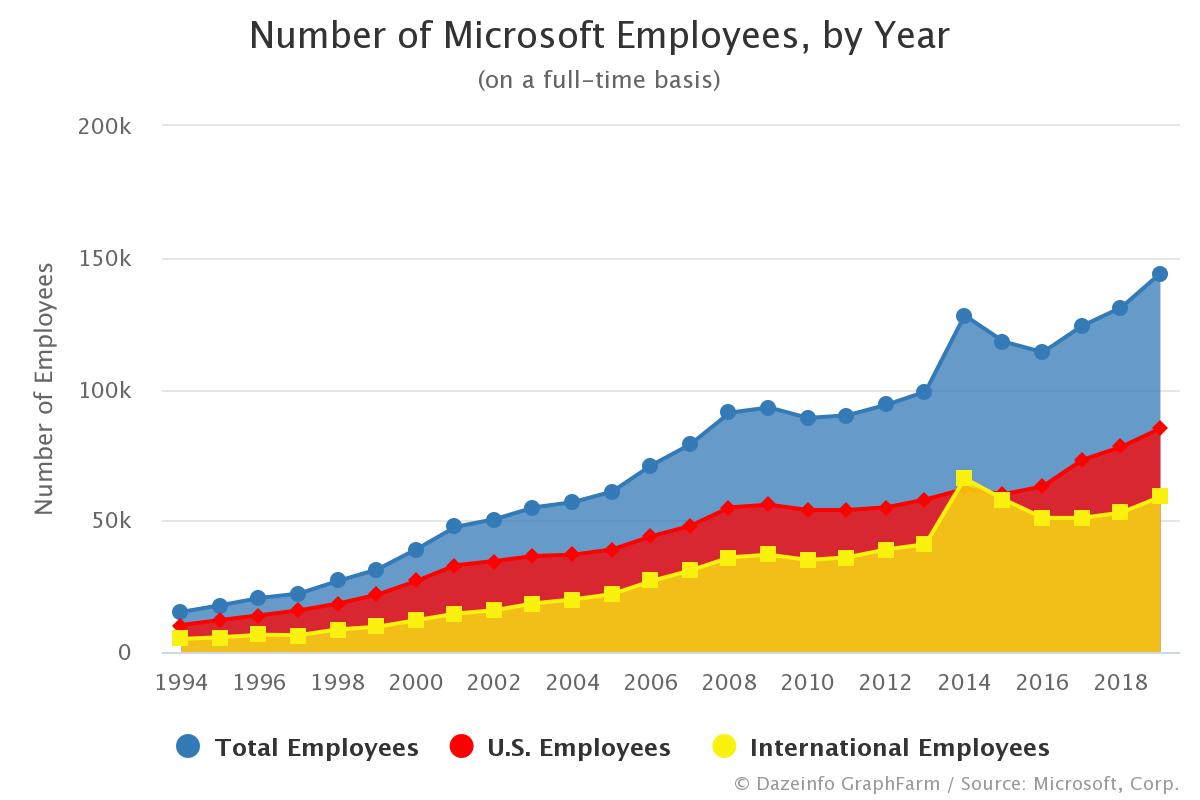
Understanding the distribution, growth, and management of these 221,000 individuals offers a window into how the company maintains its trillion-dollar market capitalization. It is an exploration of human capital as a financial asset, where every hire is calculated against the potential for recurring revenue and market dominance.
The Financial Mechanics of Headcount Growth
The trajectory of Microsoft’s employee count has historically mirrored its transitions through different technological eras. From the software-in-a-box days of the 1990s to the current “Cloud First, AI First” mandate under Satya Nadella, the headcount has expanded to meet the demands of diversified revenue streams.
Revenue per Employee: The Efficiency Metric
One of the most critical metrics for evaluating a company of Microsoft’s size is revenue per employee. This figure provides insight into how efficiently the firm utilizes its human capital. Currently, with annual revenues exceeding $211 billion, Microsoft generates nearly $1 million in revenue for every single employee on its payroll.
When compared to other members of the “Magnificent Seven” or the broader S&P 500, Microsoft’s ability to maintain high margins while supporting a workforce of over 200,000 is a testament to its scalable business model. Unlike service-oriented firms that require linear headcount growth to increase revenue, Microsoft’s reliance on software and cloud infrastructure allows for exponential financial gains without a proportional increase in staff.
The Impact of Acquisitions on Capital Allocation
A significant portion of Microsoft’s headcount growth over the last decade has been inorganic. When Microsoft acquires a company, it isn’t just buying IP or market share; it is absorbing thousands of highly skilled—and highly paid—professionals.
-
LinkedIn: The 2016 acquisition brought in over 10,000 employees.
-
GitHub: Added a lean but critical workforce of approximately 1,000.
-
Activision Blizzard: The most massive shift in recent years, adding roughly 13,000 employees to Microsoft’s gaming division (Microsoft Gaming/Xbox).
From a business finance perspective, these acquisitions represent a massive transfer of capital into human assets. The challenge for Microsoft’s leadership is to integrate these disparate workforces without diluting the corporate culture or inflating the operating expenses to a point that hampers profitability.
Global Distribution and the Economics of Labor
Microsoft is a truly global enterprise, but its workforce distribution reflects a strategic balance between domestic innovation and international cost-efficiency. Approximately 60% of Microsoft’s employees are based in the United States, with the remaining 40% spread across international markets.
The Puget Sound Economic Engine
The concentration of employees in the Redmond, Washington, area creates a localized economic ecosystem. With over 50,000 employees in the Puget Sound region alone, Microsoft’s payroll serves as a foundational pillar for the local economy. For the company, this concentration allows for a high degree of collaborative synergy, but it also necessitates a massive investment in real estate and local infrastructure, which sits as a significant line item on the balance sheet.
International Labor Arbritage and R&D Centers
The 40% of the workforce located outside the U.S. is strategically placed in high-growth or cost-effective regions. Major hubs in India (Hyderabad and Bangalore), China, and Ireland allow Microsoft to tap into global talent pools while managing labor costs. These international R&D centers are not just support hubs; they are profit centers that drive innovation in localized markets, allowing Microsoft to maintain a competitive edge in the global software trade.
From a financial management standpoint, this geographic diversity acts as a hedge against localized economic downturns. If the U.S. labor market becomes too tight or expensive, Microsoft can pivot its hiring focus to its international subsidiaries, optimizing its global spend on talent.
Strategic Realignments: Layoffs as a Fiscal Tool
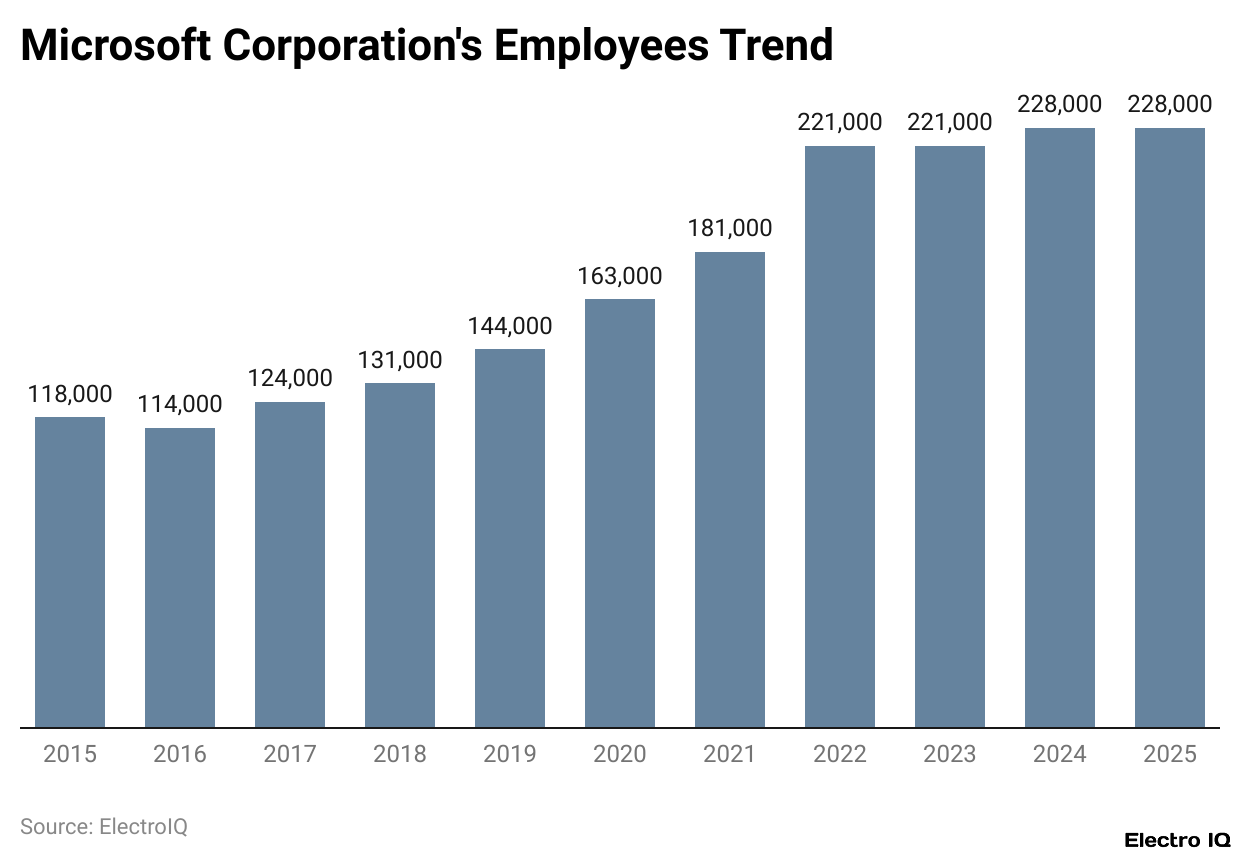
While the general trend of Microsoft’s headcount has been upward, the company has not been immune to the necessity of contraction. In 2023, Microsoft announced the layoff of approximately 10,000 employees, roughly 5% of its total workforce. To the casual observer, this might seem like a sign of trouble, but to the financial community, it was a calculated move in capital reallocation.
Shifting Capital from Legacy to AI
The 2023 layoffs were strategically targeted at divisions that were no longer central to the company’s high-growth future—specifically parts of the hardware and legacy software sectors. The capital saved from these positions was almost immediately funneled into the company’s multi-billion-dollar partnership with OpenAI and the internal development of “Copilot” AI technologies.
This illustrates a core principle of Microsoft’s financial strategy: headcount is fluid. The company is willing to endure the short-term severance costs and social friction of layoffs to ensure that its “human capital budget” is spent on the highest-ROI activities. In the current market, that means moving away from generalist software engineering and toward specialized AI research and data science.
Managing Margin Pressures
In an era of rising interest rates and inflationary pressure, maintaining high operating margins is a priority for any public company. Payroll is typically the largest operating expense. By trimming the workforce by 5%, Microsoft signaled to Wall Street that it was serious about fiscal discipline. This move helped stabilize the stock price during a period of macroeconomic uncertainty, proving that headcount management is as much about investor relations as it is about operational capacity.
The Multiplier Effect: The Ecosystem Beyond Direct Employees
When discussing “how many employees” Microsoft has, it is important to distinguish between direct payroll employees and the vast ecosystem of contractors and partners that rely on the Microsoft platform. This is the “multiplier effect” of Microsoft’s business model.
The Shadow Workforce: Vendors and Contractors
In addition to its 221,000 full-time employees, Microsoft utilizes an extensive network of vendors and external staff (often referred to as “v-dash” employees). While these individuals are not technically on the Microsoft payroll, they are funded by Microsoft’s operational budget. This flexible labor model allows the company to scale up for specific projects—such as a major Windows update or a new hardware launch—without committing to the long-term liabilities of full-time employment, such as benefits and pensions.
The Partner Network and Global Job Creation
Microsoft claims that for every dollar it earns, its partner ecosystem earns several more. There are hundreds of thousands of independent software vendors (ISVs), managed service providers (MSPs), and consultants who build their entire business models around Microsoft products like Azure, Office 365, and Dynamics.
From a macro-economic perspective, the “Microsoft Economy” supports millions of jobs globally. For investors, this is a “moat.” The more people whose livelihoods depend on Microsoft technology, the more “sticky” the products become. This widespread adoption ensures long-term financial stability, as the cost for a business to migrate away from the Microsoft ecosystem involves not just software licensing, but the retraining of an entire workforce.
Future Outlook: The Intersection of Human Talent and Automation
As we look toward the future of Microsoft’s workforce, a central question arises: Will AI reduce the need for such a massive headcount? The financial implications of this shift are profound.
AI-Augmented Productivity
Microsoft is currently betting that AI will act as a “force multiplier” for its existing staff. Rather than replacing 200,000 workers, the goal is to make those 200,000 workers significantly more productive. If a software engineer can use AI to write code 30% faster, Microsoft essentially gains the output of 60,000 additional employees without increasing its payroll or benefit expenses. This is the ultimate goal of corporate finance: increasing output while keeping fixed costs stagnant.
The Cost of Talent in the AI Era
However, the shift toward AI also means that the cost per employee is likely to rise. The market for AI researchers and specialized engineers is hyper-competitive, with salaries reaching unprecedented levels. Microsoft must balance the desire to keep its headcount lean with the financial necessity of outbidding competitors like Google, Meta, and Apple for top-tier talent.
Conclusion: The Bottom Line on Microsoft’s Workforce
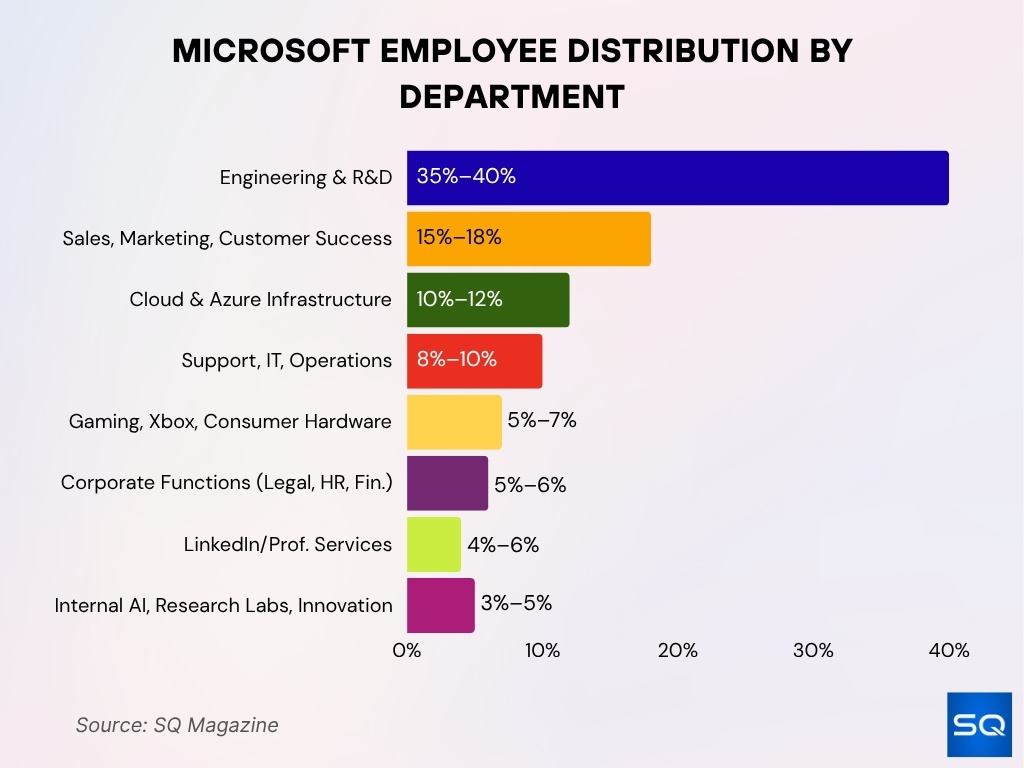
To ask “how many employees at Microsoft” is to ask about the scale of one of the world’s most successful economic engines. With 221,000 employees, Microsoft is a city-state of innovation, a massive consumer of global talent, and a leader in efficient capital allocation.
From the perspective of business finance, Microsoft’s headcount represents a carefully managed balance sheet of human potential. Through strategic growth, aggressive acquisitions, and the ruthless prioritization of high-margin sectors like AI and Cloud, Microsoft has proven that it can manage a workforce of nearly a quarter-million people while remaining one of the most profitable entities on the planet. For the investor, these 221,000 individuals are the guardians of the company’s future cash flows and the architects of its continued dominance in the global marketplace.
aViewFromTheCave is a participant in the Amazon Services LLC Associates Program, an affiliate advertising program designed to provide a means for sites to earn advertising fees by advertising and linking to Amazon.com. Amazon, the Amazon logo, AmazonSupply, and the AmazonSupply logo are trademarks of Amazon.com, Inc. or its affiliates. As an Amazon Associate we earn affiliate commissions from qualifying purchases.