
The NASDAQ Composite is often viewed as the primary pulse of the global innovation economy. Comprising more than 3,000 companies, it is heavily weighted toward technology, biotechnology, and growth-oriented sectors. For the modern investor, asking “where is the NASDAQ today?” is more than a request for a numerical value; it is an inquiry into the health of risk appetite, the trajectory of technological advancement, and the broader sentiment of the financial markets. Understanding the current standing of the NASDAQ requires a look beyond the daily price fluctuations and into the fundamental, macroeconomic, and technical drivers that dictate its path.

In recent years, the NASDAQ has transitioned from a simple stock index into a symbol of the “new economy.” Unlike the Dow Jones Industrial Average, which focuses on legacy blue-chip companies, or the S&P 500, which offers a broader slice of the American corporate landscape, the NASDAQ is where the future is priced. When the index moves, it reflects how the market values the next decade of digital transformation, healthcare breakthroughs, and consumer behavior shifts.
Decoding the Index: What Drives the NASDAQ’s Daily Movement?
To understand where the NASDAQ is today, one must first understand its unique construction. The index is market-capitalization-weighted, meaning the largest companies have the most significant impact on its performance. This creates a “top-heavy” dynamic that can often mask the performance of smaller constituent members.
The Weight of the Giants
The performance of the NASDAQ is inextricably linked to a handful of mega-cap technology firms, often referred to as the “Magnificent Seven.” When companies like Apple, Microsoft, Nvidia, and Alphabet report earnings or experience price volatility, the entire index moves in tandem. Today, the concentration of wealth within these few entities means that an investor tracking the NASDAQ is, in many ways, betting on the continued dominance of Big Tech. This concentration provides immense strength during bull markets but creates a vulnerability during sector-specific downturns. When these giants face regulatory scrutiny or hardware supply chain issues, the NASDAQ can see significant pullbacks even if the rest of the economy is performing well.
Interest Rates and the Discounted Cash Flow Model
Perhaps the most critical factor influencing the NASDAQ’s current position is the prevailing interest rate environment set by the Federal Reserve. Technology and growth stocks are traditionally valued based on their future earnings. In financial theory, the value of a company today is the sum of its future cash flows discounted back to the present. When interest rates are high, the “discount rate” increases, making those future dollars less valuable today.
This is why the NASDAQ is generally more sensitive to inflation data and Fed announcements than other indices. When the market senses that interest rates will remain “higher for longer,” the NASDAQ often faces downward pressure. Conversely, any hint of a “pivot” toward lower rates acts as a massive tailwind for the index, as cheap capital fuels the R&D and expansion that growth companies require.
The Role of Artificial Intelligence in Current Market Valuations
If there is one singular theme defining where the NASDAQ stands today, it is the explosion of Artificial Intelligence (AI). We are currently witnessing a historical shift where AI has moved from a speculative concept to a tangible driver of corporate earnings and market valuations.
From Hype to Earnings
In the initial stages of the AI boom, the NASDAQ surged on pure speculation. Investors were buying anything with an “.ai” suffix. However, the index’s current position is defined by a transition toward fundamental validation. Today, the market is looking for “proof of work.” This means that the companies leading the NASDAQ higher are those that can demonstrate how AI is either increasing their revenue or significantly reducing their operational costs. Software-as-a-Service (SaaS) companies are being re-evaluated based on their ability to integrate generative AI, while cloud providers are seeing massive upticks in demand for the processing power required to train large language models.
The Infrastructure Play: Semis and Hardware
The semiconductor sector has become the backbone of the NASDAQ. Companies that design and manufacture the high-end chips necessary for AI computation have seen their market caps swell to trillion-dollar levels. This has fundamentally changed the “volatility profile” of the index. In the past, semiconductors were considered highly cyclical—booming when consumer electronics were in demand and crashing during gluts. Today, they are viewed as essential infrastructure, akin to utilities for the digital age. Where the NASDAQ sits today is largely a reflection of the global chip supply chain and the capital expenditure budgets of the world’s largest data center operators.
Navigating Volatility: Understanding Market Cycles and Sentiment
The NASDAQ is notoriously more volatile than its peers. This volatility is not necessarily a sign of weakness but rather a reflection of the rapid price discovery that happens in high-growth sectors. To assess the index today, investors must look at technical indicators and the psychological state of the market.
Technical Support Levels and Resistance
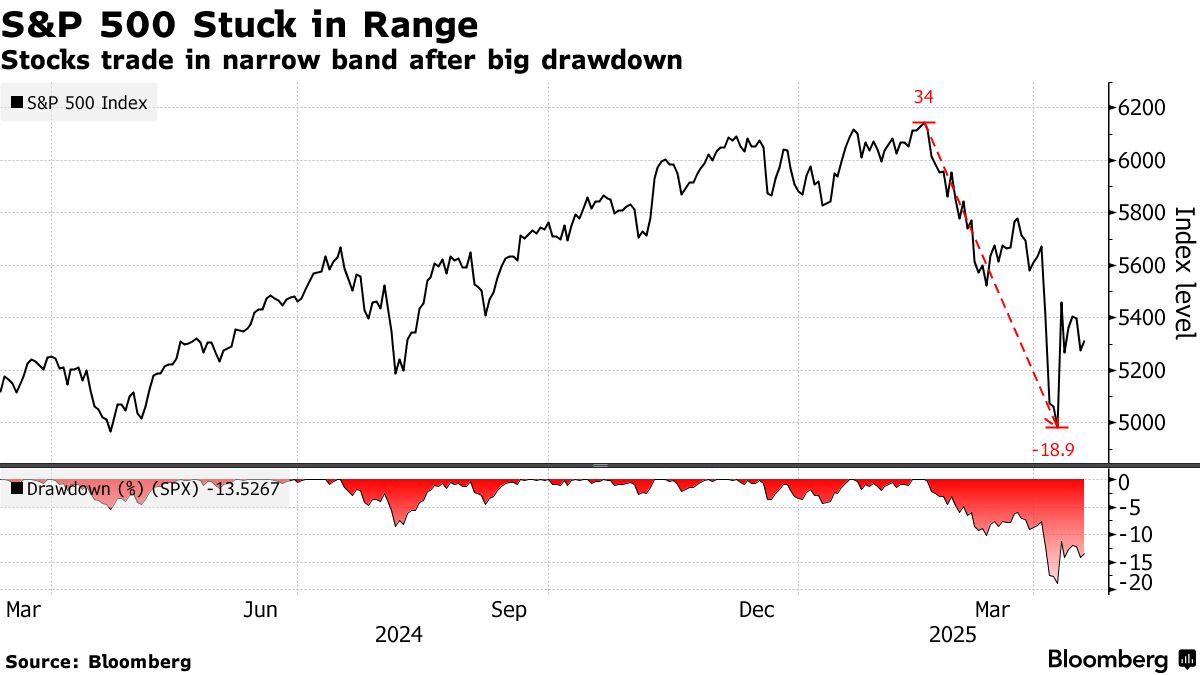
From a technical analysis perspective, the NASDAQ often respects key moving averages, such as the 50-day and 200-day lines. When the index is trading well above these averages, it suggests strong momentum but also raises concerns about being “overbought.” Today’s traders use these levels to determine entry and exit points. A “correction” is typically defined as a 10% drop from recent highs, a common occurrence for the NASDAQ that often serves to “shake out” speculative excess and reset valuations for the next leg up. Monitoring these support levels provides a clearer picture of whether a daily dip is a temporary blip or the start of a broader trend reversal.
The Psychological Element: Fear and Greed
Sentiment plays a massive role in where the NASDAQ moves on a daily basis. Because many NASDAQ-listed companies trade at high Price-to-Earnings (P/E) ratios, their stock prices are sustained by optimism. When the “Fear & Greed Index” tilts toward extreme greed, the NASDAQ often sees parabolic moves. However, when fear enters the market—due to geopolitical tensions or unexpected economic data—the NASDAQ is often the first index to be sold off as investors “de-risk” their portfolios. Today’s environment is a tug-of-war between the “Fear Of Missing Out” (FOMO) regarding AI advancements and the “Fear of Recession” brought on by restrictive monetary policy.
Strategic Asset Allocation in a Tech-Dominated Environment
For an individual investor, knowing where the NASDAQ is today is only half the battle; the other half is knowing how to position a portfolio in response to that information. The tech-heavy nature of the index requires a sophisticated approach to risk management.
Balancing Growth with Defensive Assets
While the NASDAQ offers unparalleled growth potential, it does not provide the dividend yield or stability found in other sectors. A prudent financial strategy involves using the NASDAQ as a growth engine while balancing it with “defensive” assets like bonds, value stocks, or commodities. Today, many investors use NASDAQ-tracking ETFs as a core holding but supplement them with equal-weighted indices to reduce the “concentration risk” of the mega-cap giants. This ensures that a single bad day for one or two major tech companies doesn’t derail an entire retirement plan.
The Importance of a Long-Term Perspective
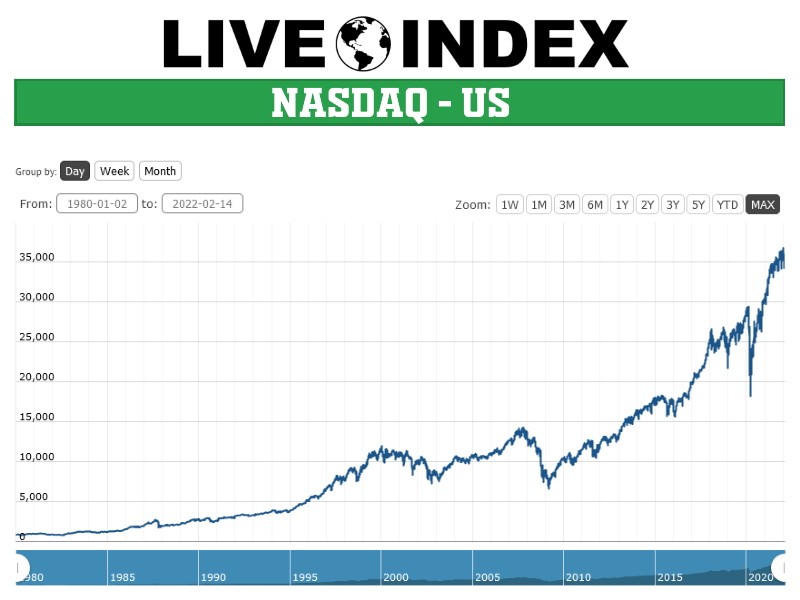
The most important takeaway for anyone tracking the NASDAQ today is the value of time in the market versus timing the market. Historically, the NASDAQ has rewarded those who can withstand its gut-wrenching drawdowns. From the dot-com bubble to the 2008 financial crisis and the 2020 pandemic, the index has shown a remarkable ability to innovate its way out of trouble.
Today, the index is navigating a complex landscape of high interest rates, geopolitical shifts, and a literal revolution in computing power. While the daily “noise” of the market can be distracting, the long-term trajectory of the NASDAQ remains tied to the human spirit of innovation. As long as companies continue to find ways to make the world more efficient, connected, and technologically advanced, the NASDAQ will remain the premier destination for growth-oriented capital.
In summary, the NASDAQ today is a reflection of a global economy in transition. It is caught between the gravity of traditional economic cycles and the escape velocity of new technologies. For the savvy investor, the index is not just a number on a screen; it is a map of where the world is going next. By understanding the interplay of interest rates, AI development, and market sentiment, one can better navigate the highs and lows of this dynamic financial powerhouse.
aViewFromTheCave is a participant in the Amazon Services LLC Associates Program, an affiliate advertising program designed to provide a means for sites to earn advertising fees by advertising and linking to Amazon.com. Amazon, the Amazon logo, AmazonSupply, and the AmazonSupply logo are trademarks of Amazon.com, Inc. or its affiliates. As an Amazon Associate we earn affiliate commissions from qualifying purchases.