
The Nasdaq Composite is one of the most closely followed stock market indices in the world. Often viewed as a barometer for the technology sector and growth-oriented companies, it represents a massive cross-section of the modern economy. Unlike the Dow Jones Industrial Average, which contains only 30 blue-chip companies, or the S&P 500, which tracks 500 of the largest U.S. corporations, the Nasdaq Composite is much broader.
However, the answer to “how many stocks are in the Nasdaq Composite” is not a fixed number. Because the index is tied to the listings on the Nasdaq Stock Market, the total count fluctuates daily based on initial public offerings (IPOs), delistings, mergers, and bankruptcies. Generally, the index contains between 2,500 and 3,500 individual securities, making it one of the most diverse representations of the equity market available to investors.
Understanding the Nasdaq Composite Structure
To understand why the number of stocks fluctuates, one must first understand what the Nasdaq Composite actually is. Established in 1971, it was the first electronic stock market. Today, the Composite Index includes almost all stocks listed on the Nasdaq Stock Exchange.
The Eligibility Criteria
For a security to be included in the Nasdaq Composite, it must meet specific criteria. Primarily, the security must be listed exclusively on the Nasdaq Stock Market. If a company is dual-listed on another U.S. exchange, it is generally not eligible. The types of securities included are:
-
Common stocks
-
American Depositary Receipts (ADRs)
-
Real Estate Investment Trusts (REITs)
-
Ordinary shares
-
Limited partnerships
Conversely, the index excludes exchange-traded funds (ETFs), preferred stocks, rights, warrants, and derivative securities. This focus on “equity” ensures that the index reflects the actual ownership and growth of the underlying companies.
Market Capitalization Weighting
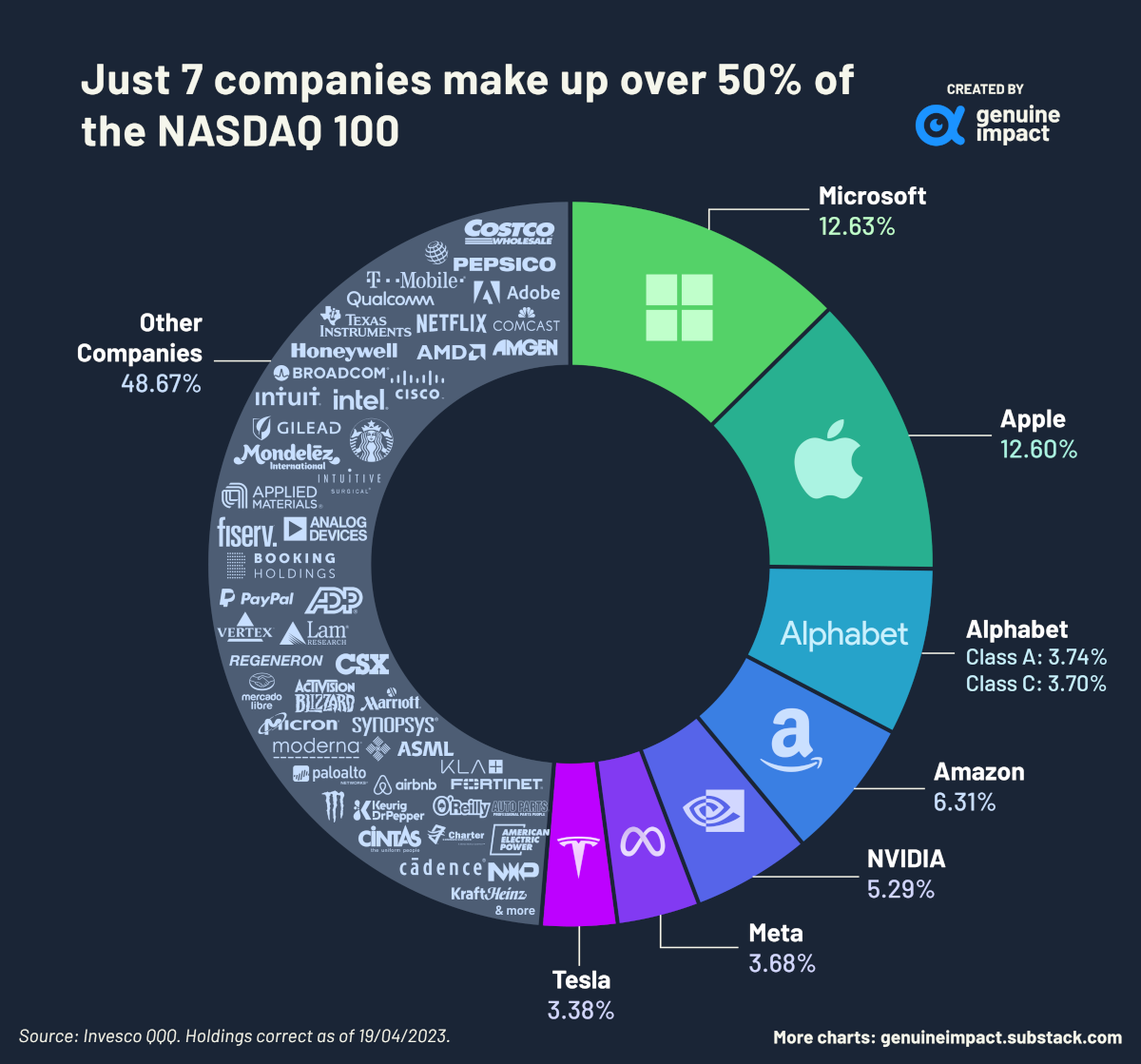
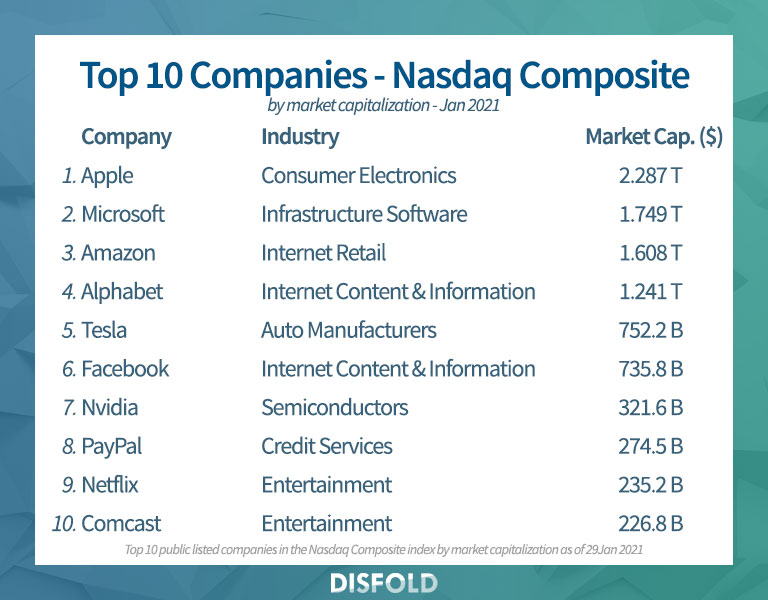
The Nasdaq Composite is a market-capitalization-weighted index. This means that the companies with the largest total market value have the greatest impact on the index’s price movements. While there are thousands of stocks in the index, the “Mega-Cap” tech giants—such as Apple, Microsoft, Alphabet, Amazon, and Nvidia—exert a disproportionate influence. Even if 2,000 small-cap stocks in the index rise in price, a significant drop in just the top five companies can pull the entire index into the red.
The Fluctuating Count: Why the Number Changes
Investors often notice that the number of holdings in a Nasdaq Composite tracker, like the Fidelity Nasdaq Composite Index ETF (ONEQ), changes slightly from month to month. This is a natural result of the “churn” within the public markets.
The Impact of IPOs and Delistings
The Nasdaq is the preferred home for many emerging technology and biotech firms. When a company “goes public” via an IPO on the Nasdaq exchange, it is typically added to the Composite Index the following day. During “bull markets” or periods of high economic activity, the number of stocks in the index tends to swell as more companies seek public capital.
On the other hand, the count decreases through delistings. A company may be delisted if its stock price falls below the exchange’s minimum requirements (often $1.00 per share) for an extended period, or if it fails to meet regulatory filing standards. Furthermore, mergers and acquisitions (M&A) are a primary driver of a shrinking stock count. When a large company acquires a smaller one, the acquired company’s stock ticker is retired, reducing the total count of the index by one.
Historical Perspective on the Stock Count
Historically, the number of stocks in the Nasdaq Composite was much higher during the late 1990s. At the peak of the Dot-com bubble in 2000, the index boasted over 5,000 companies. Following the crash, hundreds of companies went bankrupt or were consolidated, leading to a sharp decline in the total count. In the last decade, the number has generally stabilized between 3,000 and 3,700, reflecting a more mature, though still growth-heavy, marketplace.
Nasdaq Composite vs. Nasdaq-100: Clearing the Confusion
A common point of confusion for investors is the difference between the Nasdaq Composite and the Nasdaq-100. While they sound similar, they are very different in scope and composition.
The Concentrated Power of the Nasdaq-100
The Nasdaq-100 is a subset of the Nasdaq Composite. It includes only the 100 largest non-financial companies listed on the Nasdaq. Unlike the Composite, which includes thousands of companies of all sizes, the Nasdaq-100 is strictly focused on large-cap leaders. If you are looking at the famous Invesco QQQ ETF, you are tracking the Nasdaq-100, not the full Composite.
Why the Composite Offers More Diversity
Because the Nasdaq Composite includes thousands of small-cap and mid-cap stocks that the Nasdaq-100 ignores, it provides a broader look at the “health” of the innovation economy. The Composite includes financial institutions, such as banks and insurance companies, which are explicitly excluded from the Nasdaq-100. For an investor wanting exposure to the entire ecosystem of the Nasdaq exchange—including the “next big thing” that hasn’t reached large-cap status yet—the Composite is the superior metric.
Sector Breakdown: It’s More Than Just Technology
While the Nasdaq is synonymous with “Tech,” the thousands of stocks within the Composite Index actually span a wide variety of sectors. This internal diversity is what allows the index to remain resilient even when specific sub-sectors face headwinds.
The Dominance of Technology and Consumer Services
Technology remains the largest weight in the index, typically accounting for roughly 40% to 50% of the total value. This includes software, semiconductors, and hardware. Consumer Services is the second-largest sector, largely driven by internet retail giants and media companies. These two sectors define the “growth” characteristic of the index.
Healthcare and Biotechnology
One of the most overlooked aspects of the Nasdaq Composite is its massive healthcare component. The Nasdaq is the primary listing home for the biotechnology industry. There are hundreds of small and mid-cap biotech firms within the index that are working on gene therapies, oncology treatments, and medical devices. While these individual stocks can be highly volatile, collectively they represent a significant portion of the index’s total count.
Industrials and Financials
Though they make up a smaller percentage of the total market cap, there are hundreds of industrial and financial companies in the Composite. This includes regional banks, transportation companies, and capital goods manufacturers. This diversity ensures that while the index is tech-heavy, it is not a tech-exclusive silo.
How to Invest in the Full Nasdaq Composite
For individual investors, buying all 3,000+ stocks in the Nasdaq Composite individually would be a logistical nightmare and prohibitively expensive due to transaction costs. Fortunately, the financial industry provides tools to capture the entire index through a single purchase.
Index Funds and ETFs
The most common way to gain exposure to the full breadth of the Nasdaq Composite is through an ETF like the Fidelity Nasdaq Composite Index ETF (ONEQ). By purchasing shares of such an ETF, an investor owns a representative slice of every single company in the index, weighted by market cap. This provides instant diversification across thousands of securities.
The Role of the Composite in a Balanced Portfolio
Because the Nasdaq Composite is heavily weighted toward growth and technology, it tends to be more volatile than the S&P 500 or the Dow Jones. During market rallies, the Nasdaq often outperforms as investors flock to high-growth companies. However, during interest rate hikes or economic downturns, the thousands of smaller, non-profitable companies in the index can face significant selling pressure.
Investors often use the Nasdaq Composite as a “growth engine” within a diversified portfolio, balancing it with more conservative bond investments or value-oriented international stocks.

The Significance of the Index Today
The number of stocks in the Nasdaq Composite serves as a testament to the vibrancy of the public equity markets. When the count grows, it signals a healthy environment for entrepreneurship and capital formation. When it shrinks, it often points toward a period of corporate consolidation or economic cooling.
As of the current market cycle, the Nasdaq Composite continues to house over 3,000 companies, ranging from trillion-dollar titans to small-cap innovators. For the modern investor, understanding that this index is a living, breathing collection of thousands of companies—rather than just a handful of tech names—is essential for making informed financial decisions. Whether you are tracking it to gauge the health of the tech sector or investing in it to capture the total growth of the Nasdaq exchange, the Composite remains a fundamental pillar of the global financial landscape.
aViewFromTheCave is a participant in the Amazon Services LLC Associates Program, an affiliate advertising program designed to provide a means for sites to earn advertising fees by advertising and linking to Amazon.com. Amazon, the Amazon logo, AmazonSupply, and the AmazonSupply logo are trademarks of Amazon.com, Inc. or its affiliates. As an Amazon Associate we earn affiliate commissions from qualifying purchases.