
Purchasing a home is arguably the most significant financial commitment the average person will make in their lifetime. When looking at a $300,000 price tag—a figure that often represents a middle-ground entry point in many suburban markets or a high-end option in more affordable regions—the question of “what will it cost me monthly?” is rarely answered with a single number.
The monthly mortgage payment on a $300,000 house is a moving target, influenced by fluctuating interest rates, the size of your down payment, and the specific terms of your loan. To understand the true cost of homeownership at this price point, one must look beyond the sticker price and analyze the variables that dictate cash flow and long-term financial health.
The Core Components of Your Monthly Payment
When you receive a monthly mortgage statement, the total amount is typically divided into four main parts: principal, interest, taxes, and insurance—often referred to by the acronym PITI. For a $300,000 home, the “Principal and Interest” (P&I) portion makes up the majority of the payment, but the other factors are significant enough to swing your budget by hundreds of dollars.
The Impact of Interest Rates
Interest rates are the most volatile variable in the mortgage equation. In a high-rate environment, the cost of borrowing can nearly double the total interest paid over the life of the loan. For example, on a $300,000 home with a 20% down payment ($240,000 loan amount) and a 30-year fixed term:
-
At a 4% interest rate, the monthly P&I would be approximately $1,146.
-
At a 7% interest rate, that same P&I jumps to approximately $1,597.
This difference of $451 per month illustrates how much purchasing power is lost when rates rise. Over 30 years, that three-percentage-point difference equates to over $162,000 in additional interest paid.
Down Payment Scenarios
The amount of cash you put down upfront directly affects your loan balance and, consequently, your monthly obligation. While 20% was once the gold standard, many modern buyers opt for lower down payments.
-
20% Down ($60,000): You avoid Private Mortgage Insurance (PMI) and borrow $240,000.
-
10% Down ($30,000): You borrow $270,000 and must pay PMI until you reach 20% equity.
-
3.5% Down ($10,500): Typical for FHA loans, this results in a $289,500 loan balance and higher monthly insurance premiums.
A lower down payment preserves your liquid cash for repairs or investments but results in a significantly higher monthly payment due to the larger loan balance and the added cost of mortgage insurance.
Loan Terms: 15-Year vs. 30-Year
The duration of the loan also fundamentally changes the math. A 30-year mortgage offers lower monthly payments, which provides more breathing room in a monthly budget. Conversely, a 15-year mortgage features much higher monthly payments but allows the homeowner to build equity twice as fast and save tens of thousands in interest. On a $240,000 loan at 6.5%, a 30-year term costs $1,517 monthly (P&I), while a 15-year term costs $2,091.
Beyond Principal and Interest: The Total Cost of Ownership
To determine what the mortgage will actually be on a $300,000 house, we must include the costs that many first-time buyers overlook. These “hidden” costs are non-negotiable and are usually collected in an escrow account by the lender.
Property Taxes and Homeowners Insurance
Property taxes are determined by local municipalities and can vary wildly depending on the state and county. On a $300,000 home, an average national property tax rate of 1.1% would result in an annual bill of $3,300, or $275 per month. However, in high-tax states like New Jersey or Illinois, this could easily double.
Homeowners insurance is equally essential. Most lenders require a policy that covers the replacement cost of the home. Depending on the location (and risk factors like flooding or wildfires), insurance for a $300,000 home typically ranges from $80 to $150 per month.
Private Mortgage Insurance (PMI)
If you put down less than 20%, lenders view the loan as higher risk. To mitigate this, they require PMI. For a $300,000 home with a 3.5% down payment, PMI might cost between $120 and $250 per month. This fee does not go toward your principal; it is strictly an insurance premium for the lender’s protection.
Homeowners Association (HOA) Fees
If the $300,000 house is located within a planned development, condo complex, or gated community, you will likely be responsible for HOA fees. These can range from a nominal $20/month for basic street maintenance to $500+/month for amenities like pools, gyms, and landscaping. These fees are not usually part of the mortgage payment itself, but they must be factored into your debt-to-income ratio during the qualification process.
Understanding Your Debt-to-Income (DTI) Ratio and Buying Power
Lenders don’t just look at the price of the house; they look at your ability to pay for it relative to your income. This is measured through the Debt-to-Income (DTI) ratio.
The 28/36 Rule
A common benchmark used by financial advisors and lenders is the 28/36 rule. This guideline suggests that your total housing payment (PITI) should not exceed 28% of your gross monthly income, and your total debt obligations (including car loans, student loans, and credit cards) should not exceed 36%.
If you are looking at a $300,000 house and the total estimated payment is $2,400 per month (including taxes and insurance), you would ideally need a gross monthly household income of at least $8,571 ($102,852 annually) to comfortably afford the home under the 28% rule. While some loan programs allow for DTIs as high as 45% or 50%, stretching your budget that far can lead to being “house poor,” where all income goes toward the mortgage with little left for savings or leisure.
Closing Costs and Cash-to-Close
When calculating the mortgage, one must also account for the initial liquidity required. Closing costs typically range from 2% to 5% of the purchase price. On a $300,000 home, this means you need an additional $6,000 to $15,000 on top of your down payment. Failing to account for this can lead to a financial shock at the end of the escrow process.
Strategies for Reducing Your Monthly Mortgage Obligation
If the projected mortgage on a $300,000 house feels slightly out of reach, there are several financial levers you can pull to bring the number down.
Improving Your Credit Score
Mortgage rates are highly dependent on your credit tier. The difference between a 640 score and a 760 score can be as much as 1.5% in interest. On a $240,000 loan, that difference is roughly $250 per month. Taking six months to a year to pay down revolving debt and correct errors on your credit report before applying for a mortgage is often the most effective way to lower a monthly payment.
Buying Down the Rate with Points
“Points” are essentially prepaid interest. By paying an additional upfront fee at closing (usually 1% of the loan amount per point), you can “buy down” the interest rate for the life of the loan. This is an excellent strategy for buyers who plan to stay in the home for more than seven to ten years, as the monthly savings will eventually outweigh the initial cost.
Looking at Modern Loan Products
While the 30-year fixed is the safest bet, some buyers explore Adjustable-Rate Mortgages (ARMs). An ARM typically offers a lower introductory rate for a set period (5, 7, or 10 years). For a $300,000 house, a 5/1 ARM might offer a rate 0.5% to 1% lower than a fixed-rate mortgage. This can be a savvy move for professionals who know they will relocate or refinance before the rate adjusts.
The Long-Term Financial Outlook
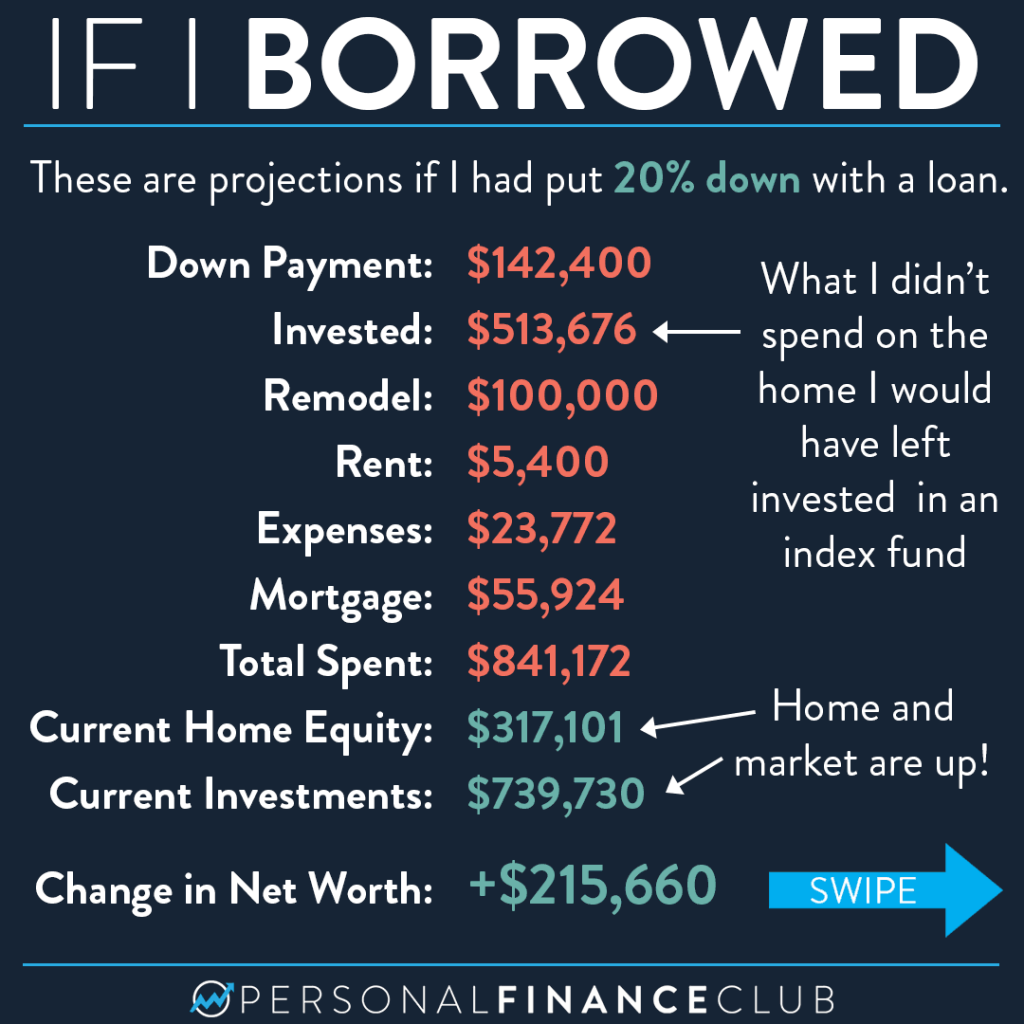
A $300,000 mortgage is not just a monthly expense; it is a forced savings vehicle. Every month, a portion of your payment goes toward the principal, slowly increasing your net worth. In the early years of a 30-year mortgage, the majority of the payment is interest. However, as the balance decreases, more of your payment is applied to the principal.
Furthermore, real estate has historically appreciated over the long term. If you purchase a $300,000 home and it appreciates at a conservative 3% annually, in ten years, the home could be worth over $400,000. Between the market appreciation and the principal pay-down, the “cost” of the mortgage is often offset by the growth in home equity.
Ultimately, determining the mortgage on a $300,000 house requires a holistic view of your financial profile. By balancing the down payment, choosing the right loan term, and accounting for the full scope of taxes and insurance, you can ensure that your move into homeownership is a sound financial investment rather than a burden.
aViewFromTheCave is a participant in the Amazon Services LLC Associates Program, an affiliate advertising program designed to provide a means for sites to earn advertising fees by advertising and linking to Amazon.com. Amazon, the Amazon logo, AmazonSupply, and the AmazonSupply logo are trademarks of Amazon.com, Inc. or its affiliates. As an Amazon Associate we earn affiliate commissions from qualifying purchases.