
In the fast-paced world of commerce, where transactions happen at the speed of a click and supply chains span the globe, understanding the foundational documents that facilitate these exchanges is crucial. Among these, the Purchase Order, often abbreviated as a “P.O.”, stands as a cornerstone of business operations. While its name might seem straightforward, its implications, applications, and integration within modern business practices are multifaceted, touching upon technology, branding, and, of course, money.
The term “P.O.” is more than just an acronym; it represents a legally binding agreement between a buyer and a seller. In its simplest form, it’s a document issued by a buyer to a seller, indicating types, quantities, and agreed-upon prices for products or services. It serves as a formal request, a confirmation of intent, and a crucial step in initiating a business transaction. However, in today’s interconnected world, the P.O. has evolved, leveraging technology to streamline processes, enhance branding, and impact financial flows.

This article delves into the essence of a P.O., exploring its fundamental role, its evolution in the digital age, and how it intersects with the core themes of technology, brand, and money that drive contemporary business. We’ll unpack the ‘what,’ ‘why,’ and ‘how’ of purchase orders, demonstrating their enduring relevance and adaptation to the modern business landscape.
The Foundational Role of a Purchase Order: From Agreement to Authorization
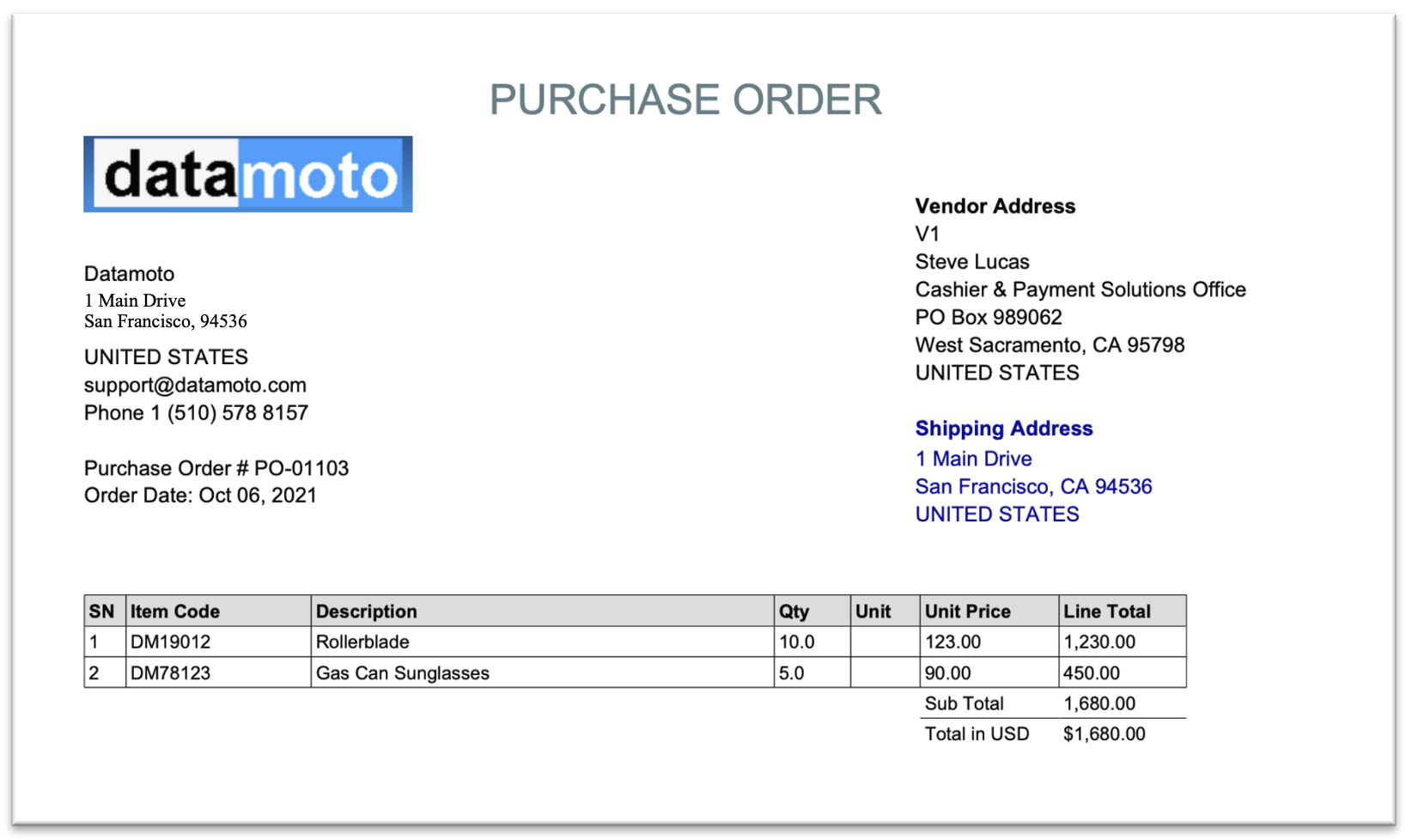
At its heart, a purchase order is a formal document that solidifies a buyer’s commitment to purchase specific goods or services from a seller. It acts as a clear, unambiguous statement of intent, detailing all the essential terms of the proposed transaction. This includes:
- Identification of Parties: Clearly states the names and addresses of both the buyer and the seller.
- Order Details: Specifies the exact items or services being ordered, including descriptions, quantities, and unit prices.
- Pricing and Payment Terms: Outlines the total cost, any applicable taxes, shipping fees, and the agreed-upon payment schedule (e.g., Net 30, payment upon receipt).
- Delivery Information: Includes the desired delivery date, shipping address, and any specific shipping instructions.
- Reference Numbers: Typically includes a unique P.O. number for easy tracking and referencing by both parties.
- Terms and Conditions: May incorporate specific contractual clauses, warranties, or return policies.
The significance of a P.O. extends far beyond a simple request. It serves several critical functions:
1. Legal Binding Agreement
Once a seller accepts a P.O. (often by signing it, acknowledging it electronically, or by fulfilling the order), it becomes a legally binding contract. This offers protection to both parties. For the buyer, it guarantees that they will receive the specified goods or services at the agreed-upon price. For the seller, it ensures they will be compensated for their products or services according to the agreed terms. This contractual aspect is fundamental to preventing disputes and ensuring a smooth transaction.
2. Authorization and Budget Control
For businesses, P.O.s are vital for internal control and financial management. They act as an authorization mechanism, ensuring that purchases are pre-approved and fall within allocated budgets. Departments or individuals requiring goods or services must typically generate a P.O., which then goes through an approval process. This prevents unauthorized spending and provides a clear audit trail, helping finance departments track expenditures and manage cash flow effectively.
3. Inventory and Supply Chain Management
P.O.s play a crucial role in managing inventory and the broader supply chain. When a buyer issues a P.O., it signals to the seller the demand for specific items. This allows sellers to plan their production, manage their own raw material procurement, and allocate resources accordingly. For the buyer, the P.O. serves as a record of anticipated incoming goods, enabling them to prepare for receiving, stocking, and subsequent use or resale. It forms a critical link in the chain from procurement to final delivery.
4. Record-Keeping and Reconciliation
Every P.O. is a document that needs to be meticulously kept. It serves as a reference point for tracking orders, verifying deliveries, and reconciling invoices. When an invoice arrives from a supplier, the accounts payable department will match it against the corresponding P.O. to ensure accuracy in terms of items ordered, quantities, and pricing. This reconciliation process is essential for preventing overpayments, identifying discrepancies, and maintaining accurate financial records.
The Digital Transformation of the P.O.: Technology’s Impact
The traditional paper-based P.O. has largely been digitized, a transformation driven by the relentless march of technology. This evolution has brought about significant improvements in efficiency, accuracy, and accessibility.
Electronic Purchase Orders (e-P.O.s) and Automation
The advent of e-commerce platforms, Enterprise Resource Planning (ERP) systems, and specialized procurement software has revolutionized how P.O.s are created, transmitted, and managed.
- Streamlined Creation and Approval: Modern software allows for the rapid generation of P.O.s, often pre-filling information based on past orders or integrated supplier catalogs. Approval workflows can be automated, routing P.O.s to the appropriate managers for review and authorization, significantly reducing turnaround times.
- Electronic Transmission: Instead of mailing or faxing, e-P.O.s are sent electronically via email, secure portals, or directly through integrated business systems. This eliminates delays, reduces the risk of lost documents, and provides immediate confirmation of receipt.
- Data Integration and Accuracy: Digital P.O.s can be directly integrated with other business systems, such as accounting software and inventory management platforms. This reduces manual data entry, minimizes errors, and ensures that information is consistent across different departments. For example, once a P.O. is approved, it can automatically trigger a requisition for funds or update inventory forecasts.
- Cloud-Based Procurement Solutions: Cloud technology has made sophisticated procurement tools accessible to businesses of all sizes. These platforms offer features for P.O. creation, supplier management, order tracking, and analytics, all accessible from any device with an internet connection.
AI and Machine Learning in P.O. Management
Artificial Intelligence (AI) and Machine Learning (ML) are further enhancing the capabilities of P.O. processes.

- Intelligent Data Extraction: AI can analyze incoming invoices and match them to P.O.s with greater accuracy, identifying discrepancies that might be missed by human eyes.
- Predictive Analytics: ML algorithms can analyze historical purchasing data to predict future needs, helping businesses optimize their ordering processes and avoid stockouts or overstocking.
- Fraud Detection: AI can identify patterns indicative of fraudulent P.O.s or invoice manipulations, adding an extra layer of security.
- Supplier Performance Analysis: By analyzing data from multiple P.O.s, AI can provide insights into supplier performance, helping businesses make more informed decisions about their supplier relationships.
The integration of technology has transformed the P.O. from a static document into a dynamic tool that drives efficiency and provides valuable data for strategic decision-making.
The P.O. and Brand: Building Trust and Ensuring Consistency
While P.O.s are primarily transactional documents, they also play a subtle yet significant role in shaping and reinforcing a company’s brand identity and reputation. The way a business handles its purchase orders, both internally and externally, reflects its professionalism, efficiency, and commitment to its partners.
Internal Brand Perception: Efficiency and Professionalism
For employees within an organization, a well-defined and efficient P.O. process contributes to a positive internal brand perception.
- Reliability and Trust: When employees can easily generate and get P.O.s approved, and when these P.O.s reliably lead to the procurement of necessary goods and services, it builds trust in the company’s operational efficiency.
- Reduced Frustration: A clunky, paper-based, or slow approval process can lead to employee frustration. A streamlined digital process, conversely, enhances the employee experience.
- Alignment with Company Values: If a company emphasizes innovation and efficiency in its external branding, its internal processes, including P.O. management, should reflect these values.
External Brand Perception: Supplier Relationships and Reputation
The interaction with suppliers through the P.O. process is a direct touchpoint that can significantly impact a company’s external brand.
- Professionalism in Communication: A clear, detailed, and professionally formatted P.O. demonstrates that the buyer is organized and serious about the transaction. This fosters respect from suppliers.
- Timely Payments: While not strictly part of the P.O. itself, the prompt payment of invoices that are reconciled against P.O.s is a crucial element of a strong supplier relationship. This reinforces the buyer’s reputation as a reliable and trustworthy business partner.
- Consistent Branding: Even in the digital realm, P.O. templates can be branded with company logos, colors, and consistent messaging. This reinforces the visual identity of the company and creates a cohesive brand experience for suppliers.
- Building Stronger Partnerships: A transparent and efficient P.O. process can lead to stronger, more collaborative relationships with suppliers. When suppliers feel valued and respected through clear communication and timely payments facilitated by accurate P.O.s, they are more likely to offer better terms, prioritize orders, and be more flexible in times of need. This positive network effect contributes to a robust and reputable supply chain.
In essence, a well-managed P.O. process is a quiet ambassador for the brand. It communicates competence, reliability, and respect to all stakeholders involved in the procurement cycle, contributing to a stronger overall brand image and reputation.
The P.O.’s Role in the Financial Ecosystem: Money Matters
The P.O. is intrinsically linked to the flow of money within and between businesses. It is a critical document for financial planning, budgeting, and cash flow management.
Budgeting and Financial Planning
Before any significant purchase can be made, a P.O. typically needs to be generated. This forces a consideration of the expenditure against allocated budgets.
- Budget Allocation: Department managers and project leaders must justify the need for a P.O., ensuring that the proposed purchase aligns with their departmental or project budget.
- Forecasting Expenditures: Aggregated P.O. data provides valuable insights for financial forecasting. By tracking outstanding P.O.s, businesses can better anticipate upcoming expenses and manage their cash reserves accordingly.
- Capital Expenditure Justification: For larger purchases, such as equipment or significant software investments, the P.O. process often involves a more rigorous justification and approval phase, ensuring that capital is deployed strategically and with a clear return on investment.
Cash Flow Management and Payment Authorization
The P.O. is a crucial precursor to an invoice and subsequent payment. Its role in managing cash flow is paramount.
- Commitment of Funds: Issuing a P.O. signifies a commitment of future funds. While not an immediate outflow of cash, it is a declaration that cash will be required at a later stage, as per the agreed payment terms.
- Invoice Reconciliation: As mentioned earlier, the P.O. is the benchmark against which invoices are verified. This prevents duplicate payments, incorrect charges, and ensures that only legitimate expenses are processed, safeguarding the company’s cash.
- Negotiating Payment Terms: The P.O. is where payment terms (e.g., Net 30, Net 60) are specified. These terms directly influence when cash leaves the business, allowing for strategic management of working capital. For example, negotiating longer payment terms can improve a company’s short-term cash position.
- Auditing and Compliance: The P.O. serves as a primary document for financial audits. Auditors will examine P.O.s to verify the authorization and legitimacy of expenditures, ensuring compliance with financial regulations and internal policies.
Impact on Online Income and Side Hustles
For individuals and small businesses operating in the online space, understanding P.O.s can still be relevant, especially when dealing with suppliers for goods or services.
- Procurement for E-commerce: An online store owner needing to purchase inventory from a wholesaler will likely receive or issue a P.O. This ensures they are getting the correct stock at the agreed price for their resale.
- Service Providers: Freelancers or consultants who need to purchase specific software, tools, or equipment for their business might use a P.O. if ordering from a larger vendor.
- Financial Record Keeping: Even for side hustles, maintaining clear records of purchases, often initiated by P.O.s or their equivalent, is essential for accurate tax reporting and profit calculation.
In conclusion, the purchase order is far more than a simple piece of paper or a digital record. It is a critical tool that underpins the efficiency of modern business operations, strengthens brand integrity, and plays a pivotal role in the financial health and strategic management of any organization. Its continued evolution, driven by technology, ensures its enduring relevance in navigating the complexities of today’s global marketplace.
aViewFromTheCave is a participant in the Amazon Services LLC Associates Program, an affiliate advertising program designed to provide a means for sites to earn advertising fees by advertising and linking to Amazon.com. Amazon, the Amazon logo, AmazonSupply, and the AmazonSupply logo are trademarks of Amazon.com, Inc. or its affiliates. As an Amazon Associate we earn affiliate commissions from qualifying purchases.