
In the world of personal finance, the interest rate is the most significant lever a consumer can pull to influence their long-term wealth. Whether you are financing a primary residence, purchasing a vehicle, or seeking a personal loan to consolidate high-interest debt, the search for the “lowest” rate is a pursuit of efficiency. However, the answer to which bank has the lowest interest rate is rarely a static name; it is a moving target influenced by federal policy, institutional overhead, and the individual borrower’s financial profile.
To navigate this landscape, one must understand that interest rates are not just prices—they are reflections of risk and cost. A bank with low overhead, such as a digital-first institution, can often undercut a legacy brick-and-mortar giant. Similarly, a credit union, which operates as a member-owned non-profit, may offer rates that commercial banks simply cannot match. Understanding where to look and how these rates are calculated is the first step toward securing the most favorable terms possible.
Understanding the Variables: Why Interest Rates Differ Between Banks
The interest rate you see advertised on a bank’s website is often a “starting at” figure, reserved for the most creditworthy borrowers. Behind that number lies a complex ecosystem of economic factors and internal bank policies.
The Role of the Federal Reserve and Macroeconomics
All banks operating within the United States are influenced by the federal funds rate set by the Federal Reserve. When the Fed raises rates to combat inflation, the cost of borrowing for banks increases, which is subsequently passed on to consumers. Conversely, in a low-rate environment, banks compete more aggressively on price. The “lowest” rate today might be 3% higher than the “lowest” rate three years ago, yet it remains the most competitive option in the current market context.
Credit Score and Risk-Based Pricing
Banks utilize risk-based pricing models. This means the interest rate offered is directly proportional to the perceived risk of default. A borrower with a FICO score of 800 is a low-risk asset for a bank, allowing the institution to offer a razor-thin margin over their own cost of capital. A borrower with a score of 620 represents higher risk, requiring the bank to charge a higher rate to offset potential losses. Therefore, the bank with the “lowest” rate for a prime borrower may not be the same bank that offers the best deal for someone with fair credit.
Relationship Banking and Loyalty Discounts
Many national banks, such as Bank of America or Chase, offer “relationship interest rates.” If you maintain a certain balance in a savings account or have an existing mortgage with the institution, they may shave 0.25% to 0.50% off the interest rate of a new loan. When calculating the total cost of borrowing, these loyalty discounts can sometimes make a large commercial bank more affordable than a specialized online lender.
Comparing Bank Types: Where to Find the Best Rates
Financial institutions are not monolithic. They have different business models, which results in different pricing strategies for loans.
Online-Only Banks and Fintech Disruption
In the last decade, online-only banks like SoFi, Ally, and Marcus by Goldman Sachs have revolutionized the lending space. Without the massive overhead of physical branches, security guards, and local utility bills, these institutions can operate on thinner margins. This frequently translates into lower interest rates for personal loans and mortgages. Furthermore, fintech lenders often use alternative data—such as education and employment history—to provide lower rates to “HENRYs” (High Earners, Not Rich Yet) who might not have a decades-long credit history but are statistically low-risk.
Credit Unions: The Member-Owned Advantage
Credit Unions are often the hidden gems of the financial world. Because they are not-for-profit cooperatives, their primary goal is to provide value to their members rather than dividends to shareholders. On average, credit unions offer interest rates on auto loans and personal loans that are 0.5% to 1.5% lower than traditional banks. National credit unions like Navy Federal or Pentagon Federal (PenFed) are famous for their aggressive rate structures, though they do require specific membership eligibility.
National Commercial Banks
While big-box banks often have higher overhead and may not always lead with the absolute lowest “teaser” rate, they offer unparalleled stability and convenience. For complex products like jumbo mortgages or specialized business lines of credit, national banks have the liquidity to offer competitive rates that smaller local banks might find too risky. They are also more likely to offer “rate matching” if you provide a written quote from a competitor, utilizing their deep pockets to retain high-value clients.
Lowest Interest Rates by Product Category

The “best” bank changes depending on what you are trying to buy. A bank that is competitive in the mortgage market may be incredibly expensive for a credit card or a personal loan.
Mortgages and Home Equity
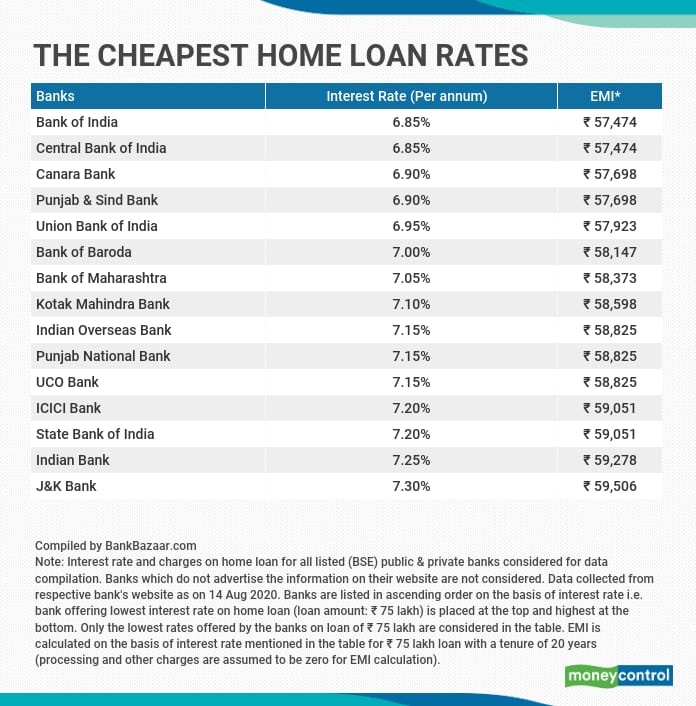
Mortgage rates are heavily influenced by the secondary market (Fannie Mae and Freddie Mac). To find the lowest mortgage rate, one must look at “wholesale” lenders or mortgage brokers who can access a variety of institutional rates simultaneously. Online lenders like Rocket Mortgage or Better.com often lead in transparency and speed, but local community banks may offer lower rates for “portfolio loans”—loans they keep on their own books rather than selling—especially for non-standard properties.
Personal Loans and Debt Consolidation
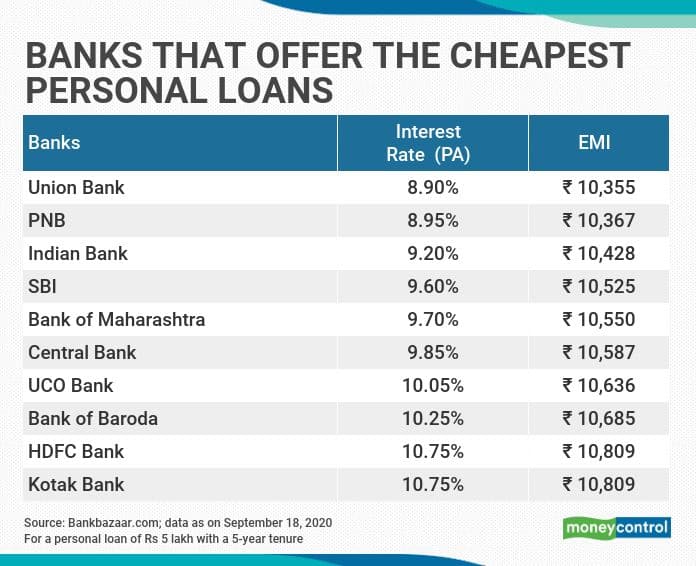
For unsecured personal loans, fintech is king. Companies like LightStream (a division of Truist) are known for offering some of the lowest rates in the industry for borrowers with excellent credit, often with no fees. In this category, the “interest rate” must be viewed alongside the APR (Annual Percentage Rate), which includes origination fees. A bank might offer a 6% interest rate but a 3% origination fee, making it more expensive than a bank offering 7% with no fees.
Auto Loans and Refinancing
When it comes to auto loans, the lowest interest rates are frequently found at the “captive” finance arms of manufacturers (e.g., Toyota Financial Services or Ford Credit), especially during promotional periods where 0% or 1.9% APR is offered to move inventory. Outside of those promotions, credit unions almost universally hold the title for the lowest auto loan rates for both new and used vehicles.
Strategies to Secure the Absolute Lowest Rate
Finding the lowest interest rate is as much about the borrower’s behavior as it is about the bank’s offerings. To access the “tier one” pricing at any institution, a strategic approach is required.
Improving Your Debt-to-Income (DTI) Ratio
Even if a bank advertises a low rate, they will not grant it to a borrower whose monthly debt obligations exceed 36% to 43% of their gross income. By paying down revolving credit card balances before applying for a major loan, you reduce your DTI. This lower risk profile can move you from a “standard” rate to a “preferred” rate, potentially saving you thousands over the life of the loan.
Choosing the Right Term Length
Interest rates are tied to time. Generally, the shorter the loan term, the lower the interest rate. A 15-year fixed-rate mortgage will always carry a lower interest rate than a 30-year fixed-rate mortgage because the bank is exposed to market volatility for a shorter period. If you can afford the higher monthly payments associated with a shorter term, you will secure a lower rate and pay significantly less interest in total.
The Power of Rate Shopping
The Consumer Financial Protection Bureau (CFPB) notes that borrowers who check at least three different lenders save an average of $1,500 to $3,000 over the life of a loan. When you shop for a loan within a 14-to-45-day window, credit scoring models treat the multiple inquiries as a single event, meaning your score won’t be penalized for being diligent. Always ask for a “Loan Estimate” form, which standardizes the presentation of interest rates and closing costs, making it easier to see which bank is truly offering the lowest cost.
The Future of Interest Rates and Banking Trends
The landscape of interest rates is currently undergoing a shift driven by artificial intelligence and real-time economic data. We are moving toward a future of “hyper-personalized” interest rates.
Predictive Analytics in Lending
Traditional banking relies on historical data (your credit report). Future-leaning banks are beginning to use predictive analytics to assess risk. This means that if you have a stable job in a high-demand field and a history of responsible cash flow management, AI-driven lenders may offer you a lower interest rate than a traditional bank would, even if your FICO score isn’t perfect. This “precision pricing” is expected to lower rates for a broader segment of the population.
The Impact of Economic Volatility
In an era of global economic shifts, the “lowest” rate bank today may change by next month. The rise of decentralized finance (DeFi) and high-yield digital environments is forcing traditional banks to be more competitive with their lending rates to keep capital flowing. As a consumer, staying informed about market trends and remaining “liquid”—keeping your credit score high and your debts low—is the best way to ensure that when you ask “what bank has the lowest interest rate,” you are positioned to qualify for the answer.
In conclusion, the lowest interest rate is not a fixed destination but a result of your financial health meeting the right institutional model. By comparing online lenders, credit unions, and national banks, and by optimizing your own credit profile, you can bypass the “sticker price” and secure the institutional-grade rates that define smart personal finance.
aViewFromTheCave is a participant in the Amazon Services LLC Associates Program, an affiliate advertising program designed to provide a means for sites to earn advertising fees by advertising and linking to Amazon.com. Amazon, the Amazon logo, AmazonSupply, and the AmazonSupply logo are trademarks of Amazon.com, Inc. or its affiliates. As an Amazon Associate we earn affiliate commissions from qualifying purchases.