
Purchasing a home is arguably the most significant financial commitment an individual will make in their lifetime. When prospective buyers ask, “How much is a house mortgage?” they are rarely looking for a single, static number. Instead, they are seeking to understand the complex interplay of financial variables that determine both the monthly outflow of cash and the total cost of borrowing over several decades.
A mortgage is not merely a loan; it is a structured financial product composed of principal, interest, taxes, and insurance. To accurately calculate the cost of a mortgage, one must look beyond the sticker price of the home and delve into the nuances of credit health, market conditions, and long-term financial planning. This guide explores the fundamental components that dictate mortgage costs and provides the insights necessary to navigate the path to homeownership.
The Four Pillars of a Mortgage Payment: PITI
To understand how much a mortgage costs, one must first deconstruct the monthly payment into its primary components, often referred to by the acronym PITI: Principal, Interest, Taxes, and Insurance.
Principal and Interest
The principal is the actual amount of money borrowed from the lender to purchase the home. The interest is the fee charged by the lender for the privilege of using that money. In the early years of a mortgage, a significant portion of the monthly payment is directed toward interest. Through a process known as amortization, the balance slowly shifts over time, with a larger percentage of the payment being applied to the principal as the loan matures.
Property Taxes
Real estate taxes are assessed by local government entities to fund public services such as schools, roads, and emergency services. These taxes are typically calculated as a percentage of the home’s assessed value. Because property taxes vary wildly by state, county, and even municipality, they can significantly alter the monthly cost of a mortgage for two identical houses in different locations.
Homeowners Insurance and PMI
Lenders require borrowers to carry homeowners insurance to protect the collateral (the house) against hazards like fire or wind damage. Additionally, if a borrower provides a down payment of less than 20% of the home’s purchase price, they are usually required to pay Private Mortgage Insurance (PMI). PMI protects the lender in the event of a default and can add hundreds of dollars to the monthly mortgage cost.
Factors That Determine Interest Rates and Total Cost
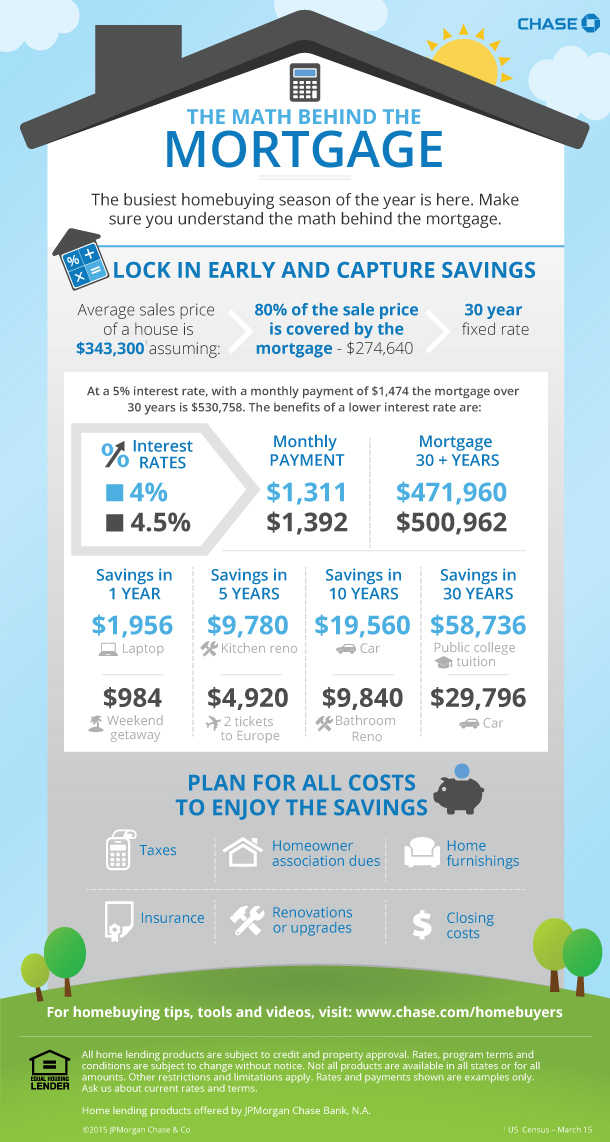
The interest rate is the most volatile variable in the mortgage equation. Even a fraction of a percentage point can result in tens of thousands of dollars in interest over the life of a 30-year loan. Several factors influence the rate a borrower is offered.
Credit Score and Financial History
A borrower’s credit score is the primary metric lenders use to assess risk. High credit scores (typically 760 and above) qualify for the lowest interest rates. Conversely, lower scores indicate higher risk, prompting lenders to charge higher rates to compensate for that risk. Maintaining a low debt-to-income ratio and a history of on-time payments is essential for securing a competitive rate.
The Down Payment
The amount of cash a buyer brings to the closing table significantly impacts the mortgage cost. A larger down payment reduces the loan-to-value (LTV) ratio, which often leads to a lower interest rate and the elimination of PMI. While many programs allow for down payments as low as 3% or 3.5%, the financial benefits of a 20% down payment remain substantial in terms of long-term savings.
Loan Term: 15 vs. 30 Years
The duration of the loan dictates the monthly payment and the total interest paid. A 30-year mortgage offers lower monthly payments, making it more affordable on a month-to-month basis. However, because the debt is carried for a longer period, the total interest paid is much higher. A 15-year mortgage typically offers a lower interest rate but requires significantly higher monthly payments to retire the debt in half the time.
Market Conditions and the Federal Reserve
While individual factors matter, the broader economic environment sets the baseline for mortgage rates. The Federal Reserve’s monetary policy, inflation rates, and the performance of the 10-year Treasury yield all influence how lenders price their mortgage products. When inflation is high, mortgage rates tend to rise as lenders demand higher returns to protect their purchasing power.
Understanding Loan Types and Their Financial Impact
The “cost” of a mortgage is also shaped by the specific loan program a borrower selects. Each program has its own set of rules regarding interest rates, insurance, and eligibility.
Conventional Loans
Conventional loans are not insured by the federal government and typically follow the guidelines set by Fannie Mae or Freddie Mac. These loans are ideal for borrowers with strong credit and a stable down payment. They offer the most flexibility and the ability to cancel PMI once the homeowner reaches 20% equity.
FHA Loans
Insured by the Federal Housing Administration, FHA loans are designed for low-to-moderate-income borrowers. They allow for lower credit scores and a minimum down payment of 3.5%. However, FHA loans require a Mortgage Insurance Premium (MIP) that often lasts for the entire life of the loan, regardless of how much equity is built, which can make them more expensive in the long run.
VA and USDA Loans
For eligible veterans and active-duty service members, VA loans offer the significant advantage of $0 down payments and no monthly mortgage insurance. Similarly, USDA loans assist buyers in designated rural areas with $0 down payment options. While these programs have lower upfront costs, they may include “funding fees” or “guarantee fees” that are rolled into the total loan amount.
The Hidden Costs: Beyond the Monthly Payment
When calculating “how much is a house mortgage,” it is a mistake to focus solely on the monthly check sent to the bank. Homeownership involves several auxiliary costs that affect the overall financial burden.
Closing Costs
Before the mortgage begins, the borrower must pay closing costs, which typically range from 2% to 5% of the purchase price. These fees cover loan origination, appraisals, title searches, credit reports, and attorney fees. On a $400,000 home, closing costs can easily exceed $12,000, representing a significant upfront investment.
Maintenance and HOA Dues
While not strictly part of the mortgage, maintenance costs are an inescapable part of the homeownership budget. Experts suggest setting aside 1% of the home’s value annually for repairs. Additionally, many homes are part of a Homeowners Association (HOA), which requires monthly or annual dues to maintain common areas and enforce community standards. These fees must be factored into the total monthly housing cost.
Escrow Accounts and Adjustments
Most lenders utilize an escrow account to collect property taxes and insurance premiums on behalf of the borrower. Because tax assessments and insurance rates can fluctuate annually, the monthly mortgage payment is rarely static. An “escrow analysis” performed by the lender may result in a “shortage” or “surplus,” leading to adjustments in the monthly payment.
Strategies for Calculating Affordability
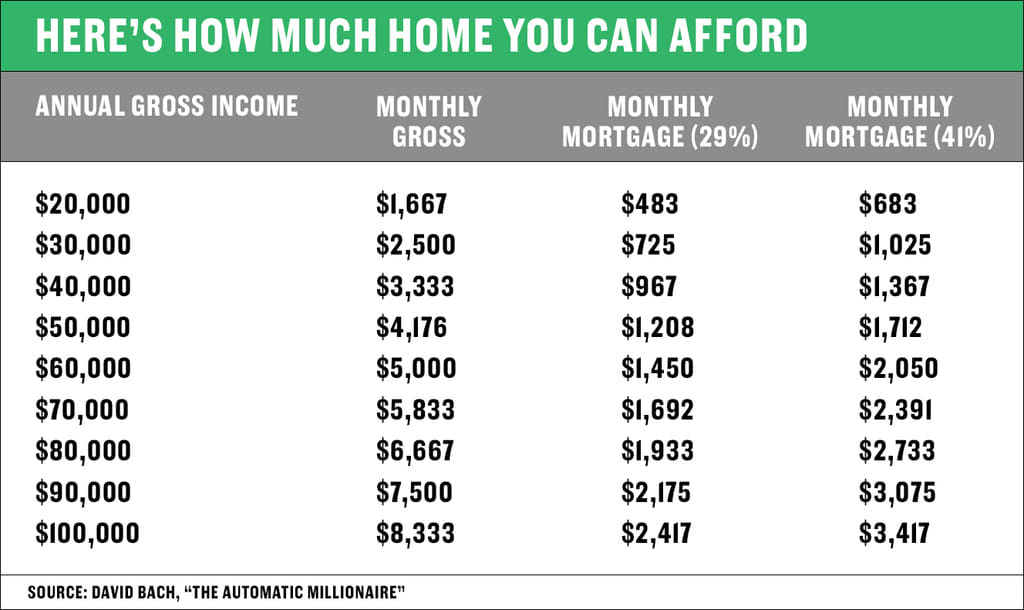
To determine how much of a mortgage one can afford, financial experts often point to the 28/36 rule. This rule suggests that a household should spend no more than 28% of its gross monthly income on total housing expenses (PITI) and no more than 36% on total debt obligations, including car loans, student loans, and credit cards.
The Debt-to-Income (DTI) Ratio
Lenders place a heavy emphasis on the DTI ratio. If your gross monthly income is $8,000, a 36% DTI would limit your total monthly debt payments to $2,880. If you have $500 in other monthly debts, your maximum mortgage payment would be $2,380. Staying within these limits ensures that the mortgage does not lead to “house poor” status, where the homeowner has little disposable income left for other necessities or savings.
Using Points to Lower Interest
Borrowers can choose to pay “discount points” at closing to lower their interest rate. One point typically costs 1% of the loan amount and reduces the interest rate by approximately 0.25%. This is an upfront cost that pays off over several years, making it a strategic move for those planning to stay in their home for a decade or more.
The Role of Refinancing
The cost of a mortgage is not necessarily permanent. If market interest rates drop or if a borrower’s credit score improves significantly, refinancing the mortgage can lower the monthly payment or shorten the loan term. However, refinancing involves its own set of closing costs, meaning the borrower must calculate the “break-even point” to ensure the move is financially sound.

Conclusion: Navigating the Financial Commitment
Determining “how much” a house mortgage is requires a holistic view of one’s financial landscape. It is the sum of the principal borrowed, the interest dictated by the market and credit health, the taxes levied by the local government, and the insurance required to mitigate risk.
By understanding these variables and utilizing conservative budgeting rules like the 28/36 guideline, prospective homeowners can move forward with confidence. The goal is not just to secure a loan, but to structure a mortgage that enhances long-term wealth without compromising current financial stability. As markets fluctuate and personal circumstances change, the key to managing mortgage costs lies in continuous education and proactive financial management.
aViewFromTheCave is a participant in the Amazon Services LLC Associates Program, an affiliate advertising program designed to provide a means for sites to earn advertising fees by advertising and linking to Amazon.com. Amazon, the Amazon logo, AmazonSupply, and the AmazonSupply logo are trademarks of Amazon.com, Inc. or its affiliates. As an Amazon Associate we earn affiliate commissions from qualifying purchases.