
The transatlantic corridor remains the most lucrative geography in global aviation, often referred to as the “crown jewel” of airline balance sheets. For American Airlines (AA), the question of where they fly in Europe is not merely a matter of logistics or tourism; it is a complex exercise in capital allocation, revenue management, and strategic asset optimization. As the world’s largest airline by fleet size, American’s European footprint is a calculated map designed to maximize Revenue Passenger Miles (RPM) while leveraging high-value partnerships through the Oneworld alliance and its Joint Business Agreement (JBA) with International Airlines Group (IAG).

Understanding the financial architecture of American’s European network requires looking beyond the flight schedule. It involves analyzing how the carrier utilizes its hubs in Dallas/Fort Worth (DFW), Charlotte (CLT), Philadelphia (PHL), New York (JFK), and Chicago (ORD) to funnel high-yield corporate and premium leisure traffic into the European theater. This analysis explores the financial logic behind American’s primary European destinations and the fiscal tools used to sustain profitability in a volatile global market.
The Economics of the London Heathrow Hub: A Multi-Billion Dollar Asset
London Heathrow (LHR) is the undisputed center of gravity for American Airlines’ European operations. From a business finance perspective, the slots American holds at LHR are among the most valuable intangible assets on its balance sheet. Heathrow is not just a destination; it is a massive revenue engine fueled by the Joint Business Agreement with British Airways.
The Joint Business Agreement (JBA) and Margin Protection
The JBA allows American Airlines and British Airways to coordinate schedules, prices, and sales, effectively functioning as a single entity on transatlantic routes. Financially, this creates a “fortress” environment that protects margins against low-cost carrier incursions. By flying from nearly all its major U.S. hubs to London, American ensures it captures the lion’s share of the high-margin corporate travel market. The financial synergy here is significant: by sharing costs and revenues, AA minimizes the risk of empty seats on expensive long-haul flights, ensuring a higher Load Factor and a more predictable Return on Invested Capital (ROIC).
Slot Valuation and Capital Intensity
London Heathrow is a slot-constrained airport, meaning the right to land and take off at specific times has a direct market value, often reaching tens of millions of dollars per pair. For American, maintaining a high frequency of flights to London is a strategic play to protect these assets. Each flight to LHR represents a high-stakes investment in “premium real estate.” The airline’s heavy deployment of Boeing 777-300ER and 787 Dreamliner aircraft on these routes is a testament to the high Yield Per Available Seat Mile (YASM) that the London market provides, particularly through its Flagship First and Business Class cabins.
Strategic Asset Allocation: The Mediterranean and Continental Portfolio
While London serves as the primary financial anchor, American’s broader European network is a study in seasonal volatility and market diversification. The airline’s strategy has shifted in recent years toward capturing the “premium leisure” market, which has shown a higher willingness to pay for upgraded experiences post-pandemic.
The Mediterranean Surge and Seasonal ROI
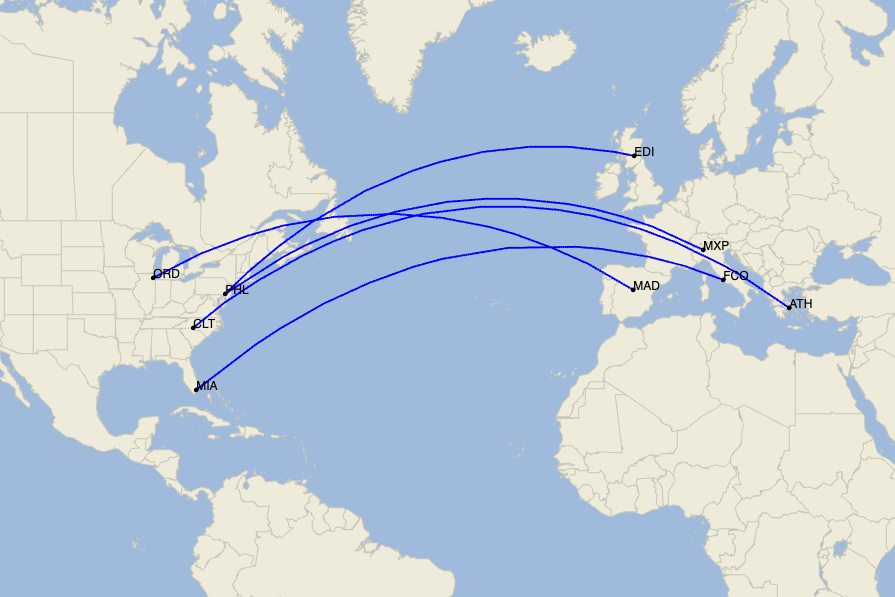
Destinations such as Rome (FCO), Athens (ATH), Barcelona (BCN), and Madrid (MAD) are critical components of American’s seasonal profit strategy. During the peak summer months, these routes generate immense cash flow. Madrid, in particular, serves as a dual-purpose asset. Through its partnership with Iberia, American uses Madrid as a secondary gateway, not just for Spain, but as a financial bridge to North Africa and the rest of Europe. This partnership allows American to sell tickets to dozens of European cities without the massive overhead of operating its own aircraft, a high-efficiency model that boosts the bottom line without increasing capital expenditure (CAPEX).
The Paris and Frankfurt Industrial Corridors
Paris (CDG) and Frankfurt (FRA) represent the “blue-chip” stocks of American’s European portfolio. These are year-round routes driven by a mix of corporate contracts and cargo revenue. Frankfurt, as a global financial hub, attracts a steady stream of business travelers who are less price-sensitive and more focused on schedule frequency and loyalty program benefits. American’s presence in these markets is essential for maintaining its “Corporate Identity” as a global carrier capable of serving the needs of Fortune 500 companies, which provides a stable, predictable revenue stream that offsets the more volatile leisure markets.
Financial Tools: The AAdvantage Program and European Utility
One of the most powerful financial tools in American Airlines’ arsenal is its loyalty program, AAdvantage. The way American structures its European flight path is heavily influenced by the “currency” of frequent flyer miles and the multi-billion dollar valuation of the loyalty program itself.
Miles as a Liability and Revenue Driver
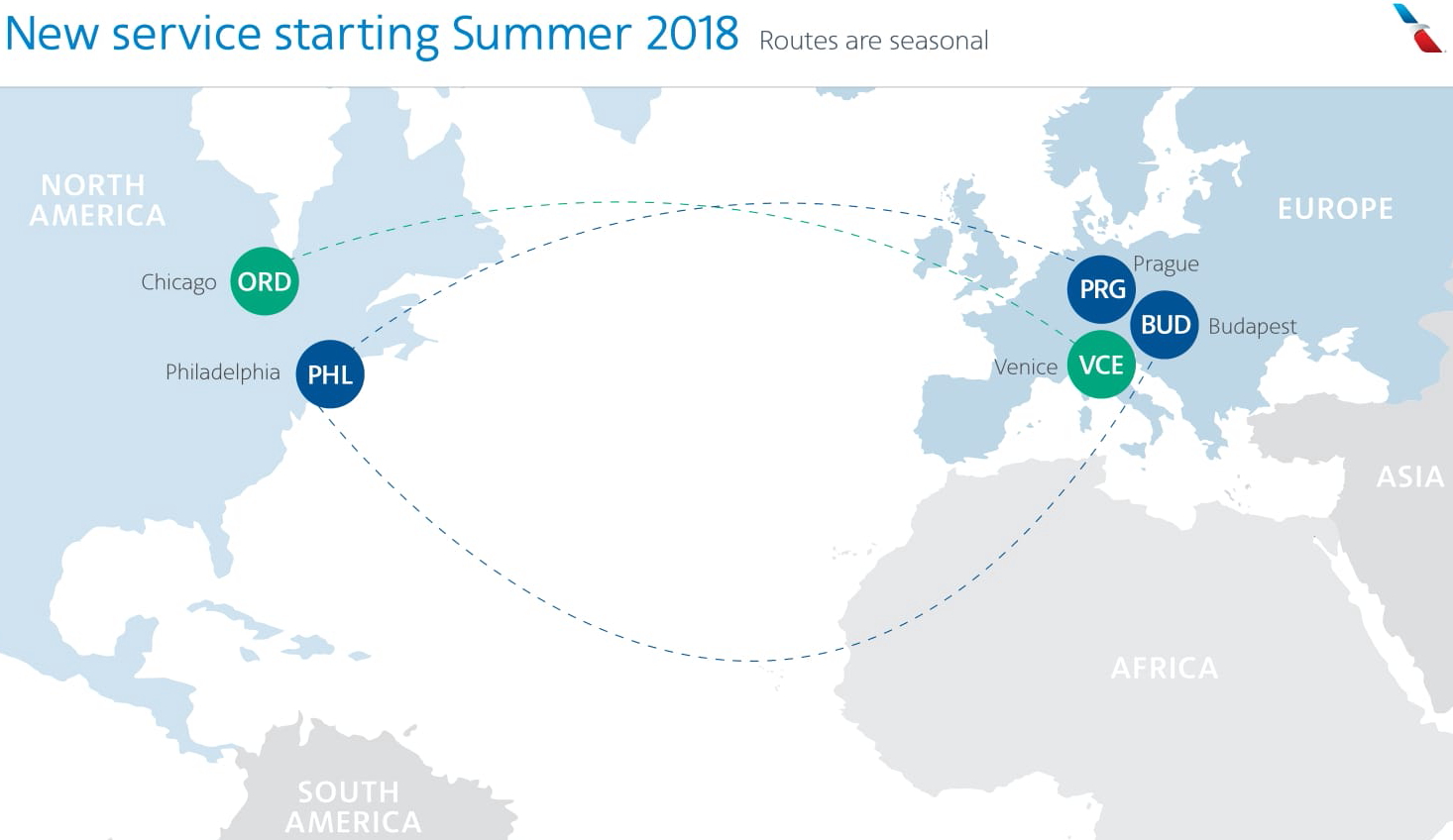
In modern airline finance, loyalty programs are often more valuable than the flying operation itself. By flying to “aspirational” European destinations like Venice (VCE), Nice (NCE), and Copenhagen (CPH), American increases the perceived value of its miles. This encourages credit card spend and corporate loyalty, as customers want to earn miles they can “invest” in high-value premium cabin redemptions to Europe. From a balance sheet perspective, these European routes help manage the “loyalty liability” by providing seats for redemption while simultaneously driving high-margin revenue through the sale of miles to banking partners like Citi and Barclays.
Arbitrage and Partner Redemptions
The financial utility of American’s European network is amplified by the Oneworld alliance. If American does not fly directly to a specific city—such as Berlin or Geneva—it leverages its financial agreements with Finnair, Qatar Airways, or Aer Lingus. This allows for “revenue leakage prevention,” ensuring that a customer’s travel spend stays within the partner ecosystem. The financial clearinghouse that manages these interline settlements is a sophisticated tool that allows American to offer a “virtual” European network far larger than its actual physical footprint.
Risk Management and the Future of Transatlantic Investment
As American Airlines looks toward the future of its European network, it faces a shifting landscape of fuel costs, environmental regulations, and changing consumer behavior. The airline’s response is a masterclass in risk management and disciplined CAPEX.
The A321XLR: A Game-Changer for Business Finance
The introduction of the Airbus A321XLR (Extra Long Range) into American’s fleet is a pivotal financial move. Historically, flying to Europe required wide-body aircraft with 200–300 seats, which are expensive to operate and difficult to fill during off-peak seasons. The A321XLR allows American to fly smaller “long-and-thin” routes—such as Philadelphia to Reykjavik or Charlotte to secondary French cities—with much lower trip costs. This reduces the “break-even load factor,” allowing the airline to test new markets with significantly less financial risk. It represents a shift from “bulk” capacity to “precision” capacity, maximizing the ROI on each flight hour.
Navigating Macroeconomic Headwinds
Currency fluctuations (specifically the USD vs. EUR/GBP) and fuel price volatility are the primary risks to American’s European profitability. To mitigate these, the airline uses sophisticated fuel hedging and currency layering strategies. Furthermore, by diversifying its European destinations across both the Eurozone and non-Euro countries, American creates a natural hedge against regional economic downturns. The decision of where to fly is constantly re-evaluated through the lens of “Unit Revenue” (RASM), with routes that underperform being quickly cut or shifted to seasonal status to preserve liquidity.
Conclusion: The Strategic Map of Profitability
Where American Airlines flies in Europe is a reflection of its broader corporate finance strategy. Each route to London, Paris, Rome, or Zurich is a calculated bet on market demand, partnership synergy, and brand equity. By focusing on high-yield hubs, leveraging the massive financial power of the AAdvantage program, and investing in fuel-efficient technology like the A321XLR, American ensures that its European network remains a cornerstone of its global profitability.
For the traveler, these routes are gateways to culture and history; for the airline, they are a sophisticated portfolio of assets designed to generate shareholder value in one of the most competitive industries on earth. The map of American’s European operations is not just a collection of flight paths—it is a blueprint for financial resilience and strategic growth in the global marketplace.
aViewFromTheCave is a participant in the Amazon Services LLC Associates Program, an affiliate advertising program designed to provide a means for sites to earn advertising fees by advertising and linking to Amazon.com. Amazon, the Amazon logo, AmazonSupply, and the AmazonSupply logo are trademarks of Amazon.com, Inc. or its affiliates. As an Amazon Associate we earn affiliate commissions from qualifying purchases.