
In the high-stakes world of global aviation, human capital is the primary engine of operational success and the most significant line item on a balance sheet. For investors, market analysts, and business professionals, understanding the scale of a company like American Airlines requires looking beyond its fleet size and destination maps. One must look at its workforce. As of the most recent fiscal reports, American Airlines employs approximately 132,800 full-time equivalent employees. This figure represents more than just a headcount; it is a testament to the massive logistical and financial infrastructure required to maintain the title of the world’s largest airline by certain metrics.

From a business finance perspective, the number of employees is a critical indicator of a company’s health, its scalability, and its exposure to labor market volatility. For American Airlines, managing a workforce of over 130,000 people involves navigating complex union contracts, massive payroll obligations, and the perpetual challenge of optimizing productivity in a low-margin industry.
The Current Landscape of the American Airlines Workforce
To understand the sheer magnitude of American Airlines’ operations, one must break down the 132,800 employees into their functional roles. A global carrier is not merely a collection of pilots and flight attendants; it is a massive corporate entity that requires a diverse range of skill sets, from high-level data scientists to specialized aeronautical engineers.
Departmental Breakdowns and Specializations
The largest segment of the American Airlines workforce is comprised of front-line operational staff. This includes approximately 15,000 pilots and over 26,000 flight attendants. These groups represent the face of the brand and the core of its service delivery. However, the “hidden” workforce is equally substantial. Thousands of employees work in fleet maintenance, ensuring that the airline’s 900+ mainline aircraft remain airworthy and compliant with stringent FAA regulations.
Furthermore, the airline employs a significant number of customer service agents, ramp handlers, and gate agents who manage the complex choreography of airport operations. At the corporate level, headquartered in Fort Worth, Texas, thousands of professionals manage revenue management, marketing, legal affairs, and technical infrastructure. This diversity of labor is what allows American Airlines to operate nearly 6,700 flights per day to 350 destinations in more than 50 countries.
The Scale of Global Operations
Unlike smaller regional carriers, American Airlines’ workforce is distributed globally. While the majority of employees are based in the United States, particularly at major hubs like Dallas/Fort Worth (DFW), Charlotte (CLT), and Miami (MIA), the company maintains a significant international presence. Managing payroll, benefits, and local labor laws across dozens of international jurisdictions adds a layer of financial complexity that only a few corporations in the world must navigate. For investors, this global footprint is a double-edged sword: it provides unparalleled market reach but introduces significant “personnel risk” related to global economic shifts and geopolitical stability.
Labor as a Financial Lever: Understanding the Expense Structure
In the airline industry, labor typically represents the largest or second-largest operating expense, often rivaling fuel costs. For American Airlines, the financial implications of its 130,000-strong workforce are profound. In recent fiscal years, salaries, wages, and benefits have accounted for nearly 25% to 30% of total operating expenses.
The Impact of Unionization
One of the most critical aspects of American Airlines’ financial profile is its highly unionized workforce. Approximately 85% of the company’s employees are represented by various labor unions, including the Allied Pilots Association (APA) and the Association of Professional Flight Attendants (APFA). From a business finance standpoint, this high rate of unionization means that labor costs are largely fixed over the medium term but subject to significant “step-ups” during contract renewals.
For example, the 2023 contract agreement with pilots included immediate pay increases and long-term compensation adjustments totaling over $9 billion in value over four years. While these agreements are essential for operational stability and employee retention, they exert immediate pressure on profit margins. Analysts closely monitor these negotiations because even a 1% increase in total labor costs can translate into hundreds of millions of dollars in reduced net income.
Human Capital as a Fixed vs. Variable Cost
In most industries, labor can be scaled down during economic downturns. However, the airline industry faces unique challenges in this regard. Pilots and technicians require highly specialized certifications and training that can take years to acquire. If an airline furloughs too many staff during a recession, it may find itself unable to capture the upside when the economy recovers due to a shortage of qualified personnel.
This was vividly demonstrated during the post-pandemic recovery, where American Airlines and its competitors struggled to scale operations quickly enough to meet surging demand. Consequently, the company now views its employee count not just as a cost to be managed, but as a strategic asset that must be maintained even during periods of lower demand to ensure long-term operational readiness.
Productivity Metrics and Competitive Benchmarking
When evaluating the efficiency of American Airlines, financial analysts often look at “Revenue per Employee” and “Available Seat Miles (ASM) per Employee.” These metrics help determine whether the company is utilizing its massive workforce effectively compared to peers like Delta Air Lines and United Airlines.
Revenue per Employee
This metric is a standard gauge of corporate efficiency. By dividing total annual revenue by the total number of employees, stakeholders can see how much value each staff member contributes to the bottom line. Historically, American Airlines has sought to improve this ratio through investments in technology and automation. For instance, the implementation of self-service kiosks and enhanced mobile app functionality has allowed the airline to handle higher passenger volumes without a proportional increase in airport staffing.
The Employee-to-Aircraft Ratio
Another vital industry metric is the number of employees per aircraft in the fleet. American Airlines maintains a lean but robust ratio that balances the need for high-touch customer service with the necessity of operational lean-ness. By optimizing scheduling and utilizing “hub-and-spoke” efficiency, the airline aims to maximize the number of flight hours each employee supports. However, maintaining this balance is difficult; over-optimization can lead to employee burnout and operational “meltdowns” during weather events, while under-optimization leads to bloated payrolls and diminished investor returns.
The Role of Technology in Workforce Efficiency
To manage 132,800 employees, American Airlines has pivoted toward sophisticated AI-driven scheduling and resource management tools. These systems predict staffing needs based on historical flight data, weather patterns, and maintenance cycles. By reducing “deadhead” time (when crew members are moved as passengers to their next assignment) and optimizing standby lists, the airline can extract more value from its existing workforce without necessarily increasing the headcount.
The Strategic Future: Labor Markets and Long-Term Value
Looking ahead, the number of employees at American Airlines is expected to fluctuate based on fleet modernization and international expansion strategies. However, the focus is shifting from pure growth in numbers to an increase in the “quality” and “efficiency” of the workforce.
Addressing the Pilot and Technician Shortage
The aviation industry is currently facing a generational shortage of pilots and skilled maintenance technicians. This scarcity has turned labor into a competitive battleground. American Airlines has responded by investing in its own “Cadet Academy,” a program designed to provide a direct pipeline of new pilots into the workforce. From a financial perspective, these investments are essential “CapEx” (Capital Expenditure) for the human side of the business. By securing its future workforce today, the airline mitigates the risk of grounded flights and lost revenue in the future.
Sustainability and the “S” in ESG
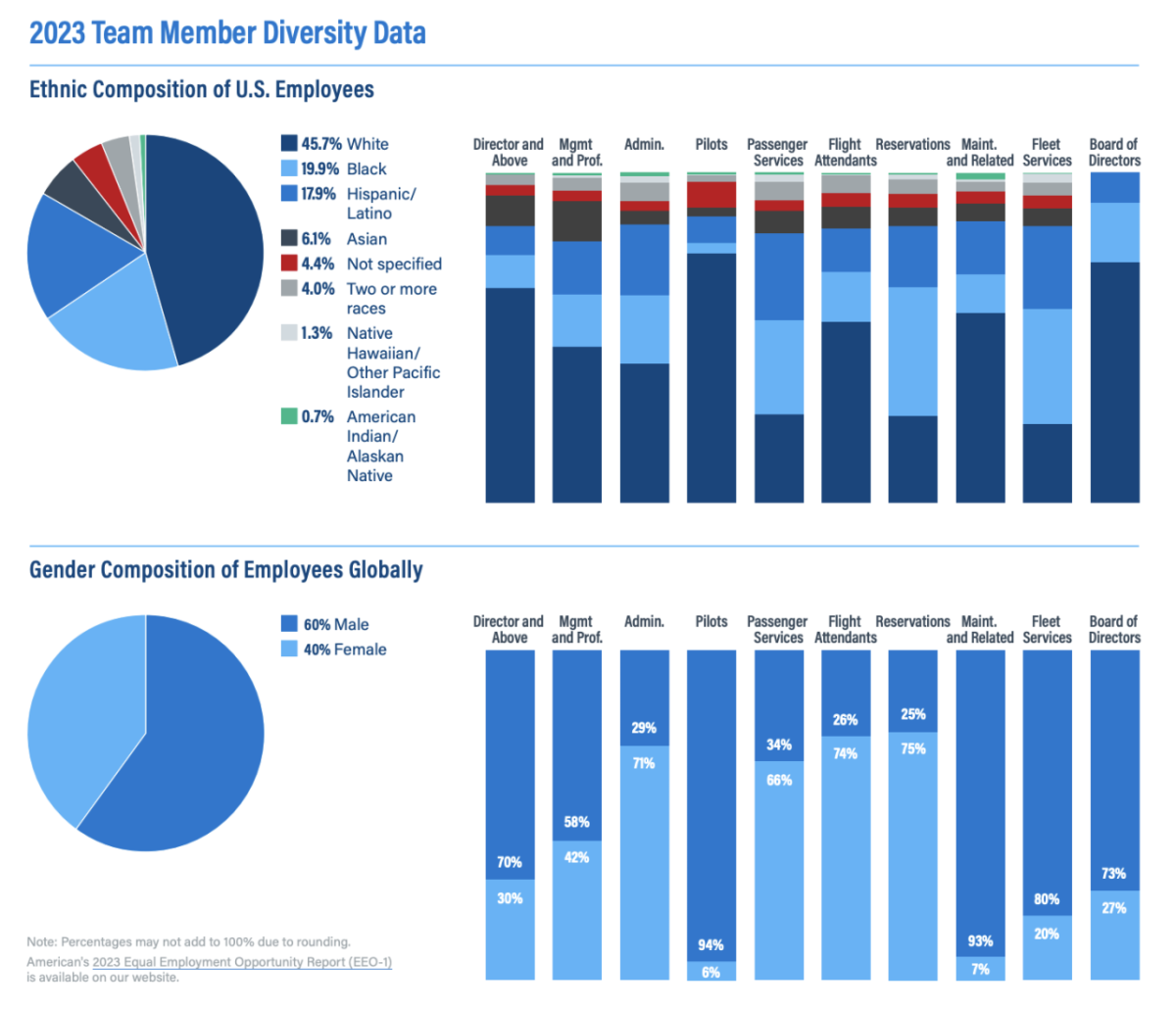
In the modern investing landscape, Environmental, Social, and Governance (ESG) criteria play a significant role in capital allocation. The “Social” aspect of ESG for American Airlines is deeply tied to its 130,000+ employees. Investors are increasingly looking at diversity, equity, and inclusion (DEI) metrics, workplace safety, and employee engagement scores. A highly engaged and well-compensated workforce is often a leading indicator of superior customer service, which in turn drives brand loyalty and long-term stock performance.

Conclusion: The Macro View
How many employees does American Airlines have? The answer—roughly 132,800—is the starting point for a complex financial narrative. This number represents one of the largest payrolls in the United States and a cornerstone of the global economy. For the business-minded observer, these employees are the architects of the company’s revenue, the primary claimants of its cash flow, and the most critical factor in its operational resilience.
Managing a workforce of this scale requires a delicate balancing act: paying enough to attract top-tier talent in a competitive market while maintaining the fiscal discipline required to satisfy shareholders. As American Airlines continues to navigate the evolving landscape of global travel, its ability to optimize, support, and grow its human capital will remain the ultimate determinant of its financial success. Whether through the lens of labor negotiations, productivity metrics, or long-term strategic hiring, the people of American Airlines are the company’s most valuable—and most expensive—asset.
aViewFromTheCave is a participant in the Amazon Services LLC Associates Program, an affiliate advertising program designed to provide a means for sites to earn advertising fees by advertising and linking to Amazon.com. Amazon, the Amazon logo, AmazonSupply, and the AmazonSupply logo are trademarks of Amazon.com, Inc. or its affiliates. As an Amazon Associate we earn affiliate commissions from qualifying purchases.