
To the uninitiated, the term “blockchain” often conjures images of literal metallic chains or stacks of physical coins. In reality, blockchain is an abstract architecture of data, a sophisticated software protocol that redefines how information is stored, verified, and distributed across the globe. To understand what blockchain “looks” like, one must move past physical metaphors and delve into the world of cryptographic structures, peer-to-peer networks, and sequential data entries. It is a digital infrastructure that functions as a living, breathing ledger—a transparent, immutable, and decentralized record of everything from financial transactions to complex software logic.
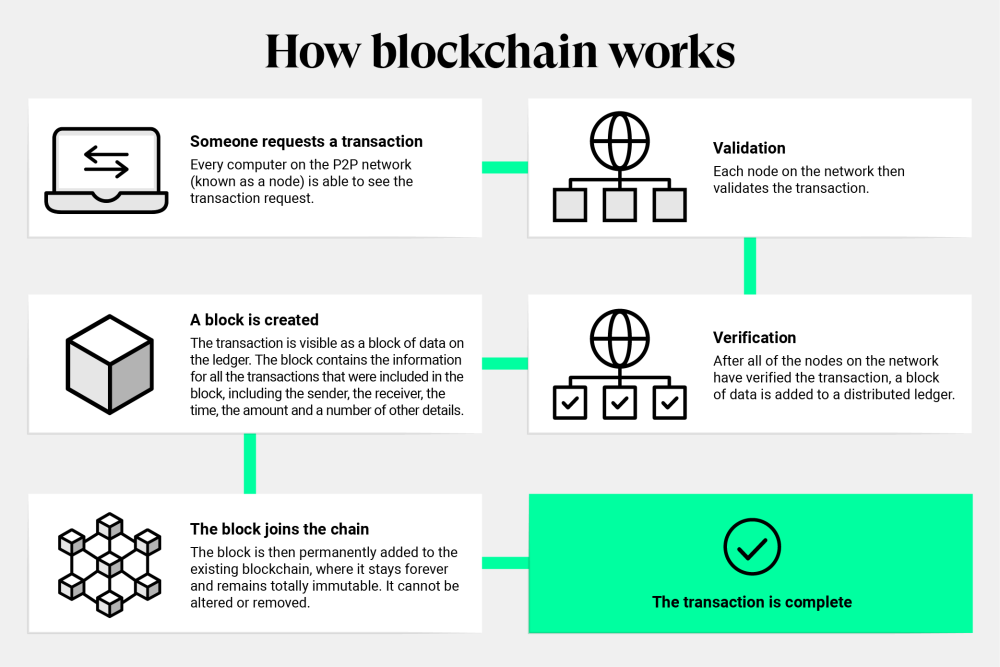
The Anatomy of a Digital Block
At the most granular level, blockchain is composed of individual units called blocks. If we were to visualize a single block, it would look like a highly organized digital container divided into two primary sections: the header and the payload.
The Header: The Block’s Identity
The header is the administrative face of the block. It contains several critical pieces of metadata that define the block’s place in the broader ecosystem. First, it includes a version number, indicating which set of software rules the block follows. Second, it holds a timestamp, marking the exact second the block was created. Third, it contains a “nonce”—a random number used in the process of mining or validation.
However, the most vital components of the header are the cryptographic hashes. A hash is a long string of alphanumeric characters (for example, a 64-character hexadecimal string in SHA-256) that represents a unique digital fingerprint of the data. The header contains the hash of the current block’s data and, crucially, the hash of the previous block. This specific design choice is what creates the “chain.”
The Payload: The Data Body
The payload, or the body of the block, contains the actual information being recorded. In a financial context, this would be a list of transactions. In a supply chain context, it might be temperature logs for a shipment of pharmaceuticals or the movement of raw materials. To an observer, this looks like a dense list of digital entries, each signed with a cryptographic signature. This data is not just thrown into the block; it is organized into a specific structure known as a Merkle Tree.
The Cryptographic Thread: Linking the Chain
If a block is a single link, the “chain” is the chronological and cryptographic connection between these links. This is where the visual of a chain becomes most relevant, though it is executed through mathematics rather than iron.
Sequential Linking and Immutability
The “look” of the chain is defined by its continuity. Because each block’s header contains the hash of the block that came before it, they are inextricably linked. If a single bit of data in Block 5 is changed, its hash changes entirely. Because Block 6 contains the hash of Block 5, Block 6 now points to a fingerprint that no longer exists. This creates a “break” in the chain that is immediately visible to the software.
Visually, imagine a series of glass boxes. Inside each box is a unique key that was forged using the contents of the previous box. If someone breaks into one box and changes even a grain of sand, the key they produce will no longer fit the lock of the next box. This visual integrity is what makes blockchain “immutable.” To change history, an attacker would have to re-forge every single box and every single key in the sequence, an act that requires more computational power than is currently feasible on major networks.
The Genesis Block
Every blockchain begins with a single point of origin: the Genesis Block. This is Block 0. It is the only block in the entire history of the network that does not point to a previous block. It serves as the foundation upon which the entire digital tower is built. In a visualization of a blockchain’s history, the Genesis Block sits at the bottom or the far left, representing the definitive start of that specific universe of data.
A Web of Nodes: Visualizing Decentralization
To see what blockchain looks like on a macro scale, one must look away from the data structure and toward the network. Blockchain does not exist on a single server or in a specific data center. Instead, it exists on thousands of individual computers, known as “nodes,” spread across the planet.
The Distributed Ledger
If you were to view a global map of a blockchain network, it would look like a dense, glowing web of interconnected dots. Each dot is a node. Unlike a traditional database where a central server sends information to clients, in a blockchain, every node holds a complete copy of the entire ledger.
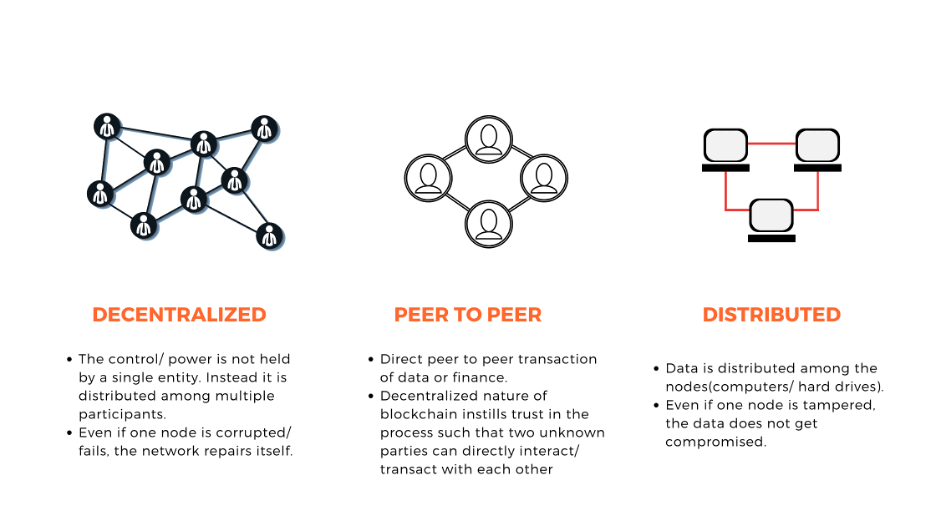
When a new block is added, it is “gossiped” across the network. One node tells five neighbors, those five tell twenty-five more, and within seconds, the new block has rippled across the entire globe. This redundancy is the core of blockchain’s security. There is no “master copy” to attack; to destroy the blockchain, one would have to simultaneously destroy every single node in the web.
Consensus Mechanisms: The Network’s Pulse
The nodes don’t just store data; they participate in a constant, rhythmic process of agreement called “consensus.” Visualizing consensus is like watching a massive, automated voting system. In Proof of Work (PoW) systems, the network looks like a high-intensity computational race, where machines expend energy to solve mathematical puzzles. In Proof of Stake (PoS), it looks more like a boardroom where validators are chosen based on their “stake” in the system to verify the next set of entries. This constant pulse of verification and synchronization is what keeps the decentralized web in harmony.
The Life of a Transaction: A Visual Journey
To understand the functional “look” of blockchain, one can follow the journey of a single piece of data—a transaction—as it moves from a user’s device to the permanent ledger.
The Digital Signature
It begins with a user’s private and public keys. A transaction “looks” like a digital envelope. The user uses their private key (a secret digital code) to sign the transaction, proving they have the authority to move the data. This signature is a complex mathematical proof that anyone can verify using the user’s public key, but no one can forge.
The Mempool: The Waiting Room
Before a transaction is added to a block, it enters the “mempool” (memory pool). Visually, the mempool is a chaotic holding area—a digital waiting room where thousands of unconfirmed transactions float, waiting to be picked up by a miner or validator. Transactions with higher fees attached to them “glow” brighter to validators, who prioritize them for inclusion in the next block.
Broadcast and Validation
Once a validator selects a group of transactions, they bundle them into a block and propose it to the network. The transaction then travels through the “gossip protocol” mentioned earlier. At this stage, the transaction moves from a state of “pending” to “confirmed.” Once it is buried under several subsequent blocks, it is considered “finalized,” meaning it is now a permanent part of the digital landscape.
Beyond Simple Ledgers: The Visual Evolution of Smart Contracts
Modern blockchains, such as Ethereum or Solana, look like more than just a list of transactions; they look like a global, decentralized computer. This is made possible through smart contracts.
Code as Law
A smart contract is a piece of executable code stored directly on the blockchain. Visually, these are like automated vending machines embedded within the blocks. When certain conditions are met (e.g., “If Date = Friday, then release payment”), the code executes automatically without the need for a third party.
This transforms the blockchain from a static record into an active environment. The “look” of the blockchain now includes decentralized applications (dApps) that provide interfaces for users to interact with these contracts. While the back-end remains a series of cryptographic hashes and linked blocks, the front-end looks like familiar web apps, financial dashboards, or gaming environments.
The Merkle Tree and Efficient Verification
As blockchains grow to hold millions of transactions and complex contracts, they utilize a structure called a Merkle Tree to remain efficient. Visually, this is an upside-down tree structure. All the transactions in a block sit at the bottom (the “leaves”). They are hashed in pairs, and those hashes are hashed again, moving up the tree until a single “Merkle Root” is reached at the top.
This root represents the entire body of data in the block. This structure allows a computer to verify if a specific transaction exists in a block without having to download the entire block. It is a masterpiece of computer science visualization, allowing massive amounts of data to be summarized into a single string of characters.

The Invisible Architecture
Ultimately, blockchain looks like a new layer of the internet. If the original internet (TCP/IP) was a layer for the exchange of information, blockchain is a layer for the exchange of value and trust. It is an architecture defined by transparency; anyone with an internet connection can use a “block explorer” to peer into the heart of the network and see every transaction, every wallet balance, and every line of smart contract code.
It looks like a world where data is no longer siloed in the private servers of tech giants, but exists in a shared, public space. It is a digital landscape built on the uncompromising laws of mathematics and cryptography, providing a visual and structural certainty that “what you see is what is there.” Whether it is visualized as a chain of blocks, a web of nodes, or a tree of hashes, blockchain represents the most significant shift in digital architecture since the dawn of the web itself.
aViewFromTheCave is a participant in the Amazon Services LLC Associates Program, an affiliate advertising program designed to provide a means for sites to earn advertising fees by advertising and linking to Amazon.com. Amazon, the Amazon logo, AmazonSupply, and the AmazonSupply logo are trademarks of Amazon.com, Inc. or its affiliates. As an Amazon Associate we earn affiliate commissions from qualifying purchases.