
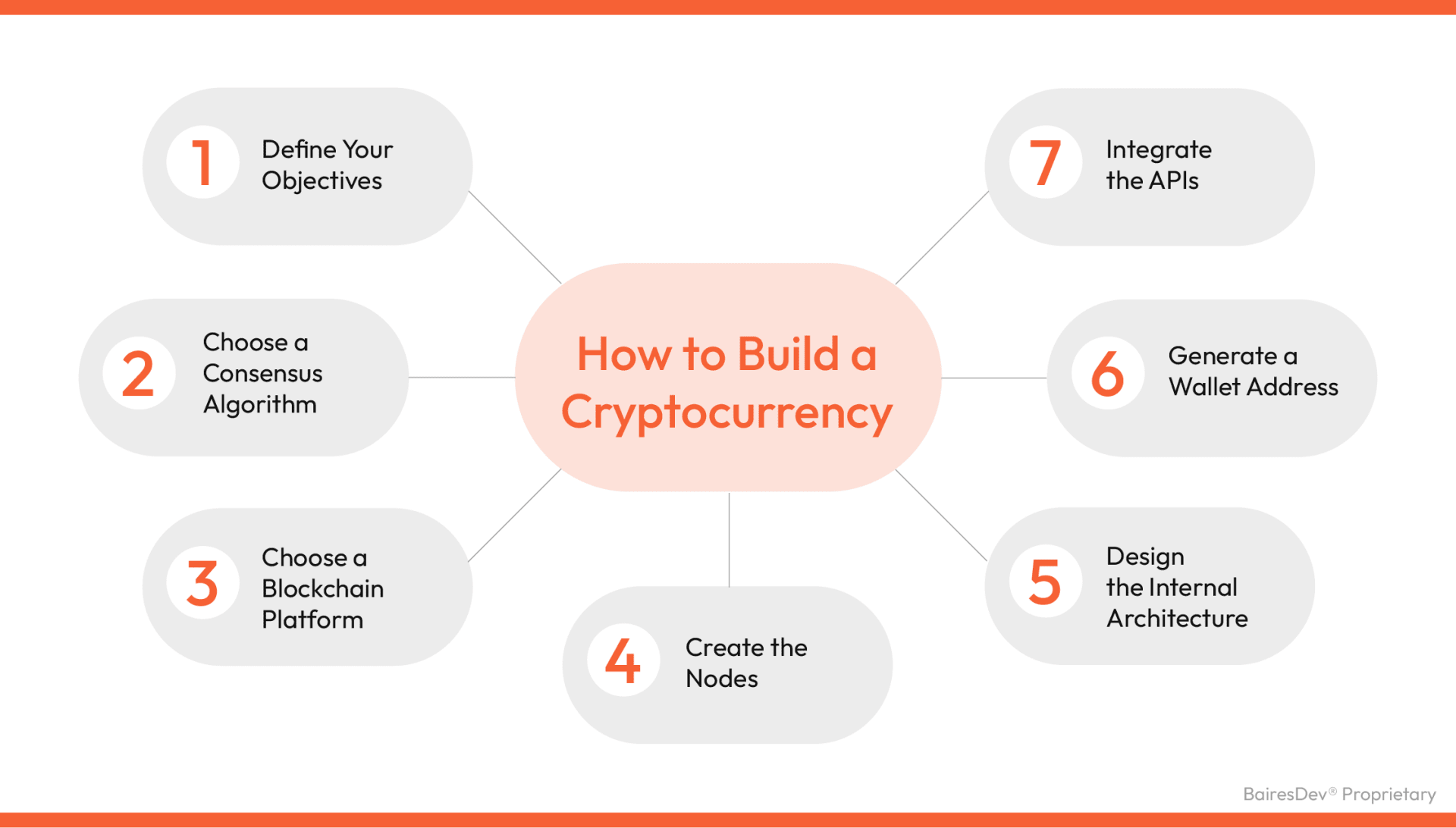
The democratization of financial systems has reached a point where the creation of a digital asset is no longer reserved for sovereign nations or massive banking institutions. Today, entrepreneurs, investors, and business leaders are looking toward blockchain technology to create custom cryptocurrencies that serve as the backbone of new economic ecosystems. However, making a crypto coin is less about the underlying code and more about the financial engineering, market strategy, and capital management that ensure its long-term viability. To successfully launch a digital asset, one must navigate the complexities of tokenomics, regulatory compliance, and market liquidity.
1. The Financial Architecture of Tokenomics
The term “tokenomics” refers to the economic framework that governs a cryptocurrency’s supply, demand, and overall value proposition. Before a single line of code is deployed, a founder must treat the coin as a financial instrument. A poorly designed economic model will lead to hyperinflation or a lack of liquidity, regardless of how advanced the technology may be.
Circulating vs. Total Supply
One of the most critical decisions in the financial design of a coin is determining its supply dynamics. A fixed supply, much like Bitcoin’s 21 million cap, creates a deflationary pressure that can drive value upward as demand increases. Conversely, an inflationary model—where new coins are minted over time—can be used to incentivize network participants, such as miners or stakers. When designing the supply, you must calculate the “Fully Diluted Valuation” (FDV). This is the market capitalization of the coin if the entire supply were in circulation. If the gap between the current circulating supply and the total supply is too large, early investors may fear “dumping” or excessive dilution in the future.
Revenue Mechanisms and Value Accrual
For a cryptocurrency to maintain value, it must have a clear mechanism for value accrual. This often takes the form of utility within a specific ecosystem. For instance, the coin might be required to pay transaction fees, access specific services, or participate in governance. From a business finance perspective, the coin acts as a medium of exchange or a store of value within its own micro-economy. Successful projects often implement “buy-back and burn” strategies, where a portion of the project’s revenue is used to purchase coins from the open market and destroy them, effectively increasing the scarcity and value for remaining holders.
Incentivizing Stakeholders
A coin is only as strong as its community of holders. Financial incentives must be aligned across all participants, including the core development team, private investors, and the general public. This is typically managed through “vesting schedules.” To prevent a sudden sell-off that could crash the price, team members and early investors usually have their coins locked for a period of six months to several years. This ensures that those with the most influence over the project are financially committed to its long-term success.
2. Capitalization and Fundraising Models
Launching a cryptocurrency requires significant upfront capital. From smart contract audits to marketing and exchange listing fees, the costs can escalate quickly. Choosing the right fundraising model is a pivotal step in the financial lifecycle of the coin.
Bootstrapping vs. External Investment
Some founders choose to “bootstrap” their projects, funding the initial development themselves to retain total control and 100% of the equity/token supply. While this minimizes external interference, it also limits the speed at which the project can scale. Alternatively, seeking external investment through seed rounds or venture capital (VC) provides the necessary liquidity to hire top-tier talent and execute aggressive marketing campaigns. However, VC involvement often comes with the expectation of significant token allocations at discounted rates, which must be carefully balanced against the interests of retail investors.
Initial Coin Offerings (ICOs) and IDOs
The landscape of public fundraising has evolved. While the 2017 era of ICOs was defined by direct sales to the public, modern projects often utilize Initial DEX Offerings (IDOs) or Initial Exchange Offerings (IEOs). These models leverage decentralized or centralized exchanges to facilitate the sale. An IDO provides immediate liquidity and allows the market to determine the fair price of the coin almost instantly. From a business finance perspective, these methods are highly efficient ways to raise capital while simultaneously building a user base. However, they require a deep understanding of “slippage” and “automated market makers” (AMMs) to ensure the price remains stable during the initial volatility.
The Role of Decentralized Finance (DeFi) in Launching
Many new coins are now launched within the DeFi ecosystem. By creating a liquidity pool on a platform like Uniswap or PancakeSwap, a creator can allow users to trade the coin without needing a traditional intermediary. This requires the creator to provide “seed liquidity”—usually a pair of the new coin and an established asset like ETH or USDT. This initial liquidity is a capital expense that must be factored into the project’s budget, as insufficient liquidity can lead to extreme price swings that deter serious investors.
3. Regulatory Compliance and Financial Risk
The intersection of cryptocurrency and traditional finance is heavily regulated. Ignoring the legal aspects of making a coin can result in severe financial penalties or the complete shutdown of the project by authorities such as the SEC in the United States or ESMA in Europe.
Identifying Security vs. Utility Status
The most significant legal hurdle is determining whether the coin is a “utility token” or a “security.” If a coin is marketed as an investment where buyers expect profits primarily from the efforts of the founders, it may be classified as a security. This classification subjects the project to rigorous filing requirements and restricts who can invest. Most successful projects seek a formal legal opinion to ensure their coin is classified as a utility, meaning it is a functional tool for a platform rather than a speculative investment contract.
Security Audits and Capital Protection
From a risk management standpoint, the security of the coin’s code is a financial priority. A bug in the smart contract can lead to the total loss of investor funds, which is a catastrophic financial and reputational event. Professional audits by firms like CertiK or Hacken are non-negotiable. These audits are an investment in the coin’s “financial integrity.” Furthermore, implementing multi-signature (Multi-sig) wallets for the project’s treasury ensures that no single individual can vanish with the funds, providing a layer of institutional-grade security to the project’s capital.
4. Market Entry and Liquidity Provision
Once the coin is created and funded, it must enter the open market. This phase is where the financial health of the coin is tested against the forces of supply and demand.
Creating Market Depth on Exchanges
A coin with no volume is a dead asset. To ensure that investors can buy and sell without moving the price too drastically, the project must focus on “market depth.” This involves partnering with professional market makers—firms that provide buy and sell orders at various price levels to keep the market fluid. Listing on Centralized Exchanges (CEXs) like Binance or Coinbase provides the highest visibility but often comes with high listing fees and strict financial reporting requirements.
Strategic Partnerships and Financial Ecosystems
The value of a coin is often a reflection of its ecosystem. Strategic partnerships with other financial platforms can increase the coin’s “Total Value Locked” (TVL). For example, if your coin can be used as collateral for a loan on a lending platform, its utility—and therefore its financial demand—increases significantly. Building these bridges within the broader crypto-economy is essential for moving the coin from a speculative asset to a functional financial tool.
5. Long-term Fiscal Sustainability
The final stage of making a crypto coin is ensuring it survives beyond the initial hype. This requires disciplined treasury management and a focus on sustainable growth.
Treasury Management and Burn Schedules
The project’s treasury, often held in a mix of the native coin and stablecoins, must be managed with the same rigor as a corporate balance sheet. Using a portion of the treasury for “yield farming” or low-risk DeFi lending can provide a passive income stream to fund ongoing development. Additionally, a clear “burn schedule”—the systematic removal of coins from circulation—can act as a long-term catalyst for price appreciation, rewarding holders for their loyalty.
Incentivizing Stakeholders for Financial Growth
Staking mechanisms allow holders to lock up their coins in exchange for rewards, reducing the sell pressure on the market. This creates a “sticky” investor base. However, the rewards must be carefully balanced; if the staking APR (Annual Percentage Rate) is too high, it can lead to massive inflation and eventually devalue the coin. The goal is to reach a “steady-state” economy where the issuance of new coins is perfectly offset by the demand generated by the coin’s utility and the removal of coins through burn mechanisms.
In conclusion, making a crypto coin is a multi-faceted financial endeavor. It requires a blend of macroeconomic theory, venture capital strategy, and rigorous risk management. By focusing on robust tokenomics, legal compliance, and strategic liquidity management, a founder can transform a digital idea into a sustainable financial asset that provides value to investors and utility to the global digital economy.
aViewFromTheCave is a participant in the Amazon Services LLC Associates Program, an affiliate advertising program designed to provide a means for sites to earn advertising fees by advertising and linking to Amazon.com. Amazon, the Amazon logo, AmazonSupply, and the AmazonSupply logo are trademarks of Amazon.com, Inc. or its affiliates. As an Amazon Associate we earn affiliate commissions from qualifying purchases.