
At its core, blockchain technology represents a fundamental shift in how we record, verify, and share data. While often conflated with cryptocurrencies like Bitcoin, the underlying architecture of a blockchain is a sophisticated masterpiece of distributed systems engineering, cryptography, and game theory. To understand how a blockchain works is to understand the mechanics of decentralized trust—a system where data integrity is maintained not by a central authority like a bank or a government, but by a global network of independent computers following a strict mathematical protocol.
The Architecture of Trust: Understanding the Fundamentals
To visualize a blockchain, one must look beyond the abstract concept and examine its structural components. A blockchain is essentially a distributed ledger—a digital record of transactions or data entries that is replicated across a network of computers, known as nodes. Unlike a traditional database stored on a central server, there is no single point of failure and no single entity that owns the data.
The Block Structure: Data, Hash, and Previous Hash
The “chain” in blockchain is formed by individual units of data called blocks. Each block consists of three primary elements. First is the data relevant to the specific application; in a financial context, this includes sender, receiver, and amount, but in a supply chain context, it might include timestamps and sensor readings.
The second element is a hash. A hash functions like a digital fingerprint. It is generated by a cryptographic algorithm (such as SHA-256) that takes the block’s contents and converts them into a unique string of characters. If even a single bit of data within the block is altered, the hash changes entirely.
The third and most critical element is the hash of the previous block. This is what creates the link. By including the previous block’s fingerprint, each new block references the one before it. This chronological sequence ensures that if a malicious actor attempts to alter an earlier block, its hash will change. Consequently, the reference in the subsequent block becomes invalid, breaking the chain.
Nodes and the Distributed Ledger
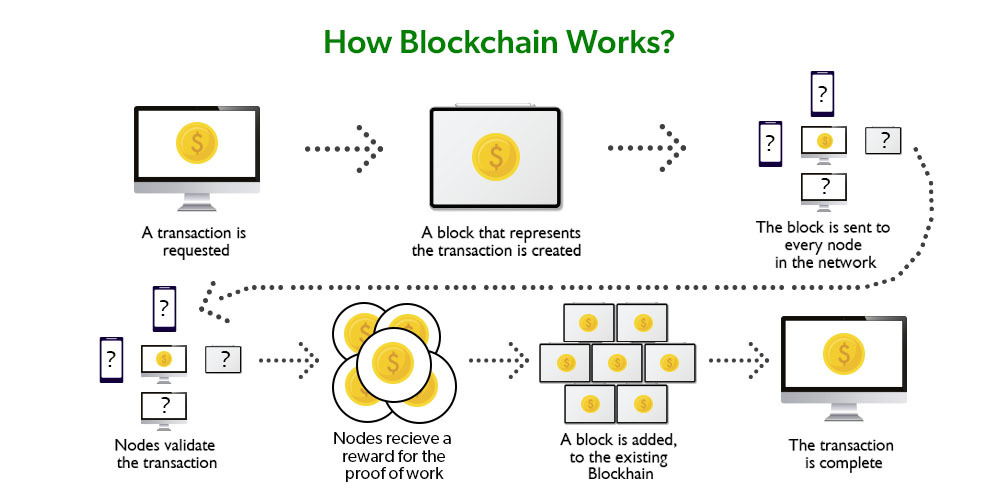
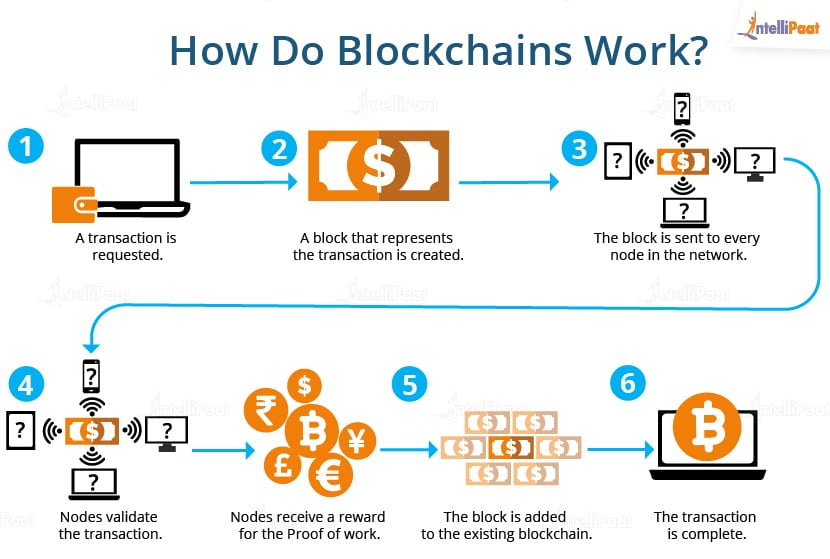
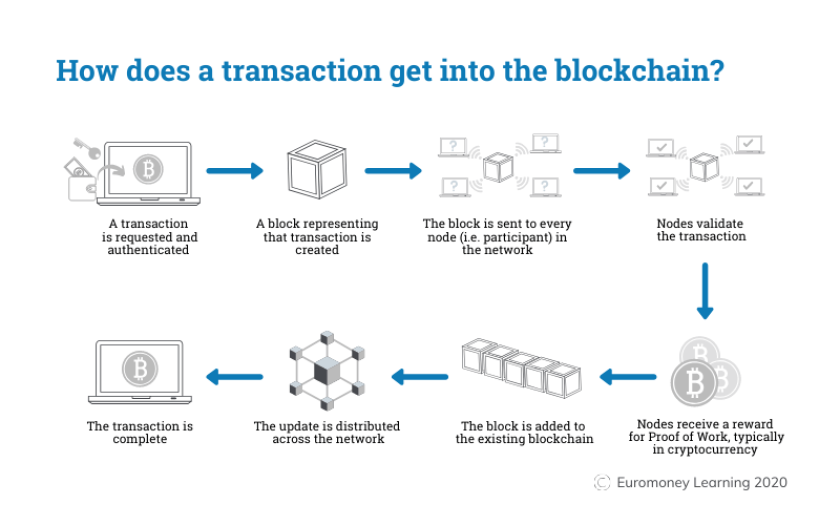
A blockchain exists on a Peer-to-Peer (P2P) network. When a new user joins the network, their computer becomes a “node.” Each full node downloads a complete copy of the blockchain. When a new block is created, it is broadcast to every node on the network. Each node then verifies the block to ensure it hasn’t been tampered with. Only after a majority of nodes reach a consensus on the block’s validity is it added to their local version of the ledger. This massive redundancy ensures that even if several nodes are compromised or go offline, the integrity of the data remains intact.
The Consensus Mechanism: Reaching Agreement in a Decentralized Network
The greatest challenge in a decentralized system is achieving agreement. If there is no boss to decide which transactions are valid, how does the network prevent fraud? This is solved through “Consensus Mechanisms”—sets of rules that dictate how the network agrees on the state of the ledger.
Proof of Work (PoW) and Mining
Proof of Work was the first consensus mechanism, popularized by Bitcoin. In this system, nodes (called miners) compete to solve a complex mathematical puzzle. This puzzle is purposefully difficult to solve but very easy for other nodes to verify. The first miner to find the solution earns the right to add the next block to the chain and receives a reward.
The “work” involved requires significant computational power, which serves as a security feature. To successfully cheat the system, an attacker would need to control more than 50% of the network’s total computing power (a “51% attack”), making fraud economically and technologically prohibitive.
Proof of Stake (PoS) and Validating
As concerns over the energy consumption of PoW grew, the tech industry pivoted toward Proof of Stake. In a PoS system, the creators of new blocks are not miners but “validators.” Instead of using electricity to solve puzzles, validators “stake” their own digital assets as collateral.
The network selects a validator to propose a block based on the size of their stake and other factors. If a validator attempts to approve fraudulent transactions, they lose their staked assets. This aligns the security of the network with the economic interests of its participants, requiring far less energy while maintaining high levels of security.
Other Emerging Consensus Protocols
Beyond PoW and PoS, developers are exploring alternative protocols to optimize for speed and scalability. Proof of History (PoH), utilized by networks like Solana, incorporates a historical record that proves an event happened at a specific moment in time, drastically reducing communication overhead between nodes. Directed Acyclic Graphs (DAGs), while technically not a linear “chain,” offer a different way of structuring data where transactions verify each other, potentially allowing for near-infinite scalability and zero fees.
Cryptographic Security: Protecting the Integrity of the Chain
The “crypto” in cryptocurrency refers to the heavy reliance on advanced mathematics to secure data. Blockchain utilizes two primary forms of cryptography: Hashing (as discussed earlier) and Asymmetric Encryption.
Public-Key Cryptography
In a blockchain network, users interact via a pair of cryptographic keys: a public key and a private key. The public key is like an email address; it is shared with the network so others can send data or assets to you. The private key is like a password or a digital signature; it is kept secret and used to authorize transactions.
When you send a transaction, you sign it using your private key. The network uses your public key to verify that the signature is authentic and that you are indeed the owner of the assets being moved. Because these keys are mathematically linked but impossible to reverse-engineer, it ensures that only the rightful owner can initiate a change in the ledger.
Immutability and Hashing Algorithms
The immutability of a blockchain is its most cited security feature. Once a block is confirmed and added to the chain, it becomes practically impossible to change. Because each block contains the hash of the previous one, changing a single transaction in an old block would require re-calculating the hashes for every subsequent block in the chain.
In a PoW system, this would require re-doing the massive computational work for all those blocks faster than the rest of the network can add new ones. This “computational impossibility” is what makes the technology so attractive for digital security, as it provides a permanent, tamper-proof record of events.
Smart Contracts and the Evolution of Programmable Logic
While the first generation of blockchain was focused on simple value transfer, the second generation—led by Ethereum—introduced “Smart Contracts.” These are self-executing contracts with the terms of the agreement directly written into lines of code.
Automating Transactions without Intermediaries
A smart contract allows for complex logic to be executed on the blockchain. For example, a smart contract could be programmed to release funds to a developer only once a specific software update is uploaded and verified by a third-party testing suite. Because the contract lives on the blockchain, it is decentralized and immutable. Neither party can change the terms or stop the execution once the conditions are met. This removes the need for escrow agents, lawyers, or other intermediaries, reducing costs and eliminating human error or bias.
The Role of the Virtual Machine
To run these smart contracts, blockchains utilize what is known as a Virtual Machine (e.g., the Ethereum Virtual Machine or EVM). This is a decentralized computer that exists across all the nodes in the network. When a smart contract is triggered, every node runs the code and must reach the same result. This ensures that the “logic” of the contract is just as secure and distributed as the “data” of the transactions.
Future Tech Implications: From Web3 to Decentralized Infrastructure
As blockchain technology matures, it is moving beyond financial applications and into the broader tech ecosystem. We are seeing the rise of Web3, a decentralized vision of the internet where users own their data and identity, rather than relying on centralized tech giants.
Layer 2 Solutions and Scalability
One of the primary technical hurdles for blockchain has been throughput. Bitcoin and Ethereum (Layer 1) can only process a limited number of transactions per second. To solve this, developers have built “Layer 2” solutions—protocols that sit on top of the main blockchain. Techniques like Rollups bundle hundreds of transactions into a single submission to the main chain, significantly increasing speed and lowering costs without sacrificing the security of the underlying ledger.
Interoperability and Sharding
The future of blockchain tech also lies in interoperability—the ability for different blockchains to communicate with one another. Projects are building “bridges” and “cross-chain protocols” to allow data and assets to flow seamlessly between disparate networks. Furthermore, Sharding—the process of splitting a blockchain into smaller pieces (shards) to distribute the workload—is being implemented to allow networks to handle millions of users simultaneously.
In conclusion, a blockchain is not just a database; it is a holistic technological framework. By combining distributed networking, sophisticated consensus protocols, and unbreakable cryptography, it creates a “trustless” environment where data is transparent, secure, and permanent. Whether applied to finance, cybersecurity, or the future of the internet, the mechanics of blockchain represent one of the most significant engineering milestones of the digital age.
aViewFromTheCave is a participant in the Amazon Services LLC Associates Program, an affiliate advertising program designed to provide a means for sites to earn advertising fees by advertising and linking to Amazon.com. Amazon, the Amazon logo, AmazonSupply, and the AmazonSupply logo are trademarks of Amazon.com, Inc. or its affiliates. As an Amazon Associate we earn affiliate commissions from qualifying purchases.