
In the modern landscape of enterprise management, procurement is no longer just a logistical necessity; it is a critical lever for financial health and operational efficiency. For business owners, freelancers, and procurement officers, the transition from a standard consumer account to a dedicated Amazon Business account represents a strategic shift toward better cash flow management and overhead reduction. Amazon Business is specifically engineered to cater to the unique needs of organizations, offering a suite of tools designed to streamline purchasing, secure tax exemptions, and provide deep visibility into corporate spending.

Setting up an Amazon Business account is a straightforward process, but doing so with a strategic mindset allows you to maximize the platform’s financial benefits. Whether you are looking to scale a startup or manage the recurring expenses of an established firm, understanding how to navigate the registration and optimization of this tool is essential for long-term fiscal discipline.
The Financial Advantages of Amazon Business Integration
Before diving into the technical steps of registration, it is vital to understand the “why” from a financial perspective. A standard Amazon account is built for the individual consumer, focusing on convenience and variety. In contrast, an Amazon Business account is a financial tool built for ROI.
Access to Business-Only Pricing and Quantity Discounts
One of the most immediate financial gains of an Amazon Business account is the access to tiered pricing models that are unavailable to the general public. Thousands of items across the marketplace feature “Business-Only Pricing”—discounted rates specifically for registered organizations. Furthermore, the platform offers “Quantity Discounts” on high-volume purchases. For a company managing office supplies, IT hardware, or breakroom essentials, these discounts can significantly lower the Cost of Goods Sold (COGS) or general administrative expenses.
The Amazon Tax Exemption Program (ATEP)
For many organizations, the most significant financial advantage is the Amazon Tax Exemption Program. If your organization is a non-profit, a public school, or a reseller, you may be eligible for tax-exempt purchases. By uploading your tax-exempt certificates through the Amazon Business dashboard, the system automatically removes sales tax at the point of purchase for qualifying items. This eliminates the tedious process of seeking tax refunds after the fact and keeps more liquidity within your business accounts.
Step-by-Step Guide to Registering Your Account
Transitioning to an Amazon Business account requires formal verification to ensure that the platform’s benefits are reserved for legitimate entities. The process is designed to be efficient, though it requires specific documentation to move through the approval phase quickly.
Step 1: Choosing Your Email Architecture
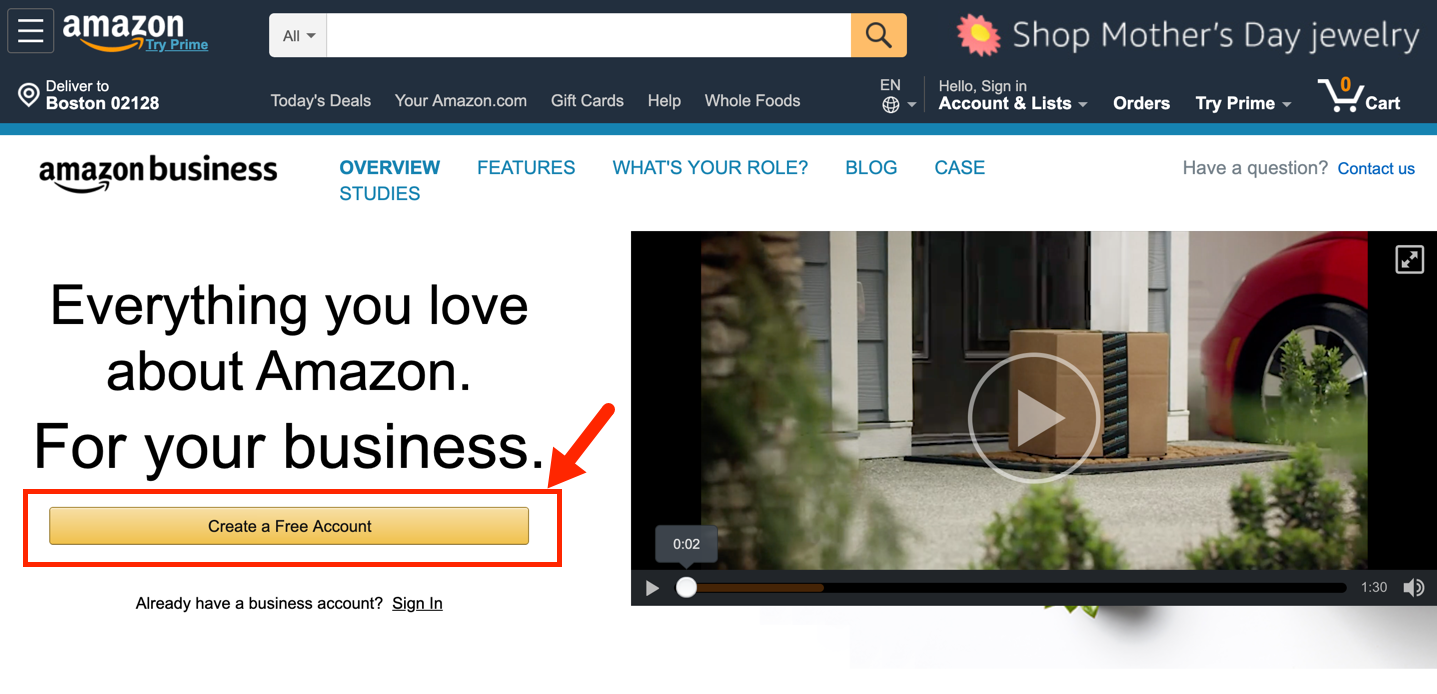
When you begin the registration process at the Amazon Business landing page, you are given a choice: convert an existing personal account or create a completely new business account. From a financial and security standpoint, it is almost always better to use a dedicated work email address. Using a personal account can lead to commingled data, making it difficult for accountants to reconcile personal versus professional expenses during tax season. Using a domain-specific email (e.g., name@yourcompany.com) also speeds up the verification process.
Step 2: Providing Business Credentials
Amazon requires proof of business identity. You will be asked to provide:
-
The legal name of your business or entity.
-
The business address.
-
A Tax ID (such as an EIN or SSN for sole proprietors).
-
Your job title or role within the company.
For most established businesses, Amazon uses an automated verification system that can approve an account within minutes. However, if your business is new or the data does not immediately match public records, a manual review may take up to 24 to 72 hours.
Step 3: Setting Up User Roles and Permissions
Once the account is active, the focus shifts to internal financial controls. Amazon Business allows you to add multiple users under a single master account. This is a critical step for spend management. You can assign roles such as “Administrator,” “Requisitioner,” or “Finance.” By setting up these hierarchies, you ensure that employees can place items in a cart while requiring final approval from a manager before any funds are disbursed. This “Approval Workflow” is a powerful deterrent against unauthorized spending and budget leakage.
Optimizing Cash Flow with Advanced Payment Solutions
Effective financial management is as much about when you pay as it is about how much you pay. Amazon Business offers specialized payment tools that provide businesses with greater flexibility than a standard credit card.

Pay by Invoice: 30-Day Terms
Perhaps the most powerful financial tool within the platform is “Pay by Invoice.” Subject to a credit evaluation, Amazon allows businesses to purchase items and receive an invoice with Net30 terms (or longer for certain Prime Business members). This allows you to preserve your cash on hand for other operational needs while securing the supplies you need immediately. It essentially functions as an interest-free short-term loan, allowing for better synchronization between your accounts payable and accounts receivable cycles.
Corporate Purchasing Cards and Shared Payment Methods
For larger teams, the platform supports shared payment methods. Instead of reimbursing employees for individual purchases—which creates an administrative nightmare for the accounting department—you can upload a single corporate credit card or line of credit to the account. You can then restrict its use to specific departments or spend limits, ensuring that every dollar spent is tracked and categorized automatically.
Integration with Accounting Software
To further refine your business finance workflow, Amazon Business integrates directly with major procurement and accounting systems like QuickBooks, Xero, and Coupa. This integration allows for the automatic synchronization of purchase history and digital receipts. By automating the data entry portion of bookkeeping, businesses save hours of manual labor and reduce the risk of human error in financial reporting.
Strategic Spend Management and Reporting
A common challenge for growing businesses is “maverick spending”—the decentralized and unrecorded purchasing of goods by various employees. Amazon Business provides a suite of analytics tools designed to bring transparency to every transaction.
Leveraging Amazon Business Analytics
The “Analytics” dashboard provides a bird’s-eye view of your organization’s procurement patterns. You can generate reports based on category, buyer, or cost center. For a CFO or a small business owner, this data is invaluable for budgeting. If the data shows a high volume of spending in a particular category, you can negotiate better bulk rates or set stricter purchase guidelines for that department.
Guided Buying for Budget Compliance
For businesses with an Amazon Business Prime membership, “Guided Buying” allows you to steer employees toward specific products or sellers that align with your corporate financial goals. For example, you can mark certain high-value, low-cost items as “Preferred,” or you can restrict the purchase of non-essential categories. This ensures that even in a decentralized purchasing environment, the organization remains compliant with its internal financial policies.
Year-End Financial Reconciliation
As tax season approaches, the centralized nature of the Amazon Business account becomes a significant asset. Rather than hunting through various email threads and bank statements, you can download a comprehensive, itemized report of every purchase made throughout the fiscal year. This report includes tax information, shipping costs, and seller details, making it easy to categorize expenses for tax deductions and audit protection.
Scaling Operations Through Business Prime
While the basic Amazon Business account is free, many organizations opt for Business Prime as a tool for further financial scaling. Business Prime is not just about faster shipping; it is an investment in procurement intelligence.
Enhanced Analytics and Spend Visibility
Higher tiers of Business Prime offer “Spend Visibility” powered by AWS QuickSight. This provides visual representations of spending trends, helping leadership identify opportunities for cost savings that might be missed in a standard spreadsheet. It allows for the tracking of “Progress to Goal,” where you can set a budget for a specific period and receive alerts as you approach that limit.
Progressive Discounts and Shipping Efficiency
Logistics costs can silently erode profit margins. Business Prime provides unlimited fast, free shipping on millions of items, which eliminates the variable cost of delivery from your financial projections. Additionally, “Progressive Discounts” provide further price reductions on frequently purchased items as your total volume increases over time. This creates a feedback loop where the more you consolidate your purchasing onto the platform, the higher your margins become.
Conclusion: The Path to Fiscal Discipline
Obtaining an Amazon Business account is a fundamental step for any entity looking to professionalize its procurement process. By moving away from the limitations of a consumer account, you unlock a suite of financial instruments—from tax exemptions and Net30 terms to granular spend analytics—that are designed to protect your bottom line.
The process of setting up the account is only the beginning. The true value lies in the ongoing management of user roles, the strategic use of Pay by Invoice to manage cash flow, and the rigorous analysis of purchasing data to eliminate waste. In an era where operational efficiency is a primary competitive advantage, the Amazon Business account serves as a vital bridge between procurement and financial strategy, providing the clarity and control necessary to scale with confidence.
aViewFromTheCave is a participant in the Amazon Services LLC Associates Program, an affiliate advertising program designed to provide a means for sites to earn advertising fees by advertising and linking to Amazon.com. Amazon, the Amazon logo, AmazonSupply, and the AmazonSupply logo are trademarks of Amazon.com, Inc. or its affiliates. As an Amazon Associate we earn affiliate commissions from qualifying purchases.