
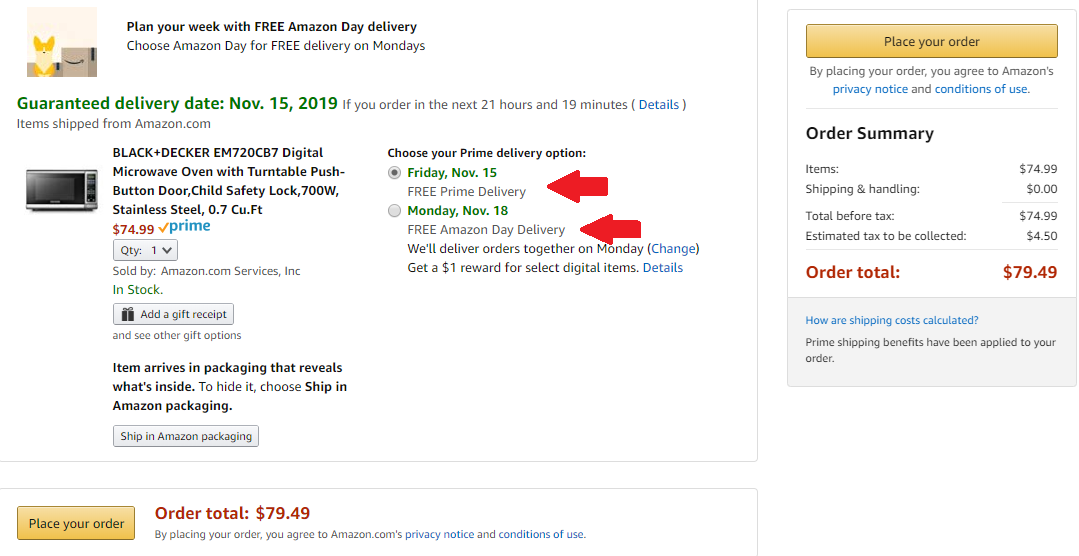
In the modern digital economy, the concept of “free shipping” has transitioned from a promotional perk to a baseline consumer expectation. Amazon, the titan of e-commerce, has been the primary architect of this shift. However, for the financially conscious consumer, the term “free” warrants a deeper investigation. While the checkout button may display a $0.00 shipping charge, the underlying financial structures—ranging from membership fees to minimum order thresholds—reveal a complex ecosystem of consumer spending and corporate strategy.
Understanding the true cost of Amazon’s shipping options is essential for effective personal budgeting. Whether you are an occasional shopper or a power user, navigating these costs requires a balance between convenience and fiscal discipline.

The Threshold Game: Shipping Costs for Non-Prime Members
For many years, Amazon has utilized a tiered system for customers who choose not to subscribe to their Prime membership. For these shoppers, “free” is a conditional state achieved only through specific spending behaviors.
The $35 Magic Number
Currently, the standard threshold for free shipping on Amazon for non-Prime members typically sits at $35. This applies to orders that include at least $35 worth of eligible items. Eligibility is a crucial distinction here; items must generally be “Fulfilled by Amazon” to count toward this total.
From a personal finance perspective, this threshold creates a psychological incentive to spend more. If a consumer has $28 worth of goods in their cart and faces a $6.99 shipping fee, the rational economic move is often to add a $7 “filler” item. While this results in free shipping, the consumer has effectively spent more total capital. Over a fiscal year, these filler purchases can lead to significant “lifestyle creep” in one’s shopping habits, adding hundreds of dollars in unplanned expenditures.
Identifying “Shipping Included” vs. “Free Shipping”
It is a common misconception that every item on Amazon is eligible for free shipping if the threshold is met. Third-party sellers who handle their own logistics (Merchant Fulfilled) often set their own shipping rates. In some cases, these sellers may bake the cost of shipping into the item price itself, offering “Free Shipping” regardless of the order total.
Analyzing the unit price is vital. A savvy shopper should compare the total cost of an item from a third-party seller (Price + Shipping) against the Amazon-fulfilled version. Frequently, the “free shipping” item is priced higher to offset the logistics costs, meaning the consumer is still paying for transport—it is simply a hidden line item.
Analyzing the True ROI of an Amazon Prime Subscription
The most common way consumers access “free” shipping is through the Amazon Prime membership. However, calling this shipping “free” is technically a misnomer; it is a prepaid service. To determine if the investment is sound, one must conduct a cost-benefit analysis based on their annual shipping volume.
Subscription Costs vs. Individual Shipping Fees
As of 2024, an Amazon Prime membership costs $139 per year, or $14.99 on a month-to-month basis. To find the “break-even” point, a consumer must estimate how many orders they would place annually and what those shipping costs would be without the membership.
If the average standard shipping cost is approximately $7 per order, a consumer would need to place at least 20 orders per year to justify the $139 annual fee solely based on shipping. If you shop less frequently, you are essentially overpaying for the privilege of “free” shipping. Conversely, for households that rely on Amazon for weekly essentials, the per-shipment cost of Prime drops significantly, making it a highly efficient financial tool for logistics.
The Sunk Cost Fallacy in Digital Subscriptions
One of the greatest risks to a personal budget is the “sunk cost fallacy” associated with Prime. Once a consumer pays the $139 fee, they often feel a psychological need to “get their money’s worth.” This leads to increased shopping frequency and a lower barrier to impulse purchases.
When shipping feels free at the point of sale, the friction of spending is removed. From a behavioral finance standpoint, this can be dangerous. The convenience of “One-Click” ordering and next-day delivery can lead to a higher volume of small, unnecessary purchases that aggregate into a substantial monthly drain on one’s disposable income.
Strategic Financial Moves to Avoid Shipping Fees
For those who want to avoid the annual Prime fee but refuse to pay for shipping, there are several tactical approaches to manage Amazon orders. These strategies require patience and planning but can result in significant annual savings.
Order Consolidating and the Wait-and-Save Method
The most effective way to hit the $35 free shipping threshold without overspending is order consolidation. Rather than buying items as the need arises, disciplined shoppers maintain a “save for later” list or keep items in their cart until the total exceeds the minimum requirement.
This method serves two financial purposes: it eliminates shipping fees and acts as a cooling-off period for impulse buys. Often, an item that seemed essential on Tuesday no longer feels necessary by the time the cart hits $35 on Friday. By delaying the transaction, you allow yourself to audit your needs, ensuring that every dollar spent is intentional.
Leveraging Amazon Hub and Locker Locations
In some regions and for certain items, Amazon offers reduced shipping rates or free delivery options if the consumer agrees to pick up the package at an Amazon Hub Locker or Counter. This reduces the “last-mile” delivery cost for Amazon, and they occasionally pass those savings or incentives to the customer.
Furthermore, for those living in high-theft areas, using a locker provides a financial safeguard against “porch piracy.” Replacing stolen items is a hidden cost of online shopping that many forget to calculate. Utilizing secure pickup locations ensures that the value of your purchase is protected without requiring an additional insurance or shipping premium.
The Psychology of “Free”: How Shipping Influences Consumer Spending
Amazon’s shipping model is a masterclass in behavioral economics. By framing shipping as a cost that can be “avoided” through Prime or a minimum spend, they tap into loss aversion—the human tendency to prefer avoiding losses (shipping fees) to acquiring equivalent gains.
The Impact on Impulse Control
The “Prime Effect” refers to the phenomenon where members spend significantly more on the platform than non-members—often nearly double. The removal of shipping costs as a barrier creates a frictionless spending environment. For a personal finance enthusiast, the goal is to reintroduce friction.
Ask yourself: “Would I still buy this if I had to pay $5 to have it delivered?” If the answer is no, the item’s utility is likely lower than its price point, and you are being swayed by the “deal” of free shipping rather than the value of the product.
Calculating the Opportunity Cost of Convenience
Convenience is a commodity, and like any commodity, it has a price. When you pay for Prime or add items to a cart to hit a threshold, you are trading capital for time and ease. In some cases, this is a wise investment. For a busy professional or a small business owner, the time saved by not driving to a physical store may be worth more than the $139 annual fee.
However, for those in a wealth-building phase where every dollar of savings matters, the opportunity cost of that $139 (plus the incidental spending it encourages) can be high. If $139 were invested in a diversified index fund with a 7% annual return, it would grow significantly over a decade. The choice for the consumer is whether the convenience of Amazon’s logistics is worth the long-term compounding interest of that capital.

Comparing Amazon’s Shipping Value to Major Retail Competitors
To truly understand if Amazon’s shipping is a “good deal,” one must look at the broader market. The landscape of retail finance has changed, and Amazon is no longer the only player with a robust logistics network.
-
Walmart+: Priced similarly to Prime, Walmart+ offers free shipping with no order minimum on many items and includes fuel discounts, which may offer a better ROI for those who commute frequently.
-
Target Circle 360: Target’s new subscription service also targets the same demographic, offering same-day delivery on many items.
-
Niche Retailers: Many specialized retailers offer free shipping at higher thresholds (e.g., $50 or $75) but may have lower base prices for the products themselves.
The financial takeaway is that Amazon “free” shipping is a tool—not a default necessity. By understanding the tiers of spending, the true cost of memberships, and the psychological traps of the e-commerce giant, consumers can make informed decisions that protect their bottom line while still enjoying the benefits of the digital marketplace. Consistent auditing of your Amazon spending habits is the only way to ensure that “free shipping” isn’t actually costing you a fortune.
aViewFromTheCave is a participant in the Amazon Services LLC Associates Program, an affiliate advertising program designed to provide a means for sites to earn advertising fees by advertising and linking to Amazon.com. Amazon, the Amazon logo, AmazonSupply, and the AmazonSupply logo are trademarks of Amazon.com, Inc. or its affiliates. As an Amazon Associate we earn affiliate commissions from qualifying purchases.