
In the rapidly evolving landscape of digital entertainment, Prime Video has transitioned from a supplemental perk for online shoppers into one of the most sophisticated Video on Demand (VOD) and Over-the-Top (OTT) platforms in the world. At its core, Prime Video is a software-driven ecosystem designed to deliver high-fidelity video content to millions of concurrent users across a dizzying array of hardware configurations. To understand what Prime Video is from a technological perspective, one must look past the library of movies and focus on the complex architecture of content delivery, artificial intelligence, and hardware integration that makes seamless streaming possible.

The Architecture of Modern Streaming: How Prime Video Works
Prime Video does not operate in a vacuum; it is built upon the robust infrastructure of Amazon Web Services (AWS), the world’s most comprehensive and broadly adopted cloud platform. This relationship gives Prime Video a distinct technological advantage over competitors who must rent server space from third parties.
AWS and the Backbone of Global Content Delivery
The platform utilizes a global Content Delivery Network (CDN) to minimize latency. When a user in Tokyo requests a video, the data is served from a local edge location rather than a data center in Virginia. This distributed architecture is critical for maintaining high performance. By using AWS Lambda for serverless computing and Amazon S3 for vast storage of terabytes of video assets, Prime Video can scale instantly to accommodate massive surges in traffic, such as during the live broadcast of NFL “Thursday Night Football.”
Adaptive Bitrate Streaming (ABS) and Data Efficiency
One of the primary technical challenges of streaming is the variability of user internet speeds. Prime Video employs Adaptive Bitrate Streaming (ABS), a technology that detects a user’s bandwidth in real-time and adjusts the video quality accordingly. The platform utilizes advanced video codecs such as HEVC (High Efficiency Video Coding) and AV1 to compress video files without sacrificing visual fidelity. By creating multiple “rungs” of quality for every second of video, the software ensures that a viewer on a 5G connection receives 4K resolution, while a user on a congested 3G network still experiences smooth playback at a lower resolution, preventing the dreaded “buffering” icon.
The Hardware Ecosystem and Software Compatibility
A streaming service is only as effective as its accessibility. Prime Video’s software engineers face the monumental task of maintaining a consistent user experience across thousands of different devices, from legacy smart TVs to the latest flagship smartphones.
Cross-Platform Integration and Fire OS
While Prime Video is available on iOS, Android, PlayStation, and Xbox, its most optimized environment is Fire OS—the Android-based operating system used in Fire TV Sticks and tablets. Within the Fire TV ecosystem, Prime Video is deeply integrated into the kernel of the OS. This allows for features like system-wide search, where voice commands through Alexa can trigger deep links within the Prime Video app to start playback instantly.
The application architecture relies heavily on web technologies like React Native and customized C++ engines to ensure that the user interface remains responsive even on low-powered hardware. This cross-platform compatibility requires rigorous automated testing pipelines to ensure that software updates do not break functionality on older television firmware.
User Interface (UI) Design and Navigation
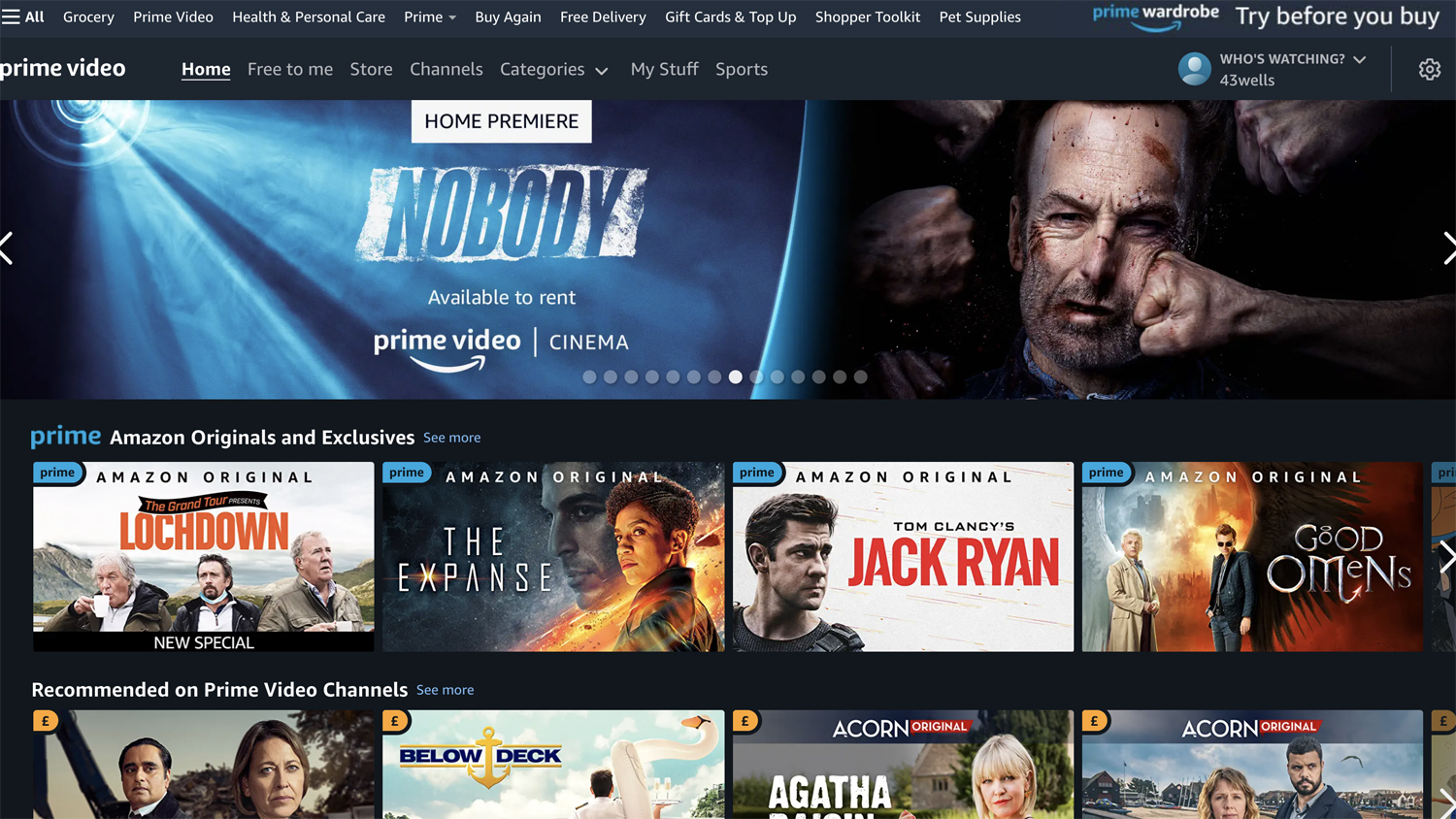
The Prime Video interface is a study in data-driven UI/UX design. In recent years, the platform underwent a massive technical overhaul to move away from a “grid-heavy” look toward a more cinematic, fluid interface. The backend uses machine learning models to personalize the dashboard for every user. This “Recommendation Engine” processes billions of data points—including viewing history, watch duration, and even the time of day—to surface content through an API that refreshes the user’s home screen dynamically.
Enhancing the Viewer Experience: Advanced Features and AI Integration

Prime Video distinguishes itself through proprietary technological features that add utility beyond simple video playback. These features represent the intersection of big data, computer vision, and cloud computing.
X-Ray: Leveraging Big Data and Computer Vision
Perhaps the most iconic technical feature of Prime Video is “X-Ray,” powered by IMDb (an Amazon-owned subsidiary). While a video is playing, X-Ray provides real-time metadata about the actors on screen, the music playing in the background, and trivia about the scene.
Behind the scenes, this is achieved through meticulous synchronization of timecodes and metadata. More recently, Amazon has integrated computer vision and machine learning to automate parts of this process, identifying faces and objects within frames to provide a layered information experience. This is not just a UI trick; it is a complex data-mapping exercise that requires the video player to communicate constantly with a massive database of biographical and production information.
Audio-Visual Standards: 4K, HDR, and Dolby Atmos
From a hardware-pushing perspective, Prime Video is a leader in adopting high-end visual standards. It was one of the first major services to support HDR10+, an open-standard high-dynamic-range video technology that optimizes every frame of a movie for the specific capabilities of the user’s display. For audio enthusiasts, the platform supports Dolby Atmos, a spatial audio technology that requires the software to output complex multi-channel metadata to compatible soundbars and home theater receivers. Delivering these high-bitrate formats requires significant backend processing power during the encoding phase to ensure that the metadata remains perfectly synced with the video stream.
Security, Digital Privacy, and Content Management
As a distributor of high-value intellectual property, Prime Video must implement rigorous digital security measures to prevent piracy and manage regional licensing restrictions.
DRM and Encryption Standards
Digital Rights Management (DRM) is the invisible layer of technology that protects content. Prime Video utilizes multiple DRM systems, including Google Widevine, Apple FairPlay, and Microsoft PlayReady, depending on the device. When a user hits “Play,” the app initiates a secure handshake with a license server. The video stream is encrypted using AES-128 or higher, and the decryption keys are handled within a Trusted Execution Environment (TEE) on the device’s processor to ensure that the raw video data cannot be intercepted or copied.
Parental Controls and Digital Safety
Security also extends to the user experience through granular parental controls. Prime Video allows for the creation of multiple profiles, each with its own restricted “Viewing Rating” governed by a PIN. This involves a complex permissions architecture in the backend database, ensuring that content restricted in one profile is filtered out at the API level, so it never even appears in the search results of a restricted user.
The Evolution of Live Streaming and Latency Optimization
While pre-recorded movies are relatively easy to cache, live sports represent the “final frontier” of streaming technology. Prime Video has invested heavily in low-latency live streaming tech to bridge the gap between digital streams and traditional cable broadcasts.
Solving the “Spoiler” Problem
The biggest issue with live streaming is the delay (latency) between the action on the field and the image on the screen, which can often be 30 to 60 seconds. Prime Video utilizes proprietary optimizations in the Chunked Transfer Encoding process to reduce this delay to just a few seconds. By reducing the size of the video “segments” sent to the player and optimizing the handshaking process between the player and the CDN, Prime Video has set new industry benchmarks for live-streaming stability and speed.
Interactive Features and Real-Time Stats
During live events, Prime Video integrates “Rapid Recap” and “Next Gen Stats.” These are data-intensive features that overlay real-time tracking data (like player speed or passing probability) directly onto the live feed. This requires a high-speed data pipeline that syncs live telemetry from sensors on the field with the video clock, providing an interactive experience that traditional television cannot replicate.
In conclusion, Prime Video is far more than a digital library; it is a sophisticated software platform that sits at the cutting edge of cloud computing, video compression, and artificial intelligence. Its ability to deliver high-quality, secure, and interactive content to a global audience is a testament to the power of the modern technology stack. As 8K resolution, AI-generated content, and even more immersive audio standards emerge, Prime Video’s technical architecture is positioned to lead the next generation of digital media consumption.
aViewFromTheCave is a participant in the Amazon Services LLC Associates Program, an affiliate advertising program designed to provide a means for sites to earn advertising fees by advertising and linking to Amazon.com. Amazon, the Amazon logo, AmazonSupply, and the AmazonSupply logo are trademarks of Amazon.com, Inc. or its affiliates. As an Amazon Associate we earn affiliate commissions from qualifying purchases.