
In an era increasingly dominated by contactless payments, mobile wallets, and instant peer-to-peer transfers, the traditional paper check can feel like a relic of a bygone financial age. However, the physical check remains a vital instrument in the modern economy. Whether you are starting a new job and need to set up direct deposit, linking your primary checking account to a high-yield savings vehicle, or authorizing an Automated Clearing House (ACH) payment for a mortgage or utility, the information printed on your check is the key that unlocks these transactions.

Understanding the anatomy of a check is more than just a convenience; it is a fundamental component of financial literacy. At first glance, the string of numbers at the bottom of a check may appear to be a random sequence of digits. In reality, these numbers follow a strict, standardized format designed for both human readability and high-speed machine processing. To navigate your personal finances with confidence, you must be able to distinguish between your routing number, your account number, and your check number.
The Anatomy of a Check: Decoding the MICR Line
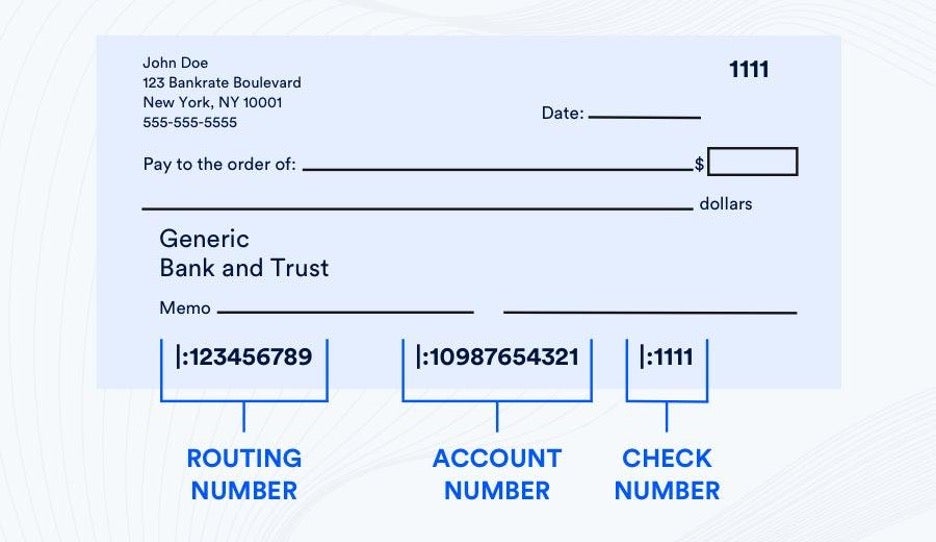
To find your bank account number, you must look at the very bottom of your check. There, you will find a single line of numbers and unique symbols printed in a distinct, slightly blocky font. This is known as the MICR line, which stands for Magnetic Ink Character Recognition.
The MICR line is printed using a specialized ink or toner that contains magnetic particles. This allows high-speed processing machines at the Federal Reserve and private clearinghouses to “read” the information even if the check has been written over, canceled, or slightly crumpled. The line is divided into three primary sections, each serving a specific purpose in the movement of funds from one institution to another.
The Routing Number (The First Sequence)
The first set of numbers on the far left of the MICR line is your bank’s routing number, often referred to as the ABA (American Bankers Association) routing transit number. This is always nine digits long. The routing number serves as a “postal code” for financial institutions; it tells the clearinghouse exactly which bank is responsible for the funds. The first two digits usually indicate the Federal Reserve district where the bank is located.
The Account Number (The Middle Sequence)
The second set of numbers is your unique bank account number. Unlike the routing number, which is shared by every customer at your specific branch or bank, the account number is unique to you. It typically ranges from 8 to 12 digits, though some institutions may use fewer or more. This number identifies the specific internal bucket where your money is held. When you are asked “where is my bank account number on my check,” this middle sequence is almost always the answer.
The Check Number (The Final Sequence)
The third and usually shortest set of numbers is the check number. This number serves as a tracking device for your personal records. It should match the number printed in the top right-hand corner of the check. Identifying this number is crucial for reconciling your bank statements and ensuring that no duplicate transactions have occurred.
Distinguishing the Account Number from Other Digits
One of the most common points of confusion for consumers is where the routing number ends and the account number begins. Because different banks use different lengths for their account numbers, the spacing can sometimes be ambiguous. To solve this, the banking industry uses specific MICR symbols to act as “bookends” for the data.
Identifying the “On-Us” Symbol
The account number is typically preceded or followed by a symbol known in the banking industry as the “on-us” symbol. This symbol looks like a vertical line with a small dash next to it. Its presence tells the scanning machine that the following digits are internal to the bank—meaning they represent the specific customer account.
Why the Sequence Matters
In most personal checks issued by major financial institutions like Chase, Bank of America, or Wells Fargo, the order is consistent: Routing Number, then Account Number, then Check Number. However, this is not a universal rule. Some smaller credit unions or specialized business checks may place the check number before the account number or even at the very beginning of the line.
The most reliable way to confirm which number is which is to count the digits. If you see a nine-digit number, that is almost certainly the routing number. If you see a shorter number that matches the digits in the top right corner of the document, that is the check number. The remaining string of digits is your account number.
The Role of Account Numbers in Modern Digital Finance
While you might be looking at a physical check to find your account number, the primary reason you likely need that number is to interface with a digital platform. The account number is the foundational identifier for several modern financial tools.
Direct Deposit and Payroll
When you start a new position, your employer’s HR department will require a “voided check” or your account details. By providing the account number found on your check, you enable the employer’s payroll provider to send funds directly into your account via the ACH network. This eliminates the need for physical paychecks and ensures that your earnings are available on the morning of payday.
Connecting to Fintech and Investment Apps
If you use apps like Robinhood for investing, Mint for budgeting, or Venmo for social payments, you often have the option to “link a bank account.” While many of these services use third-party aggregators like Plaid to log you in via your bank credentials, some still require manual entry of your routing and account numbers. Correctly identifying these numbers ensures that your transfers are successful and prevents the “returned item” fees that banks often charge for incorrect account information.
Automatic Bill Pay
Setting up automatic payments for recurring expenses—such as a car loan, mortgage, or student loans—is one of the most effective ways to maintain a high credit score and avoid late fees. Most lenders prefer an ACH pull from a checking account rather than a credit card payment to avoid processing fees. To set this up, you will need the account number from your check to authorize the lender to withdraw the exact amount due each month.
Security Considerations for Your Account Information
Because your bank account number is the “address” to your money, it must be guarded with significant care. Unlike a credit card number, which can be easily canceled and replaced with a new 16-digit code if it is compromised, changing a bank account number is a laborious process. It involves closing the account, opening a new one, and manually updating every single direct deposit and automatic payment link you have established.
The Risks of Check Fraud
When you hand a check to a person or a business, you are essentially giving them a document that contains all the information they would need to attempt an unauthorized withdrawal. “Check washing”—a process where criminals use chemicals to erase the payee and amount on a check while leaving your signature and account details intact—remains a persistent threat. To mitigate this, always use pens with “fraud-resistant” ink (typically pigmented gel ink) that bonds to the fibers of the paper.
Safe Disposal of Checks
If you have old checkbooks for accounts that are closed, or if you make a mistake while writing a check, do not simply throw the paper in the trash. Use a cross-cut shredder to destroy the MICR line. Since the account and routing numbers are printed in magnetic ink, they are high-value targets for “dumpster divers” looking to commit identity theft.
Digital Privacy
When entering your account number into online forms, ensure that the website is secure (look for the “https” and the padlock icon). Avoid sending your account number or photos of your checks via unencrypted email or text messages. If you must provide this information to a financial advisor or an accountant, use a secure file-transfer portal.

The Future of the Check and the Account Number
As we move toward a “real-time payments” (RTP) environment and the implementation of systems like FedNow in the United States, the way we use account numbers is evolving. We are seeing a shift toward “tokenization,” where your actual account number is replaced by a digital token during a transaction, much like how Apple Pay hides your actual credit card number from a merchant.
However, even as these technologies advance, the underlying “ledger” system of the bank still relies on that original account number. Whether it is printed on a piece of parchment-style paper or stored in a secure cloud database, those 8 to 12 digits remain the definitive marker of your financial identity within your bank.
Knowing exactly where to find your bank account number on your check—and understanding the difference between the symbols and sequences surrounding it—is a small but vital part of managing your money. It allows you to bridge the gap between the physical world of paper documents and the digital world of instant finance, ensuring that your funds move accurately, safely, and efficiently whenever you need them.
aViewFromTheCave is a participant in the Amazon Services LLC Associates Program, an affiliate advertising program designed to provide a means for sites to earn advertising fees by advertising and linking to Amazon.com. Amazon, the Amazon logo, AmazonSupply, and the AmazonSupply logo are trademarks of Amazon.com, Inc. or its affiliates. As an Amazon Associate we earn affiliate commissions from qualifying purchases.