
In the contemporary economic landscape, the traditional boundaries of personal finance are expanding. While legacy financial planning often focused strictly on income generation and investment portfolios, modern fiscal strategy has shifted toward a more holistic view of “wealth preservation.” Within this framework, the search for “what food pantries are open tomorrow” is no longer merely an act of immediate necessity for some; it has become a sophisticated component of strategic cash flow management for households navigating high-inflation environments. By integrating community resources into a comprehensive financial plan, individuals can mitigate the rising costs of living and reallocate capital toward high-impact financial goals such as debt reduction, emergency fund seeding, and long-term investment.

The Economic Imperative of Food Security in Personal Finance
The cost of consumer goods, particularly groceries, has outpaced wage growth in many sectors over the last several fiscal quarters. This disparity creates a “liquidity crunch” for middle- and lower-income households. When a significant percentage of take-home pay is dedicated to non-discretionary spending—specifically food—the ability to build a financial cushion is severely compromised.
From a personal finance perspective, utilizing food pantries is an exercise in “expense optimization.” If a household can reduce its monthly grocery expenditure by 30% to 50% through community assistance, that liberated capital serves as a “tax-free” boost to their net income. In financial terms, this is an immediate improvement in the household’s operating margin.
Inflation Mitigation and Purchasing Power
Inflation acts as a hidden tax on the consumer. As the purchasing power of the dollar erodes, the real value of a fixed salary decreases. By identifying which food pantries are open tomorrow and utilizing those resources, a consumer is effectively hedging against inflation. The “return on investment” (ROI) for the time spent researching and visiting these locations is often significantly higher than the interest earned in a standard savings account. For example, spending two hours to secure $150 worth of high-quality groceries equates to an hourly “earnings” rate of $75—a figure that exceeds the median hourly wage in most professional sectors.
Budgeting for the Unexpected
Strategic budgeting requires a buffer for “black swan” events—unexpected medical bills, car repairs, or sudden job loss. When the food budget is flexible, the entire financial architecture becomes more resilient. Knowing the schedules of local food distribution centers allows for a “just-in-time” inventory approach to household management, ensuring that liquid cash remains available for fixed obligations like mortgage payments or insurance premiums.
Real-Time Resource Mapping: The Intersection of Digital Tools and Financial Planning
The primary challenge in utilizing community resources is the logistical barrier of “asymmetric information.” Pantries often operate on irregular schedules, have varying eligibility requirements, and offer different types of inventory. Finding which locations are open “tomorrow” requires a tech-forward approach to financial planning.
Utilizing Geographic Information Systems (GIS) and Databases
Modern financial literacy involves the ability to navigate digital ecosystems. Tools such as “Find Help” (formerly Aunt Bertha) or the “Feeding America” network provide real-time, geolocated databases that allow users to filter by date, time, and service type. For a financial strategist, these tools are as essential as a stock market ticker or a banking app. They provide the data necessary to minimize “opportunity cost”—the time and fuel spent traveling to a location that may be closed or at capacity.
Digital Literacy as a Financial Skill
The ability to quickly identify “what food pantries are open tomorrow” is a subset of digital literacy that directly impacts one’s bottom line. Professional financial advisors are increasingly suggesting that clients look into “circular economy” resources and community-based support as a way to bridge the gap during periods of high interest rates. Using mobile applications to sync pantry schedules with one’s work calendar is a high-level productivity hack that preserves both time and money.
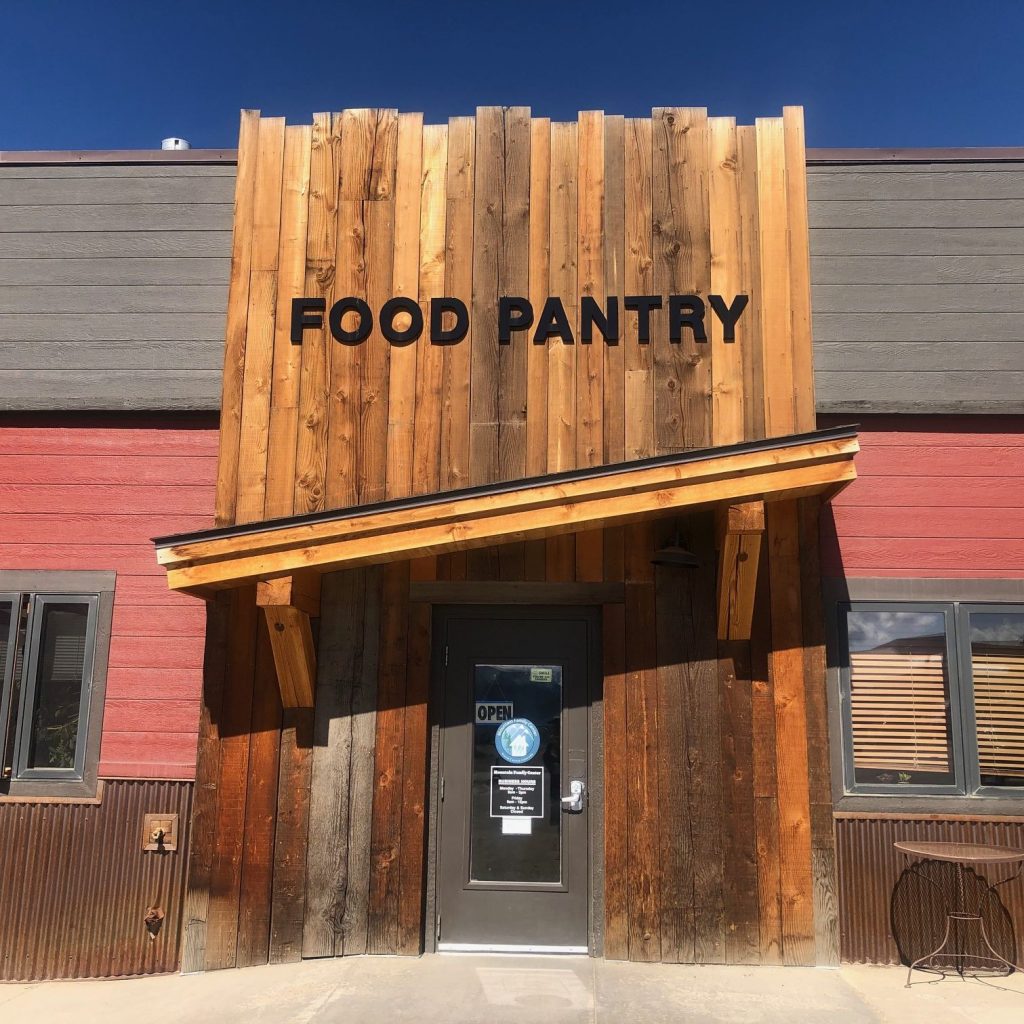
Opportunity Cost and Capital Allocation: The Strategic Benefit of Food Pantries
In finance, “capital allocation” refers to how an entity decides to spend its money to generate the best possible return. For an individual, the “return” is often financial freedom or security. When we look at the query of finding open food pantries, we must look at where that saved money goes.
Debt Acceleration Strategies
One of the most effective uses of the money saved from food assistance is the “Debt Snowball” or “Debt Avalanche” method. If a household saves $400 a month on groceries, and that $400 is applied directly to a high-interest credit card balance (often carrying 20-30% APR), the long-term financial gain is exponential. The interest saved over the life of the debt can amount to thousands of dollars. In this context, the food pantry is not just a source of nutrition; it is a catalyst for debt elimination.
Building the Initial Emergency Fund
Financial experts widely agree that a $1,000 “starter” emergency fund is the first line of defense against financial ruin. However, for a family living paycheck to paycheck, finding that $1,000 can feel impossible. By leveraging food pantries over a three- to four-month period, a family can “harvest” the necessary cash from their existing budget. This shift from consumption to preservation is the cornerstone of moving from financial fragility to stability.
The Psychological Dividend of Fiscal Security
There is a documented “scarcity mindset” that affects financial decision-making. When individuals are worried about basic needs like food, their ability to make sound, long-term financial decisions (like retirement planning or career pivoting) is diminished. By solving the immediate problem of “what food pantries are open tomorrow,” the individual regains the cognitive bandwidth necessary to focus on higher-level financial strategy and professional growth.
Building Fiscal Resilience Through Community Infrastructure
A robust community is one where resources flow efficiently to minimize waste and maximize utility. From a macro-financial perspective, food pantries are essential infrastructure that supports the local economy. When residents can meet their nutritional needs through community support, they are less likely to default on local taxes, utility bills, or rent.
The Role of Corporate and Personal Philanthropy
For those on the “giving” side of the financial equation, understanding the schedules and needs of food pantries is a form of social impact investing. Modern brand strategies often include “Corporate Social Responsibility” (CSR) programs that focus on food security because they recognize that a stable workforce is a productive workforce. When a corporation invests in the local food pantry network, they are essentially investing in the financial stability of their own consumer base.
Navigating Eligibility and Financial Thresholds
It is a common misconception that food pantries are only for those in absolute poverty. Many “choice pantries” and community food banks have expanded their eligibility to include “ALICE” populations (Asset Limited, Income Constrained, Employed). These are individuals who earn above the federal poverty level but still struggle to meet the basic cost of living. For these households, using a food pantry is a legitimate and professional financial move to prevent them from falling into deeper debt cycles.

Conclusion: The New Frontier of Personal Wealth Management
The question of “what food pantries are open tomorrow” is more than a logistical inquiry; it is a proactive step in a modern financial journey. By de-stigmatizing the use of community resources and viewing them through the lens of professional money management, individuals can reclaim control over their financial futures.
In an era of economic volatility, the most successful “investors” are those who look at every asset available to them—including community-based assets. Whether the goal is to pay off a student loan, save for a down payment on a home, or simply survive a period of temporary unemployment, the strategic use of food pantries offers a path to fiscal solvency that should not be overlooked. By mastering the tools to find these resources in real-time, savvy consumers are turning a challenge into an opportunity for long-term financial growth and resilience. Wealth management, after all, is not just about what you earn; it is about how effectively you manage what you have.
aViewFromTheCave is a participant in the Amazon Services LLC Associates Program, an affiliate advertising program designed to provide a means for sites to earn advertising fees by advertising and linking to Amazon.com. Amazon, the Amazon logo, AmazonSupply, and the AmazonSupply logo are trademarks of Amazon.com, Inc. or its affiliates. As an Amazon Associate we earn affiliate commissions from qualifying purchases.