
Changing your name is a significant life event, often accompanying milestones like marriage, divorce, or a personal legal decision. While the emotional and legal aspects are paramount, the financial implications, particularly updating your name at your bank, are equally crucial. Failure to accurately reflect your current legal name across your financial institutions can lead to a cascade of problems, from transaction denials to identity verification issues, ultimately jeopardizing your financial stability and access to your own funds. This comprehensive guide will walk you through the process, ensuring a smooth transition for your financial identity.

The Financial Imperative of Updating Your Name
Updating your name at the bank isn’t merely a bureaucratic formality; it’s a fundamental step in maintaining the integrity of your personal finances. Your bank accounts are the bedrock of your financial life, facilitating income, payments, savings, and investments. Any discrepancy between your legal identity and the name on your bank records can create significant friction.
Why Your Bank Needs Your Current Legal Name
Banks operate under strict regulatory frameworks designed to prevent fraud, money laundering, and identity theft. A core component of these regulations is “Know Your Customer” (KYC) compliance, which mandates that financial institutions accurately identify their clients. Your legal name is your primary identifier. If the name on your account doesn’t match your government-issued identification or other official records, the bank cannot confidently verify your identity, potentially flagging your account for review or restricting access.
Beyond compliance, your correct legal name ensures seamless interactions with other financial services. When you apply for a loan, a new credit card, or set up direct deposits, these institutions will cross-reference your identity with your banking records. A consistent, up-to-date name across all platforms is essential for a unified financial profile.
Implications of Discrepancies: From Account Access to Credit
The repercussions of not updating your name at the bank can range from minor inconveniences to severe financial impediments:
-
Restricted Account Access: The most immediate impact could be limitations on accessing your funds. You might be unable to withdraw cash, make significant transactions, or even log into your online banking portal if your identity can’t be verified.
-
Transaction Delays and Denials: Checks written in your old name may bounce, direct deposits or withdrawals linked to outdated information could fail, and electronic transfers might be delayed or rejected. This can lead to missed payments, late fees, and damage to your financial reputation.
-
Credit Report Inconsistencies: Credit bureaus gather information from various sources, including banks and lenders. If your name is inconsistent across different financial accounts, it can create fragmented credit reports, making it harder to establish or improve your credit score. This can hinder future applications for loans, mortgages, or credit cards.
-
Fraud and Identity Theft Vulnerability: An inconsistent identity trail can inadvertently make you more vulnerable to fraud. It complicates the process of monitoring your accounts and can create confusion if you ever need to report identity theft.
-
Legal and Tax Issues: Your banking records are often linked to your tax filings and other legal documents. Discrepancies can lead to complications with the IRS, state tax authorities, or in legal proceedings where your financial history is relevant.
When a Name Change Becomes Necessary
A name change typically arises from several life events:
-
Marriage: Adopting a spouse’s surname, hyphenating names, or creating a new blended surname.
-
Divorce: Reverting to a maiden name or a previous legal name.
-
Legal Name Change: A personal decision through a court order to change a name for various reasons.
-
Gender Transition: Changing your name to align with your gender identity.
Regardless of the reason, the process of updating your financial identity follows a similar path and requires diligent attention to detail.
Navigating the Name Change Process: A Step-by-Step Financial Guide
Updating your name at the bank requires methodical preparation and execution. Think of it as a critical financial project, ensuring every detail is covered to avoid future headaches.
Step 1: Secure Your Legal Documentation
Before you even approach your bank, ensure you have obtained and updated your primary legal identification. This sequence is critical:
-
Social Security Administration (SSA): This is often the first and most vital step. Your new name must be updated with the SSA first, as banks often verify your identity against this federal database. You’ll need to submit Form SS-5 (Application for a Social Security Card) along with proof of your name change (e.g., marriage certificate) and identity.
-
Government-Issued ID: Once your Social Security record is updated, proceed to update your driver’s license or state ID with the Department of Motor Vehicles (DMV) or equivalent agency. Your passport should also be updated. These serve as your primary photo identification for the bank.
Having these updated documents in hand is non-negotiable for the bank’s name change process.
Step 2: Preparing for Your Bank Visit (or Digital Update)
Gather all necessary documents. This will typically include:
-
Proof of Name Change: Original or certified copy of your marriage certificate, divorce decree, court order, or adoption papers.
-
Updated Photo ID: Your new driver’s license, state ID, or passport reflecting your new name.
-
Updated Social Security Card: While not always required as primary ID, it serves as crucial secondary proof and confirms your SSA record is updated.
-
Current Bank Account Information: Your debit card, checks, or account numbers.
-
Proof of Address: A utility bill or another official document if your address has also changed or needs verification.
It’s advisable to call your bank ahead of time or check their website for their specific requirements, as these can vary slightly by institution. Inquire if an appointment is necessary and if the process can be initiated online or requires an in-person visit. Many banks still prefer in-person verification for name changes due to the sensitive nature of the transaction.
Step 3: What to Expect During the Update
When you visit the bank, be prepared to:
-
Present All Documents: Hand over your original or certified copies of the name change document and your updated photo ID. The bank representative will typically make copies for their records.
-
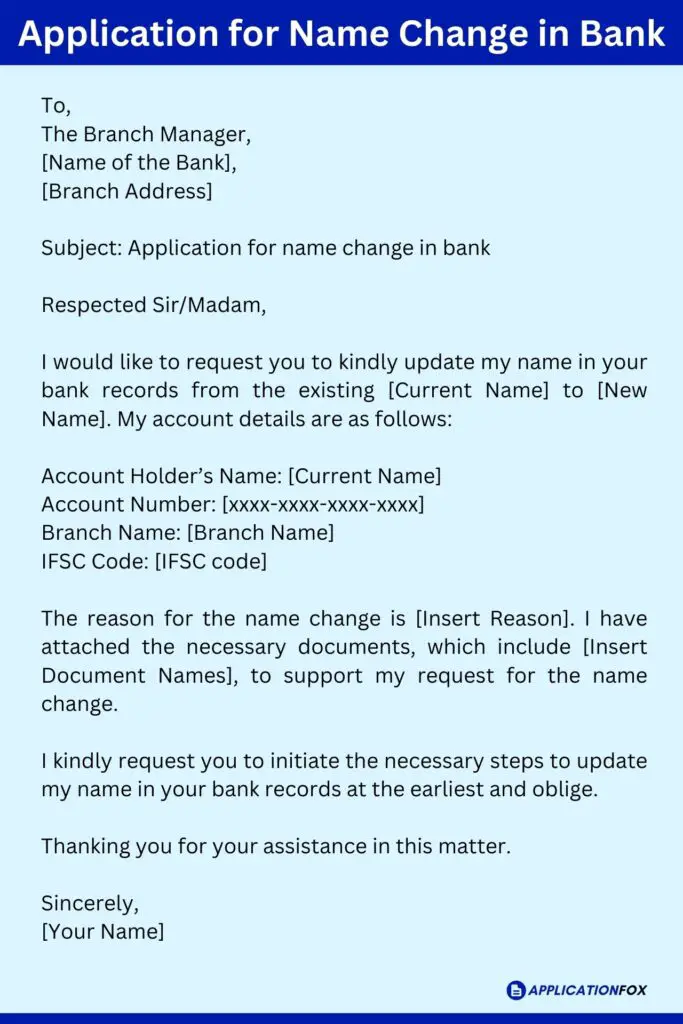
Complete Bank Forms: You’ll likely need to fill out a form requesting the name change on your account(s). Be clear about which accounts you want the name change applied to (checking, savings, joint accounts, credit cards, loans).
-
Verification Process: The bank will verify your identity and the authenticity of your documents. This might involve a quick check against public records or internal databases.
-
Receive Confirmation: Ask for a written confirmation or a printed statement showing your new name once the change has been processed. This serves as your immediate proof.
-
Order New Cards/Checks: You will need to order new debit cards, credit cards, and checkbooks reflecting your new name. These typically arrive within 7-10 business days.
Step 4: Verifying the Change and Updating Other Financial Services
After your visit, it’s critical to follow up:
-
Review Statements: Check your next bank statement and online banking profile to ensure your name has been correctly updated across all relevant accounts.
-
Update Linked Services: Remember to update your name with any services linked directly to your bank account, such as PayPal, Venmo, direct deposit employers, bill pay services, and subscription services. This prevents payment failures and service interruptions.
Essential Documents for a Seamless Bank Name Change
The success of your bank name change hinges on presenting the correct and legally valid documentation. Understanding what’s required will save you time and prevent multiple trips.
Primary Legal Name Change Documents
These are the foundational documents that legally establish your name change:
-
Marriage Certificate (Original or Certified Copy): For changes due to marriage.
-
Divorce Decree (Original or Certified Copy): Specifically the portion outlining the restoration of a former name, for changes due to divorce.
-
Court Order for Name Change (Original or Certified Copy): For any other legal name change decided by a court.
-
Adoption Papers (Original or Certified Copy): If applicable for minor children or adult adoptions.
Always bring the original or a certified copy, not just a photocopy. Banks need to verify the authenticity of these legal documents.
Supporting Identification
These documents confirm your identity and link your old name to your new one, and serve as photo ID:
-
Updated Driver’s License or State-Issued ID: This is usually the primary form of photo identification. It must reflect your new legal name.
-
Updated Passport: Another strong form of primary photo identification, also reflecting your new legal name.
-
Updated Social Security Card: While it doesn’t have your photo, it’s critical proof that your name change has been registered with the SSA, which is foundational for many financial verifications.
-
Old Identification (Optional but Recommended): Sometimes, showing an old ID alongside your new legal document can help link your previous identity to your current one, especially if your new photo ID is very recent.
Proof of Address
Though not always required for a name change specifically, having current proof of address is good practice, especially if your address has also recently changed or if the bank needs to re-verify your residential information:
-
Utility Bill (e.g., electricity, gas, water): Issued within the last 60 days.
-
Bank Statement: From another financial institution, also recent.
-
Lease Agreement or Mortgage Statement: Reflecting your current residence.
Ensure all documents are current, legible, and match the information you are providing.
Beyond the Bank: A Holistic Financial Name Change Strategy
Updating your name at your primary bank is just one piece of a larger financial puzzle. For complete financial integrity, you must extend the name change to all aspects of your financial life.
Updating Your Credit Report and Credit Cards
Your credit report is a detailed history of your borrowing and payment behavior. Inconsistent names can lead to errors or fragmentation.
-
Credit Bureaus: After updating your name at the bank and with other creditors, the changes should eventually reflect on your credit reports. However, it’s wise to proactively contact the three major credit bureaus (Experian, Equifax, TransUnion) to inform them of your name change and ensure your credit files are consolidated under your new name. You might need to submit copies of your legal name change documents.
-
Credit Card Companies: Individually contact each credit card issuer to update your name. This will ensure new cards are issued in your correct name and that your payment history remains consistent.
Informing Investment Accounts and Brokerages
Investment accounts, retirement funds, and brokerage accounts also require your current legal name for accurate tax reporting and proper ownership.
-
Investment Firms: Contact your brokerage firms (e.g., Fidelity, Schwab, Vanguard) and mutual fund companies. They will have specific forms and document requirements, similar to banks.
-
Retirement Accounts: If you have 401(k)s, IRAs, or other retirement plans, ensure your name is updated with the plan administrator or custodian.
Amending Insurance Policies and Retirement Plans
Your various insurance policies and retirement plans must reflect your new legal name to ensure benefits are correctly processed and paid out.
-
Life Insurance: Inform your life insurance provider. The beneficiary information may also need review.
-
Health Insurance: Update your name with your health insurance provider and employer (if employer-sponsored).
-
Auto and Homeowner’s Insurance: Update these policies to reflect your new name to avoid any issues with claims.
-
Pension Plans: If you are a beneficiary of a pension plan, or have your own, ensure your name is updated with the plan administrator.
Addressing Payroll, Taxes, and Government Benefits
This category ensures your income, tax obligations, and any government support are correctly tied to your new identity.
-
Employer (Payroll and HR): Crucially, inform your employer’s HR and payroll departments. This ensures your paychecks, W-2 forms, and other employment records are under your new legal name. You will likely need to fill out a new W-4 form.
-
Internal Revenue Service (IRS): The IRS receives information from your employer (W-2) and banks (1099, etc.). It’s vital that your name with the IRS matches your Social Security record. While often updated automatically after SSA, you can notify them directly by sending a letter with your old and new names, SSN, and signature.
-
Government Benefits: If you receive any government benefits (e.g., Social Security, veteran’s benefits, unemployment), contact the relevant agencies to update your name.
Potential Pitfalls and Best Practices for Financial Stability
While changing your name at the bank is a straightforward process, overlooking certain details can create unnecessary complications.
Common Challenges and How to Overcome Them
-
Incomplete Documentation: The most frequent pitfall is not having all required original or certified documents. Always double-check your bank’s specific list before your visit.
-
Inconsistent Timing: Trying to update your bank before your Social Security card or driver’s license is updated will lead to delays. Follow the logical sequence (SSA, then DMV/Passport, then Banks/Other Institutions).
-
Forgetting Other Financial Accounts: It’s easy to focus on your primary bank and forget secondary accounts, investment portfolios, or old credit cards. Create a checklist of all financial entities you interact with.
-
Joint Accounts: For joint accounts, both account holders might need to be present or provide their consent and identification, depending on the bank’s policy.
-
Fraud Concerns: Banks are vigilant about identity changes. Be patient with their verification processes, as they are designed to protect your assets.
The Importance of Timing and Prioritization
Prioritize the updates that impact your income and daily spending first:
-
SSA: As noted, this is foundational.
-
Driver’s License/Passport: Your primary photo ID.
-
Primary Bank Accounts: Essential for daily transactions.
-
Employer: Ensures correct payroll and tax forms.
-
Credit Cards: Prevents issues with purchases and credit reporting.
-
Investment/Retirement Accounts & Insurance: Important for long-term financial planning and asset protection.
Aim to complete all critical financial name changes within a few weeks to a couple of months of your legal name change to minimize potential disruptions.

Maintaining Financial Security During the Transition
-
Keep Originals Safe: Always keep your original legal name change documents (marriage certificate, court order) in a secure place. You may need them again in the future.
-
Shred Old Cards/Checks: Once you receive new cards and checks, securely destroy any old ones to prevent misuse.
-
Monitor Accounts: Pay close attention to your bank statements and credit reports for several months after the change to catch any errors or potential fraudulent activity.
-
Update Passwords: If you changed your name due to a significant life event that also involved a change of address or phone number, consider updating passwords for your online banking and other financial accounts for enhanced security.
Changing your name at the bank and across your entire financial ecosystem requires diligent effort, but it’s an investment in your financial future. By methodically following these steps, you can ensure a smooth, secure, and financially stable transition to your new identity. Your proactive approach will safeguard your assets, maintain your credit health, and provide peace of mind in managing your personal finances.
aViewFromTheCave is a participant in the Amazon Services LLC Associates Program, an affiliate advertising program designed to provide a means for sites to earn advertising fees by advertising and linking to Amazon.com. Amazon, the Amazon logo, AmazonSupply, and the AmazonSupply logo are trademarks of Amazon.com, Inc. or its affiliates. As an Amazon Associate we earn affiliate commissions from qualifying purchases.