
Bank of America stands as an undisputed titan in the global financial landscape. When we ask “how big is Bank of America,” we’re not merely inquiring about its physical dimensions or employee count. We are delving into a multifaceted inquiry about its financial might, its extensive reach, its profound economic impact, and its systemic importance within the intricate web of modern finance. Its “bigness” is a complex mosaic of trillions in assets, millions of customers, and a global operational footprint that touches virtually every aspect of the economy, from individual savings to multinational corporate finance. Understanding the scale of an institution like Bank of America provides critical insights into the dynamics of the banking sector, the flow of capital, and the very stability of the financial system itself.
A Colossus of Capital: Measuring Financial Scale
The most immediate and quantifiable measure of any financial institution’s size lies in its financial statements. Bank of America consistently ranks among the largest banks globally across key metrics, reflecting its colossal accumulation and management of capital. This financial scale is not just a point of prestige; it underpins its capacity to execute vast transactions, absorb economic shocks, and influence market trends.
Assets Under Management and Total Assets
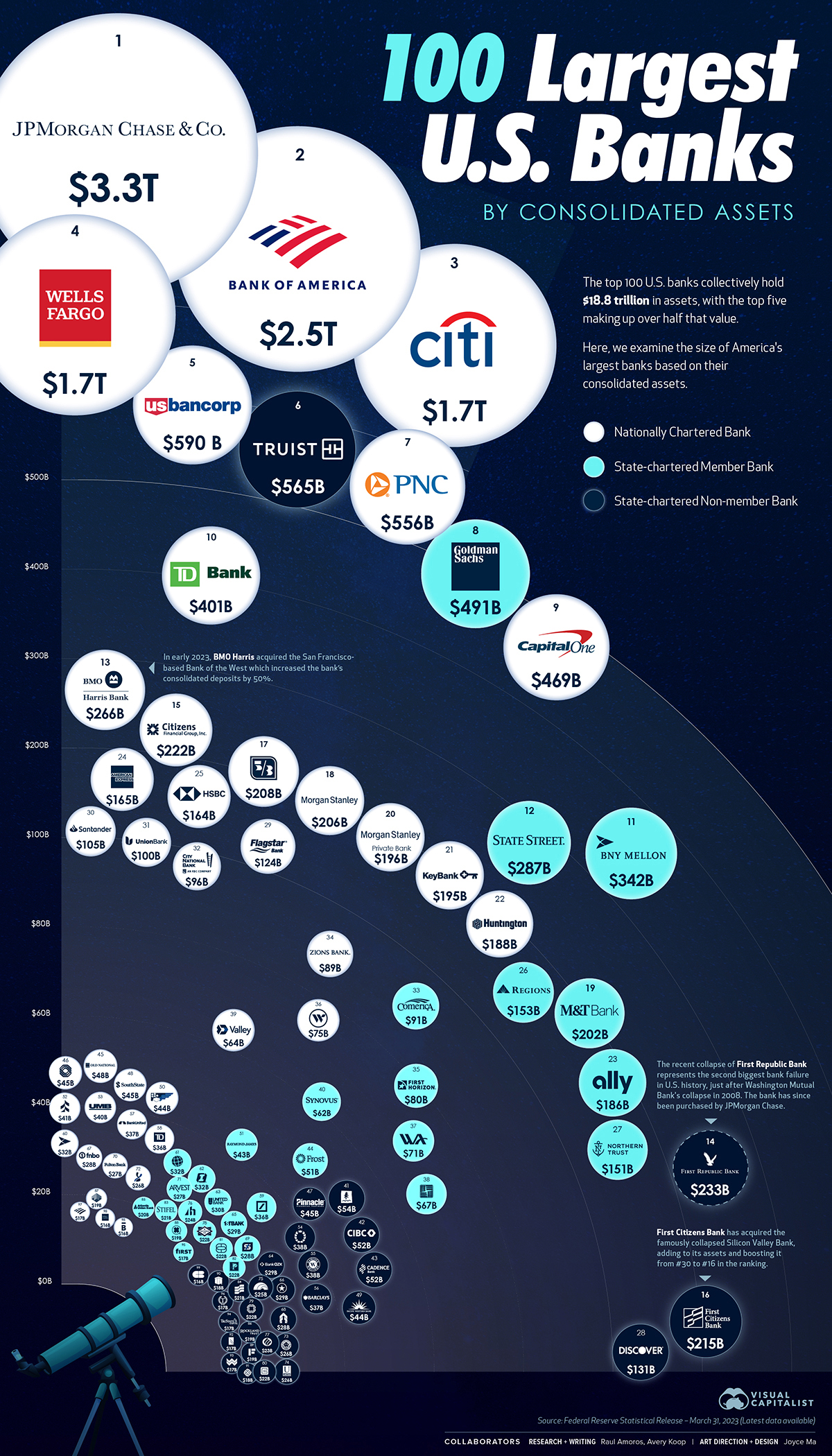
At the heart of Bank of America’s immense scale are its total assets. As of recent reporting periods, Bank of America regularly reports total assets exceeding $3 trillion. This staggering figure encompasses everything from cash and cash equivalents to investment securities, loans extended to individuals and corporations, and physical property and equipment. These assets represent the cumulative resources the bank controls, forming the bedrock of its lending capacity and investment power.
Beyond its direct assets, Bank of America also boasts significant assets under management (AUM), particularly through its Merrill Lynch wealth management division and its institutional investment arms. AUM reflects the value of clients’ funds that the bank manages on their behalf, a critical indicator of its influence in investment markets and its role as a trusted advisor to high-net-worth individuals, families, and institutional investors. The substantial AUM figures underscore its position as a dominant force in wealth creation and preservation, guiding billions, if not trillions, of dollars in investment decisions globally.
Market Capitalization and Shareholder Value
Another powerful indicator of Bank of America’s size and market perception is its market capitalization. Market cap is calculated by multiplying the total number of outstanding shares by the current stock price, representing the total dollar value of the company as determined by the stock market. Bank of America frequently holds a market capitalization in the hundreds of billions of dollars, making it one of the most valuable publicly traded companies in the world.
This massive market cap signifies investor confidence in its future earnings potential and its fundamental financial health. It also reflects its systemic importance; a company of this valuation carries significant weight in major stock indices and can influence broader market sentiment. The sheer volume of its shares traded daily and the vast number of institutional and individual investors holding its stock further attest to its central role in the investment community. Its consistent ability to generate shareholder value, often through dividends and stock buybacks, reinforces its attractiveness as a core holding for many investment portfolios.
Revenue and Profitability
Ultimately, the measure of a bank’s effective “bigness” is its ability to translate its vast asset base and market presence into substantial revenue and sustainable profitability. Bank of America consistently generates tens of billions of dollars in revenue each quarter and hundreds of billions annually. This revenue is primarily derived from two main categories:
-
Net Interest Income (NII): This is the difference between the interest earned on assets (like loans and securities) and the interest paid on liabilities (like customer deposits). Given its enormous loan portfolio and deposit base, NII is a significant driver of Bank of America’s earnings.
-
Non-Interest Income: This includes fees for various services such as wealth management, investment banking advisory fees, credit card fees, mortgage servicing fees, and trading income. Bank of America’s diverse business segments ensure a robust stream of non-interest income, diversifying its revenue base and making it less susceptible to interest rate fluctuations alone.
Its ability to maintain strong profitability, even through various economic cycles, demonstrates efficient operations, effective risk management, and a powerful franchise capable of attracting and retaining customers across all segments. These profits are crucial for reinvestment, maintaining capital reserves, and distributing returns to shareholders, all of which are hallmarks of a financially robust and “big” institution.
Reach and Influence: A Global Footprint
Bank of America’s bigness extends far beyond its financial statements, manifesting in an expansive operational footprint and an unparalleled reach that impacts millions of individuals and thousands of businesses daily. Its presence is felt not just in physical locations but increasingly in the digital realm, shaping how people manage their money and how businesses conduct their operations.
Customer Base and Account Volume
Perhaps the most tangible illustration of Bank of America’s scale is its immense customer base. The bank serves an astonishing number of clients across various segments:
-
Consumer Banking: Millions of individual customers rely on Bank of America for their everyday banking needs, including checking and savings accounts, credit cards, mortgages, and auto loans. The sheer volume of these accounts represents a vast network of personal financial relationships.
-
Wealth Management (Merrill Lynch and Private Bank): Through Merrill, Bank of America provides advisory services to affluent individuals and families, managing significant portions of their wealth. The Private Bank caters to ultra-high-net-worth clients, offering bespoke financial solutions.
-
Global Banking and Markets: This segment serves large corporations, institutions, and governments, providing capital markets services, corporate lending, treasury solutions, and advisory services for mergers and acquisitions.
Collectively, these segments translate into tens of millions of active banking relationships, underscoring its pivotal role in the financial lives of a substantial portion of the population and the business community.
Branch Network and Digital Presence
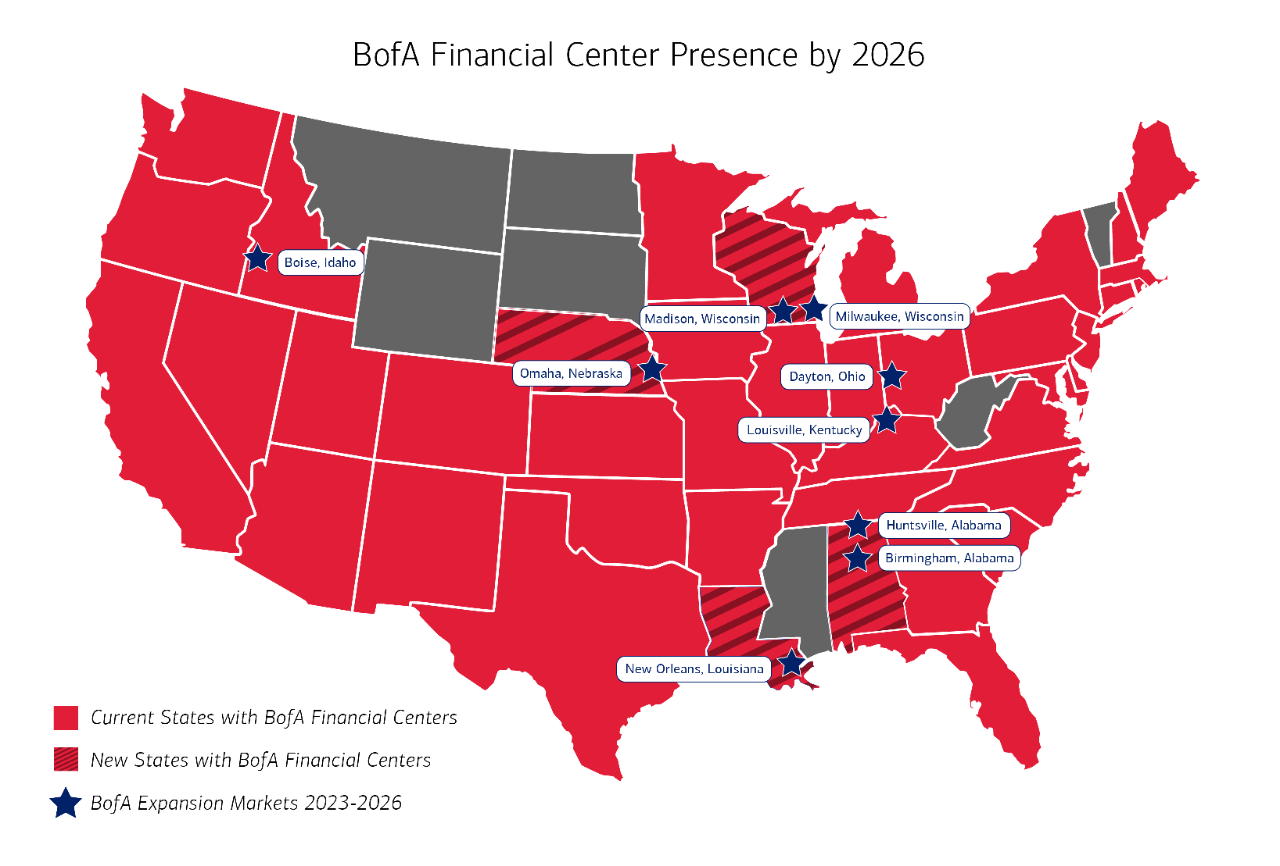
For decades, the traditional brick-and-mortar branch network was the primary indicator of a bank’s reach. Bank of America maintains one of the largest branch networks in the United States, with thousands of banking centers strategically located across the country. These branches remain vital hubs for customer service, complex transactions, and community engagement. Alongside this, the bank operates a massive network of ATMs, providing convenient access to cash and basic banking services.
However, in the modern era, “reach” is increasingly defined by digital presence. Bank of America has made significant investments in its digital banking platforms, becoming a leader in online and mobile banking. Its highly rated mobile app and comprehensive online portal allow millions of customers to manage their accounts, pay bills, transfer funds, deposit checks, and apply for loans from anywhere, at any time. This dual approach – a robust physical presence complemented by an advanced digital ecosystem – ensures maximum accessibility and convenience, solidifying its market penetration and customer engagement in an evolving landscape.
Global Operations and International Impact
While primarily focused on the U.S. market, Bank of America’s influence is decidedly global. Its Global Banking and Markets division operates in numerous countries across Europe, Asia, Latin America, and other regions. These international operations facilitate cross-border transactions, provide financing for global trade, offer investment banking services to multinational corporations, and participate in international capital markets.

This global footprint means that Bank of America plays a significant role in international finance, connecting economies, facilitating capital flows, and providing critical services for businesses operating across borders. Its global presence allows it to serve its multinational clients comprehensively, manage diverse financial risks, and participate in the world’s largest financial centers, cementing its status as a truly global financial powerhouse.
Economic Impact and Systemic Importance
The sheer scale of Bank of America elevates it beyond merely a large corporation; it is a critical artery within the economic body, with its health and operations having profound implications for national and even global financial stability. Its “bigness” translates into significant economic contributions and responsibilities.
Employment and Contribution to Labor Markets
As one of the largest employers in the United States and globally, Bank of America directly provides hundreds of thousands of jobs. These roles span a vast array of professions, from branch tellers and loan officers to software engineers, financial analysts, risk managers, and investment bankers. The salaries and benefits paid to this massive workforce inject billions of dollars into local economies annually, supporting consumer spending, housing markets, and various service industries.
Beyond direct employment, Bank of America’s operations support countless indirect jobs through its extensive supply chain, technology vendors, and professional service providers. Its significant investment in employee training and development also contributes to human capital formation, enhancing the skill sets of a large segment of the workforce. This role as a major job creator and economic driver underscores its substantial societal and economic contribution.
Lending and Capital Allocation
One of the most fundamental functions of any bank, and particularly one of Bank of America’s size, is the allocation of capital throughout the economy. Through its extensive lending activities, the bank provides essential financing for:
-
Individuals: Mortgages for homes, auto loans, student loans, and personal credit lines enable millions to achieve personal financial goals.
-
Small Businesses: Loans and credit facilities help entrepreneurs start, grow, and sustain their ventures, acting as a lifeblood for job creation and local economic vitality.
-
Large Corporations: Corporate loans, lines of credit, and investment banking services fund major capital projects, expansions, mergers, and acquisitions, driving innovation and industrial growth.
-
Governments: Bank of America participates in underwriting municipal bonds and providing other forms of financing for public sector projects.
This massive scale of capital allocation is crucial for economic growth and development. By channeling funds from savers to borrowers, Bank of America acts as a primary facilitator of economic activity, enabling investment, consumption, and wealth creation across all sectors.
Role in Financial Stability (Too Big to Fail)
Bank of America’s enormous size and interconnectedness within the financial system have led to its designation as a Global Systemically Important Bank (G-SIB) by international regulatory bodies. This designation means that its failure would pose a significant risk to the broader financial system and the economy, leading to the colloquial term “too big to fail.”
This systemic importance carries immense responsibilities. Regulators impose stricter capital requirements, liquidity rules, and resolution planning mandates on G-SIBs like Bank of America to mitigate potential risks. While the “too big to fail” label implies a degree of implicit government support in times of crisis, it also means the bank operates under intense scrutiny, with every major decision having potential ripple effects across markets. Its sheer scale dictates that it must be a steward of financial stability, with robust risk management frameworks and ample capital buffers to withstand adverse economic conditions.
Navigating the Future: Growth and Challenges
Bank of America’s “bigness” is not a static state but a dynamic position that requires continuous adaptation and strategic foresight. The future presents both opportunities for further growth and significant challenges that demand agility and innovation.
Adapting to Regulatory Landscapes
Operating at such a colossal scale inevitably means navigating an ever-evolving and increasingly stringent regulatory environment. Post-financial crisis reforms, such as Dodd-Frank in the U.S. and Basel Accords internationally, have imposed significant compliance burdens, capital requirements, and stress testing regimes. For Bank of America, this means dedicating vast resources to regulatory compliance, risk management, and legal teams. While these regulations are designed to enhance financial stability, they also add to operational costs and can influence strategic decisions, such as the types of businesses it can pursue or the level of risk it can undertake. Adapting effectively to these landscapes is crucial for maintaining its “license to operate” and ensuring sustainable growth.
Technological Investment and Digital Transformation
While the “Money” category article generally avoids deep dives into technology, it’s impossible to discuss the future of a major financial institution without acknowledging its strategic imperative to embrace technology. For Bank of America, massive investments in digital transformation are not about being a “tech company,” but about leveraging financial tools and IT to:
-
Enhance Efficiency: Automating back-office operations, streamlining processes, and reducing manual errors to improve profitability.
-
Improve Customer Experience: Developing user-friendly mobile apps, online platforms, and integrating AI-powered chatbots or virtual assistants (e.g., Erica) for personalized service and faster problem resolution. This falls under financial tools for customers.
-
Strengthen Security: Investing in advanced cybersecurity measures, fraud detection systems, and biometric authentication to protect customer data and assets. This is critical for maintaining trust and avoiding financial losses.
-
Drive Innovation in Financial Products: Exploring blockchain for payment systems, advanced analytics for credit risk assessment, and new digital payment solutions (e.g., Zelle integration).
These technological endeavors are critical for Bank of America to maintain its competitive edge, meet evolving customer expectations, and drive future growth within the financial sector. They directly impact its business finance and operational scalability.
Competition and Market Dynamics
Despite its formidable size, Bank of America operates in an intensely competitive market. It faces rivalry from:
-
Other Mega-Banks: JPMorgan Chase, Wells Fargo, Citigroup, and global institutions like HSBC or BNP Paribas compete fiercely for corporate clients, investment banking mandates, and wealth management services.
-
Regional Banks: Numerous regional and community banks compete for consumer deposits and small business loans in specific geographies.
-
Fintech Companies: An explosion of financial technology startups (fintechs) challenges traditional banking services with innovative digital-only platforms for payments, lending, and investment.
-
Shadow Banking: Non-bank financial institutions also compete in areas like lending and asset management.
To maintain its “bigness” and market leadership, Bank of America must continually innovate, optimize its cost structure, and leverage its scale to offer comprehensive and competitive services. Its vast capital resources allow it to invest in areas like technology and global expansion that smaller competitors cannot easily match, providing a distinct advantage in navigating these dynamic market forces.
Conclusion: More Than Just Numbers
Asking “how big is Bank of America” reveals a financial institution of truly immense proportions. It is a colossus defined by its trillions in assets, hundreds of billions in market capitalization, and consistent generation of vast revenues. Its reach extends globally, serving tens of millions of customers through an expansive physical and digital network. Its economic impact is profound, providing livelihoods, allocating vital capital, and playing a systemically critical role in maintaining financial stability.
Yet, its bigness is not merely about staggering numbers. It signifies a complex entity with enormous responsibilities – to its shareholders, its customers, its employees, and the global financial system. As it navigates the complexities of regulation, technological evolution, and intense competition, Bank of America’s ongoing journey will continue to shape the contours of banking and finance for decades to come, proving that its scale comes with both immense power and an equally immense imperative for responsible stewardship.
aViewFromTheCave is a participant in the Amazon Services LLC Associates Program, an affiliate advertising program designed to provide a means for sites to earn advertising fees by advertising and linking to Amazon.com. Amazon, the Amazon logo, AmazonSupply, and the AmazonSupply logo are trademarks of Amazon.com, Inc. or its affiliates. As an Amazon Associate we earn affiliate commissions from qualifying purchases.