
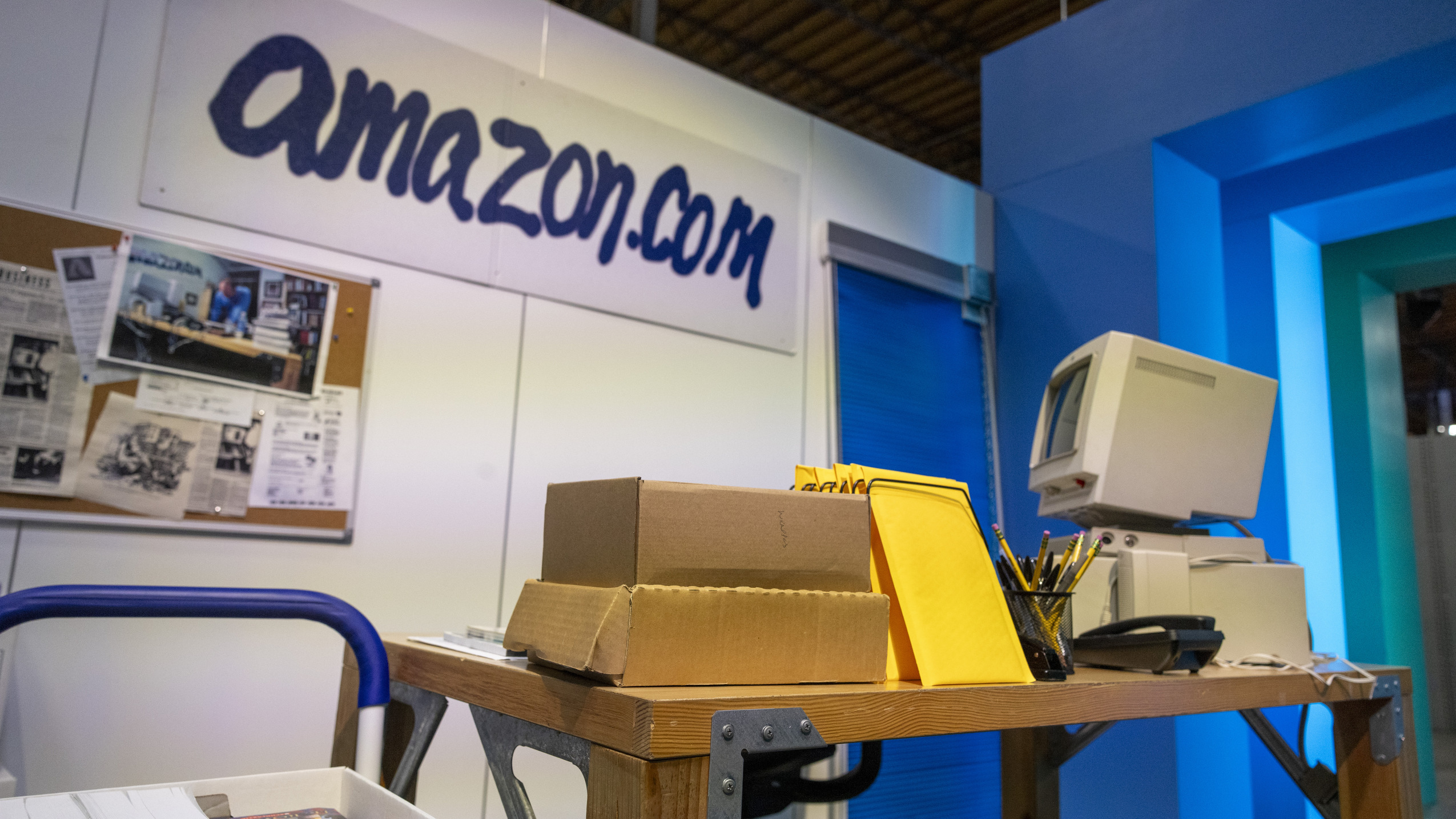
The story of Amazon is often told as a tale of technological triumph or financial dominance, but at its core, it is one of the most sophisticated case studies in brand strategy and corporate identity in modern history. What began in a garage in Bellevue, Washington, in 1994 has transformed into a global ecosystem that touches nearly every aspect of the consumer experience. The inception of Amazon was not merely about selling products online; it was about the calculated construction of a brand identity centered on “Customer Obsession” and the long-term vision of becoming “Earth’s most customer-centric company.” To understand how Amazon was started is to understand the mechanics of building a brand designed for infinite scalability.

The Conceptual Birth: Brand Vision and the Regret Minimization Framework
The origin of Amazon’s brand identity lies in a mental model utilized by its founder, Jeff Bezos, known as the “Regret Minimization Framework.” In 1994, while working as a senior vice president at the hedge fund D.E. Shaw & Co., Bezos observed that the internet was growing at a rate of 2,300% per year. From a brand strategy perspective, this was not just a business opportunity; it was a foundational shift in how brands would interact with consumers.
Bezos’s decision to leave Wall Street was predicated on the idea that he did not want to regret not participating in the internet boom. This philosophy of long-term thinking became the cornerstone of Amazon’s corporate identity. Unlike many startups of the mid-90s that focused on short-term “burn and churn” tactics, Amazon was built with a “Day 1” mentality—a brand promise that the company would always act with the urgency and innovation of a startup, regardless of its size.
The initial brand positioning was remarkably narrow yet strategically brilliant. Bezos analyzed twenty different products that could be sold online, including software, office supplies, and music. He ultimately landed on books. From a marketing and design perspective, books were the ideal entry point. They were easy to ship, difficult to damage, and—most importantly—there was a “long tail” of titles that no physical bookstore could ever hope to stock. By launching as “Earth’s Biggest Bookstore,” Amazon established a brand identity rooted in selection and convenience, two pillars that would eventually support its expansion into every other category.
The Identity Shift: From Cadabra to the Amazon River
The naming of a brand is one of the most critical steps in establishing corporate identity. Originally, Bezos incorporated the company as “Cadabra,” a play on “Abracadabra.” However, his lawyer pointed out that the name sounded too much like “cadaver” over the phone. This realization led to a rebranding effort that would define the company’s trajectory.
Bezos began looking through the “A” section of the dictionary, wanting a name that started with the first letter of the alphabet so it would appear at the top of website listings (which were often alphabetized in early search directories). He settled on “Amazon,” the name of the largest river in the world. This was a deliberate piece of brand storytelling: the Amazon River represented the vastness and scale he envisioned for the company. The brand was no longer just about books; it was about being a force of nature—massive, unstoppable, and providing a life-sustaining flow of goods to consumers.
The visual identity of the brand evolved to match this ambition. The current Amazon logo, featuring an arrow that curves from “A” to “Z,” serves as a dual-purpose brand message. First, it signifies that Amazon sells everything from A to Z. Second, the arrow is shaped like a smile, reinforcing the brand’s emotional connection with customer satisfaction. This transition from a literal representation (a river) to a symbolic representation (selection and happiness) marked Amazon’s maturity as a global brand.
Scalable Positioning: Why Books Were the Perfect Entry Point
In the realm of brand strategy, the “wedge” strategy is a method where a brand dominates a niche before expanding. Amazon’s choice of books was the ultimate wedge. In 1995, the book industry was fragmented, and the physical limitations of retail space meant that even giants like Barnes & Noble could only carry a fraction of the world’s published titles.
Amazon’s brand promise was simple: if it’s in print, we have it. This positioning created an immediate value proposition that was superior to any physical competitor. However, the true genius of the brand strategy was not just the selection; it was the leverage of user-generated content. Amazon was one of the first major e-commerce brands to encourage customer reviews. While other retailers feared that negative reviews would hurt sales, Amazon recognized that authentic feedback built trust. This moved the brand from being a mere “vendor” to a “trusted advisor,” a shift that is essential for long-term corporate identity.
Leveraging Niche Authority for Horizontal Growth
Once Amazon achieved brand authority in the book market, it began the process of horizontal expansion. This was a delicate marketing maneuver. The brand had to ensure that consumers would trust it to sell electronics, toys, and home goods with the same reliability as it sold books.
The strategy used was “Brand Extension through Operational Excellence.” By 1998, Amazon began adding music and DVDs to its catalog. The messaging remained consistent: selection, convenience, and low prices. By maintaining a uniform user interface and a reliable fulfillment process, Amazon taught its customers that the category didn’t matter as much as the platform. The brand became synonymous with the “Everything Store.” This was a pivotal moment in corporate identity, where the brand shifted from being product-focused to being platform-focused.
The “Flywheel” Strategy: How Brand Operations Fuel Growth
A significant portion of Amazon’s brand strategy is built upon the “Flywheel Effect,” a concept popularized by Jim Collins and adopted by Bezos. In this model, every aspect of the business feeds into another to create momentum. For Amazon, the flywheel starts with “Customer Experience.” A great experience leads to more traffic, which attracts more third-party sellers. This increased selection improves the customer experience further, while the scale allows for lower prices, which again enhances the customer experience.
From a brand perspective, the flywheel is more than a business model; it is a marketing engine. It allows Amazon to spend less on traditional advertising and more on “price leadership” and “shipping speed.” When a brand becomes the default choice for a consumer, the marketing has succeeded at the highest level.
The Infrastructure of Convenience: Prime and Fulfillment
In 2005, Amazon launched “Amazon Prime,” arguably the most successful loyalty program in history. At the time, the idea of paying $79 a year for “free” two-day shipping was met with skepticism. However, from a brand strategy standpoint, Prime was a masterstroke in psychological marketing. It removed the “pain of payment” associated with shipping costs, turning every purchase into a frictionless event.
Prime redefined the Amazon brand from a place where you go to buy things to a service that anticipates your needs. It created a “walled garden” effect, where the brand became an indispensable part of the consumer’s daily life. The corporate identity shifted once again, moving from “The Everything Store” to “The Infrastructure of Modern Life.” The physical manifestation of this—the ubiquitous brown boxes with the smile logo—became a more powerful brand asset than any television commercial could ever be.
Legacy and Longevity: The Customer-Obsessed Corporate Identity
Today, the Amazon brand is a multifaceted entity, spanning cloud computing (AWS), streaming media (Prime Video), smart home technology (Alexa), and physical grocery (Whole Foods). Despite this diversification, the core brand identity remains rooted in the principles established in that 1994 garage.
The brand’s success is a testament to the power of “Brand Consistency.” Whether a customer is interacting with a Kindle, a delivery driver, or an AWS server, the underlying promise is efficiency and customer-centricity. Amazon has successfully navigated the transition from a scrappy disruptor to a global incumbent by never losing sight of its primary brand pillar: the customer is the center of the universe.

The “Day 1” Mentality as a Brand Guardrail
The concept of “Day 1” serves as a cultural and brand guardrail for Amazon. In his annual letters to shareholders, Bezos often spoke about “Day 2” being stasis, followed by irrelevance, followed by an excruciating, painful decline, followed by death. Therefore, it is always Day 1 at Amazon.
This philosophy is a critical component of Amazon’s corporate identity because it allows the brand to fail. Branding often prioritizes perfection and consistency to a fault, but Amazon’s brand strategy embraces “high-velocity decision-making” and experimentation. The failures of the Fire Phone or Amazon Destinations are not seen as brand-damaging events, but rather as necessary data points in a long-term strategy of innovation. This resilience is what allows the brand to stay relevant in a rapidly changing digital landscape.
In conclusion, the story of how Amazon was started is a masterclass in strategic brand building. It demonstrates that a brand is not just a logo or a name, but a set of values and promises kept over time. By starting with a narrow focus, building a foundation of trust, and aggressively scaling through operational excellence, Amazon has created a brand identity that is both indestructible and infinitely adaptable. From the first book sold in 1995 to the global powerhouse of today, the Amazon brand remains a singular example of how a clear vision, when executed with relentless consistency, can change the world.
aViewFromTheCave is a participant in the Amazon Services LLC Associates Program, an affiliate advertising program designed to provide a means for sites to earn advertising fees by advertising and linking to Amazon.com. Amazon, the Amazon logo, AmazonSupply, and the AmazonSupply logo are trademarks of Amazon.com, Inc. or its affiliates. As an Amazon Associate we earn affiliate commissions from qualifying purchases.