
To understand how much money Amazon is worth, one must look beyond a single number on a stock ticker. In the world of high-stakes finance and global commerce, “worth” is a multifaceted concept that encompasses market capitalization, total asset value, revenue generation, and the intrinsic value of its dominant business segments. As of the mid-2020s, Amazon has firmly established itself as one of the few elite corporations to cross the trillion-dollar threshold, but its true valuation is a moving target influenced by interest rates, consumer spending, and the exponential growth of cloud computing.

For the personal investor or the business analyst, determining Amazon’s worth requires a surgical look at its balance sheet and its “flywheel” business model. Unlike traditional retailers, Amazon functions as a technology conglomerate, a logistics titan, and a digital advertising powerhouse. This complexity is exactly why its valuation fluctuates so significantly, yet remains a cornerstone of the modern financial markets.
Understanding Market Capitalization: The Public Price Tag
The most common way to answer how much Amazon is worth is by looking at its market capitalization. Market cap is calculated by multiplying the total number of outstanding shares by the current share price. This figure represents the total value that the public stock market assigns to the company at any given moment.
The Trillion-Dollar Club and Historical Context
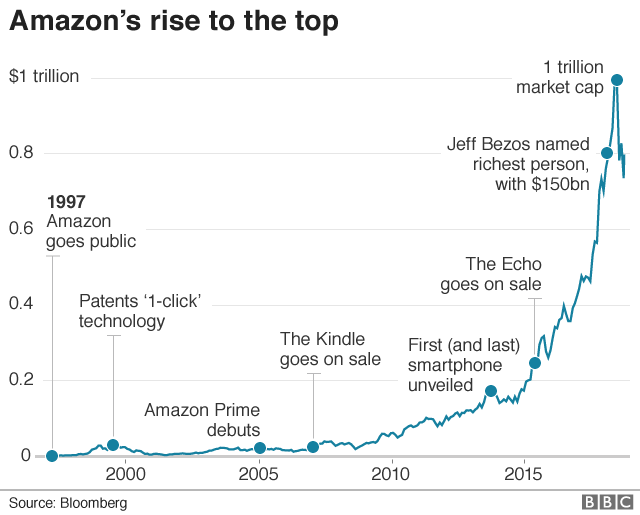
Amazon first reached a $1 trillion market cap in September 2018, joining an exclusive group that includes Apple, Microsoft, and Alphabet. Since then, its valuation has fluctuated between $1 trillion and $2 trillion, depending on quarterly earnings performance and broader economic conditions. During the height of the e-commerce surge in 2020 and 2021, Amazon’s valuation skyrocketed as the world shifted to digital-first consumption.
However, market cap is not a static figure. It reflects investor sentiment as much as it reflects actual revenue. When the Federal Reserve raises interest rates, growth stocks like Amazon often see their valuations compressed because the future cash flows they promise are discounted at a higher rate. Consequently, while Amazon may be “worth” $1.8 trillion one day, a shift in consumer price indices could shave $100 billion off that total in a single trading session.
Enterprise Value vs. Market Cap
In professional finance, we often look at Enterprise Value (EV) to get a more accurate picture of a company’s worth. EV takes the market cap, adds total debt, and subtracts cash and cash equivalents. For a company like Amazon, which maintains a significant amount of debt to fund its massive fulfillment infrastructure but also holds tens of billions in cash, the EV provides a “takeover price”—the theoretical cost to buy the entire company and pay off its debts. Amazon’s EV is typically higher than its market cap, reflecting the capital-intensive nature of its logistics and data center operations.
Analyzing the Balance Sheet: Assets, Debt, and Cash Flow
While market cap tells us what the world is willing to pay for Amazon, the balance sheet tells us what Amazon actually owns. To understand the intrinsic value of the company, we must evaluate its total assets and its ability to generate free cash flow.
Physical Assets and Infrastructure
Amazon’s worth is anchored by a staggering amount of physical property. This includes hundreds of millions of square feet of fulfillment center space, a massive fleet of delivery vans, and even its own airline, Amazon Air. Furthermore, the company’s investment in data centers for Amazon Web Services (AWS) represents billions of dollars in specialized hardware and real estate. Unlike purely digital companies, a significant portion of Amazon’s valuation is backed by “hard” assets that would be incredibly difficult and expensive for any competitor to replicate.
The Power of Free Cash Flow
For years, Amazon was famous for reporting little to no net income. This was a deliberate financial strategy orchestrated by founder Jeff Bezos. Instead of showing profit to satisfy short-term investors, Amazon redirected every cent of operating cash flow back into the business to fuel growth.
Today, the “worth” of Amazon is increasingly measured by its Free Cash Flow (FCF). FCF is the cash a company generates after accounting for cash outflows to support operations and maintain its capital assets. Investors prize Amazon’s FCF because it demonstrates the company’s ability to fund its own expansion without relying solely on external debt. When Amazon’s FCF grows, its valuation generally follows, as it signals that the company’s massive investments are finally yielding efficient returns.
The Profit Engine: Segment-by-Segment Valuation

To truly understand Amazon’s worth, you have to break the company into its constituent parts. Amazon is not a monolithic entity; it is a collection of high-margin and low-margin businesses that balance each other out.
Amazon Web Services (AWS): The Crown Jewel
If Amazon were to spin off AWS, the cloud computing division would likely be one of the most valuable companies in the world on its own. AWS provides the backbone for much of the internet, serving startups, massive corporations, and government agencies alike.
From a financial perspective, AWS is Amazon’s primary profit driver. While the retail division often operates on razor-thin margins, AWS frequently boasts operating margins north of 30%. Financial analysts often apply a much higher “multiple” to AWS earnings than they do to the retail side. Some estimates suggest that AWS alone accounts for more than half of Amazon’s total enterprise value, despite bringing in a smaller percentage of the total revenue.
The E-commerce Flywheel and Third-Party Services
Amazon’s core retail business is more than just selling books and electronics. A significant portion of its worth comes from its Third-Party Seller Services. This includes commissions and fulfillment fees (FBA—Fulfillment by Amazon) paid by independent merchants. This model is highly lucrative because it allows Amazon to take a cut of every sale without the risk of owning the inventory. This shift from “First-Party” (Amazon selling its own goods) to “Third-Party” (Amazon providing the platform) has fundamentally improved the company’s margin profile and, by extension, its market value.
Advertising and Subscriptions
In recent years, Amazon has quietly become one of the largest digital advertising platforms in the world, rivaling Google and Meta. Because Amazon has direct data on what consumers are buying, its advertising space is incredibly valuable to brands. This high-margin revenue stream adds billions to Amazon’s valuation. Additionally, the Prime subscription model provides a steady, predictable stream of recurring revenue, which investors value highly because it provides a “moat” against competitors and ensures customer loyalty.
How to Value Amazon as an Investor
When determining if Amazon is a “good value” at its current price, investors use several key financial metrics. Because Amazon reinvests so heavily, traditional metrics like the Price-to-Earnings (P/E) ratio can sometimes be misleading.
Forward P/E and Price-to-Sales
Amazon historically trades at a high P/E ratio compared to the broader market. This suggests that investors expect significant future growth. A more useful metric for a high-growth retail giant is often the Price-to-Sales (P/S) ratio or the EV/EBITDA ratio. These metrics help investors understand how much they are paying for every dollar of sales or every dollar of operating profit before accounting for the massive depreciation of its physical assets.
The Discounted Cash Flow (DCF) Model
Professional analysts use DCF models to estimate Amazon’s worth. This involves forecasting the company’s free cash flows ten or twenty years into the future and then “discounting” them back to their value in today’s dollars. Given Amazon’s dominance in cloud computing and its growing advertising business, most DCF models suggest that the company’s long-term value remains robust, provided it can maintain its lead in AI-driven services and logistical efficiency.
Future Outlook: Catalysts and Risks to Valuation
The question of “how much is Amazon worth” is inextricably linked to its future potential. As the company moves into new sectors, its valuation will be reshaped by its success or failure in those areas.
Expansion into Healthcare and Fintech
Amazon has made significant moves into the healthcare space with its acquisition of One Medical and the launch of Amazon Pharmacy. If Amazon can successfully disrupt the trillion-dollar healthcare industry, its valuation could see another massive upward re-rating. Similarly, its expansion into payment processing and “Buy Now, Pay Later” services adds a layer of financial technology value that is not yet fully realized.
Regulatory and Antitrust Risks
The greatest threat to Amazon’s worth is regulatory intervention. Governments in the U.S. and Europe have increased scrutiny of Amazon’s market power. If regulators were to force a “breakup” of the company—separating AWS from the retail business—it would create a massive shift in how the company is valued. Paradoxically, many analysts believe that the “sum of the parts” of Amazon is actually worth more than the company is worth as a single entity, meaning a breakup could potentially unlock even more value for shareholders.
The Role of Artificial Intelligence
As we move into the era of Generative AI, Amazon’s worth is increasingly tied to its ability to provide AI infrastructure through AWS. By developing its own AI chips (Trainium and Inferentia) and offering a platform for developers to build their own models (Bedrock), Amazon is positioning itself to capture a massive share of the AI economy.
In conclusion, Amazon’s worth is not just a function of its stock price, but a reflection of its role as the central infrastructure of the modern economy. Whether through the packages on your doorstep or the servers powering your favorite apps, Amazon’s financial footprint is vast, making it one of the most complex and valuable financial entities in human history. Sticking to a strict financial analysis, the company’s worth is a combination of its $1.5T+ market cap, its unrivaled logistical assets, and its high-margin dominance in the cloud and advertising sectors.
aViewFromTheCave is a participant in the Amazon Services LLC Associates Program, an affiliate advertising program designed to provide a means for sites to earn advertising fees by advertising and linking to Amazon.com. Amazon, the Amazon logo, AmazonSupply, and the AmazonSupply logo are trademarks of Amazon.com, Inc. or its affiliates. As an Amazon Associate we earn affiliate commissions from qualifying purchases.