
In the realm of global finance, few names carry as much weight as Amazon. From its humble beginnings as an online bookseller in a garage to its current status as a ubiquitous “everything store” and cloud computing pioneer, the company has fundamentally reshaped the landscape of modern commerce. But when we ask the question “How much is Amazon worth?” the answer is far more complex than a single number on a stock ticker.
To understand Amazon’s true value, one must look beyond the daily fluctuations of the NASDAQ and delve into its diversified revenue streams, its massive infrastructure investments, and its strategic positioning in the future of artificial intelligence. Assessing Amazon’s worth requires a multifaceted approach that considers market capitalization, intrinsic value, and the sheer scale of its economic ecosystem.
Understanding Market Capitalization vs. Intrinsic Value
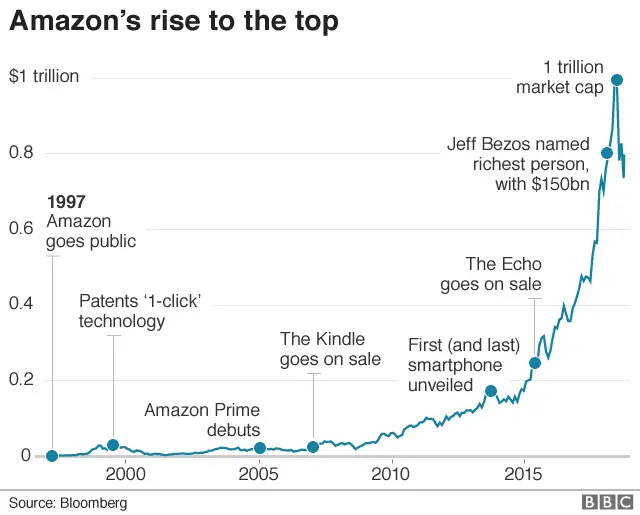
The most common way to answer how much Amazon is worth is by looking at its market capitalization. As of the current fiscal period, Amazon frequently fluctuates between a $1.5 trillion and $2 trillion valuation, placing it in an elite group of “megacap” technology stocks. Market capitalization is a straightforward calculation: the current share price multiplied by the total number of outstanding shares. However, for a company as multifaceted as Amazon, this figure only tells part of the story.
The Current Market Cap Landscape
Market capitalization represents the public’s perception of the company’s value. It is influenced by quarterly earnings reports, interest rates, and broader macroeconomic trends. For investors, the market cap is a benchmark of size and stability. Amazon’s journey to the trillion-dollar club was paved by decades of prioritizing long-term growth over short-term profits—a strategy famously championed by founder Jeff Bezos. This “Day 1” philosophy encouraged the market to value Amazon based on its potential to dominate future industries rather than its immediate dividend yield.
Why Stock Price Doesn’t Tell the Whole Story
Intrinsic value, on the other hand, is an estimate of the “true” value of the business based on its future cash flows, assets, and competitive advantages, independent of the current stock price. Many financial analysts argue that Amazon is worth more than its market cap suggests because of its “flywheel” effect. This is the idea that each part of Amazon’s business—Prime, Marketplace, AWS, and Logistics—feeds into and strengthens the others. When you value Amazon, you aren’t just valuing a retailer; you are valuing a global logistics network, a premier advertising agency, and the backbone of the internet.
The Financial Engines Driving Amazon’s Multi-Trillion Dollar Valuation
Amazon’s valuation is supported by several distinct “engines” of growth. While the public often associates the brand with brown cardboard boxes, the financial reality is that Amazon is a high-tech conglomerate with varied profit margins across its divisions.
AWS: The High-Margin Profit Machine
Amazon Web Services (AWS) is arguably the most critical component of the company’s total worth. As the pioneer in cloud computing, AWS provides the infrastructure for millions of businesses, startups, and government agencies. From a valuation perspective, AWS is the “crown jewel” because it operates with significantly higher margins than the retail side of the business.
If AWS were a standalone company, analysts estimate it could be worth north of $1 trillion on its own. It provides the consistent operating income that allows Amazon to experiment in other sectors, such as healthcare or satellite internet (Project Kuiper). The transition of global enterprise workloads to the cloud is a secular trend that ensures AWS remains a cornerstone of Amazon’s valuation for years to come.
E-commerce and Logistics Infrastructure
The core retail business—Amazon.com—is the most visible part of the company. While the margins on selling a toothbrush or a book are razor-thin, the scale is unmatched. Amazon’s worth in this sector is tied to its logistics “moat.” The company has spent billions building out a fulfillment network that rivals UPS and FedEx.
By controlling the entire value chain—from the moment a customer clicks “buy” to the “last mile” delivery at their doorstep—Amazon has created a level of convenience that competitors struggle to replicate. This infrastructure is a tangible asset that adds billions to the company’s balance sheet, representing a barrier to entry that new competitors simply cannot afford to bridge.
The Rising Power of Digital Advertising
A relatively new but explosive contributor to Amazon’s worth is its advertising business. By leveraging the data of millions of shoppers, Amazon has built a highly effective advertising platform that allows brands to reach consumers at the very point of purchase.

Amazon’s advertising revenue has grown to exceed $40 billion annually, making it the third-largest digital ad platform in the world behind Google and Meta. Because this revenue has high margins and requires little additional physical infrastructure, it has become a vital driver of the company’s overall valuation, transforming Amazon from a pure-play retailer into a high-margin data powerhouse.
Analyzing Key Financial Metrics and Growth Indicators
To determine if Amazon is “worth” its current price, investors look at specific financial metrics that highlight its efficiency and growth potential. Unlike traditional companies, Amazon is often judged on its ability to generate cash rather than just its GAAP (Generally Accepted Accounting Principles) net income.
Revenue Growth and Net Income Trends
Amazon’s annual revenue has surpassed $500 billion, a staggering figure that continues to grow at double-digit rates. However, its net income can be volatile due to heavy reinvestment. Under the leadership of CEO Andy Jassy, the company has shifted focus toward optimizing its fulfillment network and cutting costs in non-core areas. This focus on “operational excellence” has led to record-breaking operating income in recent quarters, signaling to the market that the company is maturing into a highly profitable entity without sacrificing its growth roots.
Free Cash Flow: The Metric That Matters Most
For decades, Amazon has prioritized Free Cash Flow (FCF) as its primary financial metric. FCF represents the cash a company generates after accounting for cash outflows to support operations and maintain its capital assets. It is the “fuel” that allows Amazon to innovate.
In recent years, Amazon’s FCF has seen massive swings due to the build-out of its logistics network during the pandemic and its subsequent investments in AI hardware. A positive and growing FCF is a signal to investors that the company is healthy and capable of self-funding its ambitious future projects, which in turn bolsters its market valuation.
The Future Outlook: AI, Prime, and Emerging Markets
What Amazon is worth today is heavily dependent on what it will be worth tomorrow. The company is currently in the midst of several strategic pivots that will define its valuation for the next decade.
Generative AI and the Next Evolution of the Cloud
The explosion of Generative AI represents a massive opportunity for Amazon. Through AWS, the company is positioning itself as the “provider of choice” for businesses looking to build their own AI models. With services like Amazon Bedrock and its own custom AI chips (Trainium and Inferentia), Amazon is competing directly with Microsoft and Google for AI supremacy. If Amazon can successfully integrate AI across its retail and cloud ecosystems, it could unlock trillions of dollars in new economic value.
Expanding the Ecosystem: Healthcare and Physical Retail
Amazon is also looking to capture a larger share of consumer spending through healthcare (Amazon Pharmacy and One Medical) and its grocery initiatives (Amazon Fresh and Whole Foods). While these ventures are still in the investment phase, they represent a play for “wallet share.” The goal is to make Amazon Prime an indispensable utility for every aspect of a person’s life. Every successful expansion into a new vertical increases the lifetime value of a Prime member, which is a core component of the company’s long-term worth.
Is Amazon Still a Buy? The Investor’s Perspective
When evaluating how much Amazon is worth from an investment standpoint, one must weigh its massive potential against the risks it faces. No company is without its challenges, and Amazon’s sheer size makes it a target for various external pressures.
Risks and Competitive Pressures
The primary threat to Amazon’s valuation is regulatory scrutiny. Antitrust lawsuits in the U.S. and Europe threaten to break up parts of the business or force changes to its marketplace practices. Furthermore, competition in the e-commerce space remains fierce, with companies like Walmart and Target catching up in delivery speeds, and international players like Temu and TikTok Shop vying for consumer attention. If Amazon’s growth slows or its margins are compressed by regulation, its market valuation could see significant downward pressure.

Long-term Valuation Prospects
Despite these risks, the consensus among financial analysts is that Amazon’s diversified business model provides a unique level of resilience. It is not just a retail company, nor just a tech company—it is a foundational layer of the global economy.
When we ask “how much is Amazon worth,” we are looking at the value of the world’s most sophisticated supply chain, the world’s leading cloud platform, and one of the most valuable datasets in existence. For the long-term investor, Amazon’s worth is defined by its ability to relentlessly innovate and capture new markets. As long as the company maintains its “Day 1” mindset and continues to solve complex problems for customers, its financial value is likely to continue its upward trajectory, potentially reaching heights that were once considered unimaginable in the world of business finance.
aViewFromTheCave is a participant in the Amazon Services LLC Associates Program, an affiliate advertising program designed to provide a means for sites to earn advertising fees by advertising and linking to Amazon.com. Amazon, the Amazon logo, AmazonSupply, and the AmazonSupply logo are trademarks of Amazon.com, Inc. or its affiliates. As an Amazon Associate we earn affiliate commissions from qualifying purchases.