
For decades, Apple Inc. (AAPL) has served as a cornerstone of the modern investment portfolio. When investors ask “what’s Apple share price,” they are rarely looking for a static number on a ticker. Instead, they are inquiring about the health of the global consumer, the strength of the technology sector, and the stability of one of the world’s most significant market capitalizations. As a bellwether for the S&P 500 and the Nasdaq-100, Apple’s valuation reflects a complex interplay of hardware cycles, high-margin software services, and macroeconomic shifts.
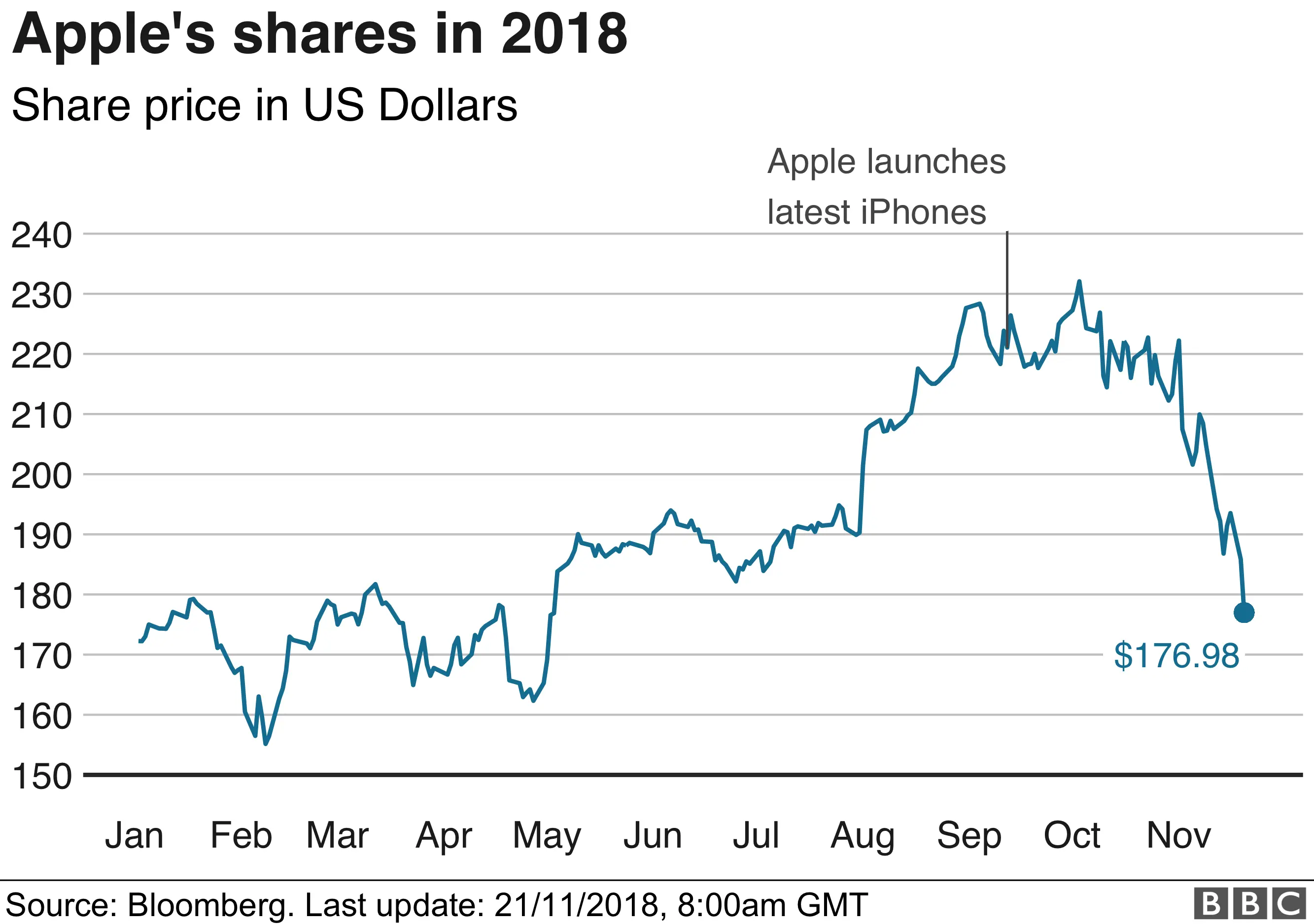
Understanding Apple’s share price requires looking beyond the daily fluctuations. It involves analyzing the company’s ability to generate massive free cash flow, its aggressive capital return program, and its pivot toward artificial intelligence and spatial computing. For the retail investor and the institutional fund manager alike, Apple represents a unique hybrid: a growth company with the stability of a value stock.
The Fundamentals Driving Apple’s Market Capitalization
The primary driver of Apple’s share price is its diversified revenue model. While the company started as a hardware manufacturer, its current valuation is heavily influenced by how effectively it monetizes its massive installed base of over two billion active devices.
The iPhone Cycle and Revenue Stability
The iPhone remains the flagship product, accounting for roughly half of Apple’s total revenue. However, the market’s view of the iPhone has shifted. Investors no longer see it as a volatile, hit-or-miss product line but as an essential utility. The “pro-ification” of the iPhone—where Apple nudges consumers toward higher-priced, higher-margin Pro and Pro Max models—has allowed the company to increase its Average Selling Price (ASP) even as global smartphone shipment volumes have plateaued. This pricing power is a critical component of Apple’s resilient share price, providing a floor during periods of economic uncertainty.
The Services Pivot: High Margins and Recurring Revenue
Perhaps the most significant transformation in Apple’s financial narrative over the last decade has been the explosive growth of its Services division. This includes the App Store, iCloud, Apple Music, Apple Pay, and Apple TV+. From a valuation perspective, Services revenue is far more valuable than hardware revenue. It is recurring, predictable, and boasts gross margins often exceeding 70%, compared to roughly 35-40% for hardware.
When the market evaluates “what’s Apple share price,” it is increasingly looking at the “Services multiple.” As Services grow to represent a larger portion of the total revenue mix, analysts justify a higher Price-to-Earnings (P/E) ratio for the stock, as the business becomes less dependent on a single annual hardware launch and more focused on a steady stream of subscription income.
Analyzing the Financial Ratios: Is AAPL Fairly Valued?
To determine if the current share price represents a buying opportunity, investors must dive into the fundamental metrics that define the company’s financial health. Apple’s balance sheet is often cited as one of the strongest in corporate history, characterized by vast cash reserves and disciplined debt management.
Price-to-Earnings (P/E) Analysis
Historically, Apple traded at a discount to other big-tech peers like Microsoft or Google, often hovering in the 12x to 18x P/E range. However, in recent years, this multiple has expanded significantly, often trading between 25x and 32x. This expansion reflects the market’s confidence in Apple’s ecosystem lock-in. Investors are willing to pay a premium for a company that exhibits lower volatility than the broader tech sector and maintains a dominant competitive moat. When assessing the share price, one must ask if the current P/E is supported by projected earnings growth, particularly as the company integrates AI into its ecosystem.

Dividends and Share Buybacks: The Capital Return Program
A major pillar of Apple’s share price support is its unparalleled capital return program. Apple is the world leader in share repurchases. By spending tens of billions of dollars each quarter to buy back its own stock, Apple effectively reduces the total number of shares outstanding. This increases Earnings Per Share (EPS) even in quarters where net income remains flat.
For the long-term investor, this creates a “buyback floor.” When the share price dips, Apple’s internal buying power kicks in, providing liquidity and upward pressure. Furthermore, while the dividend yield may appear low compared to traditional “income stocks,” the consistent annual increases in the dividend payout make AAPL a favorite for Dividend Growth Investing (DGI) strategies.
External Factors: Macroeconomics and Geopolitics
Apple does not operate in a vacuum. Its share price is highly sensitive to the broader economic environment, particularly interest rate fluctuations and international trade relations.
Interest Rates and the Tech Valuation Model
As a large-cap growth stock, Apple’s valuation is inherently tied to the Federal Reserve’s interest rate policy. In a high-interest-rate environment, the “discount rate” applied to future cash flows increases, which can compress P/E multiples across the tech sector. Conversely, when the Fed signals a pivot toward lower rates, Apple often leads the market rally. Investors view Apple as a “safe haven” in the tech world; it offers growth exposure without the extreme risk associated with unprofitable, high-burn startups.
Supply Chain Resilience and Global Trade
Geopolitics plays a disproportionate role in Apple’s stock performance due to its heavy reliance on Chinese manufacturing and the Chinese consumer market. Any tension in US-China relations often results in immediate volatility for AAPL shares. However, Apple has been aggressively diversifying its supply chain, moving significant production capacity to India and Vietnam. The market monitors these transitions closely. Successful diversification reduces the “concentration risk” premium that has occasionally weighed down the share price, potentially leading to a more stable valuation over time.
The Road Ahead: Growth Catalysts and Investment Outlook
The future trajectory of Apple’s share price will likely be determined by its ability to capitalize on the next era of computing. While the iPhone provides the foundation, new ventures will provide the momentum.
The AI Integration: Apple Intelligence and Hardware Upgrades
Artificial Intelligence is the current focal point of the financial markets. Apple’s approach, branded as “Apple Intelligence,” focuses on on-device processing and user privacy. From an investment standpoint, the “AI play” for Apple is about driving a massive hardware upgrade cycle. If AI features are only compatible with the newest chips, it could trigger a “super-cycle” of replacements for the hundreds of millions of users currently holding older devices. This anticipated surge in demand is a primary catalyst that institutional investors use to justify a bullish outlook on the share price.
Emerging Markets as the Next Growth Frontier
While markets like the US and Europe are nearing saturation, emerging economies—specifically India—represent the next leg of growth for Apple. The company has seen double-digit growth in these regions, where a rising middle class views the iPhone as a premier status symbol and a reliable tool. As Apple expands its retail footprint in these areas, it taps into a demographic shift that could sustain revenue growth for the next decade. For those looking at the long-term value of Apple shares, the success of this geographic expansion is as critical as any technological breakthrough.
Spatial Computing and the Vision Pro
While still in its infancy, Apple’s entry into spatial computing with the Vision Pro represents a long-term bet on the post-smartphone era. While initial sales may not move the needle for a company with Apple’s scale, the development of a new ecosystem—complete with its own App Store and developer community—creates a new vertical for high-margin revenue. Investors often price in these “optionalities” long before they become profitable, contributing to the premium valuation that Apple currently enjoys.
In conclusion, the question of “what’s Apple share price” is best answered by looking at the company as a financial fortress. It is a business built on unparalleled brand loyalty, a massive recurring revenue stream from services, and a management team dedicated to returning value to shareholders through buybacks. While macroeconomic headwinds and geopolitical tensions will always provide short-term turbulence, the fundamental strength of the Apple ecosystem continues to make it a central figure in the world of personal finance and institutional investing. Whether viewed as a defensive play or a growth engine, Apple remains a definitive benchmark for market value in the 21st century.
aViewFromTheCave is a participant in the Amazon Services LLC Associates Program, an affiliate advertising program designed to provide a means for sites to earn advertising fees by advertising and linking to Amazon.com. Amazon, the Amazon logo, AmazonSupply, and the AmazonSupply logo are trademarks of Amazon.com, Inc. or its affiliates. As an Amazon Associate we earn affiliate commissions from qualifying purchases.