
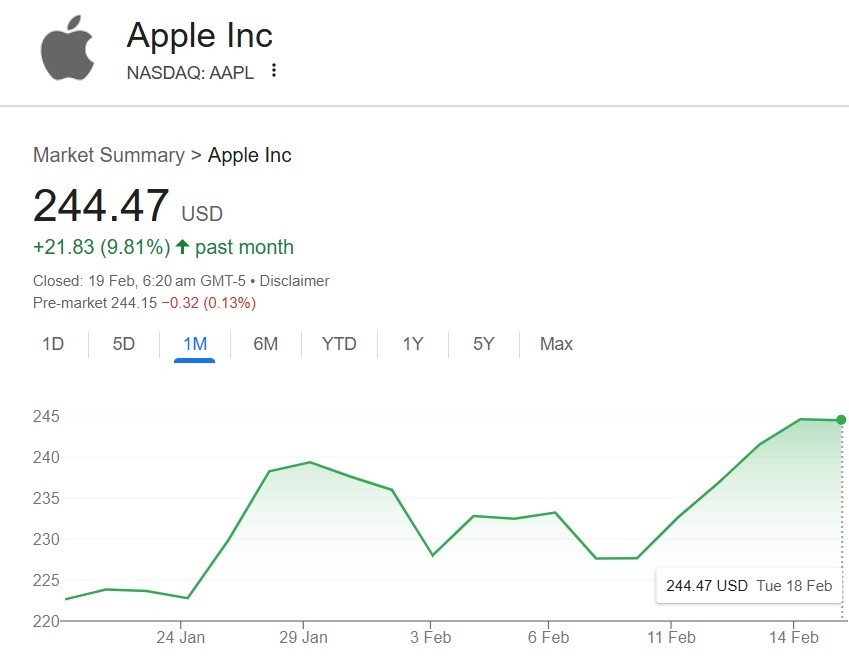
In the world of global finance, few tickers command as much attention as AAPL. When investors ask, “How much is Apple stock worth today?” they are rarely asking for a simple price quote that can be found on a flickering ticker tape. Instead, they are inquiring about the underlying value of a corporate behemoth that has redefined the parameters of market capitalization. To understand what Apple is worth today requires a dual-lens approach: an analysis of its current market price and a deep dive into its intrinsic valuation based on cash flows, ecosystem strength, and macroeconomic positioning.

The valuation of Apple (AAPL) is a moving target, influenced by real-time trading volumes, institutional sentiment, and quarterly earnings reports. However, for the serious investor, the “worth” of the company is found in its ability to generate consistent returns in an increasingly volatile financial landscape.
Analyzing the Current Market Price vs. Intrinsic Value
At any given moment, the market price of Apple stock represents the collective consensus of millions of participants. This price is driven by supply and demand, influenced by everything from daily news cycles to algorithmic trading. However, the market price is often distinct from the intrinsic value—the “true” worth of the business based on its financial fundamentals.
The Role of Price-to-Earnings (P/E) Ratios
One of the primary metrics used to determine if Apple is “worth” its current price is the Price-to-Earnings ratio. Historically, Apple traded at a discount compared to other high-growth tech firms because it was viewed primarily as a hardware company subject to cyclical product launches. In recent years, however, the market has re-rated Apple. Today, its P/E ratio often reflects a premium, signaling that investors view its revenue as more stable and software-like, thanks to the expansion of its Services division. Comparing the current P/E to its five-year average provides a snapshot of whether the stock is currently overextended or trading at a discount.
Discounted Cash Flow (DCF) Modeling
For a more technical valuation, analysts utilize Discounted Cash Flow (DCF) models. This method calculates the present value of all future cash flows Apple is expected to generate. Given Apple’s massive free cash flow—often exceeding $100 billion annually—even slight adjustments in growth projections or discount rates (often tied to Treasury yields) can cause the “intrinsic worth” to swing by hundreds of billions of dollars. When interest rates rise, the “worth” of those future cash flows decreases, which is why Apple’s stock price often reacts sensitively to Federal Reserve policy shifts.
The Financial Engines Driving Apple’s Valuation
Apple’s worth is not derived from a single product but from a sophisticated financial engine that maximizes the lifetime value of its user base. To evaluate the stock today, one must look at the diverse segments contributing to the bottom line.
The iPhone as a Cash Flow Foundation
The iPhone remains the primary driver of Apple’s valuation. It is the “entry point” into the ecosystem. Investors monitor iPhone sales not just for the immediate revenue, but for the “installed base” growth. A larger installed base represents a captive audience for higher-margin services. In financial terms, the iPhone provides the massive, predictable liquidity that allows Apple to fund its R&D and shareholder return programs.
The High-Margin Services Pivot
The most significant shift in Apple’s valuation over the last decade has been the growth of Services, which includes the App Store, iCloud, Apple Music, and Apple Pay. From a margin perspective, Services are gold. While hardware margins are respectable, Services margins are often double, significantly boosting the company’s overall profitability. When the market evaluates how much Apple is worth today, it places a higher multiple on every dollar earned through Services than it does on a dollar earned from hardware sales. This recurring revenue model makes the stock less volatile and more attractive to “value” oriented institutional investors.
Wearables and Home Ecosystem
The “Wearables, Home, and Accessories” segment has grown into a Fortune 500 company in its own right. Products like the Apple Watch and AirPods create a “sticky” ecosystem. Financially, this segment increases the switching costs for consumers. An investor looking at Apple’s worth recognizes that a consumer who owns an iPhone, a Mac, and an Apple Watch is far less likely to migrate to a competitor, ensuring the long-term terminal value of the company remains high.
The Power of the Balance Sheet: Cash Reserves and Shareholder Returns
Apple’s intrinsic worth is bolstered by one of the most formidable balance sheets in corporate history. The company’s “net cash neutral” goal has resulted in an unprecedented return of capital to shareholders.
The Impact of Share Buybacks
Apple is the undisputed king of share repurchases. By spending billions of dollars each quarter to buy back its own stock, Apple reduces the total number of shares outstanding. This is a crucial mechanic for investors: even if net income remains flat, Earnings Per Share (EPS) will rise because the profit is divided among fewer shares. This financial engineering effectively “manufactures” value for remaining shareholders and provides a floor for the stock price during market downturns.
Dividend Growth and Stability
While Apple is often categorized as a growth stock, its dividend policy makes it a staple for income-focused portfolios. The dividend yield may appear modest, but the consistency of increases and the incredibly low payout ratio suggest that the dividend is not only safe but has significant room for growth. For the long-term investor, the “worth” of Apple includes this compounding stream of passive income.
External Market Forces Influencing Today’s Quote
No stock exists in a vacuum. Apple’s valuation is constantly buffeted by external forces that individual investors must monitor to understand daily price fluctuations.
Macroeconomics and Interest Rates
As one of the largest components of the S&P 500 and the Nasdaq, Apple is a proxy for the broader economy. When inflation rises, or when the Federal Reserve raises interest rates, growth stocks generally face downward pressure. Furthermore, because Apple has a global supply chain and sales footprint, fluctuations in the U.S. Dollar (DXY) impact its worth. A strong dollar can create “currency headwinds,” making international sales less valuable when converted back into USD, which can trim billions off the quarterly revenue figures.
Regulatory and Geopolitical Risks
Apple’s valuation also carries a “risk premium” related to regulatory scrutiny and geopolitical tensions. Antitrust investigations in the EU and the US regarding App Store fees or ecosystem closedness can impact future growth projections. Additionally, as a company with significant manufacturing exposure in Asia, any shift in trade policy or regional instability is immediately reflected in the stock’s volatility. Understanding Apple’s worth requires weighing these systemic risks against its operational excellence.
Investment Strategy: Determining Your Entry and Exit Points
Deciding how much Apple stock is worth to you depends on your personal financial goals and time horizon. Valuation is subjective; what is “expensive” for a day trader may be “fair value” for a retirement fund.
Dollar-Cost Averaging (DCA) in a Premium Stock
Because Apple often trades at a high valuation, many investors find it difficult to “time the bottom.” Using a dollar-cost averaging strategy—investing a fixed amount at regular intervals—mitigates the risk of buying at a temporary peak. This approach focuses on the long-term trajectory of the company rather than trying to capture the absolute lowest price on any given day.
The Long-Term Perspective
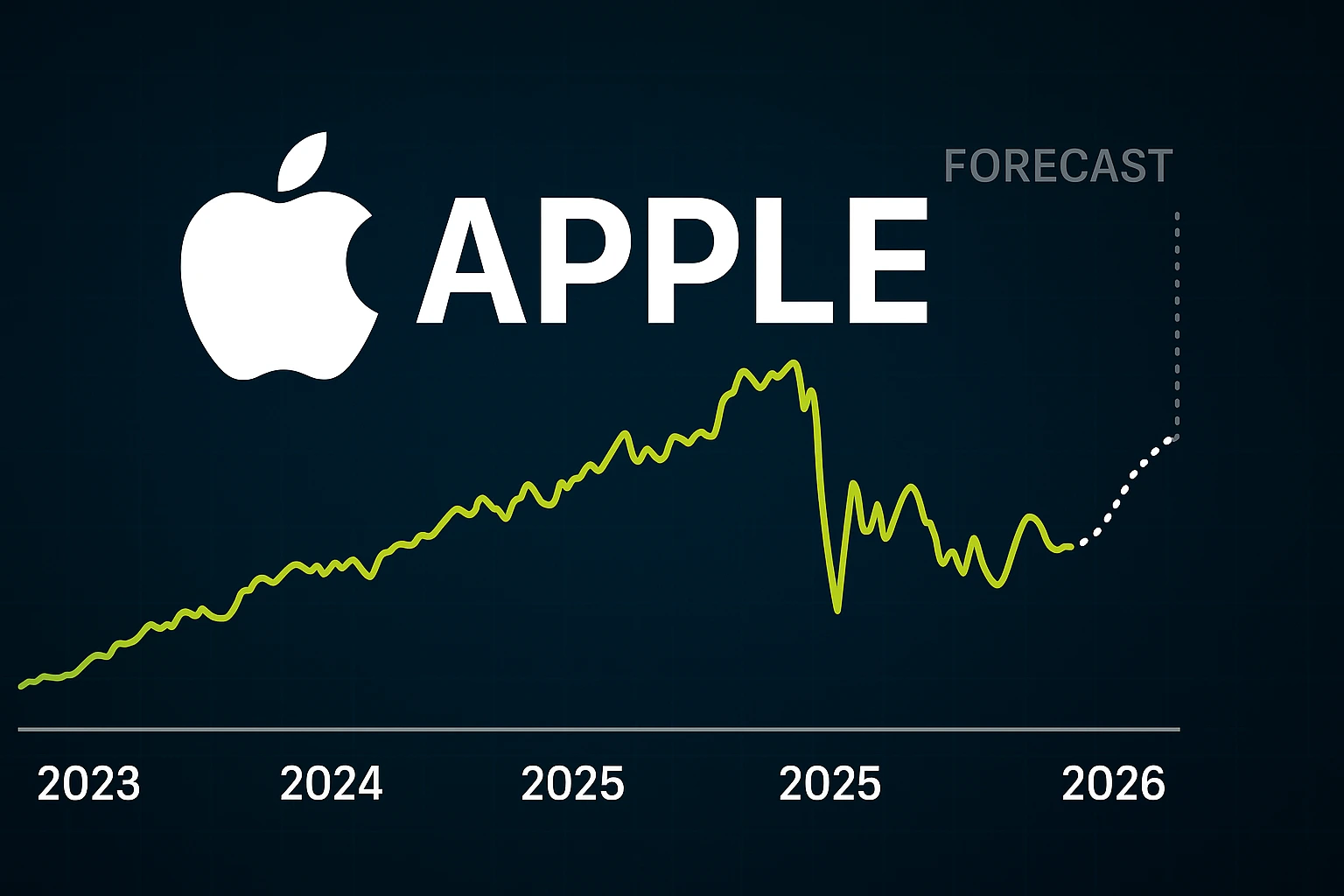
When evaluating Apple’s worth, it is essential to look beyond the next quarter. The company’s foray into spatial computing, financial services (Apple Card and Savings), and potentially automotive or healthcare sectors represents “call options” on future growth. If even one of these moonshots succeeds, the current valuation may one day look like a bargain.
In conclusion, determining how much Apple stock is worth today is an exercise in balancing current market sentiment with hard financial data. While the ticker price gives you the cost of entry, the true value lies in Apple’s massive cash flow, its dominant ecosystem, and its aggressive shareholder return programs. Whether the stock is trading at a record high or experiencing a temporary pullback, its position as a cornerstone of the modern financial markets remains undisputed. For the disciplined investor, Apple represents not just a technology company, but a sophisticated financial instrument designed to capture and distribute global consumer spending.
aViewFromTheCave is a participant in the Amazon Services LLC Associates Program, an affiliate advertising program designed to provide a means for sites to earn advertising fees by advertising and linking to Amazon.com. Amazon, the Amazon logo, AmazonSupply, and the AmazonSupply logo are trademarks of Amazon.com, Inc. or its affiliates. As an Amazon Associate we earn affiliate commissions from qualifying purchases.